Access to housing, both in the case of purchasing or renting, with any type of financing, is usually one of the most important economic investments in people's lives. It is natural to ask oneself what considerations are necessary in order to have a knowledge base before acting.
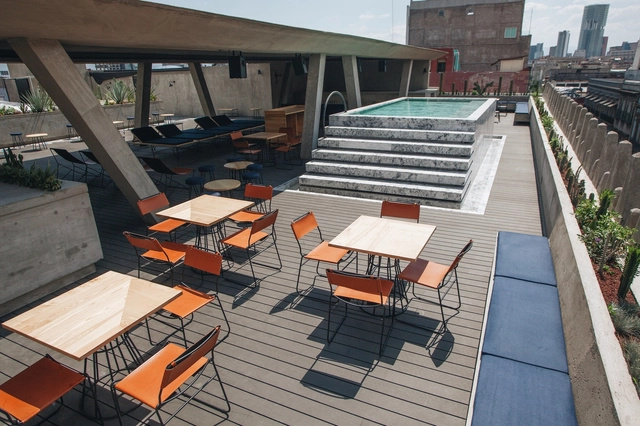
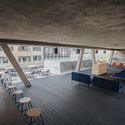
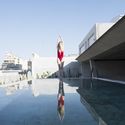
Malaquita is a project located on the terrace of the Hotel City Center in the heart of the Historic Center. Its design is conceived as an escape from the bustle of Mexico City, a place where the passage of time across the different eras that shape the territory is palpable: pre-Hispanic, colonial, modern, and postmodern coexisting in constant resilience.
Within the framework of Espacios Oscuros research project, focused on observing and analyzing the experience of sexual diversity in public spaces of Santiago de Chile, architects María González and José Tomás Franco spoke with Nikos Salingaros, a mathematician and thinker known for his alternative theoretical approach to architecture and urbanism. Salingaros promotes design focused on human needs and aspirations, combining rigorous scientific analysis with a deep intuitive experience.
Our cities are, for the most part, hostile to the sensibilities of their citizens. (...) Almost everything has been aligned, standardized, emptied. So, how to meet different people, and how to expect a mix between strangers?
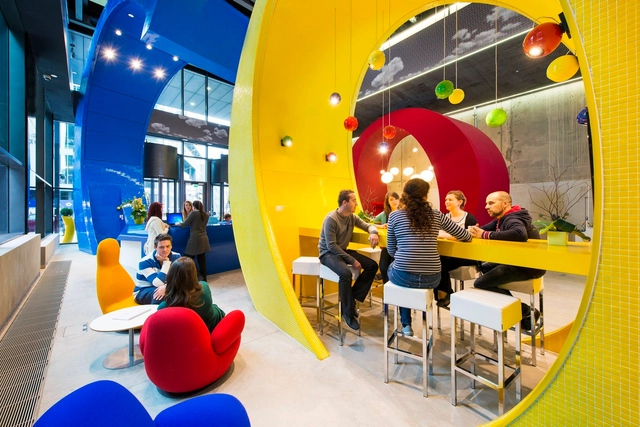
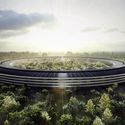
Architecture, unlike other aspects of culture (such as fashion or music), can only really be experienced and understood in person. For highly branded companies, designing a new building can be a prime opportunity to signal taste and values - but also creates an interesting architectural conundrum. While the buildings will be inhabited (nearly 24/7) by company employees, they’re also very much populated by the imaginations of people across the globe. What is it like to be in these places?
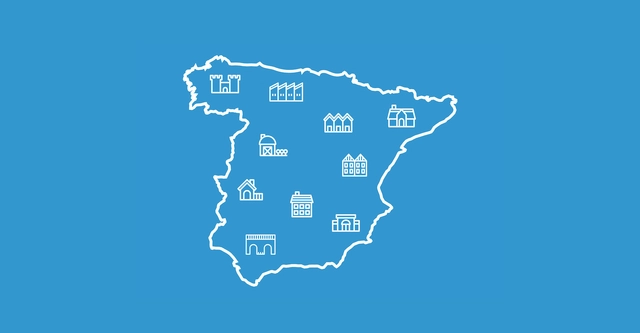
Beyond its vast and diverse geography, the Iberian Peninsula is a map of architectural examples that have successfully adapted by reinterpreting materials, technical methods, and human needs.
In this regard, vernacular architecture in Spain—referring specifically to traditional dwellings—might not be as robust today as in its heyday; nevertheless, numerous examples still stand, some even continuing to serve as viable living spaces.
Below is a selection of the most representative traditional houses across Spain's diverse regions, offering a journey through the territory to inspire new architectural perspectives.
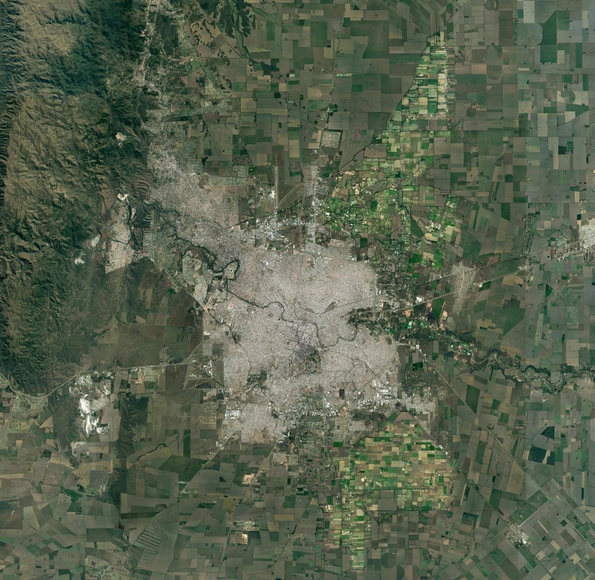
"The Metropolitan Rural Landscape" is a compendium that presents diverse, intentional perspectives on metropolitan rural territory. These viewpoints aim to highlight and open a discussion on the challenges and potential of these spaces. Below are some excerpts from the project:
Videos
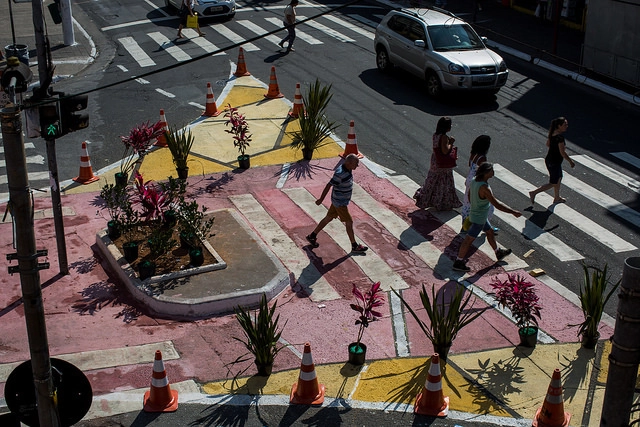
Temporary interventions can transform the landscape and the use of public space (Photo: Victor Moriyama/WRI Brasil)
No one knows a street or a neighborhood as well as the people who live there. Each place has its own peculiarities, potential, and challenges. Consequently, local-scale solutions can be created by citizens themselves, increasing both the efficiency and community buy-in of the project. Cities around the world have been adapting their legal frameworks to establish public policies that facilitate and foster citizen participation in transformative initiatives.
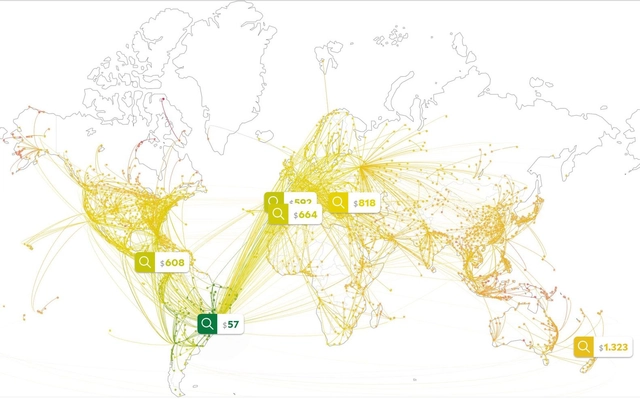
MIT's Senseable City Lab, led by the architect Carlo Ratti, has launched Escape, an interactive platform for visualizing air travel data. "Escape" serves as a search engine that helps users find the cheapest flights from a particular city, and to make the decision on their next trip faster and easier.
https://www.archdaily.com/914292/mits-new-travel-platform-finds-you-cheaper-flights-around-the-worldPedro Vada
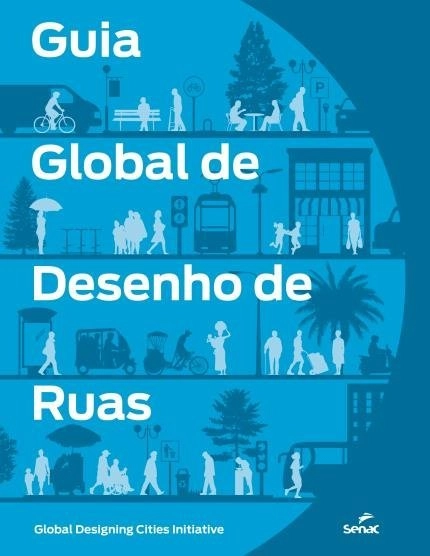
The urban public space between two architectural masses is defined as a street. It is where we establish the relationship between motorized vehicles, non-motorized transport, and pedestrians. In managing this relationship, public space requires a series of systems to guarantee active occupancy, in addition to infrastructure and safety. Consequently, the proper design of roadways and their immediate public surroundings becomes essential. Beyond what meets the eye, water, gas, electricity, and telecommunications networks are laid out beneath our feet, completely unnoticed.
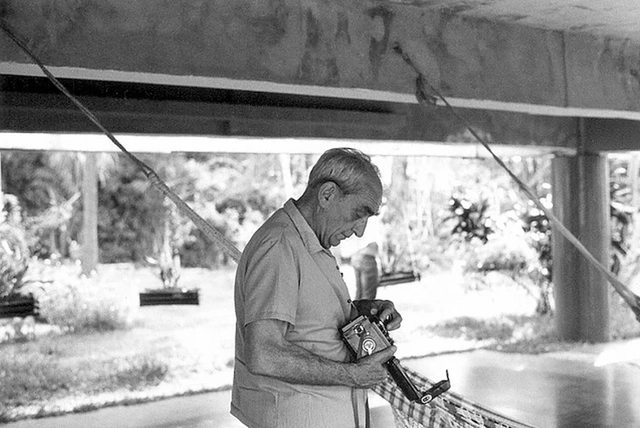
Flávio de Carvalho, publicity photo. Image via Arquivo.Arq
Flávio de Carvalho was a modern Brazilian architect recognized worldwide for his innovative and provocative way of showcasing his worldview through art. Discover some of his artistic expressions below.
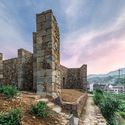
Under heavy bombing, buildings seem to have only one fate: destruction. Severely damaged during the Spanish Civil War, the 13th-century Gothic Church of Vilanova de la Barca (Lleida, Spain) remained abandoned since 1936.
It was only almost 80 years later that the remnants of the structure – parts of the naves, the west façade and the apse towards the east– went through a restoration and refurbishment process. This time, however, the building was not meant to be used as a church but as a multi-purpose hall.
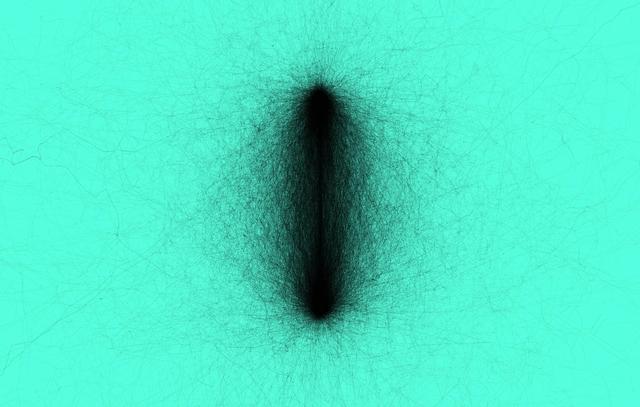
Eric Fischer - 5000 normalized walks - Modified. Image via Flickr
The practice of the dérive is a subject that sparks great interest among urban scholars and professionals. The Situationists, a social critique movement founded in 1957, used this practice to propose new interpretations of the city based on individual lived experience. Jacopo Visconti, curator of the 34th Bienal de Artes de São Paulo, analyzed in his doctoral thesis artistic practices that incorporate the act of walking, seeking the characteristics that defined the Situationist practice of the dérive. Advised by Prof. Dr. Luis Antonio Jorge, Visconti defended his thesis in 2012, which was later published as a book by Martins Fontes. Read the thesis abstract below.
https://www.archdaily.com/1122478/new-driftsPedro Vada
With the aim of generating an architecture that incubates the wellbeing, self-realization, and fulfillment of its inhabitants to become the best version of themselves, CEBRA has launched an ambitious Research and Development Program (R&D) called WISE (Work, Innovation, Space and Education).
As explained by its creators, the purpose of WISE is "to bridge the ongoing and rapid change in the sectors of workspace and education to inform the design of buildings that stimulate learning and innovation. We are connecting ideas of the foremost thinkers of education and entrepreneurship, research and studies in sensory stimuli, cognitive psychology, and behaviorism with architecture."
We spoke with Carsten Primdahl, founding partner of CEBRA, and Klaudio Muca, R&D Architect at CEBRA, to better understand the approach and expected results of the program.
It is the end of May 2016, Alejandro Aravena’s “Reporting from the Front” Biennale is about to kick off the next day and I just landed at Venice airport. Vaporetto waterbuses are no longer running at this late hour, so I am heading for a water taxi, thinking that it will cost me a bundle to get to the city. But maybe not! I see a lonely figure, “Are you going to Venice? Would you like to share a taxi?” A young Chinese woman agrees without hesitation. As soon as the boat leaves I keep pressing my luck, “Are you an architect, by any chance?” Yes! The next hour flew unnoticed, as we discussed our discipline and common friends. Two years passed, and I am back to Venice Biennale. At the opening of the Chinese Pavilion, I am hopping from conversation to conversation until I am introduced to Xu Tiantian, “China’s most promising female architect.” We looked at each other and said in unison, “The taxi girl/guy!” We finally exchanged contacts and on my next trip to Beijing we met at Xu’s DnA Design and Architecture studio. What follows, after a brief introduction, is an excerpt from that conversation.
I Am Interested in Seeing the Future is an architectural exhibition, that, contrary to what you might expect, includes no models and no drawings. Instead, as soon as visitors arrive, they find themselves surrounded by text. The wall facing the entrance is covered by an installation of single words on posters, interview transcripts on colored paper, and mirrors that reflect the sentences on flimsy scrolls arcing down from the ceiling.
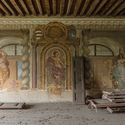
Magic lies in architectural ruins. Beneath the dirt and mold, fractured walls and deserted rooms still stand, preserving the remains that have lingered long after their owners' departure.
During his explorations of abandoned places across Europe, photographer Romain Veillon stumbled upon enchanting frescoes and paintings that were left to fade in the parlors of the aristocrats. Veillon became keen on finding more of these imaginary museums across the continent, and to his chance, managed to discover many in France, Germany, Italy, Ireland, and Portugal.
Before their art is forgotten and their houses quietly rust away, Veillon captured the murals found in these haute bourgeoisie family houses, which illustrate stories of the cities they lay in and the people they once belonged to.
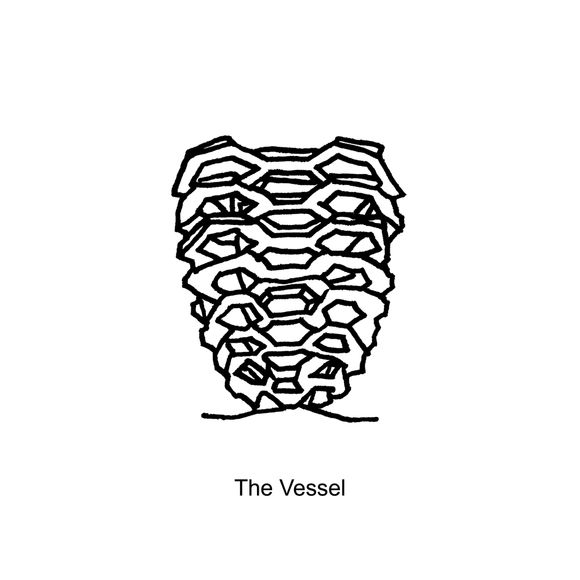
“Hudson Yards’ Large Honeycomb… Hudson Yards’ New Shawarma Sculpture…” Call it what you want, but the Vessel has created quite a buzz over the past couple of weeks, and it is not just because of its impressive architecture, or the panoramic view at the top (to which some claimed that getting there was an uncalled for work-out).
After coming across different nicknames of Hudson Yards’ now-famous point of attraction, architectural designer and illustratorChanel Dehond selected some of the most amusing ones and transformed them into sketches.
Tell us, ArchDaily readers, what do you call the Vessel?
Colombian firm DARP has won second place in the design competition for the memorial space at the former Mónaco Building in Medellín, Colombia. Organized by the EDU and the Colombian Society of Architects (SCA), the international competition sought to design a space of memory and reflection on the period between 1983 and 1994, located on the site of the demolished building that was once the home of drug trafficker Pablo Escobar.
The Chilean city of Valparaíso is comprised of 42 hills overlooking the Pacific Ocean. Its unique topography has prompted—or forced—residents to build a creative network of elevators, staircases, and alleys, connecting every corner of the city despite its rugged terrain.
This article was made in partnership with Design Indaba, a website and annual festival that uncovers innovation for good. Global Graduate Nicole Moyo presented her project Day 1 of the 2019 festival. Click here to learn more about the annual event.
Our planet is home to almost 7 billion people. Out of these 7 billion, more than 5 billion have access to mobile phones, but less have access to working toilets, and more than 1 billion still discharge waste in the open.
Whether seeking distraction, escape, or reflection, metro passengers shorten their commutes by checking their phones, reading books, or listening to music. For Chilean photographer and civil engineer Felipe Lavín, this conceals a contradiction. "Commuting en masse is a highly social act, yet at the same time, it is deeply solitary. As Marc Augé notes, in the metro we constantly brush against the lives of others without ever truly encountering them," Lavín says in conversation with ArchDaily.
Officially debuting the partnership between ArchDaily and Arquicast, episode #68 Interview: ArchDaily Brasil is now live. In this episode, three of the editors from the Brazilian platform—Pedro Vada, Eduardo Souza, and Matheus Pereira—share a behind-the-scenes look at what it is like to work for the world's most visited architecture and urbanism website. The challenges of adapting to a new kind of career in architecture, the speed of industry transformations, and the role of technology and collaboration are among the topics discussed in this casual and informative conversation, which can be accessed here!
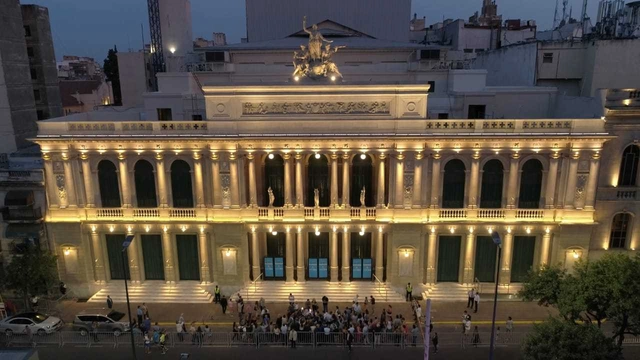
Teatro del Libertador General San Martin. Image Cortesía de Natacha Escarguel
The construction of theaters in the Province of Córdoba, Argentina, was closely tied to the second wave of immigration that arrived between 1880 and 1930, alongside the expansion of the country's railway network. Today, the city boasts a large number of theaters, most of which date back to this period and form an integral part of Córdoba's cultural heritage, despite having suffered for many years from the neglect of successive governments.







_.jpg?1553955025&format=webp&width=640&height=580)
_.jpg?1553955147 "© Laurian Ghinitoiu")
_.jpg?1553955015 "© Laurian Ghinitoiu")
_.jpg?1553955174 "© Laurian Ghinitoiu")
_.jpg?1553955102 "© Laurian Ghinitoiu")
_.jpg?1553955025)
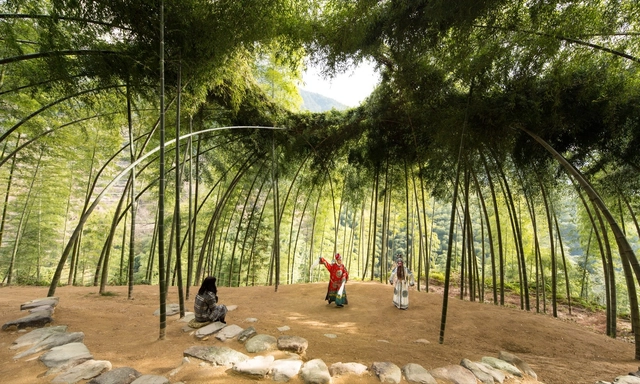

.jpg?1553867198 "Tea House. Image © Wang Ziling")








.jpg?1553680440&format=webp&width=640&height=580)


.jpg?1553680440)
_2018_-_Fotomontaje_Digital.jpg?1553477725&format=webp&width=640&height=580)