1. ArchDaily
  2. Articles

Articles

Staircases That Structure Space: Examples in Projects by Yemail Arquitectura

Subscriber Access | 

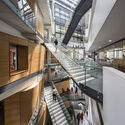
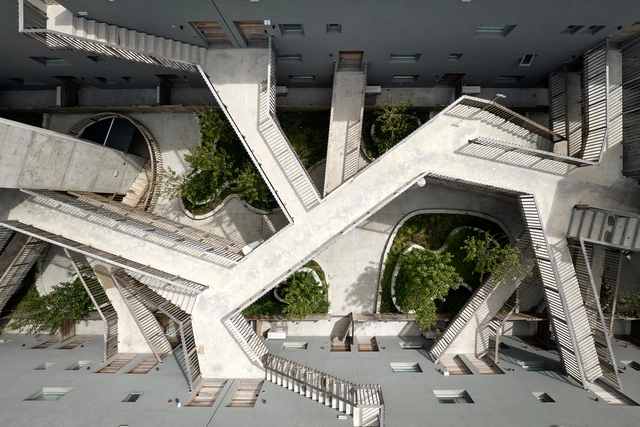
Spaces and their designated uses are connected through circulation. When navigating the vertical axis, stairs, ramps, and elevators function as the primary systems of movement. Some view these architectural elements as protagonists in spatial configuration.

Stairs undoubtedly span the entire spectrum from mere utility to sculptural installations. The stairs designed by the Bogotá-based firm Yemail Arquitectura are no exception.

National Monuments Day: Over 1,000 buildings will open their doors to the public in Argentina

Subscriber Access | 

For the third consecutive year, National Monuments Day will take place during the first weekend of May throughout Argentina, coordinated by the National Commission of Monuments, Places, and Historic Assets of the National Ministry of Culture.

Maintenance Strategy for Social Housing in Latin America

Subscriber Access | 

Continuing with the series of articles by Nikos A. Salingaros, David Brain, Andrés M. Duany, Michael W. Mehaffy, and Ernesto Philibert-Petit on the study of social housing in Latin America, this installment discusses construction work processes and operating systems. Review past publications and the new article below.

New documentary on the struggle for housing and gentrification in Lisbon

Subscriber Access | 

What Will Happen Here? (O que vai acontecer aqui?) is a new documentary by Left Hand Rotation, in collaboration with Stop Despejos and Habita, on the housing struggles in Lisbon—a city where rents have increased by 50% over the last three years and that has become the leading European city for real estate fund investment.

Emilio Santiago Muíño: "Sustainability is not a technical problem, but a political one"

Subscriber Access | 

In its most recent edition, BBConstrumat, Spain's largest construction trade fair, underscored its commitment to supporting a new model in the construction industry—one centered on the circular economy and sustainable development. 

Among the event's key highlights, Ricardo Devesa—editor-in-chief at Actar and urbanNext and professor at IAAC—curated the refreshing congress Logics of Innovation and Change, where presentations and discussions revolved around global challenges such as climate change, robotics, resilience, migration, and new global narratives.

Emilio Santiago Muíño: "Sustainability is not a technical problem, but a political one" - Imagen 1 de 4Emilio Santiago Muíño: "Sustainability is not a technical problem, but a political one" - Imagen 2 de 4Emilio Santiago Muíño: "Sustainability is not a technical problem, but a political one" - Imagen 3 de 4Emilio Santiago Muíño: "Sustainability is not a technical problem, but a political one" - Imagen 4 de 4Emilio Santiago Muíño: Sustainability is not a technical problem, but a political one - More Images

How ArchDaily Mexico Celebrated Its 7th Anniversary at Proyecto Público Prim

Subscriber Access | 

How ArchDaily Mexico Celebrated Its 7th Anniversary at Proyecto Público Prim - Imagem 1 de 4How ArchDaily Mexico Celebrated Its 7th Anniversary at Proyecto Público Prim - Imagem 2 de 4How ArchDaily Mexico Celebrated Its 7th Anniversary at Proyecto Público Prim - Imagem 3 de 4How ArchDaily Mexico Celebrated Its 7th Anniversary at Proyecto Público Prim - Imagem 4 de 4How ArchDaily Mexico Celebrated Its 7th Anniversary at Proyecto Público Prim - More Images+ 23

On Thursday, September 5, ArchDaily México celebrated its seventh anniversary. This year, Proyecto Público Prim was chosen as the venue—an early 20th-century building of great architectural value featuring interventions by architect Alberto Kalach and the firm PRODUCTORA. The venue served as the backdrop for some of the most influential figures on the contemporary scene to connect with the ArchDaily México team.

The need for adaptable materials in Latin American social housing

Subscriber Access | 

The article series by Nikos A. Salingaros, David Brain, Andrés M. Duany, Michael W. Mehaffy, and Ernesto Philibert-Petit investigating social housing in Latin America continues by exploring the choice of building materials. Read all past articles and the new piece below.

1- Design Capable of Establishing 'Emotional Belonging' 2- Anti-Patterns of Latin American Social Housing 3- Geometry of Control 4- Biophilia, Connectivity, and Spirituality 5- Using the Work of Christopher Alexander 6- Construction Strategies for Social Housing 7- Examples of Patterns and Generating Codes 8- Design Strategies 9 - Design Sequence 10 - Practical Suggestions for Successful Projects

A winning (and disqualified) project for the Catalog of Modular Schools in the Peruvian highlands

Subscriber Access | 

The results of the National Catalog of Modular Schools Competition in Peru were recently announced, with a single winning team unanimously selected for all five categories across their respective bioclimatic zones: Coast, Rainy Coast, Highlands, Frost, and Rainforest. Remarkably, this team was formed by an alliance of several highly influential architecture firms in the country, as evidenced by the caliber of their proposals. What made this outcome so compelling was that unity and diversity prevailed in a competition that seeks to foster those very principles through architecture and education.

However, there is an important detail in the competition's process—and processes are journeys worth remembering. The project developed by the architecture offices leonmarcial + Ghezzi Novak was awarded first place by the jury in the Highlands Catalog category; however, it was disqualified for failing to meet the required documentation. Such situations are common in architectural competitions, where regulations must ultimately be upheld.

Beyond the outstanding projects that ultimately won, what happens to those left behind? What becomes of all that valuable material? They, too, deserve visibility, as they represent efforts that should lead to some outcome. We are committed to sharing quality architecture, and this project, given its winning caliber, is undoubtedly one of them.

On Reclaiming Residual Spaces on the Mexican Border: Neighborhood Action Laboratory

Subscriber Access | 
On Reclaiming Residual Spaces on the Mexican Border: Neighborhood Action Laboratory - Featured Image
© Nómada Laboratorio Urbano

On Reclaiming Residual Spaces on the Mexican Border: Neighborhood Action Laboratory - Image 1 of 4On Reclaiming Residual Spaces on the Mexican Border: Neighborhood Action Laboratory - Image 2 of 4On Reclaiming Residual Spaces on the Mexican Border: Neighborhood Action Laboratory - Image 3 of 4On Reclaiming Residual Spaces on the Mexican Border: Neighborhood Action Laboratory - Image 4 of 4On Reclaiming Residual Spaces on the Mexican Border: Neighborhood Action Laboratory - More Images+ 11

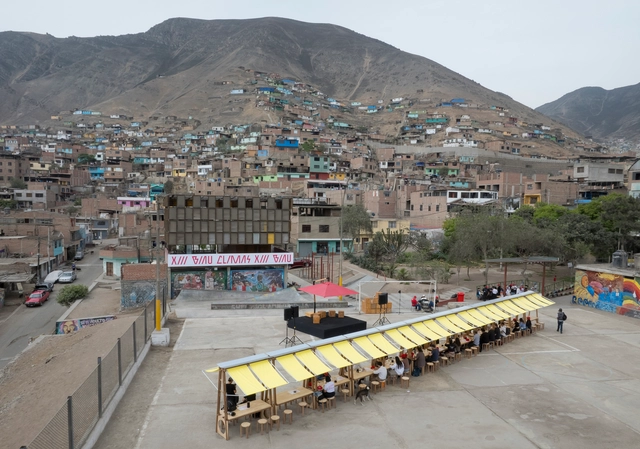
Ciudad Juárez is an industrial city located on the northern border with the United States, specifically bordering the city of El Paso, Texas. Over the years, Juárez's economy has been dominated by the ‘maquiladora’ assembly industry, and the city was once considered one of the most violent in the world due to a wave of crime between 2008 and 2012. In response to these conditions, in 2014, a group of friends from Ciudad Juárez, Chihuahua, eager to contribute to their city's resilience and recovery, came together to discuss and pitch ideas for reclaiming streets, plazas, and parks through sociocultural projects and public space interventions, ultimately giving rise to Nómada Laboratorio Urbano.

Architectural prototype for low-income urban expansions in tropical climates

Subscriber Access | 
Architectural prototype for low-income urban expansions in tropical climates - Image 11 of 4
Cortesía de SUMA Arquitectos
Architectural prototype for low-income urban expansions in tropical climates - Image 14 of 4
Cortesía de SUMA Arquitectos
Architectural prototype for low-income urban expansions in tropical climates - Featured Image
Cortesía de SUMA Arquitectos

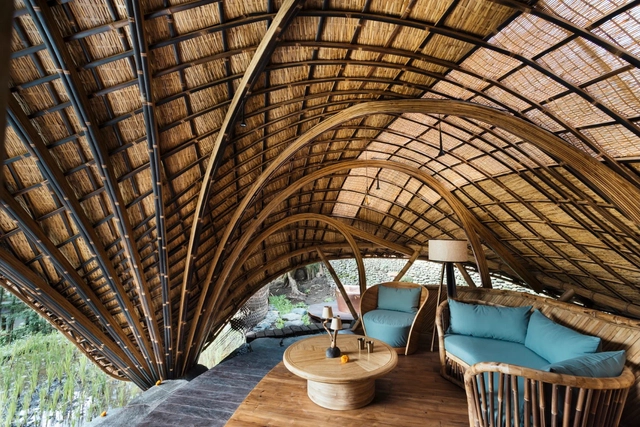
Exhibited in a parallel exhibition at the 2018 Venice Biennale, the Tropi-Co-Re Housing project by SUMA Arquitectos reflects on the intersection of urban and architectural design within the low-income residential context of an equatorial/tropical climate, investigating alternative material systems for its construction, such as bamboo truss structures and folded metal plate roofs.

Read on to explore the project in detail, in the words of its designers.

Binational Competition for the Environmental Control Laboratory on the Uruguay River

Subscriber Access | 

Promoted by the Uruguay River Administrative Commission, organized by the Society of Architects of Uruguay (SAU) and the College of Architects of the Province of Entre Ríos (CAPER) —and sponsored by the Argentine Federation of Architect Associations (FADEA)— the call for entries is now open for the binational preliminary design competition to develop a Control Laboratory for the environmental analysis of the Uruguay River.

Urban Kintsugi: An Urban Transformation Project in Mexico

Subscriber Access | 

Urban Kintsugi: An Urban Transformation Project in Mexico - Image 1 of 4Urban Kintsugi: An Urban Transformation Project in Mexico - Image 2 of 4Urban Kintsugi: An Urban Transformation Project in Mexico - Featured ImageUrban Kintsugi: An Urban Transformation Project in Mexico - Image 3 of 4Urban Kintsugi: An Urban Transformation Project in Mexico - More Images+ 25

As part of the 2nd Placemaking Latinoamérica gathering –organized by Lugares Públicos A.C.– which took place in Mexico City during the first and second weeks of November, various activities were carried out, including the restoration of eight public spaces led by Mexican and Latin American participatory urban planning specialists in the boroughs of Cuauhtémoc, Iztacalco, and Miguel Hidalgo.

Discover the winning project for the Historic Landmark of the International Congress of the Spanish Language in Córdoba

Subscriber Access | 

Rodrigo Schiavoni and Adán Yenerich, founding partners of SY arquitectos, have won the open competition organized as part of the eighth International Congress of the Spanish Language, held in the city of Córdoba from March 27 to 30, 2019. This competition called for the design of an urban-scale commemorative landmark to serve as a civic symbol.

Organized by the Córdoba Province Chamber of Tourism and open to artists, designers, and architects, this interdisciplinary competition called for the creation of urban-scale pieces to intervene in the public space of a prominent sector of the city: a portion of the historic founding district located just steps from the Jesuit Block, a site designated as a World Heritage Site by UNESCO.

We must build cities and territories in tune with communities

Subscriber Access | 

Together with a group of researchers, over the last five years we have been studying working-class housing developments in southern Chile: the coal basin in Lota, Schwager, and Pilpilco; the textile towns of Bellavista and Carlos Mahns in Tomé; and the working-class settlements in Valdivia and Magallanes.

TSI Máncora 2019: Students build in the hidden landscapes of the Peruvian coast

Subscriber Access | 

One could say we have waited for sunset to rekindle the warmth of this experience—and thus blend nostalgia with the newly arrived autumn.

The end of summer has arrived in the southwestern hemisphere, and among the many new lessons each climate leaves behind in these parts, in one of Peru's warmest regions, TSI 2019 left footprints and works that sooner or later we would be ready to reveal. All, or most, of those who participated have already returned to their school or work routines, yet at the end of the season, this remains a place to return to.

Architect and YouTuber 'Ter' explains the structure of Notre-Dame Cathedral through diagrams

Subscriber Access | 

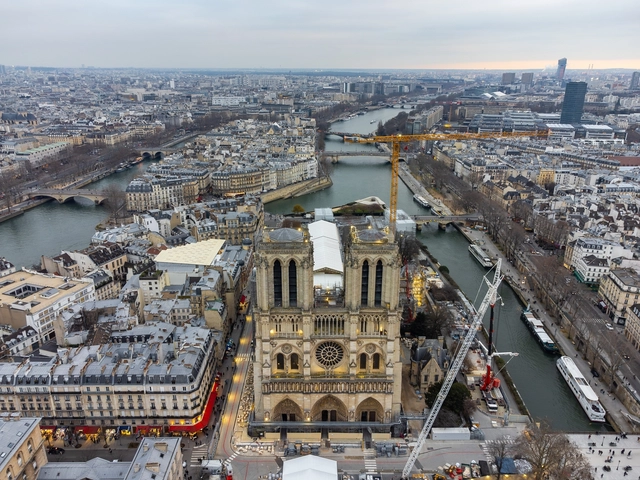
A few months ago, we witnessed how one of the most iconic Gothic monuments in Paris and Europe was consumed by a massive fire that broke out shortly before sunset. The fire reached the north tower of the cathedral's twin belfries, claiming the cathedral spire, which was part of a 19th-century addition built with a timber and lead structure.

After 19S: A Contemporary Chapel by Dellekamp / Schleich in Collaboration with AGENdA

Subscriber Access | 

After 19S: A Contemporary Chapel by Dellekamp / Schleich in Collaboration with AGENdA - Image 1 of 4After 19S: A Contemporary Chapel by Dellekamp / Schleich in Collaboration with AGENdA - Image 2 of 4After 19S: A Contemporary Chapel by Dellekamp / Schleich in Collaboration with AGENdA - Image 3 of 4After 19S: A Contemporary Chapel by Dellekamp / Schleich in Collaboration with AGENdA - Image 4 of 4After 19S: A Contemporary Chapel by Dellekamp / Schleich in Collaboration with AGENdA - More Images+ 9

In the fall of 2017, a 7.1-magnitude earthquake struck at least nine Mexican states, leaving several areas severely damaged across Mexico City, Puebla, Morelos, Oaxaca, Veracruz, Tlaxcala, Guerrero, and the State of Mexico. Jojutla, a municipality in Morelos, was among the hardest hit, left in ruins after the September 19 disaster. Much of the local infrastructure was devastated, prompting a master plan initiated by Infonavit to reconstruct the municipality's primary public buildings.

Landskating, a documentary about the construction of urban sports parks in Barcelona

Subscriber Access | 

"An old skating area, a forgotten garden beneath bridges, and the reconstruction of a skatepark in a working-class neighborhood serve as the backdrops for this documentary. The parallel narrative of the construction of three new public spaces in Barcelona shows how once-marginalized territories are integrated into the urban fabric while respecting the site, its memory, its people, and its everyday life."

The premise of the documentary Landskating, directed by Kike Barberá, with a script and production by Sergi Carulla and Oscar Blasco (Scob), is highly promising. Filmed between 2013 and 2015, this period saw the realization of participatory processes led by the youth themselves, alongside the construction of Barcelona's first three urban sports parks: the Landskate Parks.

To mark the documentary's public premiere, we interviewed the team at SCOB to learn more about their work.