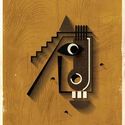
Italian artist Federico Babina has published the latest in his impressive portfolio of architectural illustrations. “Planimal” seeks to convey the close link between architecture and the natural world, translating animals into architectural plans. Through his set of drawings, Babina reimagines the architectural spaces as “narrative subjects that host us and lead us into a fantastic labyrinth of a dreamlike reality, architectures imagined as allusively zoomorphic sculptures.”
Houses, museums, and churches are conveyed as roaring lions, crawling snakes, and swimming whales, with dynamic spaces formed from cocktails of asymmetries and symmetries, curves and straight lines, solids and voids, sounds and silences, lights and shadows.
Past, Present, Future is an interview project by Itinerant Office, asking acclaimed architects to share their perspectives on the constantly evolving world of architecture. Each interview is split into three video segments: Past, Present, and Future, in which interviewees discuss their thoughts and experiences of architecture through each of those lenses. The first episode of the project featured 11 architects from Italy and the Netherlands and Episode II is comprised of interviews with 13 architects from Spain, Portugal, France, and Belgium.
55Laney69 on VisualHunt.com / CC BY-NC - modified. Image via Visual Hunt
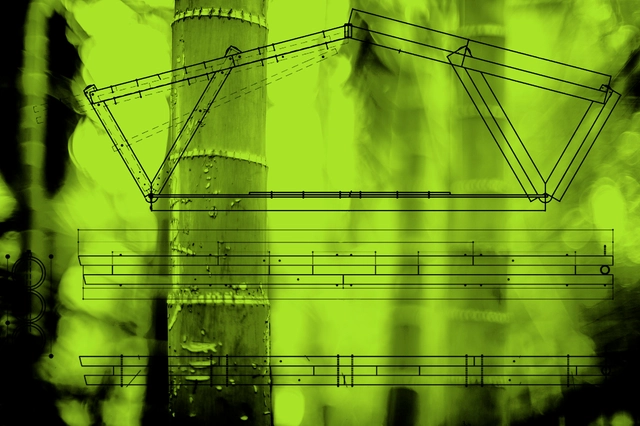
In this article shared by the Bamboo Experimentation Laboratory at UNESP - Bauru the researchers involved report on the construction of the Workshop Shed at the Horto de Aimorés Rural Settlement. The project utilized raw bamboo combined with round aroeira columns and metal connections. Read the summary submitted by the authors and the results of this process below.
https://www.archdaily.com/1122590/bamboo-components-production-design-and-prefabrication-processPedro Vada
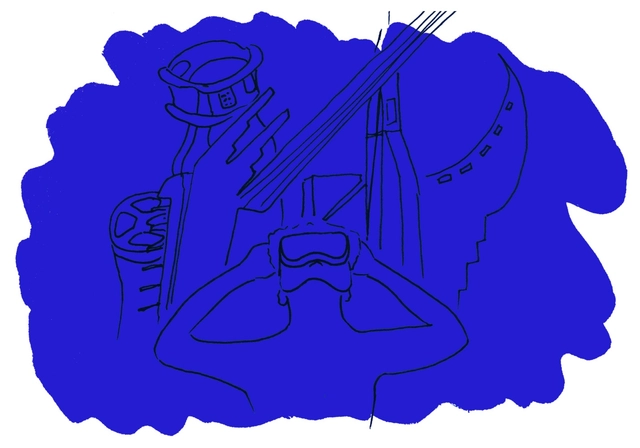
What happens when the sensor-imbued city acquires the ability to see – almost as if it had eyes? Ahead of the 2019 Shenzhen Biennale of Urbanism\Architecture (UABB), ArchDaily is working with the curators of the "Eyes of the City" section at UABB 2019 to set up a discussion on how new technologies - and Artificial Intelligence in particular - might impact architecture and urban life. Here you can read the “Eyes of the City” curatorial statement by Carlo Ratti, Politecnico di Torino, and SCUT. If you are interested in taking part in the exhibition at UABB 2019, submit your proposal to the “Eyes of the City” open call until May 31st, 2019: www.eyesofthecity.net
Comparisons, transpositions and metaphors can be misleading if one does not unpack carefully their point of departure. The notion that the digital age introduces us to a new regime of "eyes on the street", an expression famously coined by Jane Jacobs, requires understanding exactly what the author of The Death and Life of Great American Cities implied when she used it. For Jane Jacobs, the active presence of city dwellers in the street, their unconscious or conscious monitoring of what was going on in their immediate surroundings was the best way to ensure public safety. "The public peace — the sidewalk and the street peace— of cities is not kept primarily by the police, necessary as police are. It is kept primarily by an intricate, almost unconscious, network of voluntary controls and standards among the people themselves, and enforced by the people themselves," wrote Jane Jacobs.
Architects are often noted for having bad work-life balance, a lot of stress and little free time. How can you take time off while still improving your skills as an architect? Can that time off even give you an extra edge? Compared to other fields, architecture stands out as a field in which you need to “know a little bit about everything." Thus, in order to live up to our name we must also do a little bit of everything, and as they say, a little goes a long way. So with that in mind, here are 11 activities which, while not obviously architectural, just might make you a better architect.
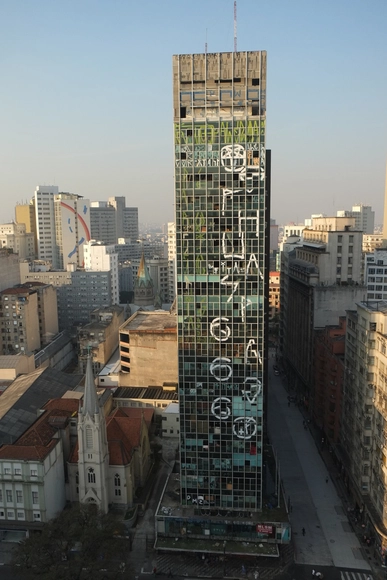
One year after the tragedy caused by the fire at the Wilton Paes de Almeida Building, we share this text originally published in 2018 in the newspaper "A Escola e a Cidade," produced by the publisher of Escola da Cidade.
https://www.archdaily.com/1122848/of-the-force-of-money-that-builds-and-destroys-beautiful-thingsIsadora de Andrade Guerreiro
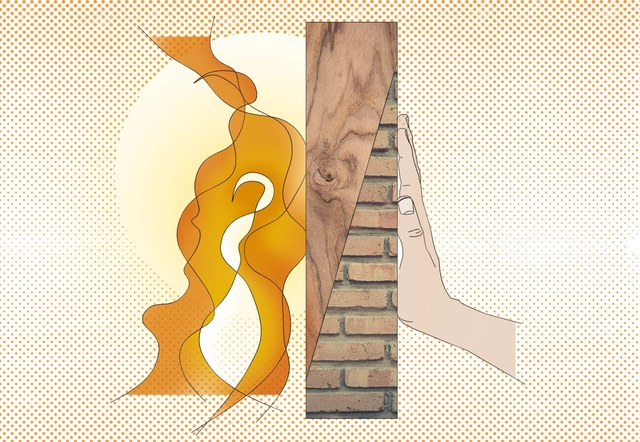
In case of fire, protecting the lives of people is the most important. All occupants of the building should have the opportunity to evacuate on time, and the time available depends largely on the materials chosen and their behavior during fire exposure.
In order to facilitate and optimize this process, the European Union has adopted the Standard EN 13501[1], introduced in the 2000s, which specifies a series of classes that determines the anti-fire properties of different materials. Their classifications are unified and compared based on the same test methods, and are currently used as a reference in many countries around the world.
Because of the architect’s role in choosing materials for projects, we have compiled the most important nomenclature to better understand the level of security of our built environment.
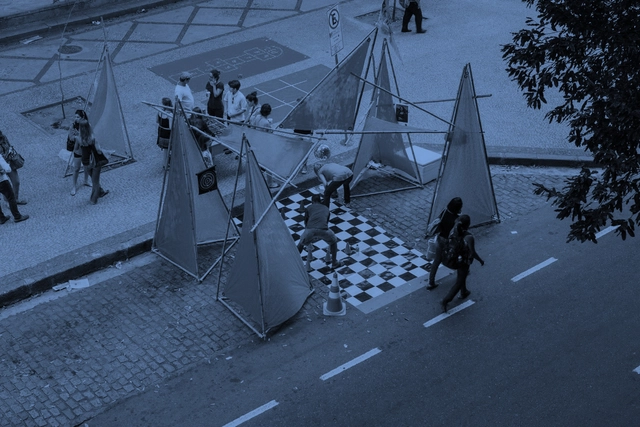
You have probably heard the term “tactical urbanism.” Though relatively recent, this approach to public space has gained visibility over the last decade, and today there are numerous examples of how to intervene in the city through a short-term, low-cost, and highly socially engaged lens. In episode #70, we chat with Rio-based architect and PhD in Urbanism Adriana Sansão, whose extensive practical work is backed by deep research on the subject. Click here to learn more!
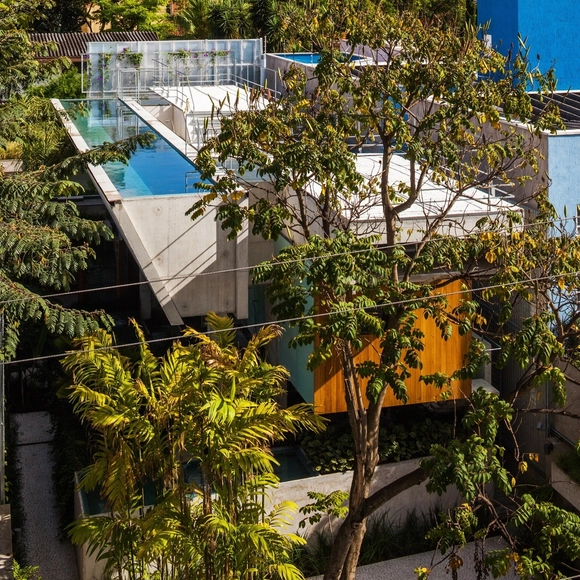
Sometimes, residential projects are structured around specific elements of the brief, exploring their sculptural potential as a defining feature of the design. Swimming pools are a compelling case in point: they often become the focal point of a project, allowing for a high degree of creativity and inventiveness while seamlessly bridging landscape and architectural design.
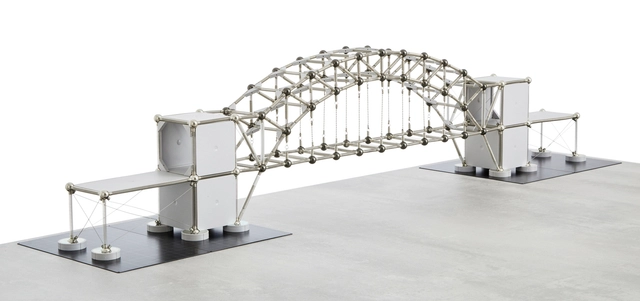
Sydney Harbour Bridge made using Mola kit. Image Courtesy of Mola
It is often difficult to detect structures' potential deformations and behaviors with the naked eye, which is why interactive education and model-making have proved to be some of the most beneficial methods of learning about structural design.
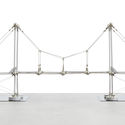
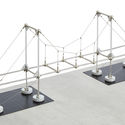
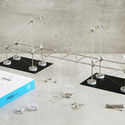
To help with the learning of structures in a more playful and intuitive way, Brazilian brand Mola, have developed Mola Structural Kits, a selection of interactive physical models that simulate the behavior of architectural structures and create countless design combinations.
Following the success of the Structural Kits 1 and 2, Mola will be launching the Mola Structural Kit 3 in a Kickstarter campaign in a couple of weeks, and to celebrate, the innovative company has once again teamed up with ArchDaily for another exclusive giveaway, offering 10 of our readers the chance to win a complete structural kit, along with additional accessories.
It is expected that within the next couple of decades, Earth will have absolutely nothing left to offer whoever/whatever is capable of surviving on it. Although the human race is solely responsible for the damages done to the planet, a thin silver lining can still be seen if radical changes were to be done to the way we live on Earth and how we sustain it.
Since architects and designers carry a responsibility of building a substantial future, we have put together an A-Z list of every sustainability term that you might come across. Every week, a new set of letters will be published, helping you stay well-rounded on everything related to sustainable architecture and design. Here are the terms that start with letters A, B, and C.
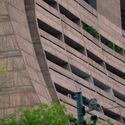
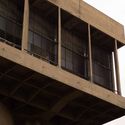
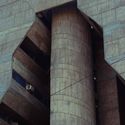
Brutalism is merely a basic equation of reinforced concrete + geometry, but while the result of this equation is rather minimal, the architecture movement remains as one of the most debatable styles, ranging between “fascinating structures” and “is it even worth preserving”.
While many perceive Brutalism as “ugly” or “incomplete”, 17 year-old Arhan Vohra found glory in these modernist structures and launched Brutal Delhi, a photography website of New Delhi’s Brutalist buildings, shot through his camera lens.
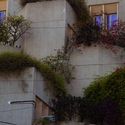
UFMG Services Plaza – view of one of the access points to the balconies (Loggias). Source: Technical Information Center of UFMG, 2018 / Photo: Junia Mortimer, 2012
When we understand architecture as the activity of modifying a natural site and transforming it into an environment suitable for human coexistence—whether through a building or the urbanization of a territory—we can understand the architect's work as something that must serve the community. In this sense, the historical concept of humanism and republicanism is invoked—the public affair, in Latin.
Whether for universal accessibility, spatial fluidity, or plastic continuity, ramps bring unique and highly welcome qualities to architectural projects. That is, of course, when they can be successfully integrated into the design—typically a demanding task due to accessibility standards governing maximum slopes.
A few days ago, we asked our Instagram followers, "What does public space mean to you?" These reflections are intrinsic to architectural discourse and come into play across various project types, particularly those involving the planning of shared spaces in cities.
The Midnight Charetteis an explicit podcast about design, architecture, and the everyday. Hosted by architectural designers David Lee and Marina Bourderonnet, it features a variety of creative professionals in unscripted and long-format conversations that allow for thoughtful takes and more personal discussions. Honesty and humor are used to cover a wide array of subjects: some episodes provide useful tips for designers, while others are project reviews, interviews, or simply explorations of everyday life and design. The Midnight Charetteis available for free on iTunes, YouTube, Spotify, and all other podcast directories.
On this episode of The Midnight Charette Podcast, Sharon Zukin discusses the economic and social impact the technology industry has had on cities around the world, the relationship between gentrification and the commodification of modern life, building improvement districts and the increasing securitization of public spaces, and the desire to live in authentic neighborhoods.
https://www.archdaily.com/915882/sharon-zukin-on-privately-managed-public-spaces-gentrification-and-urban-authenticityThe Second Studio Podcast





.jpg?1556705336&format=webp&width=640&height=580)
.jpg?1556661663)




.jpg?1556283875&format=webp&width=640&height=580)

.jpg?1556291339&format=webp&width=640&height=580)