The way we approach work has changed, and that is undeniable. Our profession no longer defines us as much as past generations, and new forms of work have been incorporated into everyday life. While technology has revolutionized our ability to perform a variety of daily tasks, many professions have disappeared, some will probably not last much longer and, while others were created.
As the trend of migration from rural to urban areas continues, it is estimated that by 2050, one billion people with disabilities will live in cities. Many of these urban centers, with cores dating back hundreds or even thousands of years, are currently ill-equipped to respond to this demand. There is, therefore, an immediate challenge for architects, urban planners, and city officials to address the inaccessibility of historic cities, from uneven cobblestones to narrow, stepped alleys, creating an urban realm that offers universal mobility without detracting from their historic charm.
https://www.archdaily.com/923725/how-ancient-cities-become-accessible-citiesNiall Patrick Walsh
Once subjugated by outlaw armed groups and devastated by the largest urban military operation in Colombia's history, the Las Independencias neighborhood, located in Medellín's Comuna 13, is today an open-air graffiti gallery of sorts, accessed via a system of electric escalators—the only ones in the world built in an informal settlement.
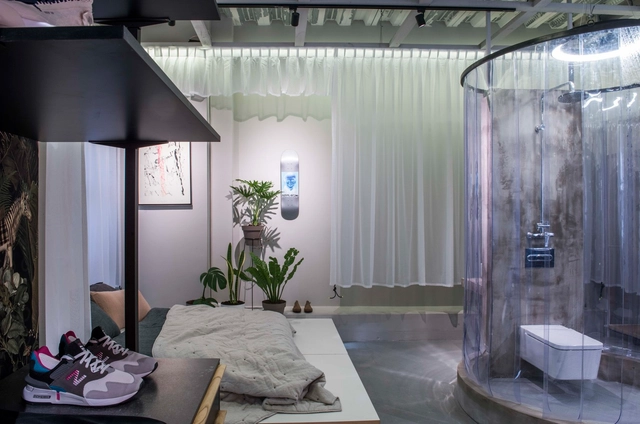
In its fourth consecutive edition in Chile, Casa FOA 2019—the international exhibition that brings together design, interior design, architecture, landscaping, and art—showcased established and emerging design talents who revitalized the forgotten Paseo San Damián in Las Condes.
The exhibition aims to introduce the public to the latest trends in the design industry under the concept of creating, transforming, and rethinking the way we live and work. This year's edition was guided by the concept of Coliving, the current expression of social and generational evolution, pointing toward collaborative living and the construction of collective intelligence through shared workspaces and common home areas.
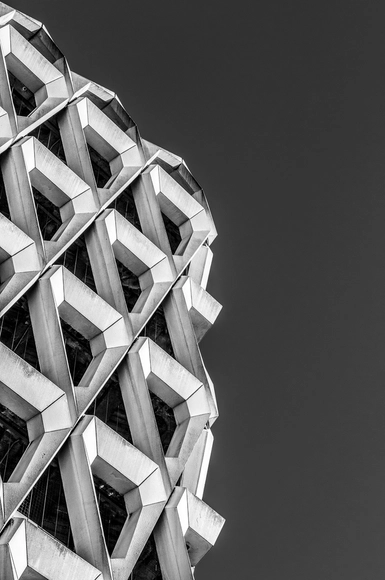
Rarely does one see brutalist architecture in the city of London. Primarily, these buildings were perceived as rebellious and grotesque, only to become the "go-to" style for commercial and governmental buildings after the Second World War. Nowadays, with the real estate market demands and dominance of contemporary architecture, these monumental grey structures are gradually fading away.
Santiago-based architect and photographer Grégoire Dorthe developed the passion of photography during his military service, when he realized that through his images, he is able to freeze moments and preserve what will be lost with time. In his photographic series titled "Brutal London", the Swiss photographer captures the raw forms and graphic qualities of the city's brutalist architecture, before these buildings meet their end.
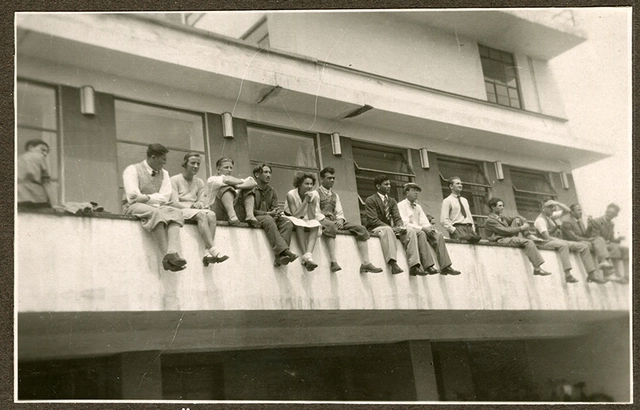
Students on the balustrade of the canteen terrace, around 1931 (photographer unknown). Image Courtesy of Stiftung Bauhaus Dessau
Women are imperative members of the design community, creating innovative and inspiring work in the fields of architecture, design, and urban planning. However, even with the rise of the women's movement, their contributions are still being questioned, compared, or taken for granted.
Metropolis Magazine looked back at the history of feminism in architecture, shedding the light on the times when the advocates witnessed unprecedented progress, and times when they lost their advantage.
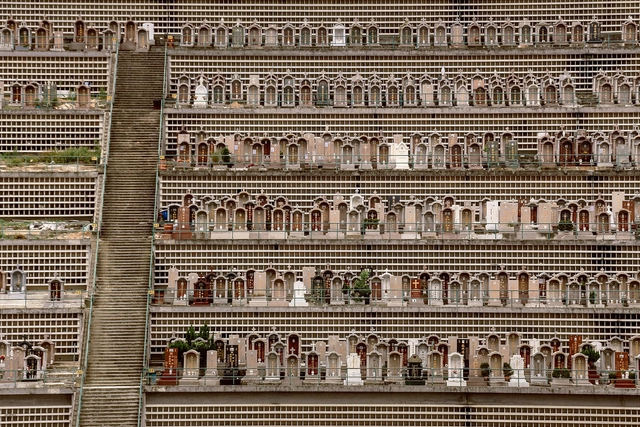
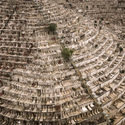
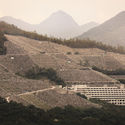
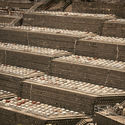
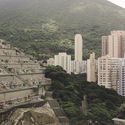
Hong Kong is considered to have one of the most exceptional skylines and urban schemes in the world: contemporary skyscrapers stand amidst the mountains and harbour, ancient houses nestled between futuristic structures, neon lights, landscapes... But among Hong Kong's numerous remarkable architectures, its spatial typology of death is like no other.
Over the course of five years, RIBA-nominated architectural photographerFinbarr Fallon captured the hyper-dense graveyards of Hong Kong, showcasing the sublime geometry of its mountainside burials in a series titled "Dead Space".
The work of the Catalan firm Barozzi Veiga is explored through the tension between tradition and invention in architecture in this article by João Paulo Rapagão, published in partnership with AMAG.
https://www.archdaily.com/1122258/evoking-quatremere-de-quincy-between-tradition-and-the-invention-of-architectureJoão Paulo Rapagão
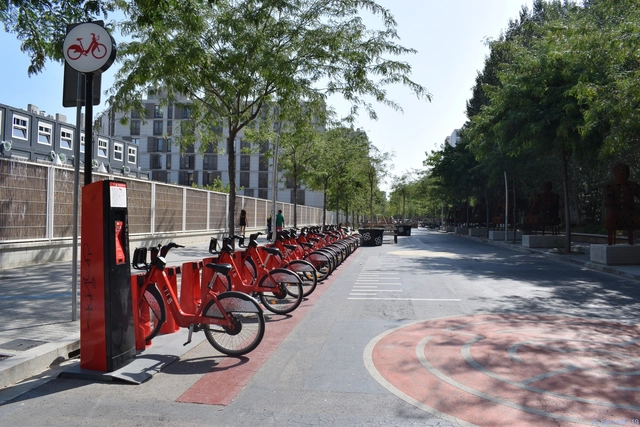
Being able to move around cities is a basic requirement for the development of most human activities. Yet daily trips between home and work, study, leisure, and other daily commitments are not always done under the most comfortable conditions, whether it be because of crowded public transportation or unexpected traffic jams. Urban mobility is a hotly debated topic, from informal conversation circles to technical and scientific seminars. It's hard to find someone who doesn't have an opinion on the subject or some miraculous solution to the problems in their city or region. In fact, we have already posted several articles addressing this issue on this site, from utopian proposals to questions related to the daily lives of most of the population.
Figura 1. Diagrama de estructura de los 10 criterios de diseño para edificios (Fuente: elaboración propia). Image Cortesía de Dra. María Beatriz Piderit M.- Ms. Matías Tapia Maureira
The following research, developed within the Master's in Sustainable Habitat and Energy Efficiency program at the Universidad del Bío-Bío by C. Matías Tapia Maureira and María Beatriz Piderit M., addresses the integration of resilience and sustainability criteria in the design of educational buildings in Chile. Read a summary of their work below.
https://www.archdaily.com/1121178/resilience-criteria-for-the-design-of-educational-buildings-in-chileMaría Beatriz Piderit M. y Matías Tapia Maureira
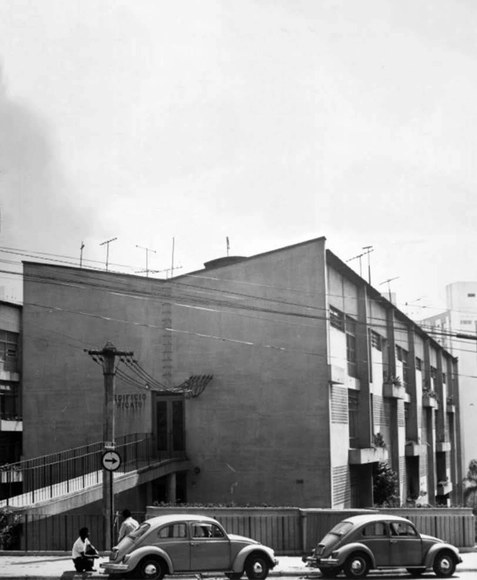
REGINO, A.; PERRONE, R. Eduardo Augusto Kneese de Mello: sua contribuição para habitação coletiva em São Paulo. Risco: Revista de Pesquisa em Arquitetura e Urbanismo (Online), n. 9, p. 56-97, 1 jan. 2009 - Editada.. Image Cortesia de PC3 - Pensamento Crítico e Cidade Contemporânea
Conceived as a large-scale residential development in an expansion zone of São Paulo, the Jardim Ana Rosa Residential Complex began its subdivision design in 1950, in the Vila Mariana neighborhood, facing Largo Ana Rosa. The development, carried out by the Banco Hipotecário Lar Brasileiro, featured the participation of several prominent São Paulo architects of the time, such as Abelardo de Souza, Plínio Croce, Roberto Aflalo, and Salvador Cândia. In its initial version, the project planned for a few buildings bordering Vergueiro Avenue, with most of the area designated for single-family homes.
https://www.archdaily.com/1122290/rationality-of-modulation-and-repetition-in-housing-design-guarapira-and-hicatu-buildingsPC3 - Pensamento Crítico e Cidade Contemporânea
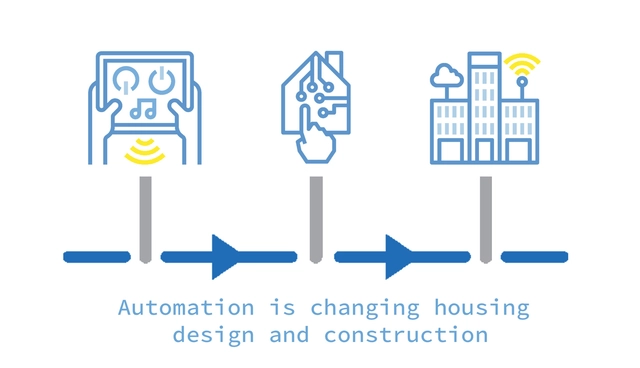
Throughout the past year, the concepts of Smart Homes (+160% YoY) and Domotics (+450% YoY) have been gaining traction as they define the automation and connectivity between devices found within homes, and which constitute the basic units of the growing Smart Cities concept.
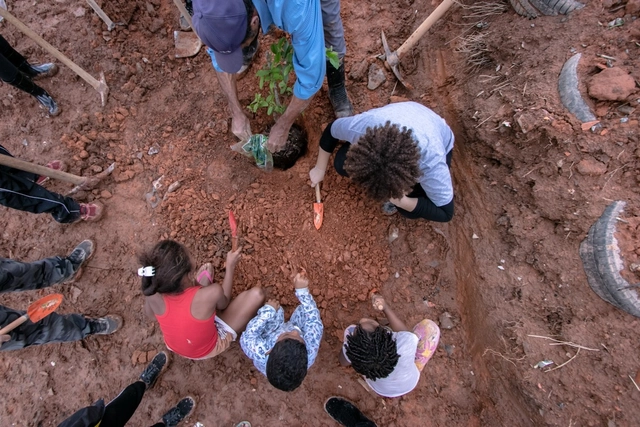
Workshop in Osasco in the Esperança community, planting seedlings for the future plaza. Image: Alberto Ricci, May 2019.
According to data released by the United Nations (UN, 2017), the global population has reached 7.6 billion, with more than half (54%) living in urban areas. In Brazil, according to data from the Brazilian Institute of Geography and Statistics (IBGE, 2010), 84.4% of the population lives in cities.
https://www.archdaily.com/1122284/designing-for-whom-a-necessary-reflectionDébora Sanches e Viviane Manzione Rubio
Open More Doors is a section by ArchDaily and the MINI Clubman that takes you behind the scenes of the world’s most innovative offices through exciting video interviews and an exclusive photo gallery featuring each studio’s workspace.
This month, we talked with Italian architecture firm Supervoid to discuss their design strategies and how they helped develop the office's interior space.
CityMakers is working with ArchDaily to publish a series of articles, conversations, and interviews with the different actors in the co-production of cities behind the Barcelona CityMakers Lab 2019, an event taking place from October 14 to 20.
On this occasion, we feature Salvador Rueda, director of the Urban Ecology Agency of Barcelona, who will give a Masterclass at the Barcelona CityMakers Lab 2019, addressing the challenges of implementing Barcelona's Sustainable Urban Mobility Plan based on "Superblocks".
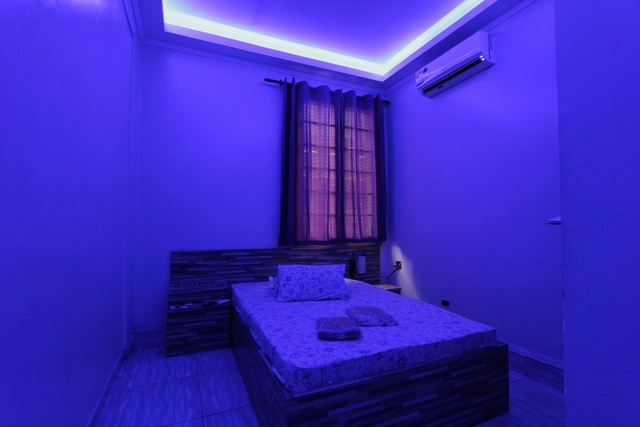
The visual stimulus that triggered this research[1] was the suggestive ambiguity of the letter m/h. Less glamorous than roadside motels, these motel-hotels are an affordable invitation to sexual fulfillment. To capture both their material and intangible complexity, the work is structured as a fiction. In doing so, the narrator imagined within these motel-hotels the potential to reveal other component parts of herself—as if these places, in their ambiguity and anonymity, could facilitate this encounter. In a simultaneous process of liberation and frustration, the multiple narrators find agency.
https://www.archdaily.com/1121538/motels-hotels-between-strangeness-and-familiarityMarian Rosa van Bodegraven
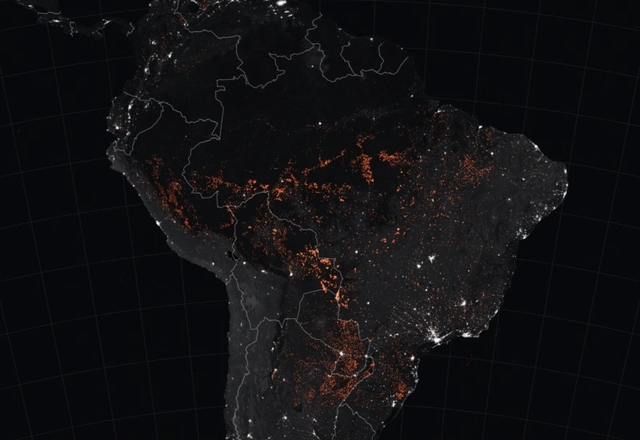
Over the past week, thousands of active fires in the Brazilian Amazon captured global attention in the press and on social media, where the hashtag #PrayForAmazonia was mentioned more than 150,000 times in a single day. But what can satellite data tell us about what is actually happening in Brazil's forests?
https://www.archdaily.com/1122027/what-maps-reveal-about-fires-in-the-amazonMikaela Weisse e Sarah Ruiz
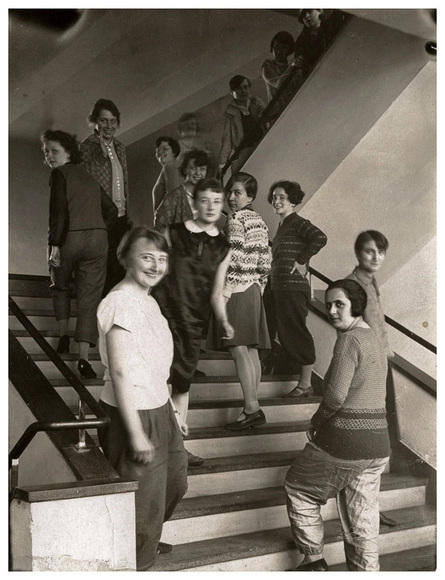
Weavers on the Bauhaus staircase, 1927. From top to bottom: Gunta Stölzl (left), Ljuba Monastirskaja (right), Grete Reichardt (left), Otti Berger, (right), Elisabeth Müller (light patterned sweater), Rosa Berger (dark sweater), Lis Beyer-Volger (center, white collar), Lena Meyer-Bergner (left), Ruth Hollós (far right) and Elisabeth Oestreicher.. ImagePhotograph by T. Lux Feininger; collection of the Bauhaus-Archiv Berlin
The Bauhaus was founded on the promise of gender equality, but women Bauhauslers had to fight for recognition. A new book recounts the achievements and talents of 45 Bauhaus women.
After the end of World War I, a spirit of optimism and a euphoric mood prevailed in Germany. Thanks to a new republican government and women’s suffrage, the war-torn nation was experiencing a radical new beginning.
As part of that convention-breaking wave, in 1919 German architect Walter Gropius assumed leadership of what would become the legendary Bauhaus. Initially, he declared that there would be “absolute equality” among male and female students.
.jpg?1567178154&format=webp&width=640&height=580)








_0262.jpg?1566906640 "© Laurian Ghinitoiu")
_0153.jpg?1566907296 "© Laurian Ghinitoiu")
_0268.jpg?1566907775 "© Laurian Ghinitoiu")
_0247.jpg?1566906787 "© Laurian Ghinitoiu")
_0247.jpg?1566906787)