Paint is synonymous with color, even when it is white. It is the simplest way to restore and correct imperfections on any surface, whether interior or exterior. Without detracting from this significant aesthetic benefit, paint also possesses composition-based properties that turn an attractive, well-finished project into a healthy building—one with a lower environmental impact throughout its life cycle.
What do we mean by heritage? This is one of the main questions raised by Alejandro Orellana, director of Relatos de Barrios—a Chilean project that seeks to reclaim the heritage and historical value of housing complexes, highlighting the community dimension behind the lives of their residents.
A documentary and a book are the results of their experience with the “CCU Worker Housing” in La Serena, later renamed the “Rengifo Housing Complex.” Designed in 1957 by architect Carlos Feuereisen Polanco and built in 1958 by Negochea and Vergara, it represents a characteristic housing typology of the city.
This article by Maya Orzechowska was originally published under the title "Five Principles for a Vulnerable and Intimate Architecture: Drawing Alternative Boundaries and Openings to the Home and the Self" in the 31st issue of Dearq journal on September 1, 2021 (DOI: https://doi.org/10.18389/dearq31.2021.04).
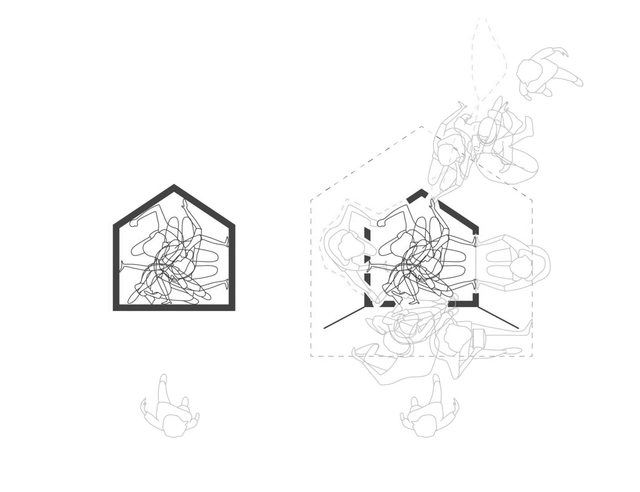
This article investigates how the boundaries and openings of the home are not separate from one another; rather, they play an active role in the politics of bodily and social health. For an increasing number of people, both the idea of the home and the reality of housing fail on a daily basis; therefore, this article seeks alternatives to the narrative of the home, of a utopian internal intimacy that endorses withdrawal, and of a non-responsible relationship toward the public realm. It suggests that the result is dystopian, concealing and exacerbating vulnerability and its resistance to change. In contrast, a vulnerable and intimate architecture focuses on the vulnerable body, drawing the uncanny, repressed, and emotional into the home.
We present it below as part of a joint collaboration to contribute to the dissemination of research, analysis, and opinion produced by the national and international academic community on architecture, urban issues, and related fields.
Exacerbated by the pandemic, the housing crisis has become a global phenomenon. Rising prices, lack of access, and poor housing policies have resulted in greater scarcity and precarious conditions. Chile is no exception. Indeed, according to the latest reports issued by the Chilean Chamber of Construction (CChC), there are “more than 700,000 families experiencing overcrowding and irreparable housing, in addition to 81,000 families living in informal settlements.”
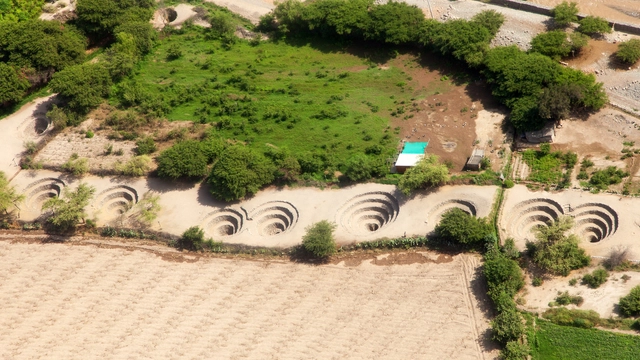
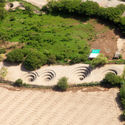
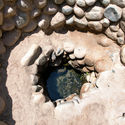
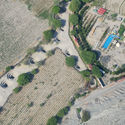
Set in the heart of one of the world's most arid deserts, the Nasca aqueducts form a hydraulic system that, for nearly two thousand years, has demonstrated advanced geological and hydrological knowledge. This system allows water to be sourced for both human consumption and agriculture, creating fertile oases in the desert. The Nasca Aqueducts represent a unique hydraulic system in the Americas, owing to their distinct design, construction technique, location, and function. They serve as an exceptional testament to the capacity of ancient societies to overcome adverse conditions, offering solutions that could be applied to the climate challenges of our time.
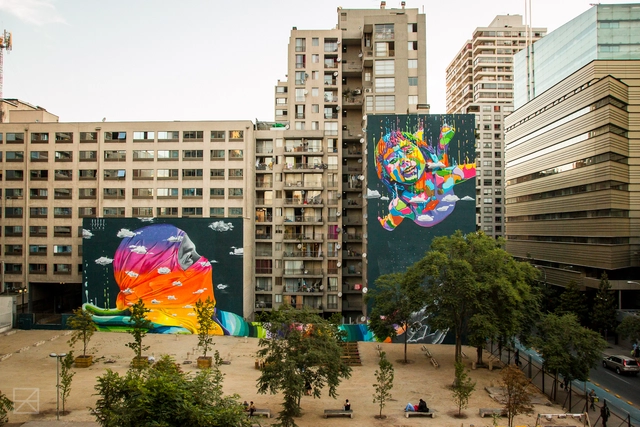
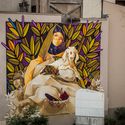
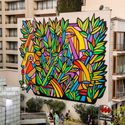
How do we experience cities? What moves us? What do we remember about them? Monuments? Museums? Are we merely tourists, or do we live the city as an experience? Art is part of the urban fabric—a way to create new paths, lifestyles, and reference points that lead us to identify the unique spaces and moments experienced within it. Art is not confined to museums; it is in the streets, on the walls, and on the buildings that shape the city. Public space dialogues with artistic expression, engaging people, neighborhoods, cities, and an interconnected world to create new modes of community within a culture that is attentive to and understands our contexts and ecosystems.
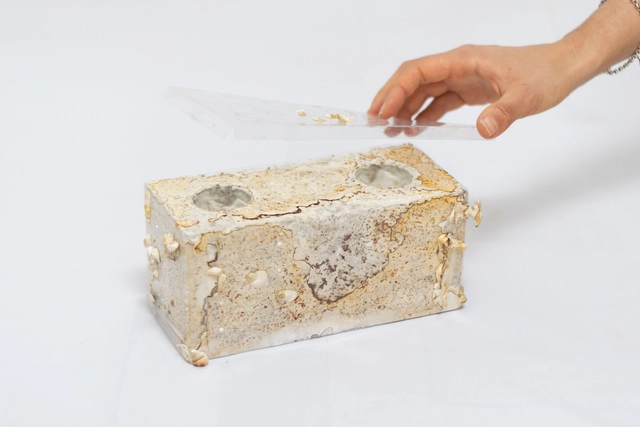
Although the construction industry has spent years making strides in new fields such as biomaterials, nanotechnology, and 3D printing, it simultaneously remains one of the slowest to adopt new technology. Many of these innovations never progress past the experimental stage. How can this situation be reversed?
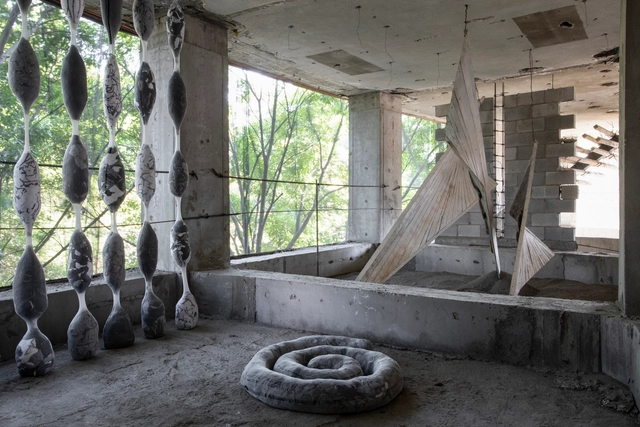
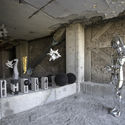
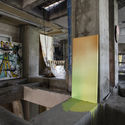
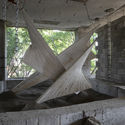
As part of the cultural agenda for Art Week 2022 in Mexico City, guadalajara90210—in collaboration with Michan Architecture and Luis Young—presented the exhibition "YACIMIENTOS," featuring works by 53 artists and architects. The venue, a building currently under reconstruction in the Condesa neighborhood, hosted the exhibition from February 12 to 20.
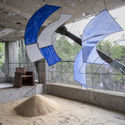
This mobile installation adapts to achieve structural parasitism, prompting us to rethink how we occupy the inert and hidden spaces that make up our cities.
Celebrating its 35th anniversary, this edition of CasaCor brings together projects by 68 renowned professionals spread across more than 10,000 square meters inside a landmark of São Paulo modernism, the Conjunto Nacional. Under the theme “Particular Infinite,” this year's exhibition focuses on the accumulation of time, on the stories already told and those we tell about ourselves. In this universe of ways of inhabiting the world, and of the traces we leave around us—from finger marks on the walls to the dust we carry on the soles of our shoes—we are always searching for something that is ours alone, inexhaustibly our own.
Featuring a spectacular amorphous structure, Bloodlust Wine Bar is located in Ejido El Porvenir, in the heart of Valle de Guadalupe, Baja California, Mexico. Its origins date back to late 2019, conceived by the vision of Juliette Cheanne, Poncho Muriedas, and Yuri Muriedas—three highly creative minds with a single shared mission: to bring to life a gastronomic space that, in addition to featuring an inimitable architectural facade designed by surrealist illustrator Jaime Zuverza, would offer an immersive auditory and visual experience to all who visit.
In these unprecedented times, uncertainty about the future runs deep. The Covid-19 pandemic is not over, the effects of climate change are already being felt everywhere, and many around the world continue to suffer from inequality. And this is just the big picture, to say nothing of how these issues interconnect. In a rapidly changing world, with stories emerging and evolving daily, which ones will have the greatest impact on people and the planet?
https://www.archdaily.com/1132642/from-discourse-to-action-6-sustainability-themes-to-watch-around-the-world-in-2022Sadof Alexander
Videos
Los augurios. Image Cortesía de Festival Model
How do we actually give citizens the ability to discover and understand what is happening around their cities? This is one of the key questions raised by Eva Franch, artistic director alongside Beth Galí and José Luis de Vicente of Model - Barcelona Architectures Festival.
How do we bring these issues to the table, into public debate, and into the public sphere? One answer could lie in augmented realities—technologies that allow us to visualize parts of the real world overlaid with new information through a technological device. For this architecture event, in addition to the five temporary physical installations scattered throughout the city, five augmented reality installations were produced, reflecting the event's different themes: Between-Generations, Between-Cultures, Between-Species, Between-Classes, and Between-Materials.
Established by master plans, zoning indexes consist of a set of regulations that govern building dimensions relative to the lot on which they are built. These requirements vary according to the zone in which the land is located and are divided into three main principles: Lot Coverage, Floor Area Ratio (FAR), and Permeability Rate. Learn what each one means and how to calculate them below.
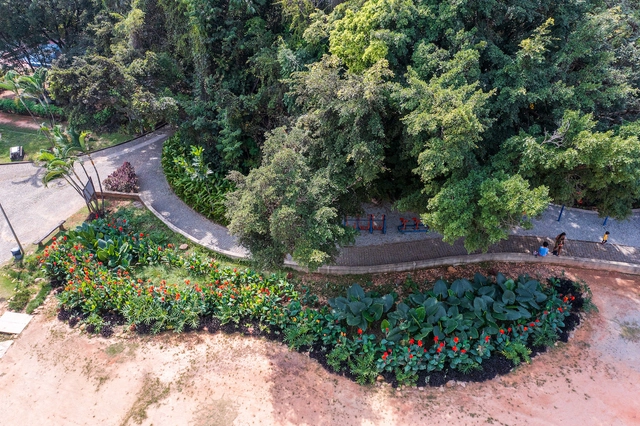
Rain garden at Lagoa do Nado Park in Belo Horizonte. Photo: Nereu Jr/WRI Brasil
Nature-based solutions (NBS) have become widely recognized as efficient approaches for adapting cities to the climate crisis and mitigating increasingly frequent disasters. Projects such as rain gardens, linear parks, hillside restoration, and urban agriculture help make cities more resilient to extreme weather events, while generating additional benefits for society, the economy, and the environment.
https://www.archdaily.com/1132522/nature-based-solutions-examples-implemented-by-brazilian-citiesHenrique Evers, Lara Caccia, Bruno Incau, Vitor Tornello e Fernando Corrêa
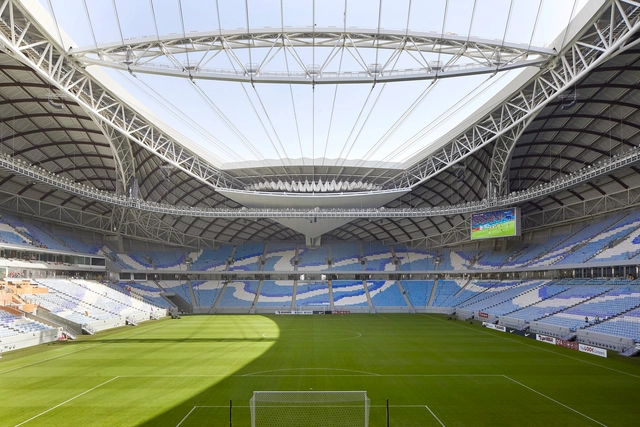
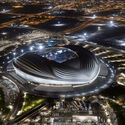
The World Cup will take place between November and December. This scheduling is due to the fact that average temperatures in the host nation, Qatar, can soar to 40 to 50°C during June and July.
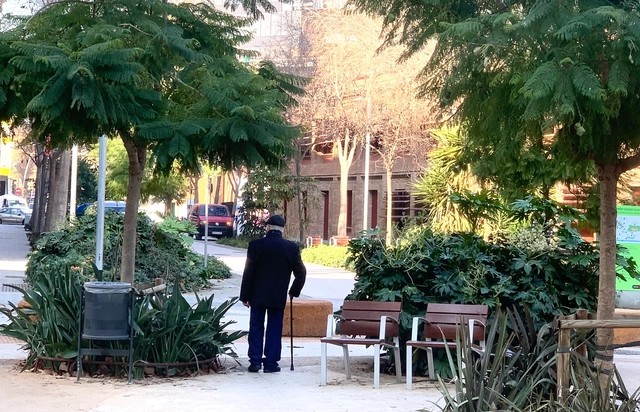
CityMakers is working with ArchDaily to publish a series of articles, conversations, and interviews with the various actors in urban co-production behind the CityMakers Barcelona Lab 2022, an event taking place from November 14 to 18. For this edition, Víctor Torres, an architect with a Master's in Territorial Planning and Environmental Management from the University of Barcelona, presents his article "Renaturalizing the City from the Smallest Scale: The Neighborhood."
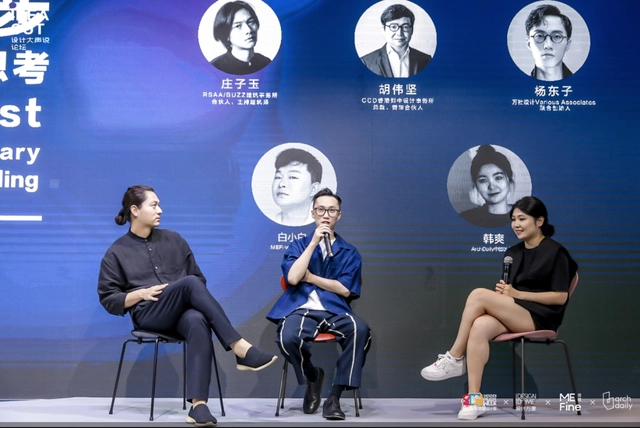
The 2022 Shenzhen Creative Home Design Week (hereinafter referred to as "Design Week") has successfully concluded. Against the ongoing backdrop of the pandemic, ArchDaily partnered with MEFine to present a themed design forum, "One Step Ahead: Contemporary Reflections on Dwelling." Hosted as part of "Design Out Loud"—a forum series dedicated to design and creativity curated by Design Dome—the event has successfully come to a close, leaving behind a wealth of memorable insights.
https://www.archdaily.com/1132480/archdaily-x-shenzhen-creative-home-design-week-forum-one-step-ahead-contemporary-reflections-on-dwellingDai Le