1. ArchDaily
  2. La Guaira

La Guaira: The Latest Architecture and News

Beyond Emergency Shelters: Modular and Vernacular Architecture in Post-Earthquake Reconstruction

Subscriber Access | 
Audio available

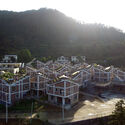
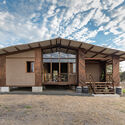
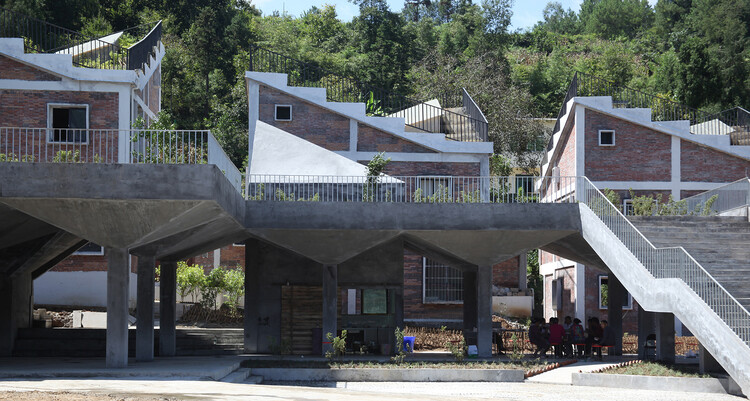
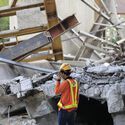
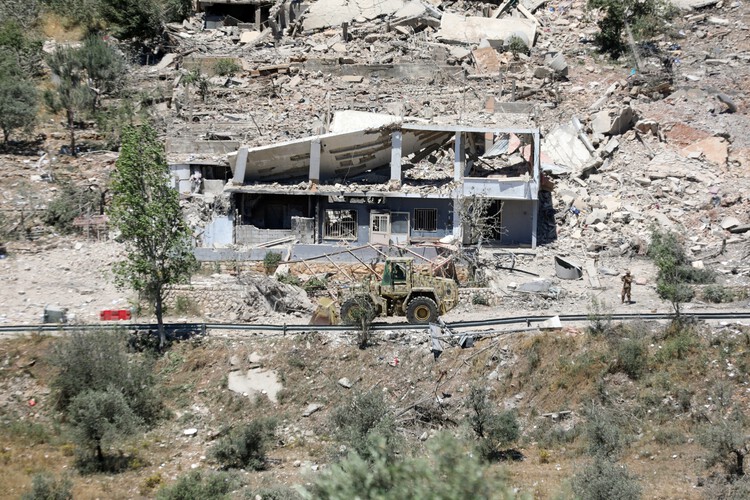
On June 24, 2026, a severe seismic event consisting of two major earthquakes with magnitudes of 7.2 and 7.5 struck north-central Venezuela just 39 seconds apart. The widespread destruction was concentrated along the country's northern coast, heavily impacting the capital city of Caracas and the neighboring state of La Guaira, where fragile urban infrastructure and vulnerable housing stock led to the collapse or severe damage of thousands of residential structures. This disaster mirrors previous devastating events observed during other major seismic events, including the 2008 Wenchuan earthquake and 2011 landslides in Sichuan, the 2014 Ludian earthquake in Yunnan, and the 2017 earthquake across central Mexico. When high-magnitude natural disasters damage entire communities, architects have the opportunity to help by proposing post-disaster architecture with strategic recovery models. Rather than relying on generic, standardized emergency shelters, conscious architectural design can deliver low-cost, rapidly deployable residential infrastructure that preserves human dignity through culturally contextual and dignified spaces.
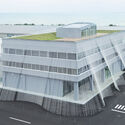
Beyond Emergency Shelters: Modular and Vernacular Architecture in Post-Earthquake Reconstruction - Imagem 1 de 4Beyond Emergency Shelters: Modular and Vernacular Architecture in Post-Earthquake Reconstruction - Imagem 2 de 4Beyond Emergency Shelters: Modular and Vernacular Architecture in Post-Earthquake Reconstruction - Imagem 3 de 4Beyond Emergency Shelters: Modular and Vernacular Architecture in Post-Earthquake Reconstruction - Imagem 4 de 4Beyond Emergency Shelters: Modular and Vernacular Architecture in Post-Earthquake Reconstruction - More Images+ 3

One Day, Four Earthquakes: What Seismic Resilience Reveals About the Built Environment

Audio available

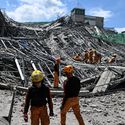
Within a 36-hour window between June 24 and June 25, four significant earthquakes struck three different regions of the world. A magnitude 7.2 earthquake shook Japan's northeastern coast, a magnitude 5.6 event was recorded in Northern California, and two major earthquakes measuring magnitudes 7.2 and 7.5 occurred just 39 seconds apart along Venezuela's northern coast. Although their close timing prompted speculation online, seismologists confirmed that the events were unrelated, occurring independently along different tectonic plate boundaries.

One Day, Four Earthquakes: What Seismic Resilience Reveals About the Built Environment - Image 1 of 4One Day, Four Earthquakes: What Seismic Resilience Reveals About the Built Environment - Image 2 of 4One Day, Four Earthquakes: What Seismic Resilience Reveals About the Built Environment - Image 3 of 4One Day, Four Earthquakes: What Seismic Resilience Reveals About the Built Environment - Image 4 of 4One Day, Four Earthquakes: What Seismic Resilience Reveals About the Built Environment - More Images

Espacios de Paz 2015: 5 Cities, 5 Communities, 20 Architecture Collectives

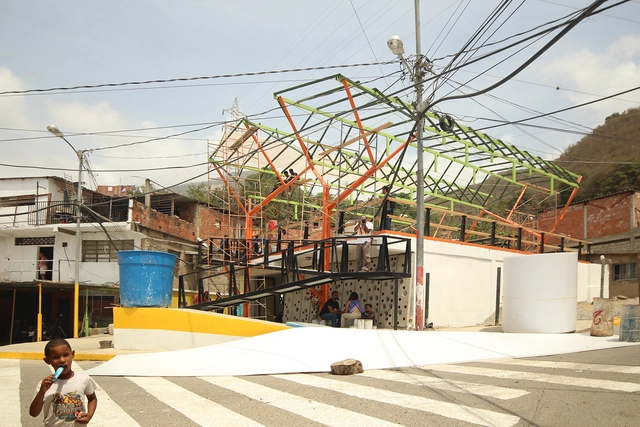
Between Sunday, May 17 and Monday, May 18 projects developed under the second phase of Espacios de Paz (Spaces of Peace) were inaugurated in five cities across Venezuela. A genuine exercise in participative design, 20 Latin American architecture groups worked for five weeks with communities in neighborhoods dominated by violence, high dropout rates and crime to convert deteriorated and abandoned spaces into public places of peace.

For each project, four groups of young architects worked together to carry out a process of dialogue, research, design, and ultimately the construction of either an athletic, social or educational facility to be administrated by the local community. Espacios de Paz is coordinated by the local office of PICO Estudio, with guidance from public institutions and under the leadership of Isis Ochoa, the High Presidential Commissioner for Peace and Life.

ArchDaily en Español Editors, Nicolás Valencia M. and José Tomás Franco, were invited by PICO Estudio to document and view the five projects in their final phase of construction and speak with the architects and community representatives about the development of the projects and some of the challenges faced in the process.

Learn more about each of the five projects after the break.