It can sometimes feel as if the world is divided into two camps: those who do not listen to podcasts (probably because they don’t know what a podcast is) and those who listen to podcasts, love podcasts, and keep badgering their friends for recommendations so they can start listening to even more.
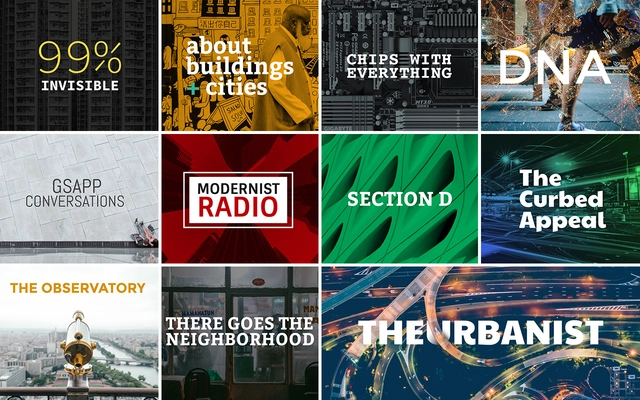
Unlike other media, it’s notoriously difficult to discover and share podcasts – even more so if you’re looking for a podcast on a niche subject like architecture, design or urbanism. To help you in your hour of need, Metropolis’Vanessa Quirk (author of Guide to Podcasting) and ArchDaily’sJames Taylor-Foster(whose silvery tones you may have heard on various architecture and design audio stories) have come together to compile this list of eleven podcasts you should subscribe to.
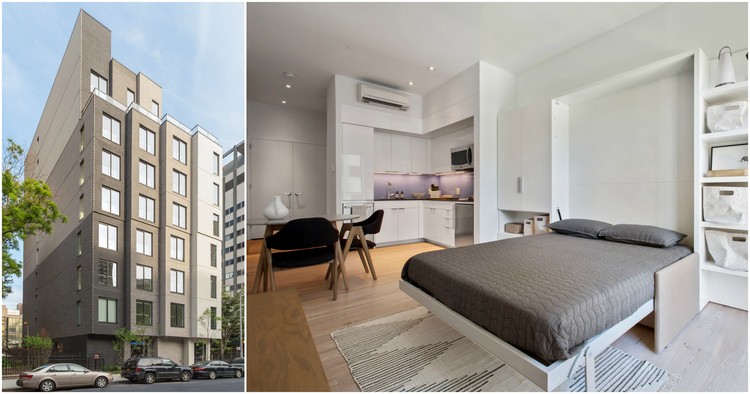
The situation was dire: People were flocking to cities for work, but scarce land and lack of new construction were driving up rent prices. Middle-income residents couldn’t afford the high-end housing stock, nor did they want to enter cramped—sometimes illegally so—apartments. Luckily, a new housing solution appeared: In exchange for small, single-occupancy units, residents could share amenities—like a restaurant-kitchen, dining area, lounge, and cleaning services—that were possible thanks to economies of scale. Sound familiar?
It should: It’s the basic premise behind Carmel Place, a micro-apartment development in Manhattan’s Kips Bay that recently started leasing. The development—whose 55 units range from 260 to 360 square feet—was the result of Mayor Bloomberg’s 2012 adAPT NYC Competition to find housing solutions for the city’s shortage of one- and two-person apartments. Back then, Carmel Place needed special legal exceptions to be built, but last March the city removed the 400-square-foot minimum on individual units. While density controls mean another all-micro-apartment building is unlikely, only building codes will provide a de facto minimum unit size (somewhere in the upper 200 square foot range). What does this deregulation mean for New York City’s always-turbulent housing market? Will New Yorkers get new, sorely needed housing options or a raw deal?
As creators, we all go through stages of creativity. Some phases are more severe than others, but getting emotionally involved is, in most cases, unavoidable. In many cases, the emotional intensity of design can be so intense, it begins to resemble another well-known emotional process—one that generally includes the stages of denial, anger, bargaining, depression, and acceptance. Design may not literally be as difficult as losing a loved one, but it's little coincidence that in the architecture profession, one's best concepts are often referred to as their "babies," and any design process will involve a fair amount of letting them go.
To paraphrase the existing psychological literature, "as long as there is creativity, there is hope. As long as there is hope, there is creativity." So join us as we explain the architect's path through the five stages of griefcreativity experienced in any design process.
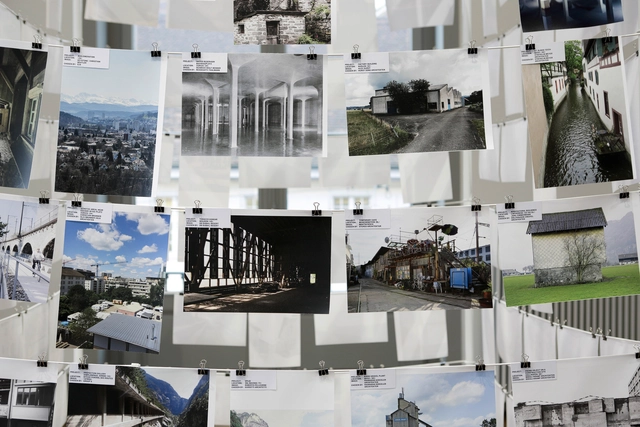
In one of his 1922 travel essays for the Toronto Star Ernest Hemingway wrote, in a typically thewy tone, of “a small, steep country, much more up and down than sideways and all stuck over with large brown hotels built [in] the cuckoo style of architecture.” This was his Switzerland: a country cornered in the heartland of Europe and yet distant from so much of its history. A nation which, for better or worse and particularly over the course of the 20th Century, has cultivated and become subject to a singularly one-dimensional reputation when it comes to architectural culture and the built environment.
At a time when so much of what we do happens online, there is a lot we can learn from tracking the way we use the web. Alexa is an Amazon company that sells data insights from millions of Internet users aimed at business owners (we'll save the data ethics discussion for a different day). A selection of Alexa's data is available to the public, with the company presenting a list of sites with the highest average daily visitor and pageview counts—including a list of the biggest websites in the architectural world, from yours truly on down.
But which is the most popular architectural firm, school, or individual building? Continue reading to find the top architecture websites for each category based on Alexa's count of the past month's traffic—there may be some surprises!
A year after her untimely passing, we take a look back on one of the hallmarks of Zaha Hadid's career as an architect: her sketches. In October we wrote about how her paintings influenced her architecture. Now, we examine her most emblematic sketches and the part they played in the initial formal exploration of her design process.
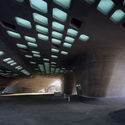
Zaha Hadid's projects are remarkable not only for her innovative way of handling tangible materials but also for her imagination regarding the medium of light. Her theories of fragmentation and fluidity are now well-known design techniques which enabled her form-finding. However, her advances in using light to render her architecture have often been neglected—even though they became an essential element in revealing and interpreting her architecture. The three-decade transition from minimal light lines at her early Vitra Fire Station to the world's tallest atrium at the Leeza SOHO skyscraper, which collects an abundance of daylight, shows the remarkable development of Zaha Hadid’s luminous legacy.
It was in 1988, at London’s Tate Gallery during the Deconstructivism conference held in anticipation of MoMA’s eponymous exhibition that I first encountered Zaha Hadid in person. She was lecturing among her six co-exhibitors: Peter Eisenman, Rem Koolhaas, Frank Gehry, Wolf Prix, Bernard Tschumi, and Daniel Libeskind. I had encountered her work a few years earlier as a young architecture student (at Stuttgart University) and was stunned and thrilled by the unprecedented degrees of compositional freedom, versatility and dynamism in her work. Up until then I had not been so sure if architecture was such a good career choice for me. I was rather underwhelmed and bored by architecture but, through my encounter with Zaha’s incredible work, architectural design unexpectedly transformed into an adventure. The bounds of architectural possibilities had shifted. Thirty years later, this sense of adventure continues. Zaha changed our field and changed everything for me.
https://www.archdaily.com/868022/the-miraculous-zaha-hadid-a-tribute-by-patrik-schumacherPatrik Schumacher
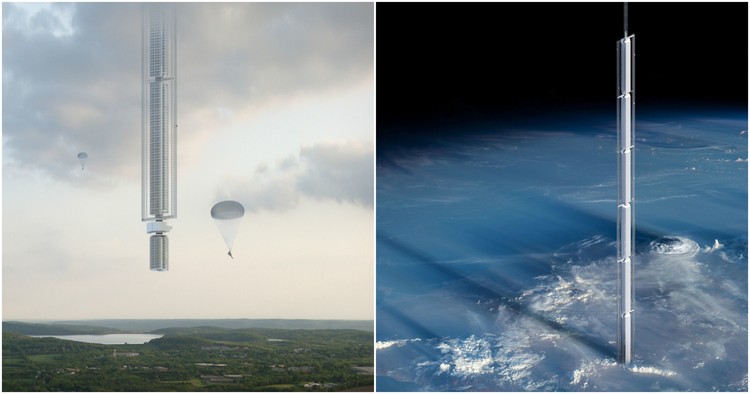
There’s a decent chance that in the last few days, you’ve seen images of Analemma, the futuristic proposal from Clouds AO to hang a skyscraper (or should that be “earthscraper”?) from an asteroid in orbit of the earth. The project has been difficult to avoid, having been picked up not only by much of the architectural media but also by NBC, CNN, Forbes, The Telegraph, The Daily Mail, Mashable, IFLScience—the list goes on almost as long as the building itself.
Is the design realistic? Obviously not, and it’s obviously not intended to be. It’s intended as a utopian thought experiment. Clouds AO has something of a pedigree in this field, as winners of a NASA-backed competition to design a Mars base with their idea for a building made of ice. As a result, it would be facile to join the internet’s collective bottom-of-the-page comment mob to point out that it would be prohibitively expensive, or that it might be more enjoyable to live on the ground anyway.
But is the design a usefulutopian thought experiment? There are some design failures that better technology, or a lot of money, or the changed mindset of a futuristic society just won’t fix. So without further ado, here are a list of the problems that this out-of-this-world design would face, in chronological order, with the issues that make it impractical in our current world marked as “minor” and the ones that would undermine the proposal in any universe marked as “major.”
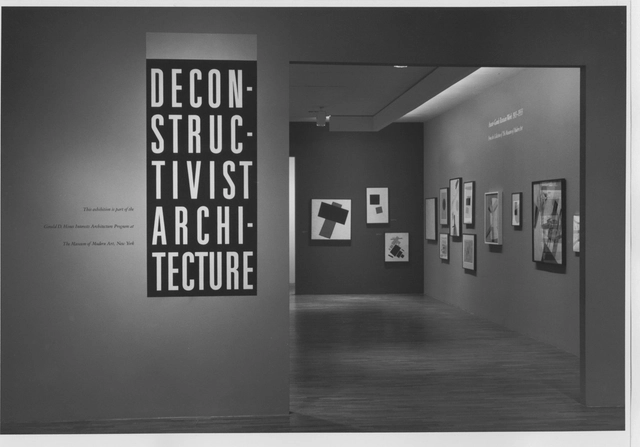
View into the exhibition (1988). Photographer unknown. Image via MoMA
When Philip Johnson curated the Museum of Modern Arts’ (MoMA) 1932 “International Exhibition of Modern Architecture,” he did so with the explicit intention of defining the International Style. As a guest curator at the same institution in 1988 alongside Mark Wigley (now Dean Emeritus of the Columbia GSAPP), Johnson took the opposite approach: rather than present architecture derived from a rigidly uniform set of design principles, he gathered a collection of work by architects whose similar (but not identical) approaches had yielded similar results. The designers he selected—Peter Eisenman, Frank Gehry, Zaha Hadid, Rem Koolhaas, Daniel Libeskind, Bernard Tschumi, and the firm Coop Himmelblau (led by Wolf Prix)—would prove to be some of the most influential architects of the late 20th Century to the present day.[1,2]
In this essay by the British architect and academic Dr. Timothy Brittain-Catlin, the very notion of British postmodernism—today often referred to as intimately tied to the work of James Stirling and the the thinking of Charles Jencks—is held to the light. Its true origins, he argues, are more historically rooted.
I grew up in a beautiful late Victorian terrace with ornamental brickwork, shaped ‘Dutch’ gables and pretty arts and crafts stained glass windows – and so I didn’t think then, and I don’t think now, that I had much to learn from Las Vegas. It turns out that I wasn’t the only one. Of British architects who made their names as postmodernists in the 1980s, not a single one would say now that they owed much to Robert Venturi, the American architect widely considered to be a grandfather of movement.
The last twenty-odd years may have seen the remarkable comeback of cities, but the next twenty might actually be more about the suburbs, as many cities have become victims of their own success. The housing crisis—a product of a complex range of factors from underbuilding to downzoning—has made some cities, such as New York and Los Angeles, a playground for the ultra-wealthy, pushing out long-time residents and making the city unaffordable for the artists, creatives, and small businesses who make vibrant places.
Maybe it's a result of long studio hours, the fact that architectural thinking tends to seep into every aspect of life, or a combination of other factors—but it's certain that architects have a culture all their own. Weird obsessions feel so commonplace in our closed social circles that it's easy to forget how bizarre some of our little quirks can appear to people on the outside. If you're an architect with a friend whose architectural knowledge pretty much stops at the Franks (Gehry and Lloyd Wright), here are some secret thoughts about you that they might be harboring.
Outside of our familiar feeds, social or otherwise, the Internet can be a daunting place. While information and interaction have never been easier, developing ways to get a handle on the quantity and pace of this crowded, if not valuable, world can often be difficult – it’s all too easy to find your digital life unintentionally isolated. In the architectural sphere, shared knowledge and a broad understanding of history and contemporary practice are all-important; discourse and conversation even more so. Are.na, a platform for collaborative and independent research, provides a new lens when surfing, capturing and contextualizing the content of the Internet.
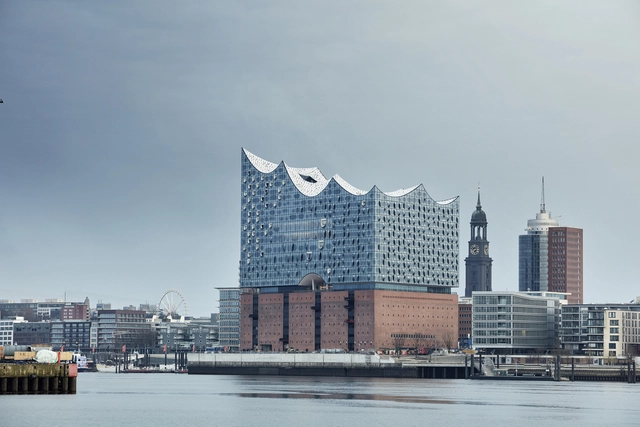
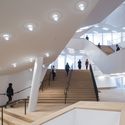
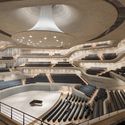
So much has already been written about Hamburg’s undeniably excellent Elbphilharmonie, which formally opened in January but has been publicly accessible, in part, since November. The chatter has mostly revolved around the same two talking points—the building’s on-the-tip-of-your-tongue shape and its fantastic price tag. In addressing the former, critics have called attention to the hall’s resemblance to an iceberg, an outcrop, a ship, circus tents, or the Sydney Opera House. And as for the costs, totaling $900 million, they point out how the project hemorrhaged cash, even if they have inadvertently exaggerated the figures. Having momentarily lost control of the narrative, the city felt compelled to set the record straight in time for the inaugural performance: The building cost just three—not ten!—times the initial budget.
The architectural legacy of the Rockefeller family in Manhattan is well-known, most obviously demonstrated in the slab-like Art Deco towers of the Rockefeller Center and the ever-expanding campus of the MoMA. But in a city that is filled with landmarks and historic buildings, it's easy for even the most remarkable projects to go unrecognized. Philip Johnson's Rockefeller Guest House in Manhattan was completed in 1950, just one year after the construction of his better known Glass House in New Canaan. The Glass House is an obvious cousin to the later guest house: both feature largely empty glass and steel boxlike forms, where structural work is exposed and celebrated.
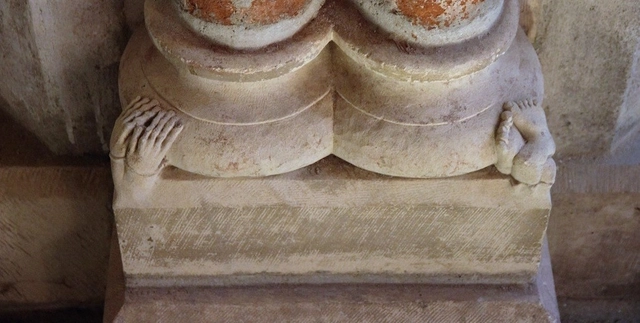
The modern use of the term “easter egg”—not the holiday treat but rather a hidden joke or surprise item inserted in a piece of media—originated with Atari in 1979, when a developer snuck his name into a game hoping to get some recognition as the creator. But these surprise treats, hidden to all but those who look closely enough, aren’t only lurking in the digital world. Some of the best easter eggs are snuck into the physical architecture around us.
The excellent thing about architectural easter eggs, be they tongue-in-cheek, carved out of spite, or simply placed as a fun treat awaiting an observant eye, is that they endure in the landscape around us, becoming a sneaky and often confusing part of history. Here are five hidden carvings that dot historic structures with a bit of human nature.
In this fourth episode of GSAPP Conversations, third-year GSAPP Master of Architecture student Ayesha Ghosh speaks with Swiss architect Christian Kerez, who delivered the opening lecture of the school's Spring 2017 Semester. Kerez's recent projects include Incidental Space at the Swiss Pavillion of the 2016 Venice Architecture Biennale, an amorphous structure which raised questions of the limits of imagination and technical feasibility in architecture today.
https://www.archdaily.com/867558/columbia-gsapp-conversations-4-wonder-structure-christian-kerez-contemporary-swiss-architectureAD Editorial Team















.jpg?1490812427 "MAXXI Museum, 2009, Rome / Italy. Image © Iwan Baan")