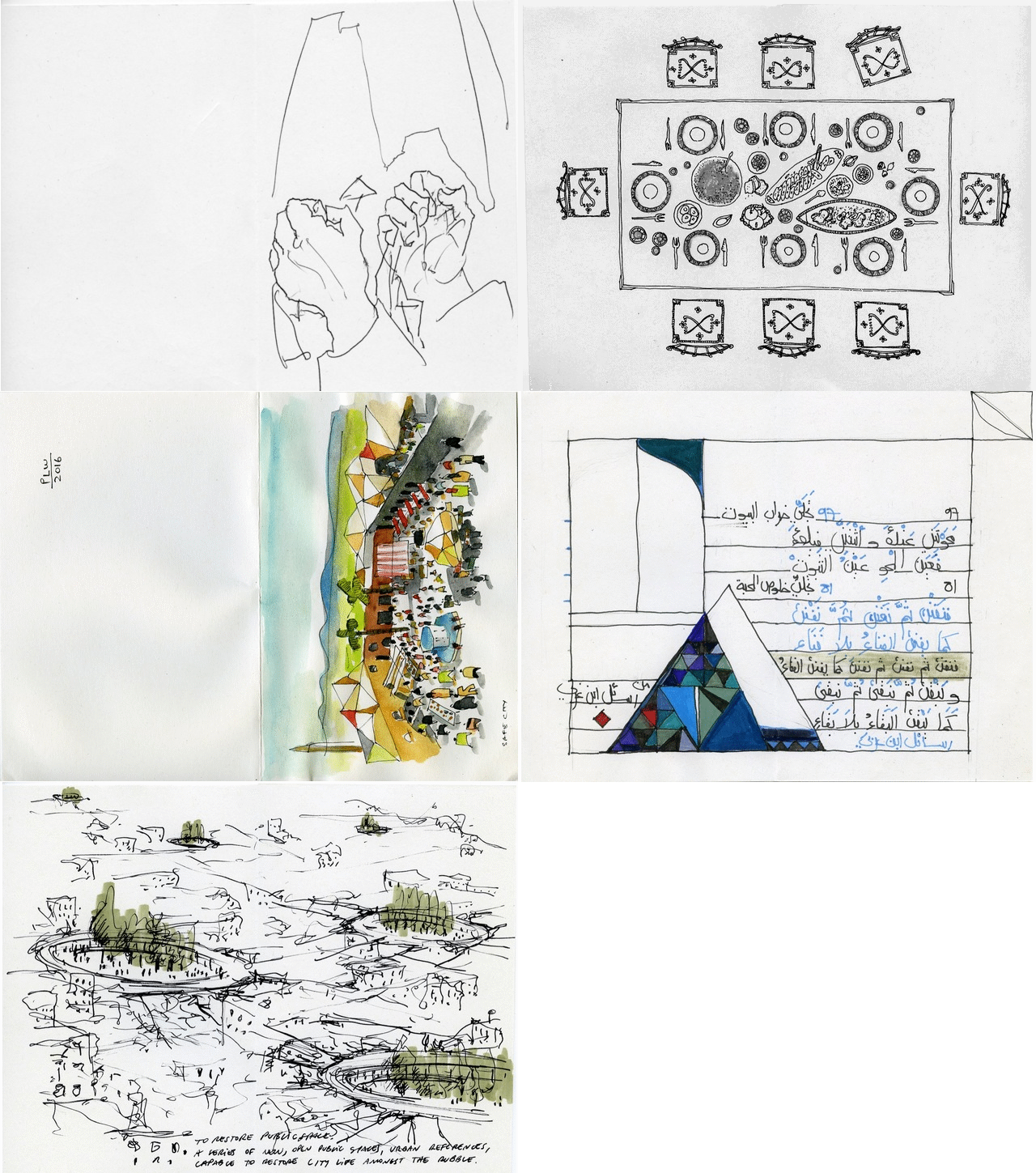
This article was originally published on the blog of the Chicago Architecture Biennial, the largest platform for contemporary architecture in North America. The 2017 Biennial, entitled Make New History, will be free and open to the public between September 16, 2017 and January 6, 2018.
Form follows function—that has been misunderstood. Form and function should be one, joined in a spiritual union.
Frank Lloyd Wright may have famously said these words in 1908, but he was by no means the first to embody them. In fact, the deeper sense of unity that Wright sought in Modern architecture had existed centuries before his time as a guiding principle for Native peoples all over the world.
https://www.archdaily.com/877933/how-terrol-dew-johnson-and-aranda-lasch-are-reinventing-basket-weaving-traditions-to-sustain-native-culture-and-communityEdric Huang & Leo Shaw
Ancient Romans mixed lime and volcanic rock to form a mortar, a precursor to modern reinforced concrete. This made engineering marvels like Rome’s Colosseum possible—still standing more than 2,000 years after its construction.
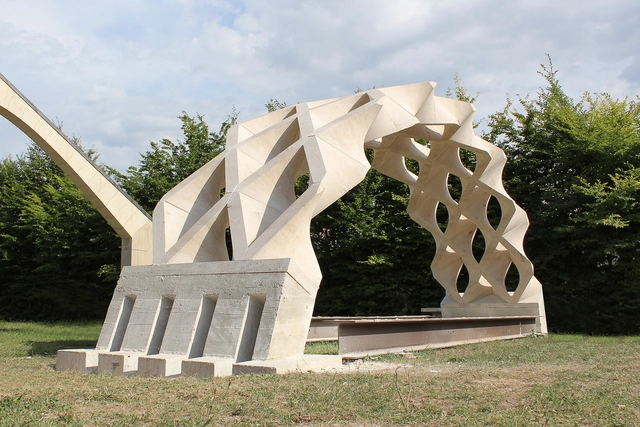
Today, this versatile material is evolving further: Precast concrete, which is formed and cured in factories before being installed onsite, is bringing about a new wave of architecture that streamlines the building process while reaching toward big, complex ideas.
https://www.archdaily.com/877871/how-one-concrete-manufacturer-helps-architects-reduce-project-costs-with-an-in-house-design-teamAngus W. Stocking, L.S.
Against the backdrop of an ever-increasing number of its farmers committing suicides, and its cities crumbling under intensifying pressure on their water resources—owing to their rapidly growing populations—India has revived its incredibly ambitious Interlinking of Rivers (ILR) project which aims to create a nation-wide water-grid twice the length of the Nile. The $168 billion project, first envisioned almost four decades ago, entails the linkage of thirty-seven of the country’s rivers through the construction of thirty canals and three-thousand water reservoirs. The chief objective is to address India’s regional inequity in water availability: 174 billion cubic meters of water is proposed to be transported across river basins, from potentially water-surplus to water-deficit areas.

The people of Manchester, UK, recently gained access to an entirely new way to access local news and engage with their city: OtherWorld, a pilot news experiment from startup studio Like No Other and Google’s Digital News Initiative. OtherWorld uses Bluetooth and cutting-edge beacon technology to deliver geo-located news directly to your smartphone for free, without installing an app. Referred to on the OtherWorld website as “living media,” as users walk around the city and pass by story locations, a silent notification will pop up on their phones, disappearing again as they walk out of range. Because the news you see on OtherWorld is directly related to the space you’re currently occupying, the system ensures that the news you’ll see is relevant to you. This unobtrusive method allows users to choose whether and how they will engage as well as adding an evanescent, elusive quality to the stories; you could walk right by and miss one if you aren’t paying attention.
In this way, OtherWorld illustrates the layers of our cities that are often invisible to us, bringing them into focus and allowing a deeper level of exploration into even a familiar city neighborhood. Focusing on stories that involve a real-world experience, users could become aware of an event nearby, a volunteer opportunity, a public meeting, or any number of other possibilities—thereby involving themselves in the public space and public realm in a way they would not have otherwise been able to.
In 2017, many of the world's cities have become potpourri time capsules of architecture. We live in an eclectic era in which a 19th-century industrial loft, post-war townhouse, and brand new high rise condominium are all comparably desirable properties. This increasingly varied urban landscape—and the appetite for variety of the people who live there—makes it more difficult than ever for new architecture to grab the public's attention.
To combat this, architects often attempt to produce an "iconic" work: a building whose design is so so striking that it attracts even a layperson's focus. Sometimes this ambition pays off as timeless, and sometimes it irreversibly pock-marks the skyline. What follows is a collection of attention grabbing structures. Will they be remembered as eccentric landmarks or glaring eyesores? You decide.
Nestled in the verdant seaside hills of the Pacific Palisades in southern California, the Entenza House is the ninth of the famous Case Study Houses built between 1945 and 1962. With a vast, open-plan living room that connects to the backyard through floor-to-ceiling glass sliding doors, the house brings its natural surroundings into a metal Modernist box, allowing the two to coexist as one harmonious space.
Like its peers in the Case Study Program, the house was designed not only to serve as a comfortable and functional residence, but to showcase how modular steel construction could be used to create low-cost housing for a society still recovering from the the Second World War. The man responsible for initiating the program was John Entenza, Editor of the magazine Arts and Architecture. The result was a series of minimalist homes that employed steel frames and open plans to reflect the more casual and independent way of life that had arisen in the automotive age.[1]
Perhaps nothing can kill a project budget or give an owner heartburn quite like costly code fixes during (or in the worst case, after) construction. As architects, we do our best to navigate construction codes during design, but there’s no denying their complexity. Projects have to comply with multiple different codes at both the federal and local levels; different codes sometimes even contradict one another, leading to headaches for the design team.
However, a new website and mobile app hopes to make understanding and complying with building codes easier for architects and designers. “The solution we provide is a search engine tailored for architecture,” explains Scott Reynolds, co-founder of UpCodes. With his background in architecture, Reynolds has partnered with his brother Garrett Reynolds—who has a PhD in machine learning—and through UpCodes, the pair to ease some of that building code-driven frustration.
In this six-minute-long video, Vox makes the argument that the primary reason behind the recent resurgence of streetcar systems—or proposals for streetcars, at least—in the USA is not because of their contributions to urban mobility, but instead because of the fact that they drive and sustain economic development. As it uncovers the causes for the popular failure of the streetcar systems in cities such as Washington DC, Atlanta, and Salt Lake City (low speed and limited connectivity, mostly) it asks why an increasing number of American city governments are pushing for streetcars in spite of their dismal record at improving transit. Is it solely due to their positively modern aesthetic? Are streetcars destined to function as mere “attractions” in a city’s urban landscape? Or is the real objective something more complex?
Last month I went on an enlightening trip to Mexico City, during which I had a chance to meet with half a dozen leading Mexican architects and critics. Those meetings included insightful conversations with Miquel Adrià, Tatiana Bilbao, Victor Legorreta, Mauricio Rocha, and Michel Rojkind among others (many of which will also feature in future installments of City of Ideas). I asked them many different questions, but two were consistent: “who would you name as Mexico’s best architect at this moment?” and “what one building built in the capital over the last decade is your favorite?” All of my interviewees pointed to Alberto Kalach (born 1960) and his Vasconcelos Library (2007). My Conversation with Kalach took place the next day after visiting the library on the rooftop of another one of his iconic buildings, Tower 41 overlooking Bosque de Chapultepec, Mexico City’s Central Park. We spoke about books, libraries, and his idea of buildings as inventions.
In this series of images, photographer Rasmus Hjortshøj has captured the Kolumba Museum by renowned architect Peter Zumthor in Cologne, Germany. The museum, constructed atop the ruins of a Gothic church destroyed during World War II, was a response to a competition that aimed to protect the remains of the Gothic work and create a space to house the art collection of the archbishopric of Cologne. In his winning design, Zumthor fused the existing ruins with modern architecture ideal for religious art in an elegant and minimalist way.
With his photographs, Rasmus Hjortshøj offers a tour of Zumthor's design, portraying the building within its urban context, while examining the architect's dedication to detail.
I attended graduate school, in geography, in Tucson, Arizona, in the late 1990s. Tucson draws fame from a number of things, including its Mexican-American heritage, its chimichangas, its sky islands, and its abundant population of saguaro cacti.
Plenty of things about Tucson, though, are perfectly, achingly ordinary.
Perhaps the most ordinary thing about Tucson led me to develop something halfway between a hobby and an academic pursuit. On occasion, whether for sport or research, friends and I used to go “sprawl-watching.” We were not exactly, say, Walter Benjamin strolling through the arcades, embracing the human pageantry of Paris. But we did our best to plumb Tucson’s depths.
Last month, ArchDaily had an opportunity to speak with Akshat Nauriyal, Content Director at Delhi-based non-profit St+Art India Foundation which aims to do exactly what its name suggests—to embed art in streets. The organization’s recent work in the Indian metropolises of Delhi, Mumbai, Hyderabad, and Bengaluru, has resulted in a popular reclamation of the cities’ civic spaces and a simultaneous transformation of their urban fabric. Primarily working within residential neighborhoods—they are touted with the creation of the country’s first public art district in Lodhi Colony, Delhi—the foundation has also collaborated with metro-rail corporations to enliven transit-spaces. While St+Art India’s experiments are evidently rooted in social activism and urban design, they mark a significant moment in the historic timeline of the application of street art in cities: the initiative involves what it believes to be a first-of-its-kind engagement between street artists and the government.
The Destruction of the Temple of Solomon, by Maarten van Heemskerck. From Freemasonry and the Enlightenment, by James Stevens Curl (Public Domain). Image
In a world in which the "happy" architectural image feels all-pervasive, the British architect and academic Dr. Timothy Brittain-Catlin reveals its darker side suggesting why, and how, we might come to celebrate it. You can read Brittain-Catlin's essays on British postmodernism here, and on colorful architecture, here.
"Contemporary buildings celebrate openness, light and free-flowing movement," says the President of the Royal Institute of British Architects (RIBA) in the March 2017 issue of the Institute’s journal. This is what at my school we call an "announcement", rather than a statement of fact. Indeed, all architects and architecture students hear these words all the time. But are they true? Should they be?
Fairy Tales 2017 Competition Winner: Last Day / Mykhailo Ponomarenko. Image Courtesy of Blank Space
When you’re used to the grind of architecture school, breaks can hit you like rain on a warm day—cool at first, but terribly annoying soon enough. While the first few days breeze past as you catch-up on lost sleep and binge-watch Game of Thrones, you realize before long that you’re going insane with nothing to absorb all your new-found energy.
This is where architectural competitions come in handy. They provide a constructive outlet while being deeply engrossing, thus keeping you from hopelessly refreshing Youtube to see if Buzzfeed uploaded a new video. Also, the fact that you’re no longer constrained by the direction of your studio-leader or school program enables you to experiment creatively. With diverse international competitions running at any given time, you can take your pick, depending on your individual interests and the amount of time you want to devote. However, the sheer number of available competitions can be deeply confusing as well. Here we shortlist seven of the most prestigious annual architectural competitions open to students:
“This place is really Instagrammable, you’ll see what I mean.”
Walking into a tiled entryway and catching a glimpse of the cocoon-shaped swings, I saw fast. Planta, located on a busy street in Downtown Toronto is an Instagram magnet. And they know it. Opened last fall, Planta’s geotagged posts grow daily, with several of the restaurants’ key spaces photographed again and again. With jungle-inspired wallpaper, graphic tiling and a solid 14k following on their own account, the plant-based eatery means business.
Instagram’s parent-company Facebook announced it made $9.1 billion in earnings this quarter on advertising, retaining its longstanding rule over digital advertising alongside with Google’s Alphabet ($26 billion). With Instagram absorbing competitor Snapchat’s story features and increasing the number of sponsored posts it shows this year (yeah, we noticed), it’s not a stretch to say that the social media giant sits at the center of food and beverage trends. But what happens to interior spaces when restaurants set out to be “Instagrammable”?
In #donotsettle’s latest video, architects and vlogging provocateurs Wahyu Pratomo and Kris Provoost provide breathtaking footage of one of Shanghai’s most curious projects, M50. The 300,000-square-meter Heatherwick Studio building is an undulating mass of mixed use urban topography.
Elevator rides may offer an uplifting experience in the literal sense, but while they are indispensable in modern buildings, users face extremely compact spaces which are designed to fit effectively into buildings. Awkward looks at the floor or past other people’s faces reveal our discomfort with the elevator’s crowded anonymity. Couldn’t a more spatial experience lead to a more exciting journey? Flat screens and projections are starting to be included in elevators, but these are just the beginning of a revolution in the atmospheres created during vertical transportation.
One of only two projects completed by Le Corbusier in the Americas—the other being the Carpenter Center for the Visual Arts in Cambridge, Massachusetts—Casa Curutchet is located in La Plata, Argentina. Commissioned by the surgeon Dr. Pedro Domingo Curutchet in 1948, the four-story residence includes a small medical office on the ground floor. The form of the building echoes traditional Latin American courtyard houses while also exemplifying Le Corbusier's five points of architecture.
https://www.archdaily.com/876672/explore-le-corbusiers-only-south-american-project-the-casa-curutchet-with-a-virtual-walkthroughAD Editorial Team