To rank architects, or to even pretend that any list or selection would be exhaustive and/or apply to the individual tastes of every architecture lover, seems, on the surface, a pointless task. However, as we move away from looking for inspiration from merely the great masters or the handful of contemporary firms studied in academic programs, it is important to shine a light on the works that we, as ArchDaily editors, have found particularly valuable. Of the thousands of architects whose projects have been selected to be published on our site, we occasionally notice firms whose work stands out. Whether we’re drawn to their innovative approach to practice, the role they play in contributing to their local communities, or their generosity, we are eager to display their work as an example, so that others may be inspired to challenge the status quo.
https://www.archdaily.com/904738/a-selection-of-the-worlds-best-architectsAD Editorial Team
Courtesy of Matthew Field, licensed under GFDL 1.2 via Commons
This article was originally published on November 2, 2015. To read the stories behind other celebrated architecture projects, visit our AD Classics section.
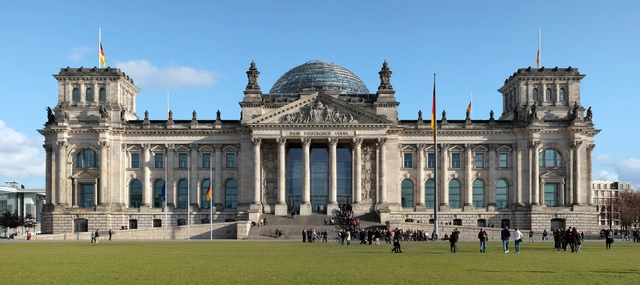
As Norman Foster describes in his firm’s monograph, Foster 40, “Our transformation of the Reichstag is rooted in four related issues: the Bundestag’s significance as a democratic forum, an understanding of history, a commitment to public accessibility and a vigorous environmental agenda.”[1] Foster’s description sounds straightforward enough, but the process of creating the New German Parliament at the Reichstag was only the latest entry in the long, complex, and contentious history of the building.
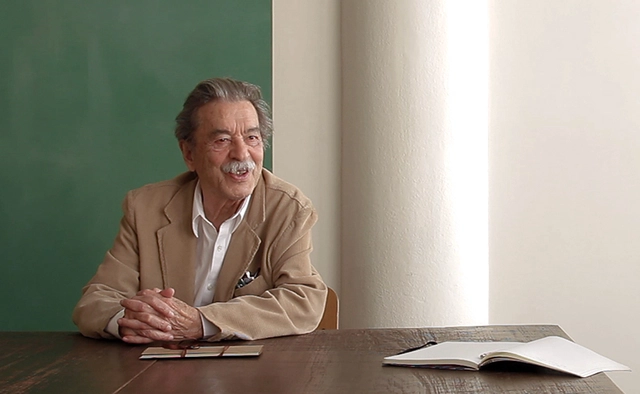
Today we celebrate the 90th anniversary of Paulo Mendes da Rocha. With a unique integrity in his thinking and design, his career has already been celebrated with the highest awards an architect can receive, from the Pritzker Prize in 2006 to the 2018 Golden Lion from the Venice Biennale and the Praemium Imperiale in 2016. Here, instead of presenting his impressive projects, we have asked architects to share some of their stories, talk about his practice and how his thinking has influenced them.
https://www.archdaily.com/904685/brazilian-architects-honor-paulo-mendes-da-rocha-on-his-90th-birthdayEquipe ArchDaily Brasil
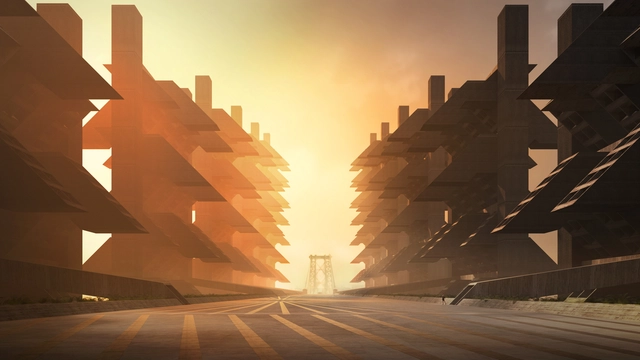
Plaza by the Williamsburg bridge. Image Courtesy of Lasse Lyhne-Hansen
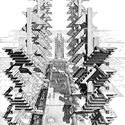
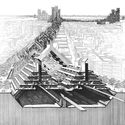
Paul Rudolph, despite vaulting to international success in the early 1940s and 50s for his Brutalist structures, saw an abrupt end to the popularity of his signature style as postmodernism gained prominence. As tastes shifted to different fare, so too did Rudolph's approach - leaving a number of his unbuilt proposals to gather dust.
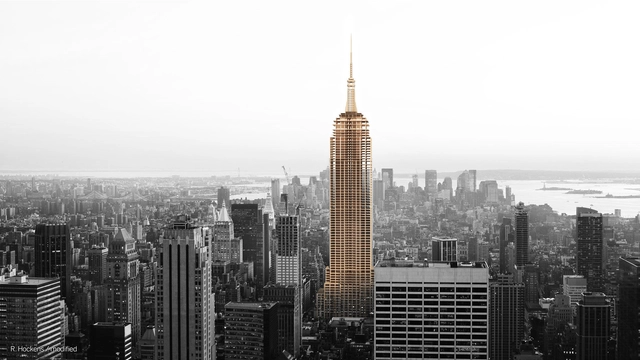
Courtesy of MGA. ImageMGA reenvisioned the Empire State Building in mass timber construction
Steel and concrete facades have dominated contemporary cityscapes for generations, but as pressures from climate change pose new challenges for design and construction industries, some firms are turning to mass timber as the construction material of the future. But could it be used for structures as complex as skyscrapers?
This article was originally published on May 9, 2016. To read the stories behind other celebrated architecture projects, visit our AD Classics section.
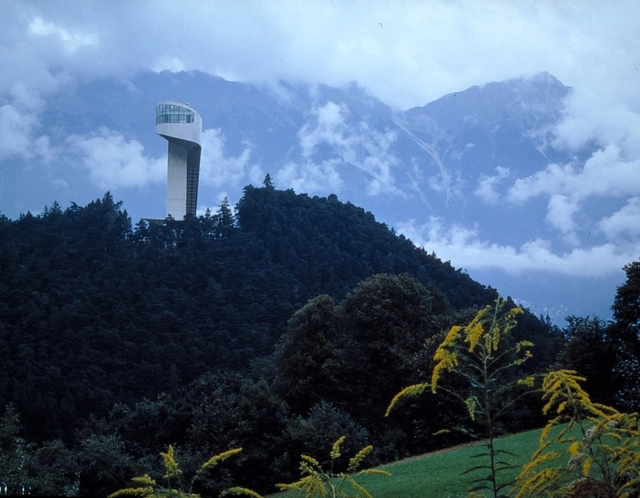
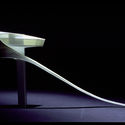
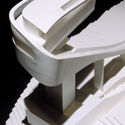
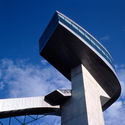
Situated on the peak of Bergisel Mountain above the picturesque alpine city of Innsbruck, Austria, the Bergisel Ski Jump represents the contemporary incarnation of a historic landmark. Designed by Zaha Hadid between 1999 and 2002, the Ski Jump is a study in formal expression: its sweeping lines and minimalist aesthetic create a sense of graceful, high-speed motion, reflecting the dynamic sensation of a ski jump in a monumental structure that stands above the historic center of Innsbruck and the mountain slopes around.
Architecture is a profession deeply dependent on the visual. It’s imagined, sold, critiqued and consumed almost entirely on the strength (or lack thereof) of drawings. We pick and prod at images presented at angles we’ll never be able to see, admiring the architectonic qualities of elements we’ll never actually experience.
https://www.archdaily.com/904318/this-week-in-architecture-more-than-visualKatherine Allen
This article was originally published on December 5, 2016. To read the stories behind other celebrated architecture projects, visit our AD Classics section.
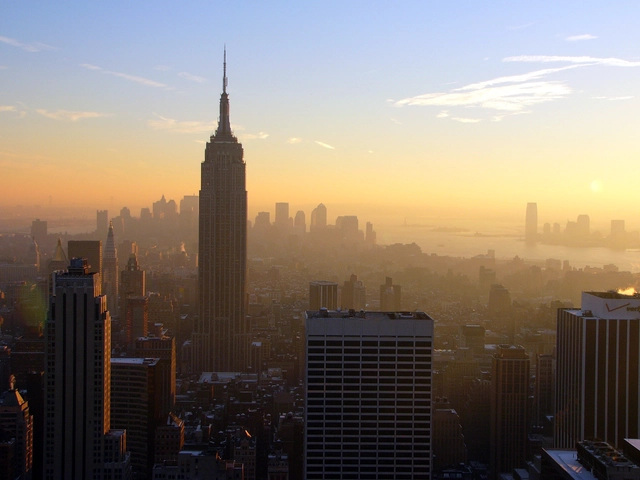
Even in Manhattan—a sea of skyscrapers—the Empire State Building towers over its neighbours. Since its completion in 1931 it has been one of the most iconic architectural landmarks in the United States, standing as the tallest structure in the world until the Twin Towers of the World Trade Center were constructed in Downtown Manhattan four decades later. Its construction in the early years of the Great Depression, employing thousands of workers and requiring vast material resources, was driven by more than commercial interest: the Empire State Building was to be a monument to the audacity of the United States of America, “a land which reached for the sky with its feet on the ground.”[1]
This article was originally published on April 27, 2017. To read the stories behind other celebrated architecture projects, visit our AD Classics section.
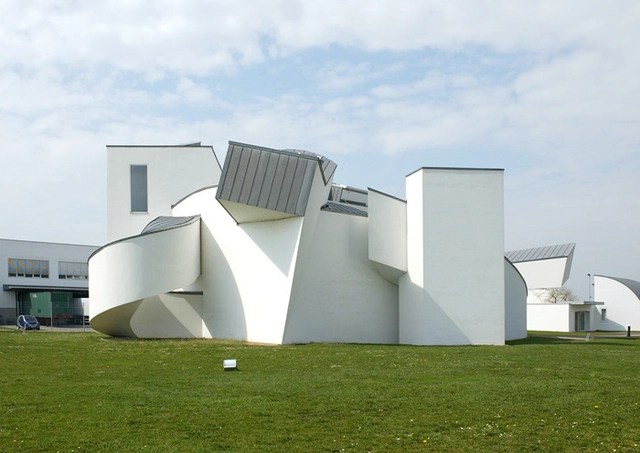
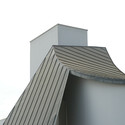
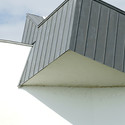
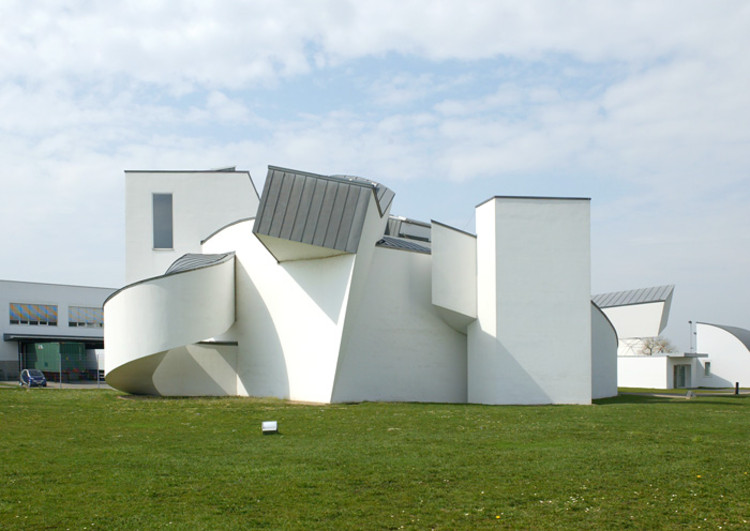
Even at the Vitra Campus in Weil-am-Rhein—a collection of furniture factories, offices, showrooms, and galleries, many of which are the products of iconic architects—the Vitra Design Museum stands out as exceptional. With its sculptural form composed of interconnected curving volumes, the museum is the unmistakable work of Frank Gehry – an architect who has built a legacy for himself upon such structures. What may not be immediately apparent is the crossroads that this serene white building represents: it was in this project at the southwestern corner of Germany (close to the Swiss border) that Gehry first realized a structure in the vein of his now signature style.
If the surest sign of summer in London is the appearance of a new pavilion in front of the Serpentine Gallery, then it’s perhaps fair to say that summer is over once the pavilion is taken down. The installations have gained prominence since its inaugural edition in 2000, acting as a kind of exclusive honor and indication of talent for those chosen to present; celebrated names from the past names include Zaha Hadid, Rem Koolhaas, and Olafur Eliasson.
Whatever the form—personal, theoretical, scholarly—architects frequently veer into the philosophical terrain when defending otherwise subjective design decisions. Personally, this may be justifiable. But professionally, this reliance on quasi-philosophical spin is one of the fundamental ways architecture differs from other practical pillars of society, such as law, finance or medicine. Those disciplines are based on structures of knowledge (precedent or code, economics, and science, respectively) that mediate between professional decisions and subjective judgement.
This article was originally published on August 15, 2016. To read the stories behind other celebrated architecture projects, visit our AD Classics section.
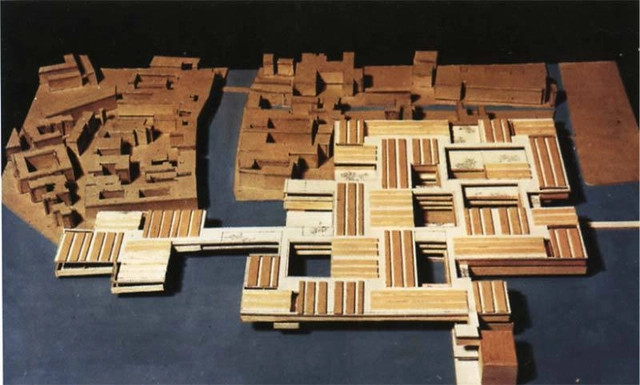
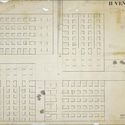
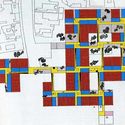
Le Corbusier made an indelible mark on Modernist architecture when he declared “une maison est une machine-à-habiter” (“a house is a machine for living”). His belief that architecture should be as efficient as machinery resulted in such proposals such as the Plan Voisin, a proposal to transform the Second Empire boulevards of Paris into a series of cruciform skyscrapers rising from a grid of freeways and open parks.[1] Not all of Le Corbusier’s concepts, however, were geared toward such radical urban transformation. His 1965 proposal for a hospital in Venice, Italy, was notable in its attempt at seeking aesthetic harmony with its unique surroundings: an attempt not to eradicate history, but to translate it.
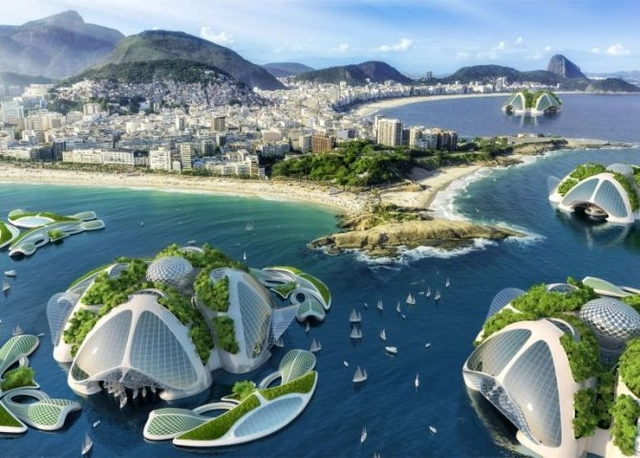
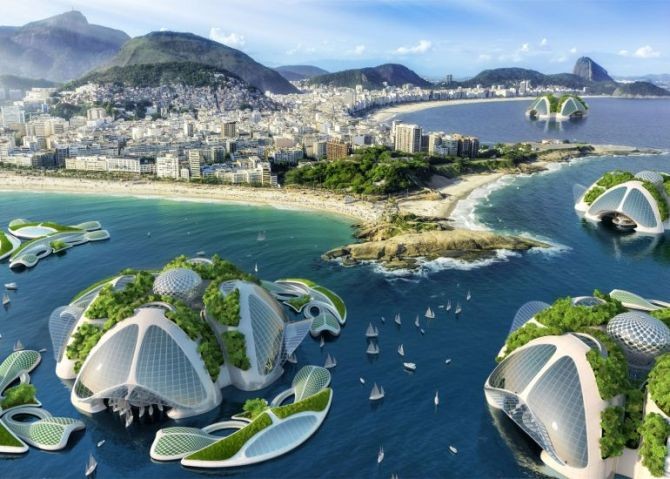
Belgian architect Vincent Callebaut proposes recycling ocean trash as building materials for his futuristic floating cities.
Migration as a result of changing climate has already begun. And while this poses enormous challenges for governments - particularly at a global moment that seems indisposed towards immigration and immigrants - there is also the concern that heritage will inevitably be lost. In places like Scotland, rising sea levels have put ancient sites at risk; the same is the case in island nations in the Pacific. As mounting environmental risks become more inevitable day by day, cities around the world are turning to more resilient forms of architecture and urban planning to combat both short term shocks and longer term pressures as a means of ensuring their future.
What comes to mind when you encounter the term “sensory design”? Chances are it is an image: a rain room, a funky eating utensil, a conspicuously textured chair. But the way things actually feel, smell, even taste, is much harder to capture. This difficulty points to how deeply ingrained the tyranny of vision is. Might the other senses be the keys to unlocking broader empirical truths? Does the ocular-centric bias of art, architecture, and design actually preclude a deeper collective experience?
This article was originally published on November 9, 2015. To read the stories behind other celebrated architecture projects, visit our AD Classics section.
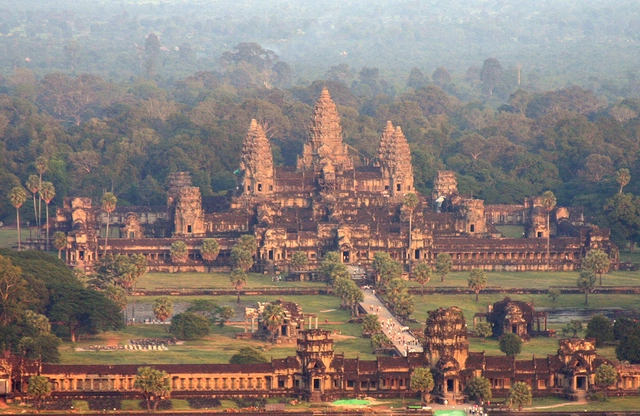
Angkor Wat is just one of dozens of extant Khmer temples in the Angkor area of present-day Cambodia, but it represents the apex of a building tradition that spanned five centuries, and the height of Khmer power and influence in the region. It is the largest temple complex at Angkor, and intricate bas-relief sculptures line the sandstone structures exemplify the apex of Khmer artistry. Although it has been in continuous use since its construction in the twelfth century, aspects of its history remain unknown. As archaeologist and anthropologist Charles Higham explains, “Curiously, there are no direct references to it in the epigraphic record, so we do not know its original name and controversy remains over its function and aspects of its symbolic status.”[1] Originally dedicated to the Hindu god Vishnu, the complex was later converted to Buddhist use (the word “wat” typically refers to Buddhist monasteries[2]), and continues to be a site of religious pilgrimage today.
This article was originally published on April 21, 2016. To read the stories behind other celebrated architecture projects, visit our AD Classics section.
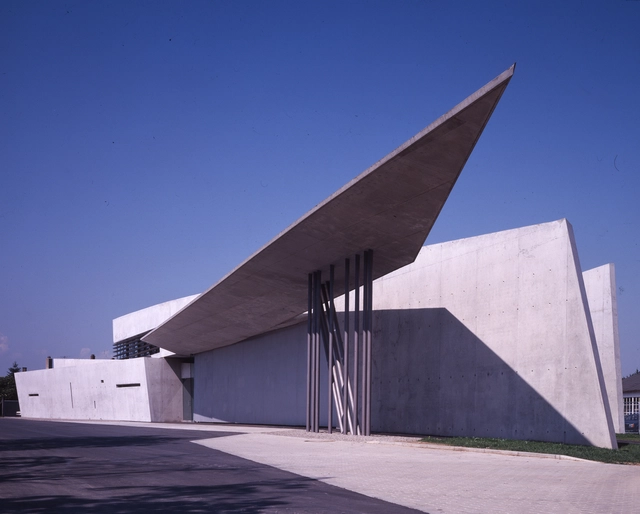
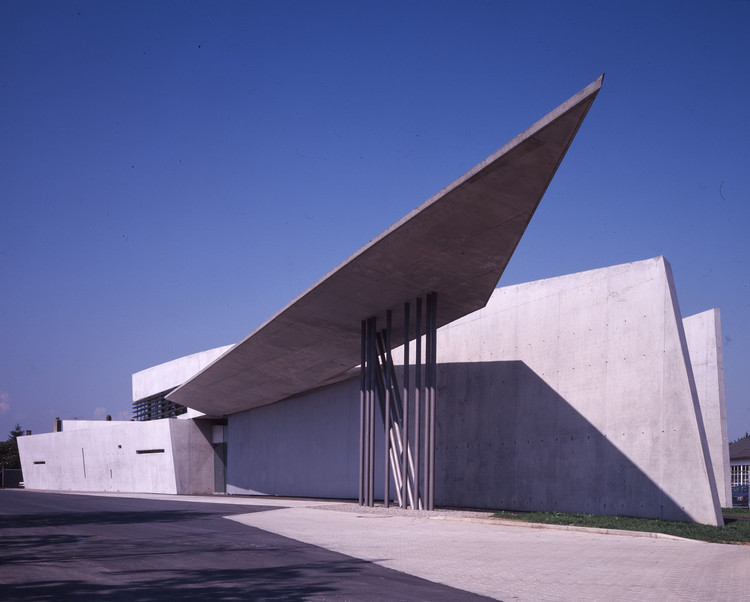
Although Zaha Hadid began her remarkable architectural career in the late 1970s, it would not be until the 1990s that her work would lift out her drawings and paintings to be realized in physical form. The VitraFire Station, designed for the factory complex of the same name in Weil-am-Rhein, Germany, was the among the first of Hadid’s design projects to be built. The building’s obliquely intersecting concrete planes, which serve to shape and define the street running through the complex, represent the earliest attempt to translate Hadid’s fantastical, powerful conceptual drawings into a functional architectural space.
This article was originally published on April 22, 2016. To read the stories behind other celebrated architecture projects, visit our AD Classics section.
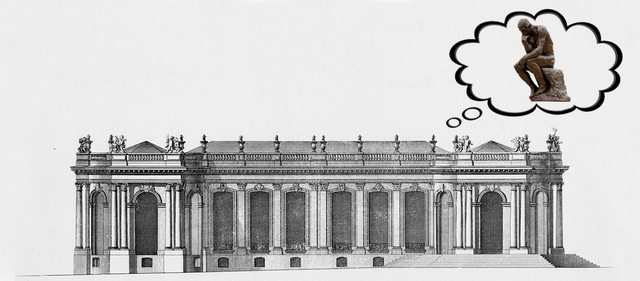
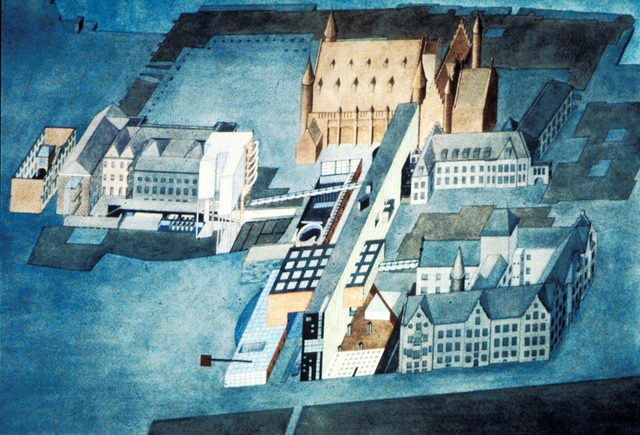
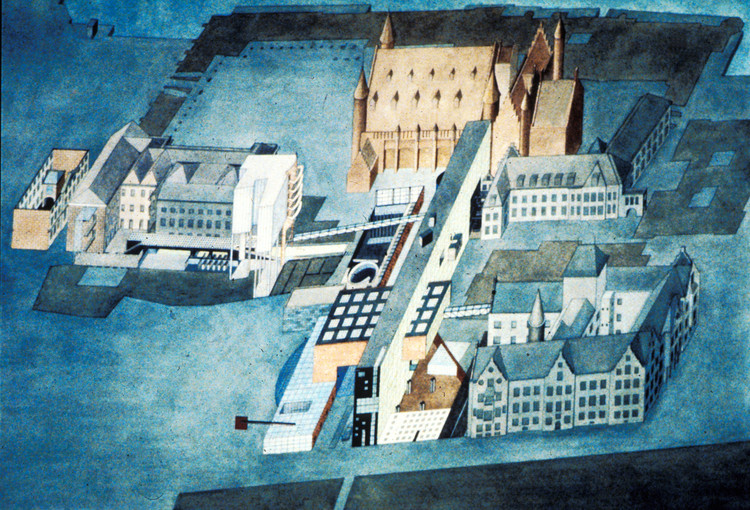
Designed shortly before Zaha Hadid left the Office of Metropolitan Architecture (OMA)—led by Rem Koolhaas—to found her practice, Zaha Hadid Architects, the proposed extension for the Dutch Parliament firmly rejects the notion that imitation is the sincerest form of flattery. Rather than mimic the style of the existing historic buildings, OMA elected to pay tribute to the complex’s accretive construction by inserting a collection of visibly postmodern, geometric elements. These new buildings, unapologetic products of the late 1970s, would have served as unmistakable indicators of the passage of time, creating a graphic reminder of the Parliament’s long history.
This article was originally published on July 28, 2016. To read the stories behind other celebrated architecture projects, visit our AD Classics section.
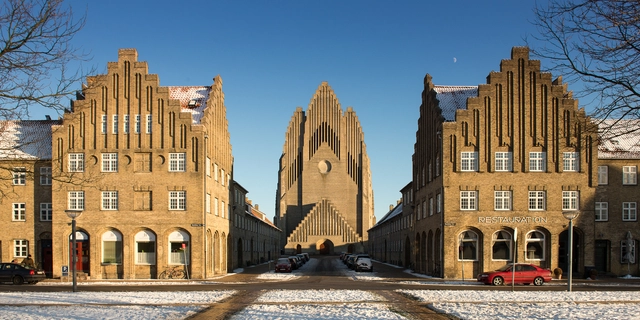
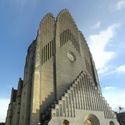
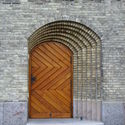
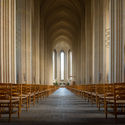
Six million yellow bricks on a hilltop just outside Copenhagen form one of the world’s foremost, if not perhaps comparatively unknown, Expressionist monuments. Grundtvigs Kirke (“Grundtvig’s Church”), designed by architect Peder Vilhelm Jensen Klint, was built between 1921 and 1940 as a memorial to N.F.S. Grundtvig – a famed Danish pastor, philosopher, historian, hymnist, and politician of the 19th century.[1] Jensen Klint, inspired by Grundtvig’s humanist interpretation of Christianity, merged the scale and stylings of a Gothic cathedral with the aesthetics of a Danish country church to create a landmark worthy of its namesake.[2]
It was decided in 1912 that Grundtvig, who had passed away in 1873, had been so significant to Danish history and culture that he merited a national monument. Two competitions were held in 1912 and 1913, bringing in numerous design submissions for statues, decorative columns, and architectural memorials.[3]









.jpg?1539856634&format=webp&width=640&height=580)


.jpg?1539856634)