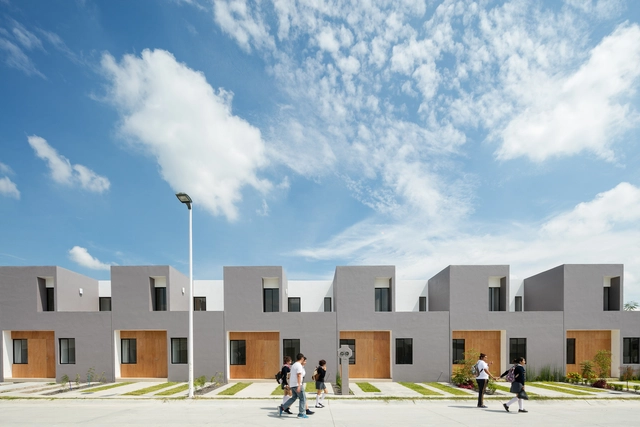
“Modular” isn’t a construction product; it’s a construction process. This is according to Tom Hardiman, executive director of the Modular Building Institute (MBI), whose members include more than 350 companies involved in the manufacturing and distribution of modular buildings, including multifamily homes.
Back in 2008, ArchDaily embarked on a challenging mission: to provide inspiration, knowledge, and tools to the architects tasked with designing cities. In an effort to further align our strategy with these challenges, we recently introduced monthly themes in order to dig deeper into topics we find relevant in today’s architectural discourse. From architects who don't design to reframing climate change as a global issue, we are celebrating our 11th birthday by asking 11 editors and curators to choose ArchDaily's most inspiring articles.
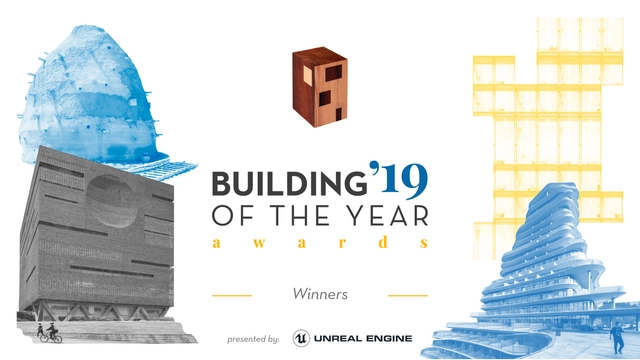
More than 80,000 votes were cast over the last two weeks and, after careful review, the results of the 2019 ArchDaily Building of the Year Awards presented by Unreal are in. Building of the Year, which itself celebrated ten years this year, is the largest peer-based crowdsourced architecture award in the world, showcasing the projects chosen by you, our readers, as the most significant of the year.
This is no mean feat. More than 4000 projects were in contention this year, challenging readers to carefully consider a wide variety of projects across type, scale, and location. 4000 projects were whittled to 75 finalists; 75 have now been reduced to the 15 winners - one for each typological category.
The results are as diverse as the architecture itself. Well-known names are, as in years past, present among the bunch, among them Zaha Hadid Architects, MVRDV, and Heatherwick Studio. For London-based Heatherwick, their win marks the second consecutive year they have taken top honors for a refurbishment-based project. But less-renowned names dominate the ranks of the winners this year. Innocad’s serenely simple office building for a real estate company elevates what corporate architecture can be while the technical and material mastery of Sameep Padora’s Maya Somaiya Library is enough to make any architect look twice. The library is, in fact, one of two Indian projects to take top honors this year - a strong first year showing for the nation whose design talent seems finally to be coming to the fore.
But for all their many beautiful differences, the winners share a crucial element in common: they represent the values of our mission, to bring inspiration, knowledge, and tools to architects everywhere. Building of the Year - indeed, ArchDaily itself - would not be possible without the generosity of firms and readers as invested in our mission as we are. We give our profound thanks to all who participated this year, no matter the form. Congratulations to all the winners!
Meeting with many leading, independent Chinese architects and visiting their built works throughout China in recent years has shaped my understanding of their contributions as regionally sensitive, poetic, photogenic, and even seductive. Yet, so many of these projects can be confused as being produced by a single, narrowly-focused practice. These works are often small in scale and built far from urban centers where ordinary people could benefit from them most. There is a lack of diversity and risk-taking. The following excerpt from my interview with Beijing-based architect Li Hu on his recent visit to New York overturned my doubts and gave me much hope for China’s urban future.
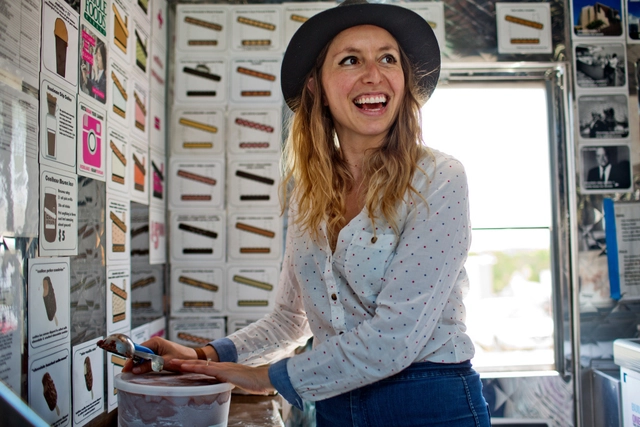
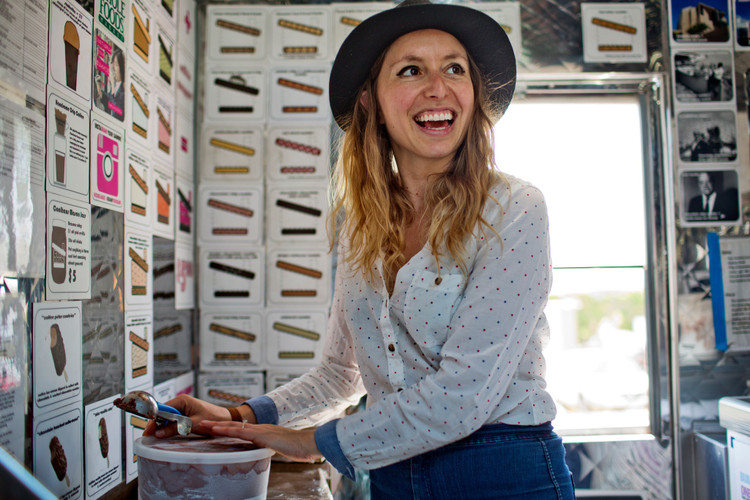
Architecture is defined by people. It’s the human condition that shapes the spaces we live within and the moments we share. Few designers and entrepreneurs understand this better than Natasha Case, co-founder of Coolhaus Ice Cream. Trained as an architect, Natasha began exploring a passion for what she called “Farchitecture” – or, Food + Architecture – in her graduate architecture program. The concept originated with the broader notion that design could enhance everyday life, and, by the same token, that food could bring awareness to design.
In an exclusive interview with ArchDaily, Natasha talks about her inspiration for creating architecturally inspired ice cream, how Los Angeles influences her life and work, and what it means to bring joy into the process of making.
Videos
Courtesy of Image: Pritzker. Collage: ArchDaily by Danae Santibáñez
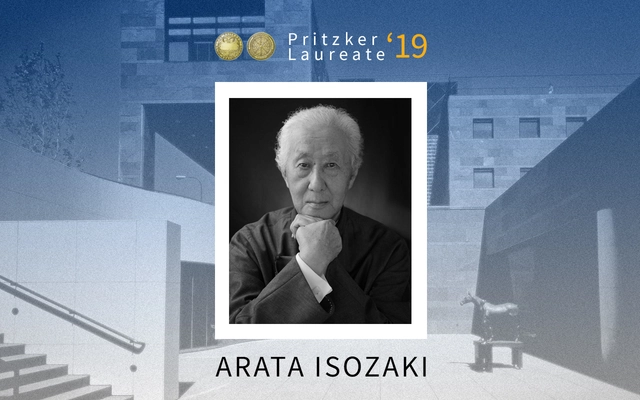
Arata Isozaki has been named the 2019 laureate of the Pritzker Prize for Architecture. Isozaki, who has been practicing architecture since the 1960s, has long been considered an architectural visionary for his transnational and fearlessly futurist approach to design. With well over 100 built works to his name, Isozaki is also incredibly prolific and influential among his contemporaries. Isozaki is the 49th architect and eighth Japanese architect to receive the honor.
Said the jury of Isozaki in the award citation: “...in his search for meaningful architecture, he created buildings of great quality that to this day defy categorizations, reflect his constant evolution, and are always fresh in their approach.”
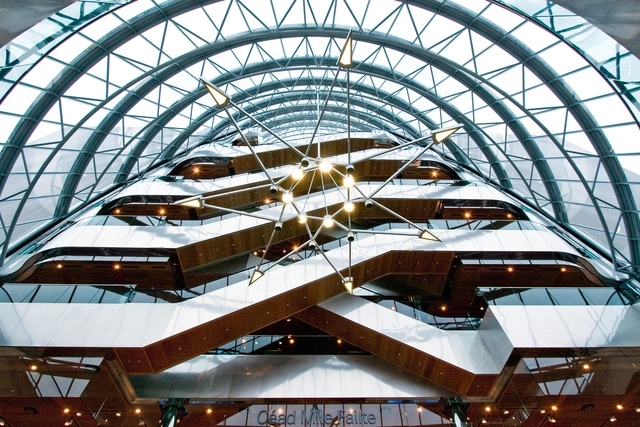
American architect Kevin Roche passed away this past Friday, March 1 at the age of 96. He was born in 1922 in Dublin, Ireland, educated at the University College Dublin (1945) and Illinois Institute of Technology (1948). In 1966, he formed Kevin Roche John Dinkeloo and Associates (KRJDA). He has designed more than 200 buildings, including renovation to the American Wing at the Metropolitan Museum of Art (2012), National Conference Centre in Dublin (2010), Lafayett Tower in Washington DC (2009), J.P. Morgan Headquarters in Manhattan (1992), Central Park Zoo in Manhattan (1988), The Knights of Columbus Building Headquarters in New Haven (1969), The Ford Foundation in Manhattan (1968), and Oakland Museum of California (1966). In 1982 he became the fourth Pritzker Prize winner and in 1993 was awarded the AIA Gold Medal. The following excerpt is from our 2011 interview at the architect’s office in Hamden, Connecticut.
Transforming urban centers can be slow going when the process is rooted in community engagement. But within the next five to ten years, historically African-American neighborhoods in Charlotte and Greenville, North Carolina; Miami; Vancouver; and Los Angeles will experience major change, thanks to architect Zena Howard, who leads Perkins+Will’s cultural practice in North Carolina.
https://www.archdaily.com/912312/how-zena-howard-uses-design-to-help-cities-healJ. Michael Welton
Enquanto meio de representação da arquitetura, a fotografia apresenta qualidades indiscutíveis. Com ela, é possível apresentar a um público distante obras erguidas em qualquer lugar do mundo, de vistas gerais a espaços internos e pormenores construtivos - ampliando o alcance e, de certo modo, o acesso à arquitetura.
Entretanto, como qualquer outra forma de representação, não é infalível. Na medida que avanços tecnológicos permitem fazer imagens cada vez mais bem definidas e softwares de edição oferecem ferramentas para retocar e, por vezes, alterar aspectos substanciais do espaço construído, a fotografia, por sua própria natureza, carece de meios para transmitir aspectos sensoriais e táteis da arquitetura. Não é possível - ao menos não satisfatoriamente - experienciar as texturas, sons, temperatura e cheiros dos espaços através de imagens estáticas.
Materials, products, and construction systems are constantly evolving and following new technologies, discoveries, and market trends. The question is: are we, as architects, evolving with them? We have heard about robots working on construction sites, responsive and intelligent materials and the continued rise of 3D printing, but is it all white noise at the moment of starting a new design? More importantly, could these new systems continue to progress without sensitively and effectively taking people's quality of life into account?
How should we use materials—both in their traditional forms and in their future conceptions—so that our projects are making relevant contributions to the way we are inhabiting our planet?
In order to evolve, we have to know how, so it' s worth beginning a discussion around these issues.
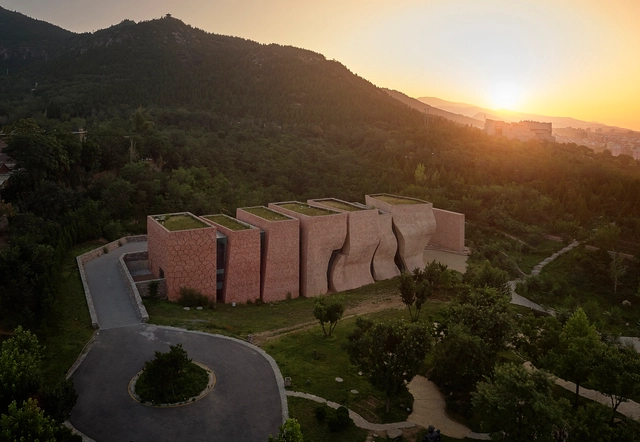
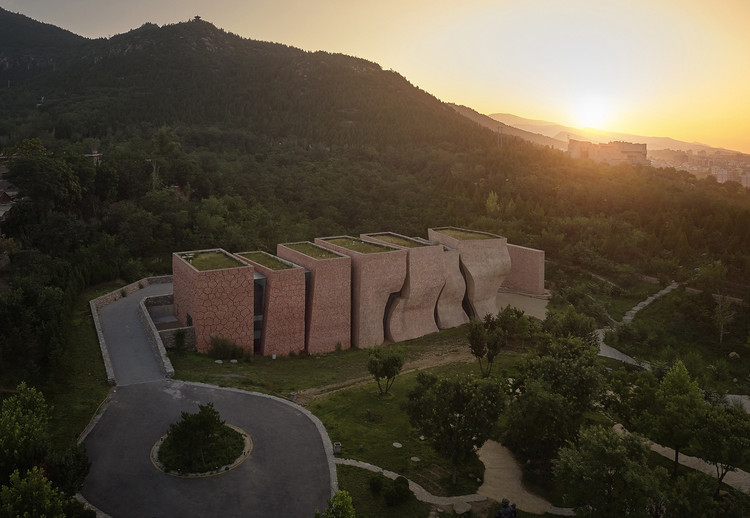
Yu Qingcheng Gallery, Tianjin, China. ImageCourtesy of Architectural Design and Research Institute of Tianjin University
The following excerpt from my recent interview with Tianjin-based architect Zhang Hua continues an ongoing series of interviews that I’ve been conducting during my frequent trips to China. Zhang Hua is leading his design studio, Zhanghua Architects, which is a part of Tianjin University Research Institute. Professor Zhang Hua’s work follows his uncompromising form-generating theory, which is based on the desire to capture the progression of transformational processes. In his many built projects, the architect examines and expresses such formal transformations as turning from something basic to complex or from monolith to disperse. The focus is on the state of transformation itself, how a form is changing and morphing from one state to another. We spoke with Zhang Hua through an interpreter at the institute, with half a dozen young architects and researchers from his studio, seated all around and taking notes.
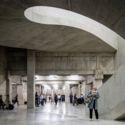
As industry has shifted over the past century, in format, location, and type, the manufacturing and industrial spaces scattered across the western world have been repurposed. You have no doubt seen these structures, though perhaps without realizing. The large windows, high ceilings, and open floor plans optimized for factory work now mark the territory of the “creative class”. Such spaces have been disproportionately appropriated by creative industries such as arts and architecture; think of Herzog + de Meuron’s renovation of the Tate Modern (from a former power station) or the recent collaborative transformation of a locomotive yard into a library in the Netherlands.
https://www.archdaily.com/911719/lacaton-and-vassals-frac-dunkerque-is-an-architectural-echo-both-in-form-and-in-conceptKatherine Allen
Starting this month, ArchDaily has introduced monthly themes that we’ll explore in our stories, posts and projects. We began this month with Architectural Representation: from Archigram to Instagram; from napkins sketching to real-time-sync VR models; from academic lectures to storytellers.
It isn’t particularly novel or groundbreaking to say that the internet, social media, and design apps have challeged the relation between representation and building. A year ago we predicted that "this is just the beginning of a new stage of negotiation between the cold precision of technology and the expressive quality inherent in architecture". But, is it? Would you say digital tools are betraying creativity? This is an older dilemma than you think.
In this new edition of our Editor's Talk, four editors and curators at ArchDaily discuss drawings as pieces of art, posit why nobody cares about telephone poles on renders and explore how the building itself is becoming a type of representation.
Internationally renowned for her avant-garde search for architectural proposals that reflect modern living, Zaha Hadid made abstract topographical studies for many of her projects, intervening with fluid, flexible and expressive works that evoke the dynamism of contemporary urban life.
In order to further knowledge of her creative process and the development of her professional projects, here we have made a historic selection of her paintings which expand the field of architectural exploration through abstract exercises in three dimensions. These artistic works propose a new and different world view, questioning the physical constraints of design, and showing the creative underpinnings of her career.
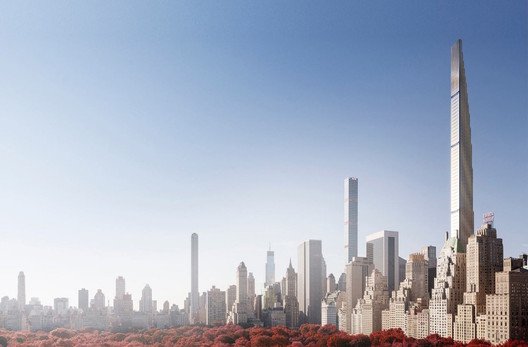
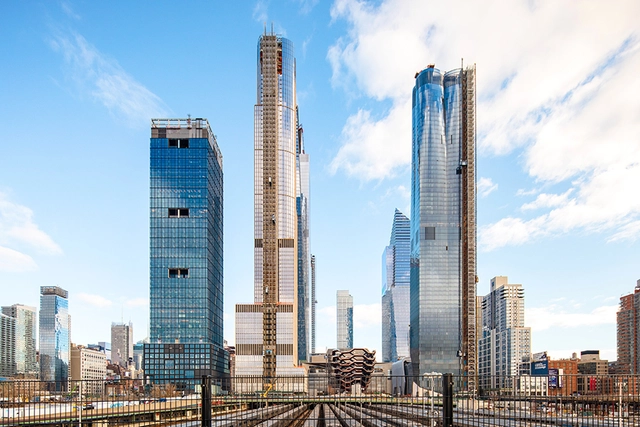
The hyperreal renderings predicting New York City’s skyline in 2018 are coming to life as the city’s wealth physically manifests into the next generation of skyscrapers. Just like millennials and their ability to kill whole industries singlehandedly, we are still fixated on the supertalls: how tall, how expensive, how record-breaking? Obsession with this typology centers around their excessive, bourgeois nature, but – at least among architects – rarely has much regard for the processes which enable the phenomenon.
There’s something striking about the command center of America’s largest private real estate development, Hudson Yards, in that it’s actually pretty boring. The room—technically known as the Energy Control Center, or ECC for short—contains two long desks crammed with desktop computers, a few TV monitors plastered to the wall, and a corkboard lined with employee badges. The ceiling is paneled; the lighting, fluorescent. However, New York’s Hudson Yards was once billed as the country’s first “quantified community”: A network of sensors would collect data on air quality, noise levels, temperature, and pedestrian traffic. This would create a feedback loop for the developers, helping them monitor and improve quality of life. So where is the NASA-like mission control? Data collection and advanced infrastructure will still drive parts of Hudson Yards’ operations, but not (yet) as first advertised.
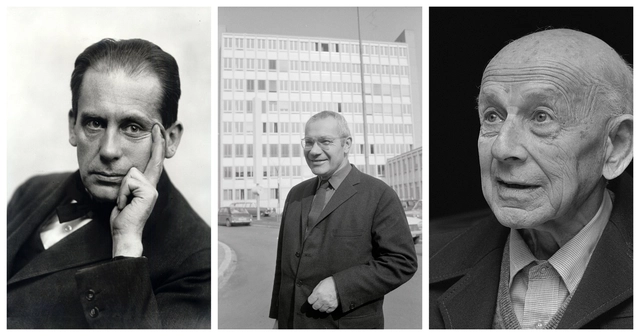
After the dissolution of the Bauhaus due to Nazi political pressure in April 1933, the ideas, teachings, and philosophies of the school were flung across the world as former students and faculty dispersed in the face of impending war. Of the numerous creative talents associated with the Bauhaus, many went on to notable careers elsewhere. Some made a living as artists or practitioners, others either continued or began careers as teachers themselves - and many did both throughout the course of their lives.











_Qatar_convention_center_Hisao_SUZUKI.jpg?1551731947 "© Hisao Suzuki")

_Hisao_SUZUKI04.jpg?1551731968 "© Hisao Suzuki")





_7061.jpg?1550506965&format=webp&width=640&height=580)
.jpg?1550605438&format=webp&width=640&height=580)


.jpg?1550605438)


_PA_01.jpg?1472565216 "The World (89 Degrees) - 1983. Image Cortesía de Zaha Hadid")