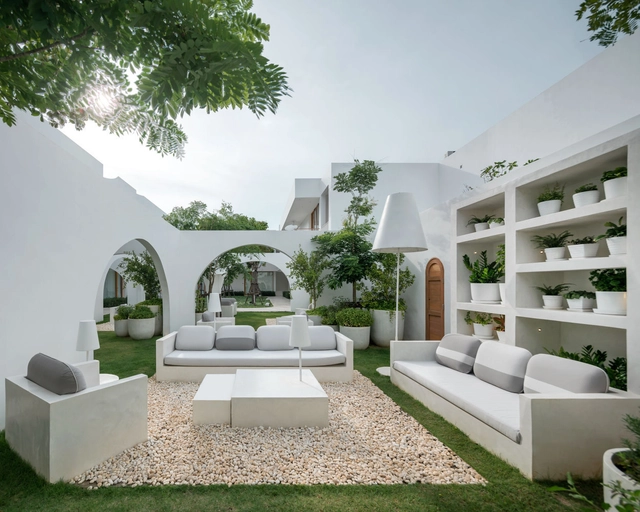
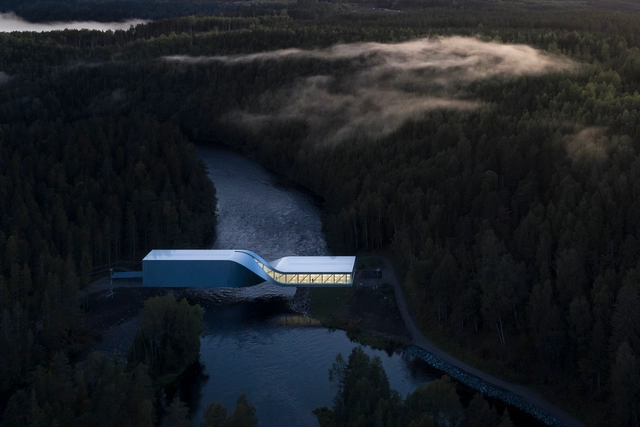
The current architectural production faces several paradigms and one of them is aesthetic. In a scenario of constant uncertainty, buildings with projections, holograms, or completely automatic ones that science fiction has shown so much, seem more and more distant from reality. Nowadays, the search for greater identification with the built space has been amplified instead of idealizing the new for the new. Therefore, looking at the past has presented different perspectives and it is in this scope that perhaps we can imagine a new futuristic aesthetic.
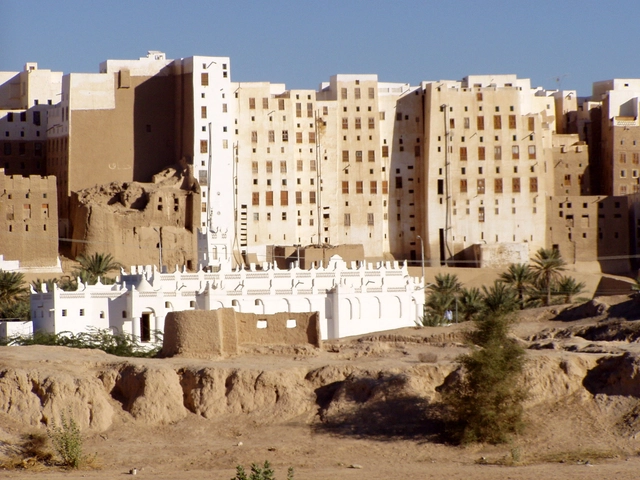
Skyscrapers are an unmissable characteristic of contemporary settlements. From São Paolo to New York, from Seoul to Dubai – these towering structures are a ubiquitous part of the urban fabric. The conventional image one has of these structures is of curtain-walled facades, but in Yemen – an ancient example goes against this trend. Central Yemen is home to the city of Shibam, surrounded by a fortified wall. It’s also home to a dazzling example of architectural ingenuity – tower houses that date back to the 16th century, stretching up to seven stories high.
The capsule hotel is typically representative of the image that many people have of Japan, combining dense use of space, technical ingenuity, and a futuristic vibe. Capsule hotels, also known as pod hotels, are one of Japan’s best-known and unique types of lodgings. Typically located around major public transportation hubs in large metropolitan cities, they target individuals looking for a low-budget, single-night stay.
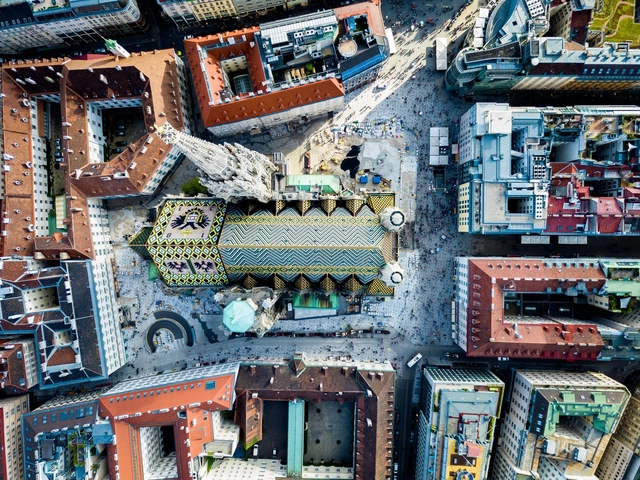
Vienna in Austria has topped the rankings of The Economist Intelligence Unit (EIU) 2022 Global Liveability Index, gaining back its previous position from 2019 and 2018, mostly for its stability and good infrastructure, supported by good healthcare and plenty of opportunities for culture and entertainment. Western European and Canadian cities dominated the top positions with Copenhagen, Denmark in second place and Zurich, Switzerland, and Calgary, Canada in third place. Adding 33 new cities to the survey, one-third of which are in China, bringing the total up to 172 cities, the classification excluded this year the city of Kyiv, due to Russia’s invasion of Ukraine.
Classified across 5 categories, stability, healthcare, education, culture and the environment, and infrastructure, the index was largely driven by the covid-19 pandemic. While covid-19 restrictions have eased in big parts of the world, liveability rankings started resembling “those seen before the pandemic”, however, the global average score remained below the pre-pandemic time. Although covid-19 has receded, a new threat to liveability emerged when Russia invaded Ukraine this year.
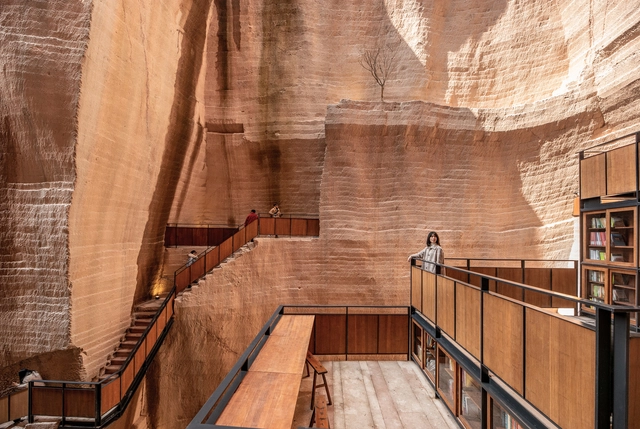
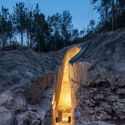
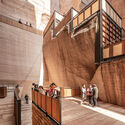
Today, reusing and adapting existing spatial resources is regarded around the world as an important contribution to sustainable development, and new challenges are thus also emerging at the margins of classic building tasks due to the changing assessments regarding whether to preserve or demolish. Xu Tiantian’s projects in the quarries of Jinyun combine aspects of landscape planning, interior design, artistic installations, and social planning with an economic revitalization of the rural area. In this way, a ruined and exploited landscape becomes a sign of departure with which a new sustainable coexistence can be linked to a narrative about the history of the location.
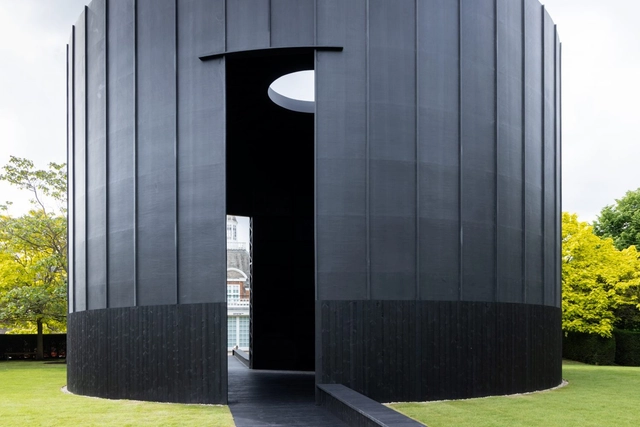
A few weeks ago, this year’s edition of the Serpentine Pavilion opened to the public. Designed by Chicago-based artist Theaster Gates, it’s an evocative project, its cylindrical form referencing American beehive kilns, English bottle kilns, and Musgum adobe homes found in Cameroon.
What the pavilion is named tells the viewer a lot more about its intentions as a spatial experience. Titled Black Chapel, it houses a spacious room with wraparound benches, and an oculus above that allows daylight to filter into the space. It’s a fairly minimal interior – designed as a site for contemplation and reflection. This minimal quality of Gates’ Serpentine Pavilion raises particularly interesting questions. How artists and architects opt for a “less is more” approach when designing meditative spaces, but also how these introspective spaces have been equally enhanced by ornamentation.
At the turn of the 19th century, a British publishing house would release a book written by an English urban planner – a book with an optimistic title. The title of this book was To-morrow: A Peaceful Path to Real Reform, later reprinted as Garden Cities of To-morrow. The English urban planner in question was Ebenezer Howard – and this book would lay the foundations for what would later become known as the Garden City Movement. This movement would go on to produce green suburbs praised for their lofty aims, but it would also produce satellite communities that only catered to a privileged few.
Living in an urban environment is demanding. Busy and competitive lifestyles leave people numbed from the effects of stress. Individuals in urban areas are more prone to mental health issues and demonstrate a noticeable lack of personal connection. Rosy city lights and skyscrapers are thorned with rising stress levels, posing an essential question to architects - how do spaces affect wellbeing?
Designer Paul Wellington, based in Milwaukee, United States, is the author of Black Built: History and Architecture in the Black Community, a book that documents more than 40 works of architecture around the country by Black architects that have had a direct impact on communities of color. He’s now working on a new book that will focus on Black women architects in a field dominated by white males. I spoke with Wellington about the new book, what he learned through his research on Black architects and their work, and the future of increasing the ranks of Black architects in the U.S.
https://www.archdaily.com/949665/hidden-figures-the-historic-contributions-of-black-architects-in-the-united-statesMichael J. Crosbie
Social responsibility and the desire to improve society has long been influenced by the built environment. Looking at city centers, architecture has contributed to the improvement of the urban fabric, whether it being through planning and zoning strategies, integration of public spaces, or small interventions. In some cases however, these interventions are in fact used as tools to keep the homeless off the streets, disguised as art or conceptual designs. Several public urban policies have all implicitly prohibited the homeless and other marginalized social groups from city centers, claiming that their presence and “irregular” use of public space could compromise the reputation, security, and desirability of the city.
Built environments are a reflection of the social order and dynamic ideals of society. Neighborhoods and cities are cultural relics shaped by diverse communities, some of whose voices are heard louder than others. In the past few decades, Indian metropolitans have been booming with urbanization. Holding cities back from being Utopian hubs of growth is spatial inequality. The residential segregation that patterns the cities of India can be understood through the caste system. The issue, however, is largely intersectional. Forces rooted in class, religion, and gender also structure the country's social landscape.
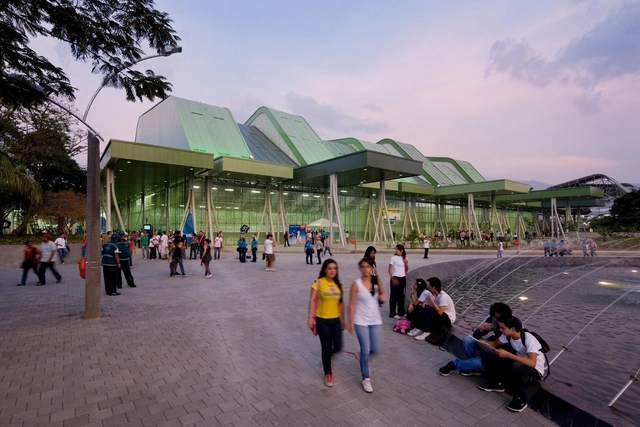
In 2013, Medellín (Colombia) was declared the most innovative city in the world as part of the City of the Year Competition, organized by the Wall Street Journal. It competed alongside metropolises like New York and Tel Aviv.
The Antioquian capital has become one of the most advanced technological and intellectual epicenters in Colombia, not to mention the important urban development that has occurred in the city since the beginning of 2010. The city’s mobility-orientated integrated infrastructure together with interventions of high social impact have turned Medellín into the center of the debate on the growth and development of Latin American cities.
The following projects tell you the story of a city that bet on urban consolidation through quality public spaces and projects that encouraged citizen management by supporting the development of marginalized areas in a process of social reconstruction, where architecture has played an important role as a spatial formulation tool.
It is often times that when living in Japan, whether you're occupying a shared house or renting out your own apartment, you'll find yourself having a limited amount of space to work with. This primarily stems from land scarcity within the country, with 73% of the land available to us being considered mountainous, with another large percentage of the country's flat land serving as farmland and a means for agricultural purposes. There is also the issue surrounding overcrowding within Japan's urban areas. Due to these factors, inflation amongst properties is rife, thus, resulting in many residents turning to small dwellings.
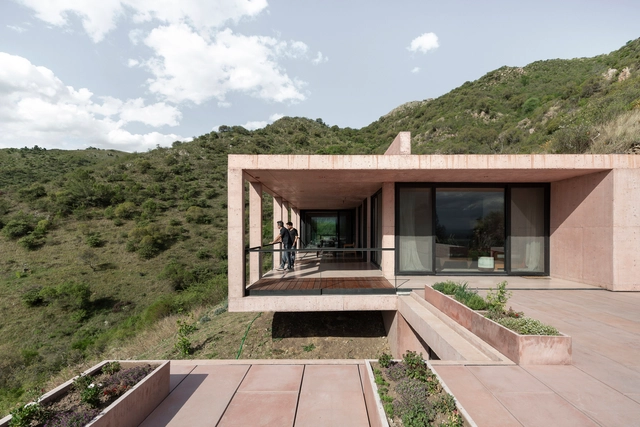
How relevant is the use of color in architecture? Throughout history, we find various scenarios where color takes centre stage in its integration with the architectural work. Nowadays this is no exception. This is because colour is a medium that can be used to provoke deep and immediate emotions and reactions in the person observing. Because of this, colour plays an important role in the architectural reading, as it has the power to clarify the components that make it up or, on the contrary, to change the perception of the work or space.
The following list shows various Latin American housing projects that have had a particular approach to color in their composition. In them, we see the conception of color as the integrator of the work, or as a means of enhancing a particular element, be it interior or exterior.
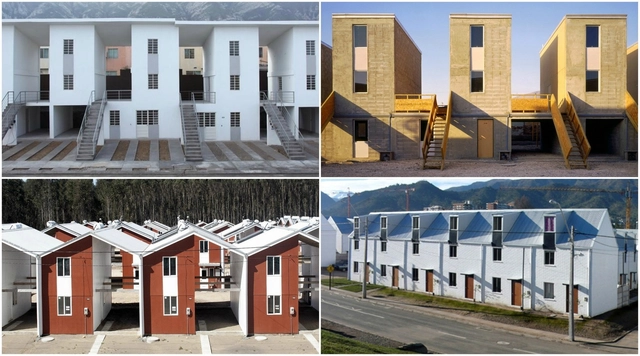
In 2016, Pritzker Prize winner Alejandro Aravena announced that his firm, ELEMENTAL, had released the rights to four of their social housing projects, and all documents would be uploaded to their website for public use. Aravena’s goal was to start a movement in which architects would work together to tackle the world’s challenges around housing shortages and affordability, especially with increased migration. The shared drawing sets and a description of the project’s principles provide architects with the necessary documentation for building a low-cost home, encouraging designers to do the same with their work, contractors to assist in building these homes, and governments to shift their thinking of how they can approach mass urbanization. Six years later, how has the concept of open-source architecture progressed, and how has it impacted the architectural profession ever since?
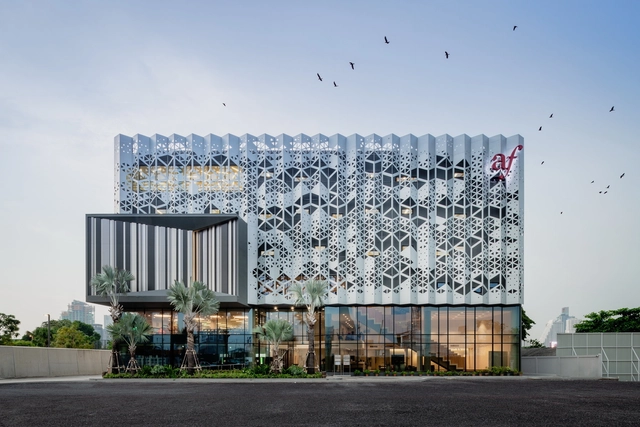
In 1782, Bangkok became the capital of Siam – as Thailand was previously known. Its strategic position within the protective curve of Chao Phraya River to the West and the vast, swampy delta of the Sea of Mud that secured the city to the East was key. King Rama I modeled the new city on what had been the urban reference of Thailand since the 14th century: Ayutthaya, which by 1700 had become the largest city in the world with a total of 1 million inhabitants.
Bangkok progressively saw the construction of temples (wats), schools, libraries and hospitals. However, few other typologies were erected and the city lacked significant paved streets. Instead, the river and a network of interconnected canals served as the transport infrastructure of the city. With time, the floating houses anchored along the riverfront decreased and the pavements spread.
Upon becoming a sovereign country, free from British Rule, the people of India found themselves faced with questions they had never needed to answer before. Coming from different cultures and origins, the citizens began to wonder what post-independence India would stand for. The nation-builders now had the choice to carve out their own future, along with the responsibility to reclaim its identity - but what was India's identity? Was it the temples and huts of the indigenous folk, the lofty palaces of the Mughal era, or the debris of British rule? There began a search for a contemporary Indian sensibility that would carry the collective histories of citizens towards a future of hope.
Architecture, with all its practitioners, academics, and theorists, have long been exploring utopic ideas with hopes of turning them into something concrete for the sake of a better world. But as the world heads towards an even greater polarization than it currently has, the architecture practice found itself having to adapt to the current systems of the planet, constrained by its ever-growing conditions. Slowly, practitioners realized that utopia can not truly be seen as the ideal solution, and needed to be readapted or morphed with other concepts for it to actually work. DETAIL's latest monograph BIG. Architecture and Construction Details / BIG. Architektur und Baudetails, a rapport between BIG’s imaginative, unbuilt utopias and functional, built architecture, explores 20 projects from the firm's workshop.