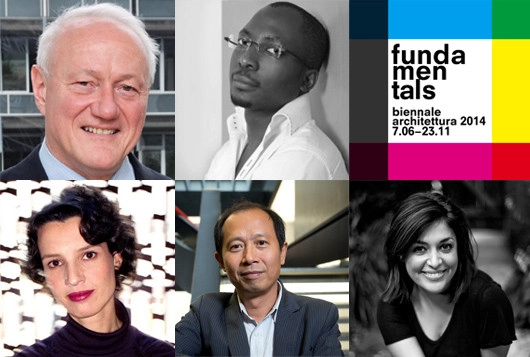
The Venice Biennale 2014 has announced the make-up of the International Jury who will determine which National Pavilions will receive the Gold and Silver Lions June 7th. As decided by the Board of Directors, including chairman Paolo Baratta and director Rem Koolhaas, the jury represents experts from a variety of disciplinary fields, from four different continents (Asia, Africa, the Middle East, & Europe). Read on after the break for more on the five appointed jury-members.
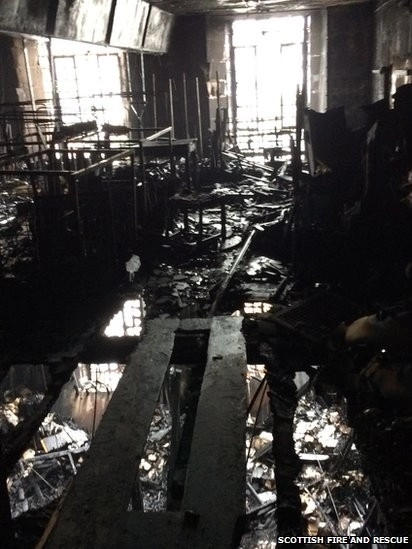
A statement from The Glasgow School of Art's Muriel Gray paints a somber picture of the aftermath of yesterday's fire: "Bad news first is that we have lost the iconic and unique Mackintosh library. This is an enormous blow and we are understandably devastated."
The fire, which broke out on Friday, May 23 at around 12:30pm, caused an outpouring of grief on social media. Though many speculated as to the fate of the library, the archives, and the building's structural integrity, the report brings confirmation that the archives are "safe."
Gray added, "As for the library, Mackintosh was not famous for working in precious materials. It was his vision that was precious and we are confident that we can recreate what was lost as faithfully as possible."
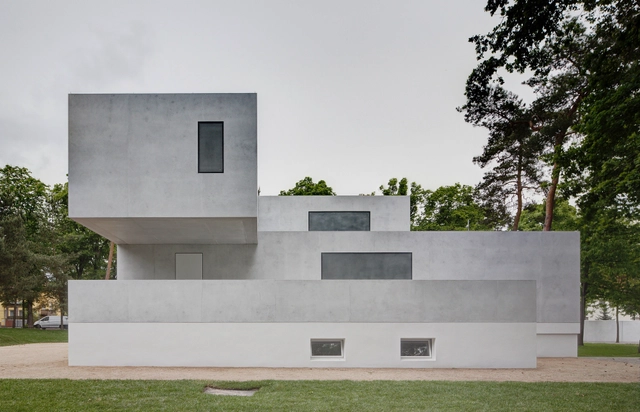
The Bauhaus school of design has made an indelible mark on the world of architecture, one that is still felt almost seventy years after its closing. After moving the school from Weimar to Dessau in 1925 to avoid confrontation with the Nazis, founder Walter Gropius designed a series of semi-detached homes for the design masters teaching at the Bauhaus. This small neighborhood, nestled in a pine forest near the school building itself, was an idyllic home for the likes of Lyonel Feininger, Oskar Schlemmer, and Gropius himself. They were abandoned in the 1930s as Germany plunged into war, and suffered years of damage from military conflict and neglect. Renovations to the houses began in 1990, and now, 24 years later, the Bauhaus meisterhäuser have been completely reopened.
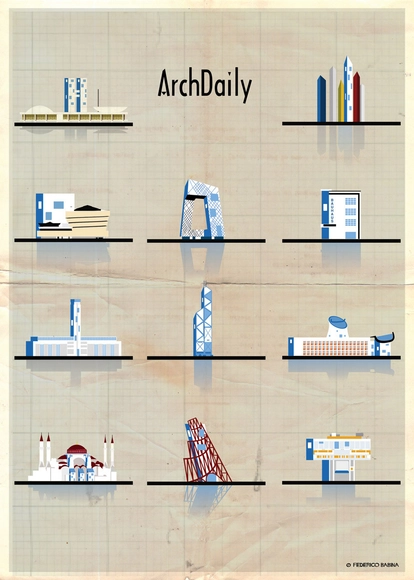
Our very talented friend Federico Babina has been responsible for some of ArchDaily's most popular posts lately. The creativity behind his ARCHISET, ARCHIMACHINE, ARCHIPORTRAIT, ARCHIST, ARCHIBET and ARCHICINE have garnered thousands of shares on social media. Since we loved Babina's serialized architectural illustrations, we were thrilled when he saw his latest set: the ArchDaily logo imagined in and around the world's classic architecture. Read on for our interview with the architect and graphic designer.
ArchDaily: Can you introduce yourself? Federico Babina: My name is Federico Babina. I am an Italian architect and graphic designer (since 1994) that lives and works in Barcelona (since 2007). But mostly I've been a curious person (since forever).
AD: What's an interesting fact about you? FB: Every day I try to rediscover a way to observe the world through the eyes of a child. Children are able to have a vision of things totally uninhibited and without the conditioning of the experience. Children's drawings are always amazing and beautiful in their spontaneous simplicity and clarity. I like trying to explain the world I see through different techniques of expression. I like the richness of the language and the diversity of its forms. I do not want to confine me in a prison of a style or shape.
AD: In what ways does your training as an architect affect your style as an illustrator? FB: Any architect has to explain his projects through illustration and drawing. Design is the first way to give shape and body to a project. In this sense every architect should be a graphic designer. I was born with illustration. It’s been part of my life since I was a child. I started with book stories, I passed through the comics and then I arrived to architecture. Drawing and illustration and making architectural projects are, for me, one of the ways to recount and capture thoughts, feelings and emotions. Every project has a story and every project is a witness of a story. I 'm fascinated by the idea of being able to blend the world of architecture and illustration: transform the architecture in an illustration and illustrations in an architecture.
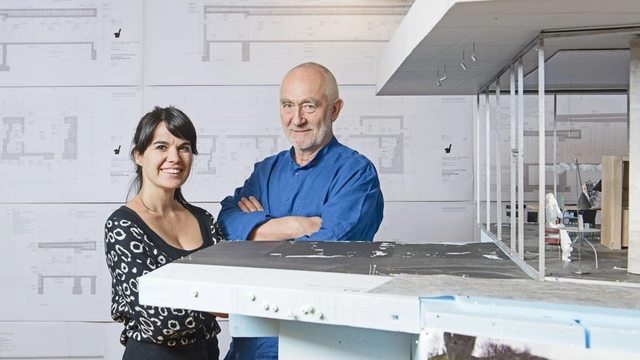
Peter Zumthor with protege Gloria Cabral. Image Courtesy of Rolex Mentor and Protege Arts Initiative
Peter Zumthor has chosen to mentor Paraguayan architect Gloria Cabral as part of the Rolex Mentor and Protégé Arts Initiative. Cabral, a partner at Asuncion-based Gabinete de Arquitectura, will spend a year collaborating with the Swiss architect, who has dedicated his expertise in an effort to learn, create and grow with the young talent.
Describing Cabral’s work to reveal an original spirit, Zumthor stated: “In Gloria’s work and attitude I sense a keen interest in the physical experience of architecture, which makes it exciting for me to collaborate with her.”
The following six "miracle" materials could be headed straight into your home, office, car and more. Dina Spector at Business Insider recently rounded up the six most promising materials. As of now, their potential applications have just scratched the surface, but the possibilities are endless. Presented by AD Materials.
Scientists are constantly on the look out for lighter, stronger, and more energy-efficient materials. Here's a glance at some materials that will change the way we build things in the future.
https://www.archdaily.com/508576/six-miracle-materials-that-will-change-their-industriesDina Spector, Business Insider
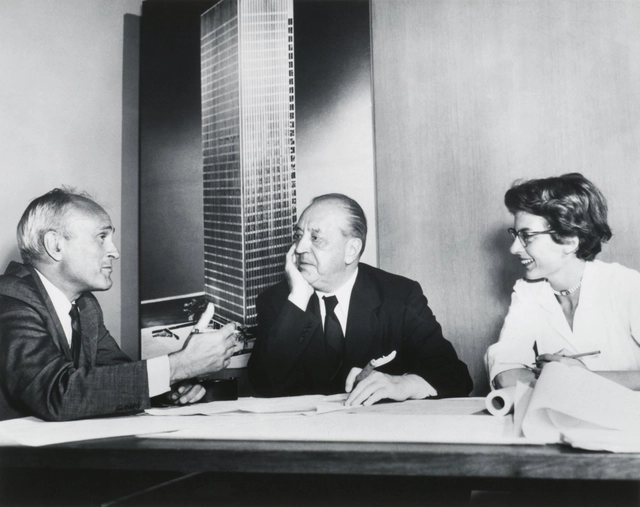
The Venice Biennale has just announced that Phyllis Lambertwill be the recipient of the Golden Lion for Lifetime Achievement at the 14th International Architecture Exhibition Fundamentals this June.
Paolo Baratta, chair of the Venice Biennale Board, and Rem Koolhaas, director of the Architecture Biennale, explained their decision:
“Not as an architect, but as a client and custodian, Phyllis Lambert has made a huge contribution to architecture. Without her participation, one of the few realizations in the 20th century of perfection on earth – the Seagram Building in New York – would not have happened. Her creation of the Canadian Centre for Architecture in Montreal combines rare vision with rare generosity to preserve crucial episodes of architecture’s heritage and to study them under ideal conditions. Architects make architecture; Phyllis Lambert made architects…”
More on Lambert's life and influence after the break:
Check out this rare footage that captures Le Corbusier as a “young man of 71-years-old” surrounded by paintings and discussing his work, poetry and the "ideal city" within his 1933, self-designed Paris flat.
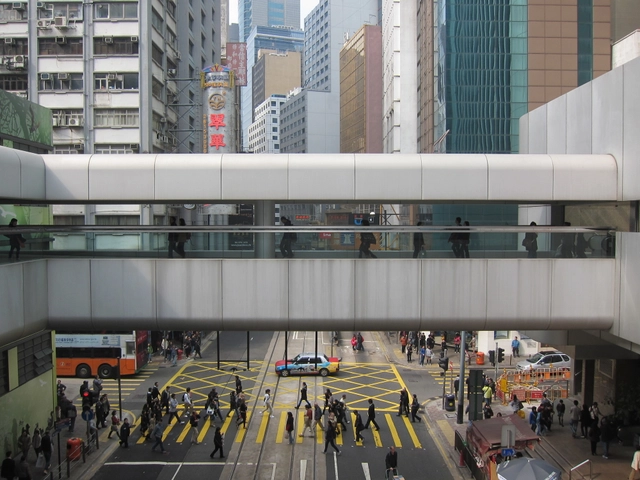
Footbridge in Central, Hong Kong. Image by Adam Frampton
The following are excerpts from one of 41 interviews that student researchers at the Strelka Institute are publishing as part of the Future Urbanism Project. In this interview, James Schrader speaks with Adam Snow Frampton, the co-author of Cities Without Ground and the Principal of Only If, a New York City-based practice for architecture and urbanism. They discuss his work with OMA, the difference between Western and Asian cities, his experiences opening a new firm in New York, and the future of design on an urban scale.
James Schrader: Before we get to future urbanism, I thought it would be interesting to look a bit into your past. Could you tell me about where your interest in cities came from? Were there any formative moments that led to your fascination with cities?
Adam Snow Frampton: I was always interested in cities, but not necessarily exposed to much planning at school. When I went to work at OMA Rotterdam, I was engaged in a lot of large-scale projects, mostly in the Middle East and increasingly in Asia, where there was an opportunity to plan cities at a bigger scale. In the Netherlands, there’s not necessarily more construction than in the US, but there is a tradition of thinking big and a tendency to plan. For instance, many Dutch design offices like OMA, West 8, and MVRDV have done master plans for the whole country.
Set to open to the public on Wednesday after a highly controversial and contested journey from idea to reality, the September 11 Memorial Museum has inevitably been a talking point among critics this week. The museum by Davis Brody Bond occupies the space between the Memorial Plaza at ground level and the bedrock below, with an angular glass pavilion by Snøhetta providing an entrance from above. A long ramp, designed to recall the access ramp with which tons of twisted metal was excavated from the site, descends to the exhibits which sit within the perimeter boundaries of the twin towers' foundations, underneath the suspended volumes of Michael Arad's memorial fountains.
The content of the museum is obviously fraught with painful memories, and the entrance pavilion occupies a privileged position as the only surface level structure ground zero, in opposition to the great voids of the memorial itself. The discussion at the opening of the museum was therefore always going to center on whether the design of the museum - both its built form and the exhibitions contained - were sensitive and appropriate enough for this challenging brief. Read the critics' takes on the results after the break.
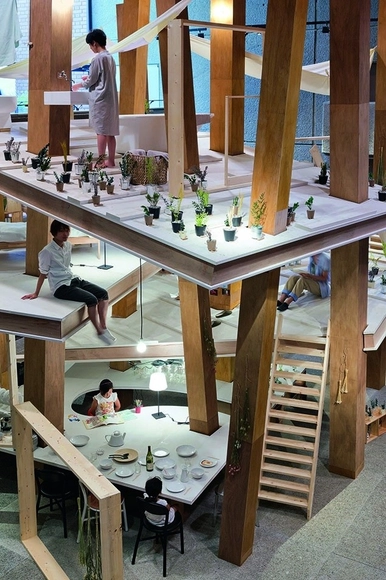
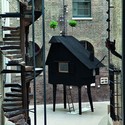
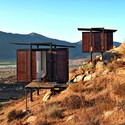
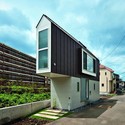
Taschen’s latest volume draws together the architectural underdogs that, despite their minute, whimsical forms, are setting bold new trends for design.
When economies falter and construction halts, what happens to architecture? Rather than indulgent, personal projects, the need for small and perfectly formed spaces is becoming an economic necessity, pushing designers to go further with less. In their new volume Small: Architecture Now!, Taschen have drawn together the teahouses, cabins, saunas and dollhouses that set the trends for the small, sensitive and sustainable, with designers ranging from Pritzker Laureate Shigeru Ban to emerging young practices.
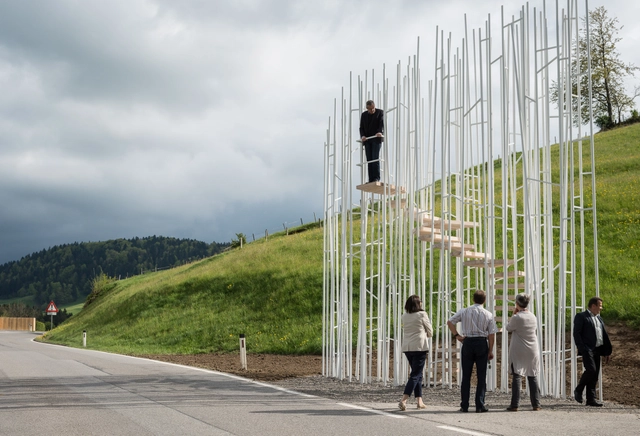
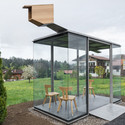
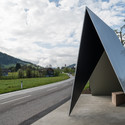
A year in the making, Krumbach in Austria has unveiled seven eye-catching bus shelters which have turned the world's gaze on the tiny village. Designed by internationally renowned architects such as Wang Shu, Sou Fujimoto and Smiljan Radic, who worked in collaboration with local architects and craftsmen, the whimsical structures will put the village of 1000 residents on the map.
Curator Dietmar Steiner praised the commitment of those involved, saying "the entire project succeeded because it was supported in the most generous fashion by more than 200 people." This included the architects, who took up their projects for little more than a free holiday in the area and the chance to engage in an unusual challenge. However, BUS:STOP was not merely a vanity project: Verena Konrad, Director of vai Vorarlberger Architektur Institut, noted that the project was important for "the successful connection of infrastructure and mobility for the rural area."
Is it more dangerous to be a soldier or a construction worker? Astonishingly, it’s the latter. According to a recent report in the Guardian, 448 British soldiers have been killed in Afghanistan since 2001. In the same period, 760 construction workers died on British building sites.
Life is cheap at the dirty end of architecture and not just in the UK. The number of fatalities of largely migrant workers from the Indian subcontinent imported to implement Qatar’s architectural ambitions, notably the stadiums for the 2022 World Cup, has been the subject of much hand-wringing discussion. And rightly so − over 400 Indian and Nepali building workers died in Qatar in 2013, and the International Trade Union Confederation (ITUC) has warned that up to 4,000 workers may die before a ball is finally kicked in 2022.
If 400 people perished in a plane crash, there would be exhaustive inquiries into aircraft safety, lessons would be learnt and strategies of improvement implemented. There would also be a palpable sense of loss and accountability. But a fatality here and there on a construction site over a period of time does not have the same galvanizing impetus.
Material Minds, presented by ArchDaily Materials, is our new series of short interviews with architects, designers, scientists, and others who use architectural materials in innovative ways. Enjoy!
Before attending Columbia University for her Masters in Architecture, Los Angeles-based architect Doris Kim Sung took a fairly non-traditional approach to becoming an architect: she was a biologist. Naturally then, Sung’s architectural work tends to take inspiration from the biological world, particularly in the way she experiments and innovates with materials. Much of her work involves thermal bimetals, a material that expands and contracts with temperature swings; it can even act as a sun shade and ventilation system, without the need for electricity.
So where does a biologist-turned-architect draw inspiration from? We interviewed Ms. Sung to find out for ourselves -- the responses, like her work at dO|Su Architecture, are simply fascinating.
Hale County, Alabama is a place full of architects, and often high profile ones. The likes of Todd Williams and Billie Tsien have ventured there, as have Peter Gluck and Xavier Vendrell, all to converge upon Auburn University’s Rural Studio. Despite the influx of designers, it is a place where an ensemble of all black will mark you as an outsider. I learned this during my year as an Outreach student there, and was reminded recently when I ventured south for the Studio’s 20th Anniversary celebration. While the most recent graduates took the stage, I watched the ceremony from the bed of a pick-up truck, indulging in corn-coated, deep-fried catfish, and reflected on what the organization represents to the architecture world.
Since its founding in 1993 by D.K. Ruth and Samuel Mockbee, the Studio has built more than 150 projects and educated over 600 students. Those first years evoke images of stacked tires coated with concrete and car windshields pinned up like shingles over a modest chapel. In the past two decades, leadership has passed from Mockbee and Ruth to the current director, Andrew Freear, and the palette has evolved to feature more conventional materials, but the Studio remains faithful to its founding principal: all people deserve good design. Now that it is officially a twenty-something, what canRural Studio teach us about good design?
https://www.archdaily.com/505030/on-its-20th-anniversary-what-rural-studio-continues-to-teach-us-about-good-designRennie Jones
Originally published in Metropolis Magazine as "Possibilities over Prescriptions," this article by Marshall Brown suggests that we open up the conversation to a wider range of possibilities for the Barack Obama Presidential Library. Brown asks "Rather than narrowing the president’s choices based on race, what if the field of candidates could be expanded?"
The official process to build the Barack Obama Presidential Library has finally been launched. After years of gossip and rumors about architects and sites, this could be the moment for some intelligent and informed debate among the design community. Unfortunately, the conversation so far has been dominated by narrow prescriptions about what the library should be, who should design it, and where it should be located, as opposed to broader speculation about what it could be. So I propose that, rather than making prescriptions to the president based on a narrow set of perceived realities, we can help him by expanding the conversation and laying out a broader set of possibilities.
https://www.archdaily.com/505012/forget-race-here-are-the-issues-we-should-be-considering-for-the-obama-library-designMarshall Brown
In recent years, crowdfunding websites have taken the world by storm. Sites like Kickstarter have been used to fund books, films, products, and even been used to fund architecture projects, with success for projects like +Pool in New York and the Luchtsingel in Rotterdam. However, one drawback which prevents such 'kickstarter urbanism' from taking off more is the way the platform constrains the design of the projects: in both instances, construction elements are offered as rewards for the backers, who get to mark their contribution by having their name inscribed on the project itself. In response to this, other crowdfunding sites specifically tailored for designers have used different models for raising money. Spacehive works by leveraging the interest of local people in an urban project, doing away with the rewards system in favor of the implicit reward of improved public space.
But now, a new site called "Make Architecture Happen" is attempting to bridge the gap, providing a way to draw funds from a worldwide audience without compromising on design freedom. Read more about the site, and see some of our favorite projects from its launch, after the break.









.jpg?1400008808&format=webp&width=640&height=580)