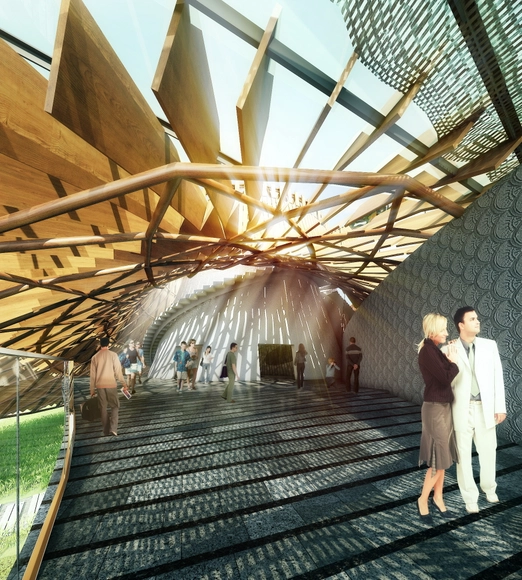
The honor of designing Thailand’s pavilion for the 2015 Milan Exposition has officially been awarded to The Office of Bangkok Architects (OBA). The firm’s winning design incorporates the Expo’s theme of “Feeding the Planet, Energy for Life” with the agrarian and religious qualities that define the Kingdom of Thailand. Located centrally on the Expo’s main avenue, the pavilion will be adjacent to a canal that will be used as a part of the exhibition, relating back to Bangkok’s informal title as the “Venice of Asia.”
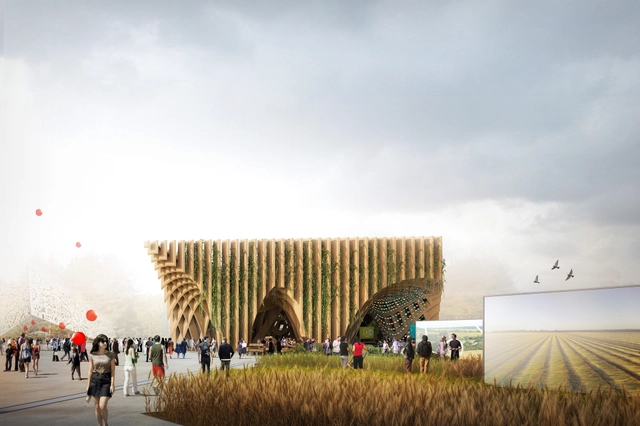
Paris-based X-TU has envisioned a more cohesive, sustainable market where food is not only grown and harvested, but sold and consumed on the spot. Serving as the French pavilion for the 2015 Milan Expo, X-TU’s competition-winning scheme will celebrate the country’s “rich genetic heritage” and future in innovative food production with a timber “fertile market” that supports the growth of the produce it sells.
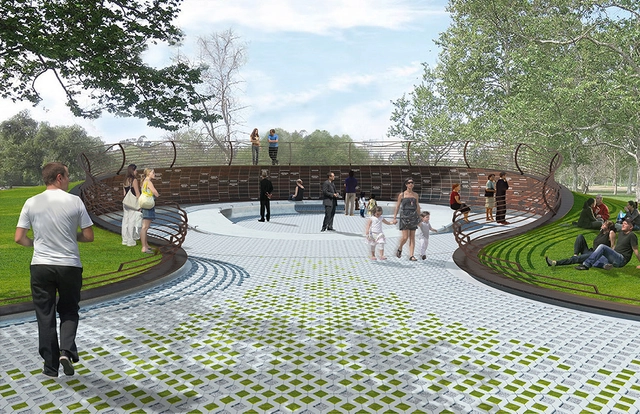
Manhattan-based Zerafa Architecture Studiohas been announced as winner of a competition to design a monument to Orange County’s crime victims. Placed between two natural mounds on axis with Irvine’s Mason Regional Park office, the winning scheme carves a subtle, circular void within the park’s forested landscape that offers a range of experiences to the community.
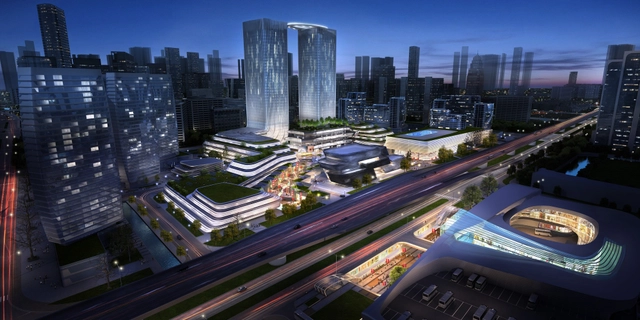
amphibianArc has been announced as winner of the Ningbo Yinzhou Southern CBD Portal Planning competition. Commissioned by the same developers of the Ningbo Museum designed by Wang Shu, the "transit-oriented" proposal aims to become the "driving force" of urban life in the masterplan's fourth and final phase.
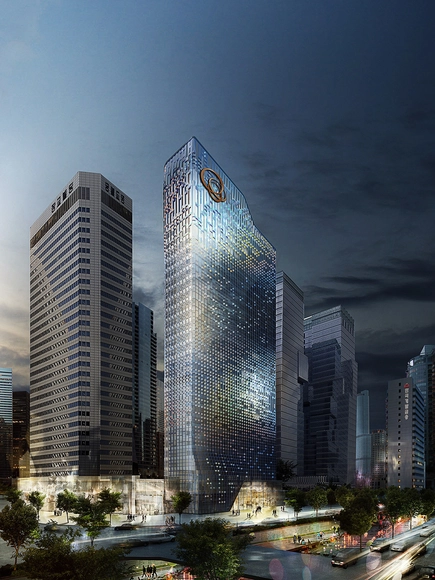
UNStudiohas won a competition to remodel the Hanwha headquarters in Seoul. With an aim to transform a building into a symbol of the leading environmental technology company’s values, UNStudio's winning scheme will replace the skyscraper’s opaque panelling and single layer of dark glass with an animated facade designed to reduce solar gain, increase natural light, generate energy, and interact with its surrounding.
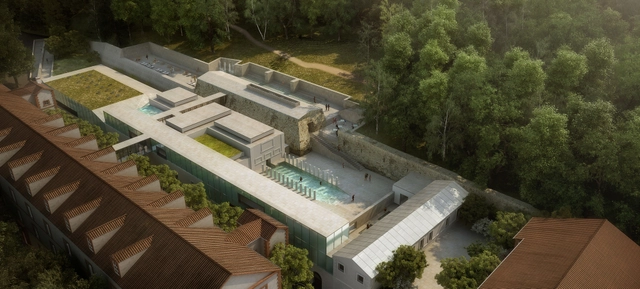
Henning Larsen Architectshas won an invited competition to design a new headquarters for the Central Bank of Libya in Tripoli. Inspired by Libyan vernacular architecture, the structure will occupy two existing site excavations. The first, and largest, excavation will be transformed into a “shaded oasis” that serves both the bank and Gurji district by providing areas for operations, an education center, restaurant and hotel. The second will allow vehicular access to the treasuries.
Visualisation (day). Image Courtesy of Boogertman + Partners
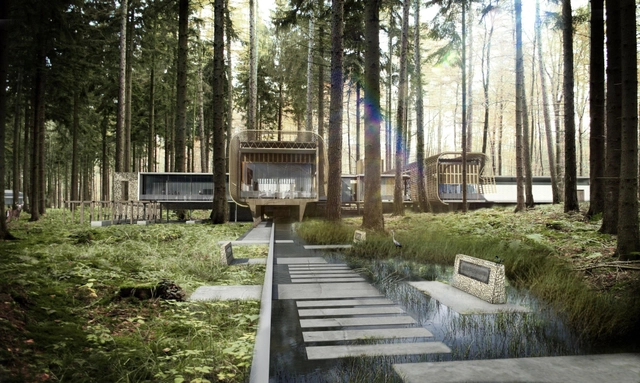
South African-based practice Boogertman + Partners has recently won a competition to design a new education centre for the Karura Forest Environmental Education Trust in Kenya'sKarura Forest Reserve. The centre, situated on around fifteen acres of a former sports club, will be surrounded by the closed-canopy forest close to the Kenya Teachers Training College, the International Center for Research in Agro-forestryand the United Nations Environment Programme Headquarters.
Located in the northern part of Nairobi County, bordering the Muthaiga, Gigiri and Runda residential areas, the centre will seek to educate people on the many species of plants, birds, insects and mammals to be found within Karura's diverse landscape.
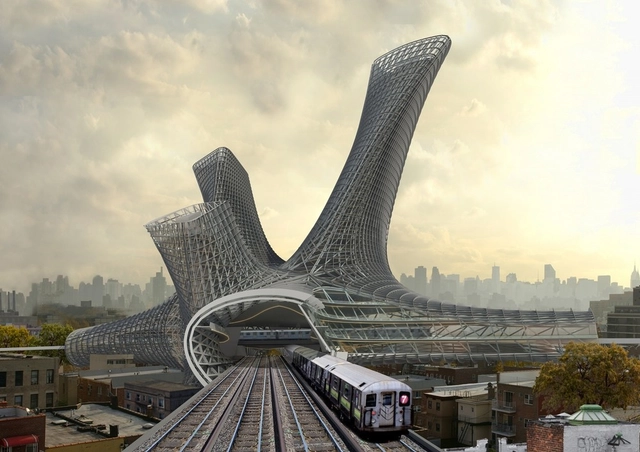
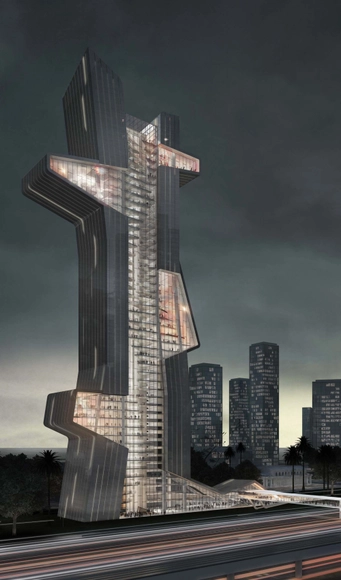
Chad Kellogg and Matt Bowles of AMLGM have envisioned a new residential tower typology for New York that can connect and transform unused space surrounding various transportation hubs into a dense, mixed-use housing tower.
The proposal, dubbed Urban Alloy, which won first in Metropolis’ Living Cities Residential Tower Competition and received honorable mention in Evolo Skyscrapers 2014, is capable of responding to a number of unique spacial and environmental situations, providing a new way for the city to grow "organically" and provide adequate housing for the expanding population.
HENNhas been selected to design a 160-meter, mixed-use tower for a new Central Business District in the eastern China metropolis of Wenzhou. Located in close proximity to the Ou Jiang river, on the district’s southern edge, the Wenzhou Tower hopes to serve as the gateway to the new city development.
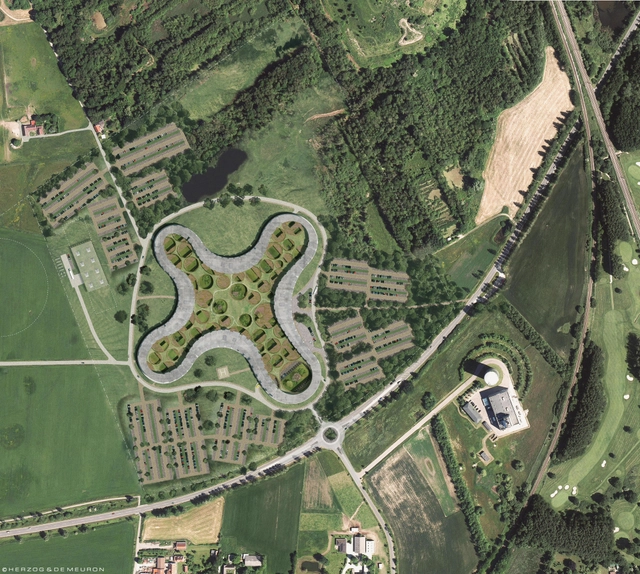
Herzog & de Meuron and Vilhelm Lauritzen Architects have been announced as winners of an international competition to design one of Denmark’s largest hospitals: Nyt Hospital Nordsjælland. Selected ahead of six other practices, including BIG and C.F. Møller, Herzog & de Meuron’s nature-inspired proposal will provide the New North Zealand Hospital with a 124,000 square meter facility that serves 24 medical departments and provides over 660 beds.
“The hospital organically reaches out into the wide landscape. Simultaneously its soft, flowing form binds the many components of the hospital,” described the architects. “It is a low building that fosters exchange between staff and patients, and it has a human scale despite its very large size.”
Brooks + Scarpahas won a competition to design a new park-and-ride plaza for the future Angle Lake light rail station in Seattle. As part of the 1.6-mile South 200th Link Extension, which will connect Angle Lake to the airport and downtown area by 2016, the $30 million complex will provide the station’s anticipated 5,400 passengers with a pedestrianized plaza, drop-off and retail area, as well as a 1,050-stall parking garage and 35,000 square feet of reserved space for future transit-oriented development.
BLUE TAPE, the winning proposal of an international competition to design an Architecture School adjacent to the American University in Dubai, “is a vertical re-imagining of the typical architecture school typology.” Submitted by USC alumni Evan Shieh and Ali Chen, BLUE TAPE, which transforms a horizontal pin-up space into a vertical 'conceptual connector,' is inspired by USC's 'Blue Tape Reviews' (their method of pinning up work for design reviews).
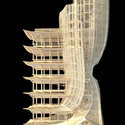
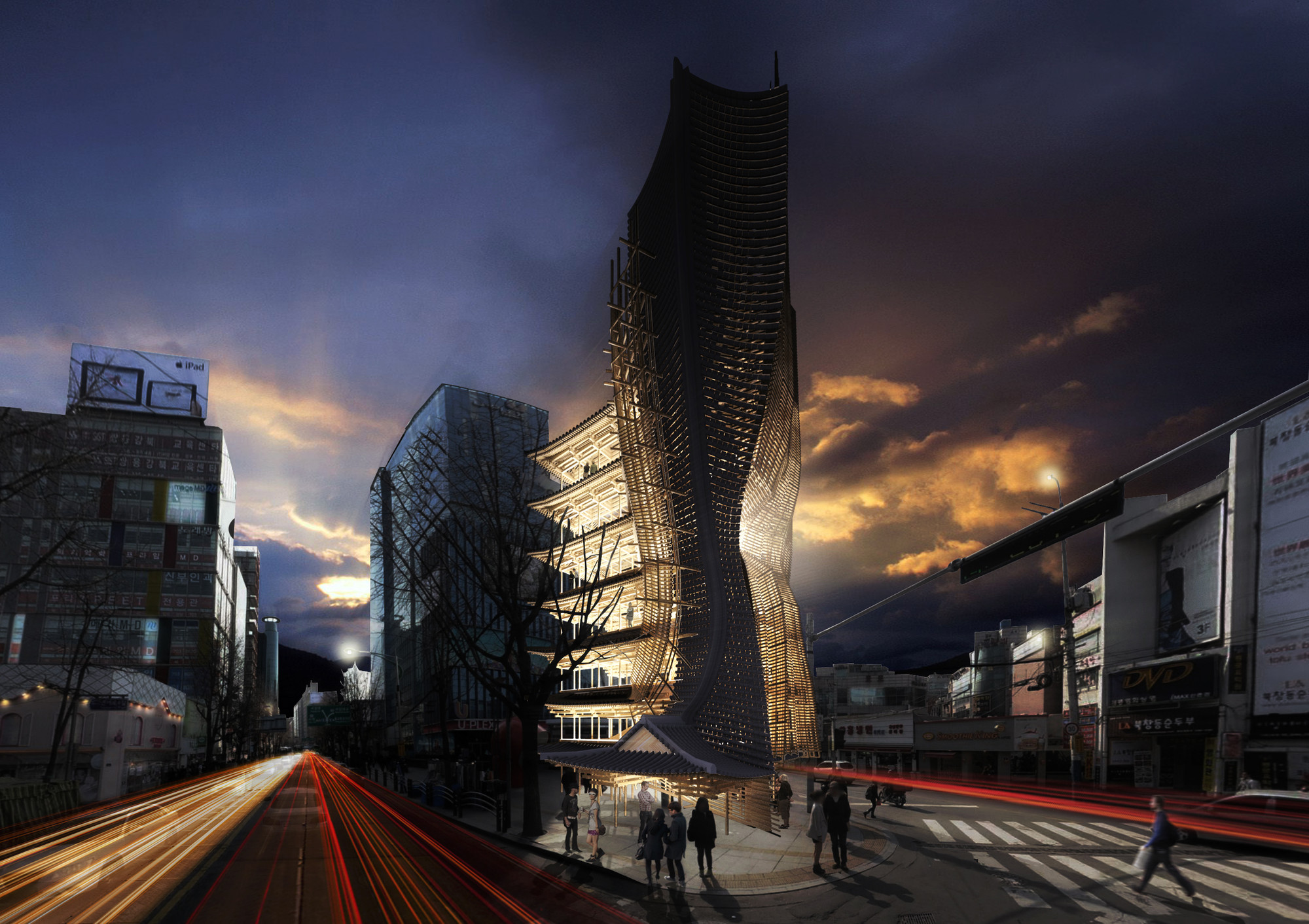
Vernacular Versatility, recently awarded first place in the 2014 eVolo Skyscraper Competition, seeks to adapt traditional Korean architecture into a contemporary mixed-use high-rise. The vernacular design of the Hanok, the "antonym of a western house" and epitome of the Korean style, has disappeared from every town. Extensive urban development in the 1970s led to a boom in modern apartment dwellings and, consequently, a loss of established Korean vernacular architecture. Yong Ju Lee's proposal aims to reimagine the Hanok in one of the country's busiest districts, drawing people's attention to and stimulating their interest in traditional architecture with the intention that "it will eventually be absorbed into people’s everyday lives"
The winning entry of the Northern Shore Lake Zwenkau competition, which challenged select firms to introduce "holiday villages" and recreational activities to a small lake twenty minutes outside of Leipzig, Germany, was proposed by Labor4plus. Dubbed "Yearning Spaces," the proposal envisions a Western harbor village that concentrates recreational activity along the northern coast of Lake Zenkau and connects to eastwardly located "hermit huts" via hiking trails paralleling the shore.
Placing fifth in the international competition to design the Austrian Pavilion for the 2015 Milan Expo, Paolo Venturella’s concept is designed as an extruded version of the Austrian mountain house that connects two major programs: an exhibition space and “big green-house.” To the north, the elevated exhibition space is shielded by a fabric sheathing which diminishes as it moves towards the greenhouse, south, where visitors are presented with a fresh vegetable garden, bar and restaurant that serves traditional cuisine.
The Hague government officials have named KAAN Architecten’s design for the Facilicom Consortium PPS B30 as winner of the PPP contract for the Bezuidenhoutseweg 30 project. Originally built in 1917 for the Department of Agriculture, Nature Management and Fisheries, KAAN is expected to transform the existing National Heritage Site facilities into a vibrant and open “modern day think tank” for the Dutch government.
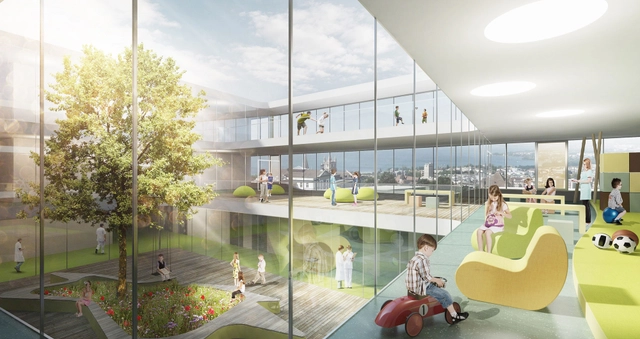
Architects von Gerkan, Marg and Partners (gmp), with partners JB Ferrari, have won first prize in an international competition to design a new children’s emergency unit at the Lausanne University Hospital in Switzerland. The 85-bed hospital will feature a terraced inner courtyard with conservatory, which will serve as a protected outside play area, that offers ample natural light and space for plant-life.
Courtesy of Silvio d’Ascia Architecture and Omar Kobité
Silvio d’Ascia Architecture, Omar Kobité Architecture and Eric Giudice Architects have been announced as winner of an international competition to design the new TGV high-speed railway station in Kénitra. The winning design aims to unite the northern and southern parts of the city by providing two entryways joined by one geometrical volume whose triangular framework recalls traditional shapes found in vernacular Moroccan architecture.
Danish architectsElkiær + Ebbeskov (E+E) andLeth & Gori have won an invited competition to design a large multifunctional sports building in Langvang, Denmark. Competing against teams led by Dorte Mandrup Arkitekter, CEBRA, COBE and Kontur, their winning proposal features a combined sports hall and community centre consisting of a series of multifunctional arenas for activities and events. The scheme also includes a masterplan of the surrounding area centeredaround sports and recreation.
Tsinghua University, alongside New York-based Studio Link-Arc, has been announced as winners of a competition to design the Chinese Pavilion at the 2015 Milan Expo. Expanding on the Expo’s overarching theme, “Feeding the Planet - Energy for Life,” the pavilion’s “Land of Hope” is centered on the idea that “hope can be realized when nature and the city exist in harmony.”
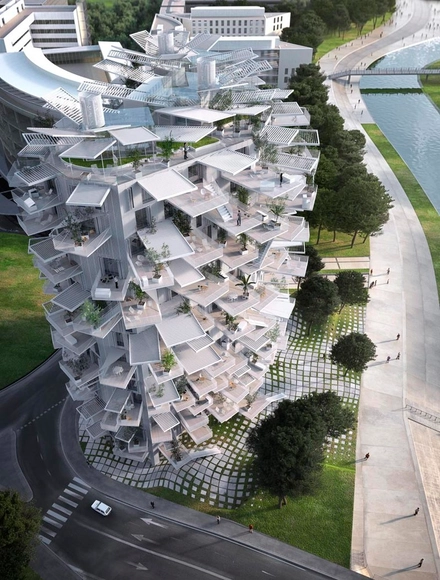
The City of Montpellier has chosen Sou Fujimoto Architects, Nicolas Laisné Associés and Manal Rachdi Oxo architects’ “White Tree (L’Arbre Blanc)” as winner of the "Architectural Folie of the 21st Century" competition. Inspired by the city’s tradition of outdoor living, and the efficient properties of a tree, the mixed-use residential tower will feed off locally available natural resources as it rises 17-stories and connects the new and old districts of Montpellier.
Berlin'sBarkow Leibinger has won an invited competition to design a new hotel tower and conference centre as part of Berlin's largest hotel complex, the Estrel. Establishing a new gateway to the center of Berlin from Schönefeld International Airport, the tower will stand at 175 meters (578 feet) making it the tallest high-rise in Berlin to date. Located on the Sonnenalle at the intersection of the Ship Canal, S-Bahn and Autobahn, the site acts as a threshold between the heterogeneous industrial and residential periphery of the city and the historical neighborhoods of Neukölln.