

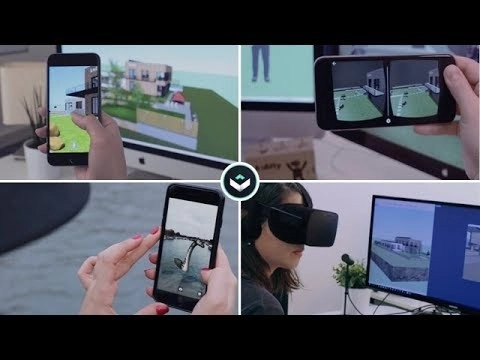
Produce personalized presentation boards that distill complex concepts into simple visual representations with a few helpful tools and effects.
Articles
How to Create Architectural Presentation Boards
| Sponsored Content
https://www.archdaily.comhttps://www.archdaily.com/catalog/us/products/37234/how-to-create-architectural-presentation-boards-lumion
Where Roofs and Streets Become One: Iran’s Historic Village of Masuleh
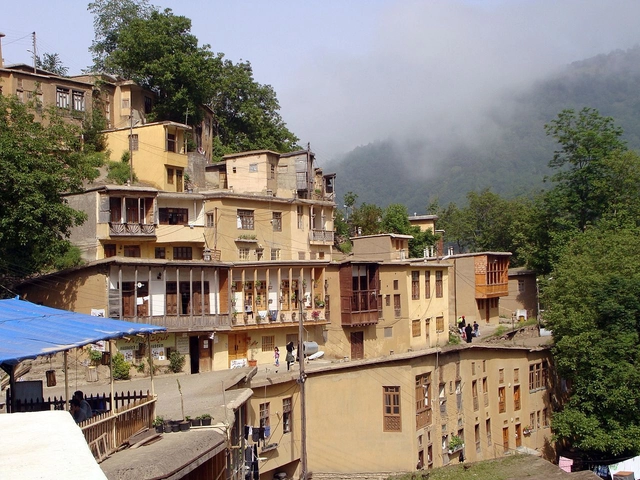
More than a thousand meters above sea level on the slopes of the Alborz mountain range in Gilan, northern Iran, a remarkable village dating back to 1006 AD bustles with life. The unique ochre-brown structures of Masuleh follow the slope of the mountain that the village nestles on—or rather, grows from—giving the village its most unusual quality: the roofs of many of the houses connect directly to, or even form a part of, the street serving the houses above.
_(1).jpg?1506588062 "© <a href='http://www.panoramio.com/photo/106899133'>Panoramio user alireza javaheri</a> licensed under <a href='https://creativecommons.org/licenses/by/3.0/deed.en'>CC BY 3.0</a>")


https://www.archdaily.com/880547/where-roofs-and-streets-become-one-irans-historic-village-of-masulehZoya Gul Hasan
How Chicago’s Tribune Tower Competition Changed Architecture Forever
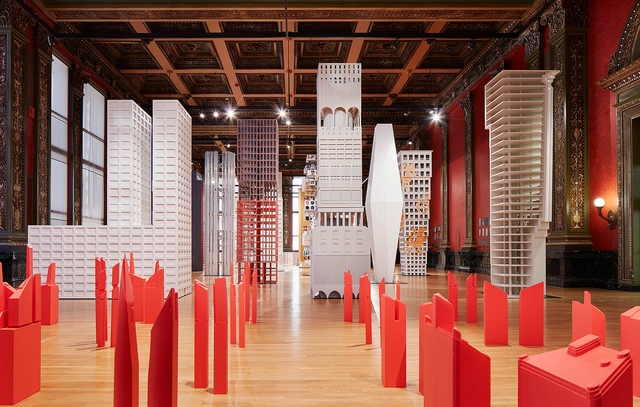
This article was originally published on the blog of the Chicago Architecture Biennial, the largest platform for contemporary architecture in North America. The 2017 Biennial, entitled Make New History, will be free and open to the public between September 16, 2017 and January 6, 2018.
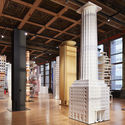
The Tribune Tower has stood at the heart of Chicago’s cultural heritage for almost a hundred years. Like the spire of a secular cathedral, it still symbolizes the rise of the “city of big shoulders” and its defining role in the American Century. But the building is more than a Chicago icon. The story of its origin has proved to be one of the most enduringly influential narratives in 20th Century architecture, key to understanding the skylines of cities all over the world.



https://www.archdaily.com/880899/how-chicagos-tribune-tower-competition-changed-architecture-foreverLeo Shaw
Architectural Upcycling: 3 Materials That Turn Trash Into Low-Cost Construction Elements
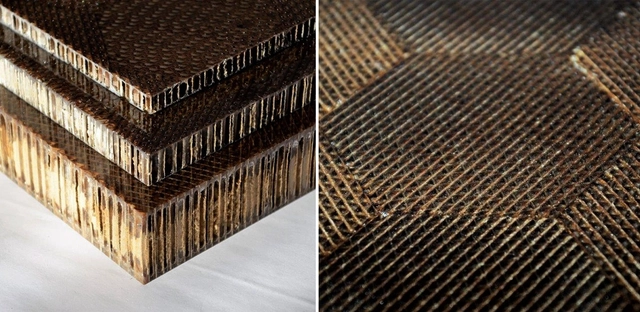
This article was originally published by Autodesk's Redshift publication as "Architectural Upcycling Builds Earth’s Better Future Out of Trash."
Contemporary designers are recycling waste materials into useable and well-crafted objects, and it’s easy to get the impression that this burgeoning realm of fabrication is destined only for the craft fair. A quick survey of Blaine Brownell’s new guide Transmaterial Next: A Catalog of Materials That Redefine Our Future turns up a half-dozen Etsy-ready art and furniture curios. There’s jewelry made from coffee grounds, bowls made from plastic bags, and a chair made from artichoke thistle fibers (the “Artichair”).
But these items don’t demonstrate the necessary capacity for heavy lifting and mass-market applicability for an age of climate change and dwindling resources. To grasp the kind of architectural upcycling that can divert trash from landfills and carbon from the atmosphere on a mass scale, it pays to step out of the design gallery and into the laboratory, where architects are inventing a new breed of modular building materials.

https://www.archdaily.com/880888/architectural-upcycling-3-materials-that-turn-trash-into-low-cost-construction-elementsZach Mortice

15 Money-Making "Side Hustles" for Architects and Designers

What do a lot of recent architecture college grads have in common besides their degree? Student loans and disillusionment (see point 1 in Megan Fowler’s 11 Things You Learn at Your First “Real” Architecture Job to understand what we mean by "disillusionment"). But with the emergence of the digital age and “side-hustle economy,” millennials are learning how to monetize their passions, and now 1 in 4 Americans are making money digitally. Side-hustling has become so popular that there is even a school for it. The difference between a side-hustle and a second job is that side-hustles aren’t just about giving yourself a raise. Your side-hustle is something you truly love to do, and would probably do anyway, but now you get to share it with the world and make a little extra cash in the process. So what side-hustle is right for you? Here is a list of side-hustles which suit the skillset of architects and designers.
https://www.archdaily.com/880725/15-money-making-side-hustles-for-architects-and-designersLindsey Leardi
The Beauty of Bamboo: The Best Photos of the Week
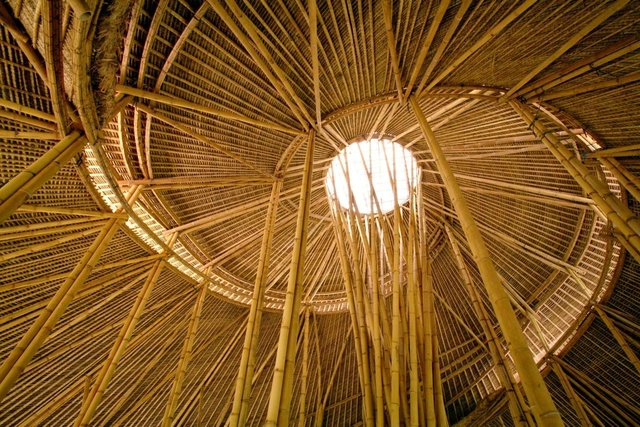
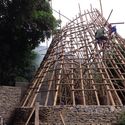
Bamboo has been used by man as a construction material since ancient times. The amazing thing about bamboo, besides being a totally natural material, is that it is sustainable, lightweight, flexible, and inexpensive. Although not widely used in the construction world (at least not when compared to materials like timber), the use of Bamboo enables original and attractive results. This week we have made a selection of 17 photos from well-known photographers such as Julien Lanoo, John Gollings, and Pasi Aalto.



https://www.archdaily.com/880711/the-beauty-of-bamboo-the-best-photos-of-the-weekMaría Francisca González
11 Nifty Measuring Hacks for Architects

Believe it or not, architects are just like everyone else! They love a shortcut in their tool belt to accomplish a task. Whether it's in the office or out in the field, all architects have a handful of tricks up their sleeves. The following are ten measuring hacks you can introduce to your daily routine. You can thank us later.
https://www.archdaily.com/880435/11-nifty-measuring-hacks-for-architectsAric Gitomer
Roberto Burle Marx's Legacy Reveals The Role of Landscape Architects
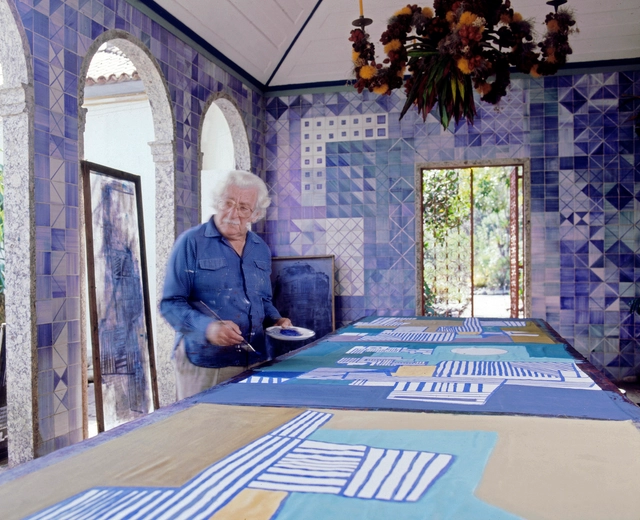
There wasn’t much in the way of art that Roberto Burle Marx couldn’t do. He was a painter, print-maker, sculptor, stage designer, jeweler, musician, tapestry-maker and one of the leading landscape architects in the 20th century. Marx’s passion for art, in all forms, strengthened his ability to design landscapes.
https://www.archdaily.com/878168/roberto-burle-marxs-legacy-reveals-the-role-of-landscape-architectsMatheus Pereira
A Virtual Look Inside Case Study House #4, Ralph Rapson’s "Greenbelt House"
The fourth house in Arts & Architecture’s Case Study program departed from the trend with a noticeably more introverted design. Intended for a modestly sized urban lot, rather than the dramatic and expansive canyon or forest locations of so many other Case Study homes, it couldn’t borrow drama from the landscape, nor would the residents welcome curious glances from their close neighbors—so the house looks entirely inward.
Rapson called his design the “Greenbelt House” for the glass-covered atrium that divides the living and sleeping areas. In his original drawings and model, as in Archilogic’s 3D model shown here, this strip is shown filled with plant beds in a striking geometric pattern. However, Rapson imagined that it could be put to many uses, according to the residents’ tastes: a croquet court or even a swimming pool could find their place here. This “brings the outdoors indoors” rather more literally than, for instance, Richard Neutra’s expansive, open-door designs.

https://www.archdaily.com/880584/a-virtual-look-inside-case-study-house-number-4-ralph-rapsons-greenbelt-houseRobynn Weldon
Are Smart Cities Doomed to Promote Inequality?
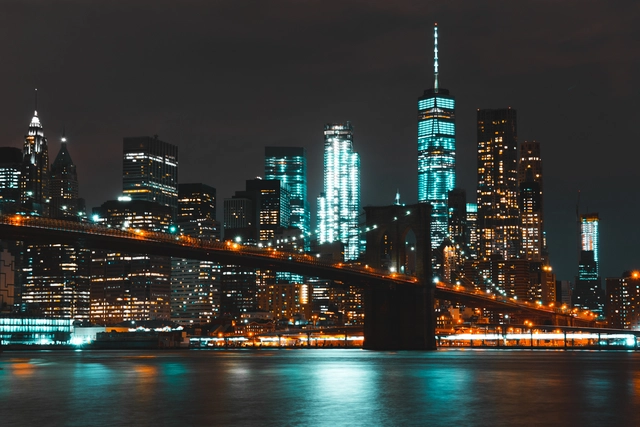
This article was originally published by Common Edge as "Can the Wired City Also Be the Equitable One?"
A city is smart when it makes better decisions, and there are only two types of decision: strategic and tactical. Strategic decisions determine the right thing to do. Tactical decisions choose the right way to do it. SMART technology is not smart technology if it causes us as citizens to confuse strategy with tactics. In other words, there are many decisions about the operation of a city that we may delegate happily to technology. But there are questions of governance, of determining our fate, of deciding what is the right thing to do as populace, that if we delegate—we abdicate. “To govern is to choose,” John F. Kennedy once said.
If I were to have believed the many consultants and emissaries of large technology companies that came to see me when I was the Chief Urban Designer of New York City, the SMART city they promised me was a place where the traffic lights always turned green and the elevator doors always awaited our arrival. They promised a city that would anticipate our needs at every turn, given tantalizing form in the recent present of our connected personal devices and the apps that seem to know us better than we know ourselves. Now, with the advent of the internet of things on the near horizon, we are set to make SMART cities a reality. Imagine the awesome power of an entire city synchronized to our taste and movement!

https://www.archdaily.com/880506/are-smart-cities-doomed-to-promote-inequalityAlexandros Washburn
Madrid's Forgotten Geometries Through The Lens of Joel Filipe
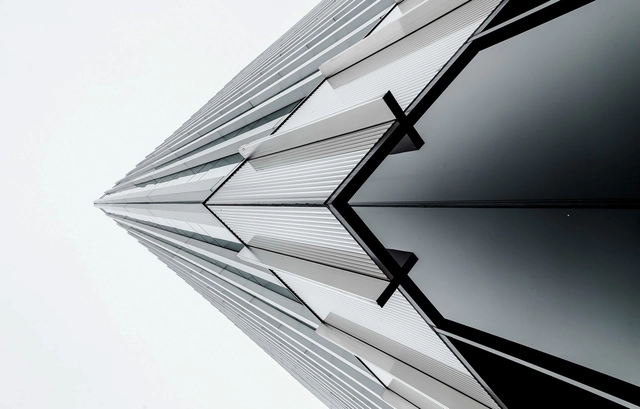
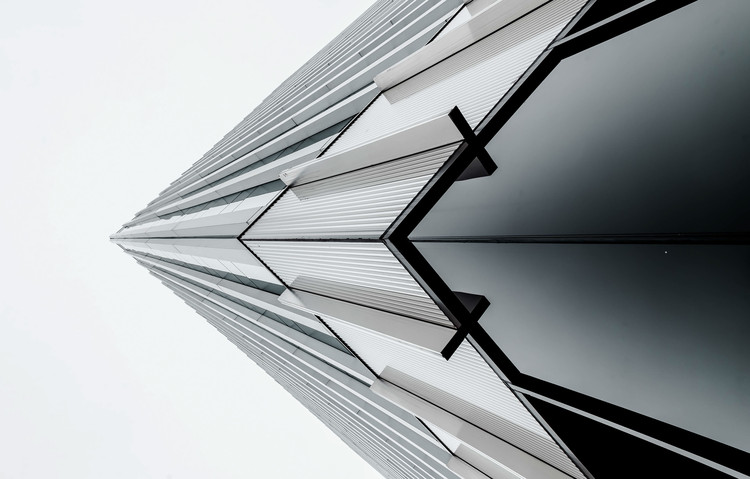
After the first series of photographs revealing Madrid's architectural geometries, Joel Filipe shared his work with us again; this time the Into the Fog series. In these photographs, Filipe presents, through a layer of mist, well-known projects featuring the skyline of the Spanish capital.


https://www.archdaily.com/880154/madrids-forgotten-geometries-through-the-lens-of-joel-filipeMiguel Picado
Towards an Architecture of Light, Color, and Virtual Experiences
This essay by Space Popular references an installation currently on display at Sto Werkstatt, in London. You can experience it in virtual reality, here.
The Glass House has no purpose other than to be beautiful. It is intended purely as a structure for exhibition and should be a beautiful source of ideas for “lasting” architecture but is not intended as such. According to the poet Paul Scheerbart, to whom it is dedicated, the Glass House should inspire the disillusion of current architecture’s far-too-restricted understanding of space and should introduce the effects and possibilities of glass into the world of architecture.
Bruno Taut [above] described his Glashaus for the 1914 Werkbund Exhibition in Cologne, Germany, as a "little temple of beauty"; as "reflections of light whose colors began at the base with a dark blue and rose up through moss green and golden yellow to culminate at the top in a luminous pale yellow.”[1] The Glass Pavilion, designed based on its potential effects on those who perceived it, was supposed to create vivid experiences. The site was the human mind.




https://www.archdaily.com/880305/towards-an-architecture-of-light-color-and-virtual-experience-space-popular-glass-chainFredrik Hellberg & Lara Lesmes
Porto's Subway Through The Lens of Fernando Guerra
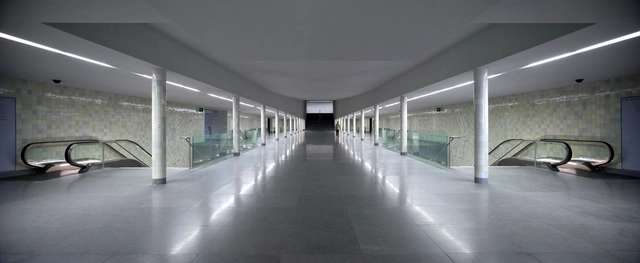
The following photo set by Fernando Guerra focuses on Porto's Subway, a project completed in 1996 and projected by the important Portuguese Architect Álvaro Siza Vieira.
Designing a subway station in Porto is about influencing the daily lives of thousands of people, where they daily circulate, establishing flows and routes, in a urbanistic and architectural intervention with large-scale dimensions. Although it demands an extremely functional and austere design, it is possible to see the gestures of the architect through the details and surprises.
https://www.archdaily.com/880153/portos-subway-through-the-lens-of-fernando-guerraMatheus Pereira
20 Amazing Images of Architecture as Seen from the Sky: The Best Photos of the Week
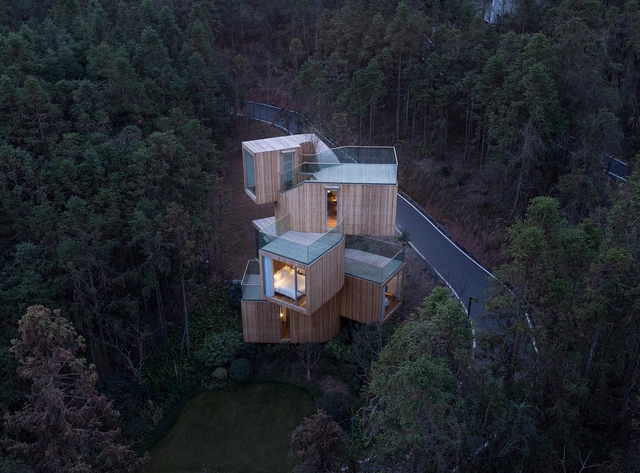
This week we have prepared a special selection of 20 images of architecture as seen from the sky. This style of image, made possible by the emergence of drones, is increasingly used in architectural photography. It makes it possible to understand, in a single image, the totality of a project, and to see how the project interacts with the context in which it is immersed. Read on to see a selection of renowned photographers such as Hufton + Crow, Fernando Guerra, NAARO, and Jesús Granada.



https://www.archdaily.com/880135/20-amazing-images-of-architecture-as-seen-from-the-sky-the-best-photos-of-the-weekMaría Francisca González
Social Agenda vs Social Media: Reviewing the 2017 Chicago Architecture Biennial
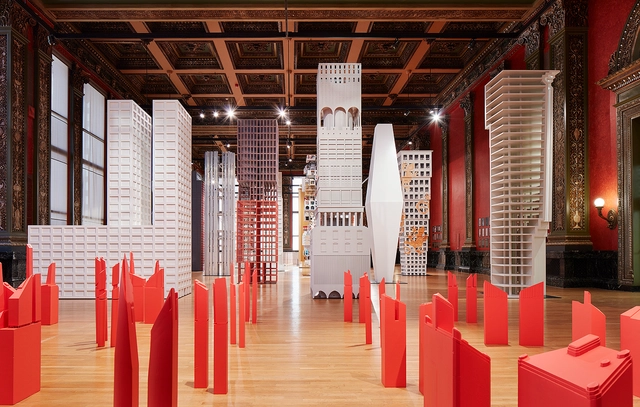
While architecture exhibitions have a tendency to be drab affairs with poorly displayed poster boards and reams of intellectualized text spouting pseudo-complex ideas, the Chicago Architecture Biennial stands out for its undeniable sense of playfulness. From its central HQ to the fringe performance events, this exhibition is bright, fun and Instagram-ready.
Chicago, like Venice, is blessed when it comes to architecture, making the city an ideal home for a recurring architecture show. The importance of this year’s iteration, the second after its inaugural event in 2015 (thus confirming its status as an actual “Biennial”), is clear. And the curators, Sharon Johnston and Mark Lee from LA-based practice Johnston Marklee, seem determined to grab people’s attention.
https://www.archdaily.com/880217/social-agenda-vs-social-media-reviewing-the-2017-chicago-architecture-biennialTom Ravenscroft
How Narinder Sagoo And Foster + Partners Are Turning Architectural Preconceptions On Their Head (With A Pencil)
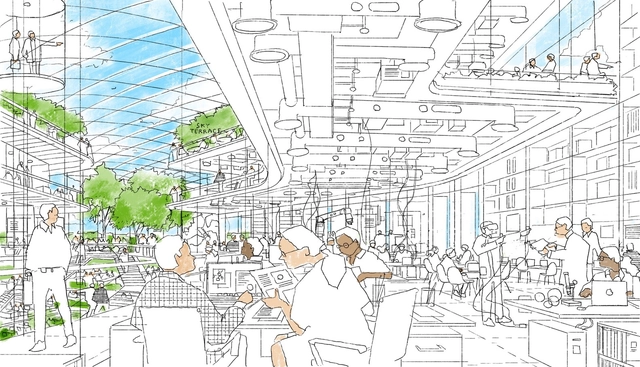
This short article, written by the author and critic Jonathan Glancey, coincides with the launch of the inaugural Architecture Drawing Prize – a competition curated by the World Architecture Festival, the Sir John Soane's Museum, and Make. The deadline for the award has been extended to September 25, 2017, and successful entries will be exhibited in both London and Berlin.
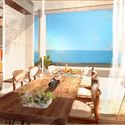
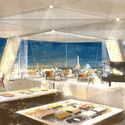
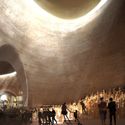
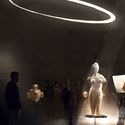
For architects, says Narinder Sagoo, Head of Design Communications at Foster + Partners, drawings are about story telling. They are also a highly effective way of raising questions about design projects. Although the history of architecture—certainly since the Italian Renaissance—has been mapped by compelling drawings asserting the primacy, and reflecting the glory, of fully resolved buildings, there is another strain of visualisation that has allowed architects to think through projects free of preconceptions.

https://www.archdaily.com/880209/how-narinder-sagoo-and-foster-plus-partners-are-turning-architectural-preconceptions-on-their-head-with-a-pencilJonathan Glancey
Architecture City Guide: 20 Places Every Architect Should Visit in Madrid
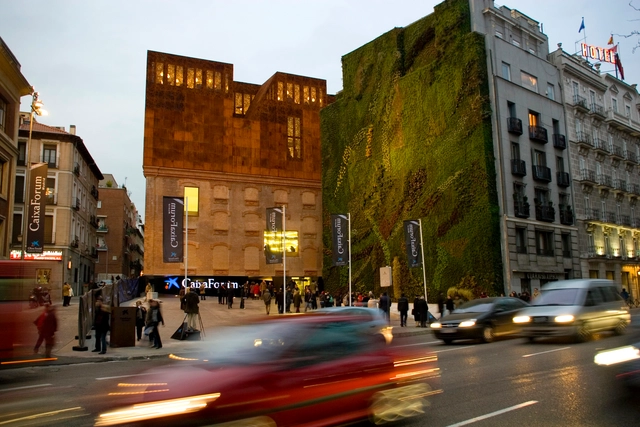
Madrid is unfathomable. If the city itself is immense, it´s examples of interesting architecture are overwhelming. For over a half a century, Madrid has been an experimental laboratory for modern and contemporary architecture in Spain. With numerous examples of innovative and experimental architecture, as well as many failures, few of which are valued and recognized. This selection seeks to show archetypal examples of architecture that have transcended time; it does not intend to be an exhaustive list of the city´s architectural works. Many will think that the list lacks important buildings and personally, I couldn´t agree more. That is perhaps the beauty of Madrid: there is a diversity of opinion, there are thousands of sites to see, the city surprises you with every step you take.



https://www.archdaily.com/877603/architecture-city-guide-20-places-every-architect-should-visit-in-madridMiguel Picado
3 Reasons Why Excel is the Ultimate BIM Sidekick
This article was originally published by ArchSmarter.
Have you ever played the party game “telephone”? You know the one, where you tell something to the person next to you and they pass it on to the person next to them and so on down the line. Inevitably, your original message is badly mangled and misappropriated by the time it gets back to you. Everyone gets a good laugh at how far the end message is from your original one.
https://www.archdaily.com/878812/3-reasons-why-excel-is-the-ultimate-bim-sidekickMichael Kilkelly
The Ambitious Project that Brings Together 44 Mexican and International Architects
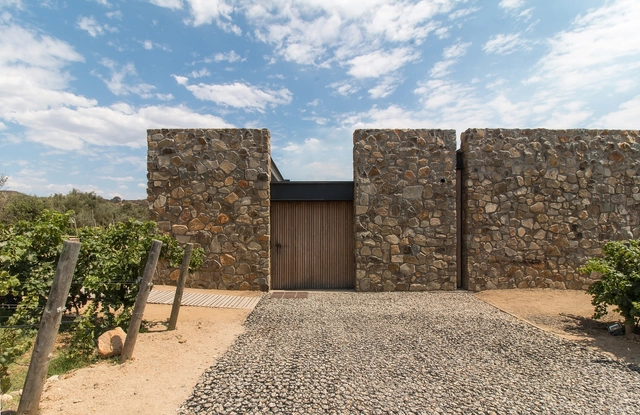
In Baja California, Mexico, the 860 hectares that make up 'Cuatro Cuatros'—a tourism development that for the past ten years has been overseen and designed by Mauricio Rocha and Gabriela Carrillo of Taller de Arquitectura—present an arid and mostly monochromatic landscape interrupted only by stones and bushland.
Vast as the site may seem, only 360 of its hectares will be destined for housing development, of which only 10% can be impacted by construction. The challenge will lay in mitigating the protagonistic stance architecture usually assumes when conquering previously untouched lands, by taking on a presence that disappears into the landscape.
https://www.archdaily.com/879643/the-ambitious-project-that-brings-together-44-mexican-and-international-architectsKarina Zatarain
13 Weird, Surprising Architecture Facts You've Probably Never Heard
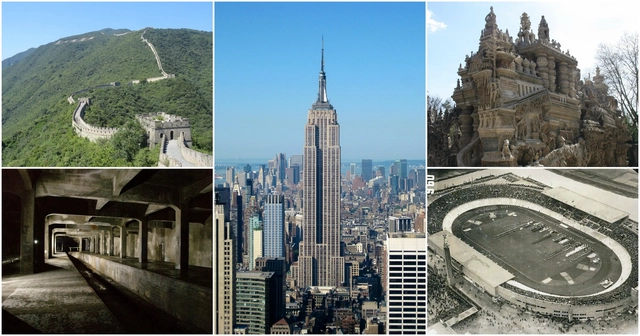
The history of humans building shelters goes back over 10,000 years. Over this time, the human need to build was distilled into the profession of architecture, and in the process it attracted all manner of eccentric, visionary, and stubborn individuals. In light of both architecture's long history and its abundance of colorful characters, it's no surprise that it's full of surprising and unlikely stories. From Lincoln Logs and the Olympics to Ouija boards and 9/11, here are 13 architecture-related facts you may not have previously known.
https://www.archdaily.com/879764/13-weird-surprising-architecture-facts-youve-probably-never-heardAD Editorial Team
How Architects Dress vs How Normal People Dress

"Does this come in black?" is probably the most used phrase during any architect's shopping trip, but nobody really knows why. Search the internet for the reason that architects wear black, you will find that numerous people have written about the subject,—there’s even a book about it! The fact is that other people don't quite understand how many shades of black there actually are like you do. And it's also a common misconception that wearing black is all in the name of convenience, since looking for a specific item in your wardrobes takes 5 times longer when everything looks the same. In short, architects will continue to wear black... at least until something darker comes out.

https://www.archdaily.com/878764/how-architects-dress-vs-how-normal-people-dressAmanda Pimenta
Space Popular Reignite the Concerns of "The Glass Chain" Letters By Way of Virtual Reality
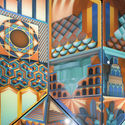
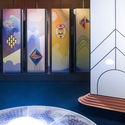
"The Glass Chain" (Die Gläserne Kette in its native German) was an exchange of written letters initiated by Bruno Taut in November 1919. The correspondence lasted only a year, and included the likes of Walter Gropius, Hans Scharoun, and Paul Gösch. In the letters, the penfriends—thirteen in all—speculated and fantasized about the possibilities of glass, imagining, in the words of Fredrik Hellberg and Lara Lesmes (Space Popular), "fluid and organic glass follies and colourful crystal cathedrals covering entire mountain chains and even reaching into space."

https://www.archdaily.com/879622/space-popular-reignite-the-concerns-of-the-glass-chain-letters-by-way-of-virtual-reality-sto-werkstatt-londonJames Taylor-Foster