The Turba Tol Hol-Hol TolPavilion is a collective project led by curator Camila Marambio that proposes an experimental path towards the conservation and visibility of peatlands, a type of wetland considered to be the most efficient natural ecosystem for accumulating carbon in the atmosphere and yet one of the least researched.
Presented by the Ministry of Cultures, Arts and Heritage and the Ministry of Foreign Affairs of the Government of Chile at the 59th International Art Exhibition - La Biennale di Venezia, which will have its official opening on the 23rd of April, was a collaborative work between art, science and traditional knowledge, promoting research and ecological transition from the environmental humanities. In this sense, a diverse multidisciplinary team was brought together: sound artist, Ariel Bustamante; art historian, Carla Macchiavello; filmmaker, Dominga Sotomayor; and architect, Alfredo Thiermann.
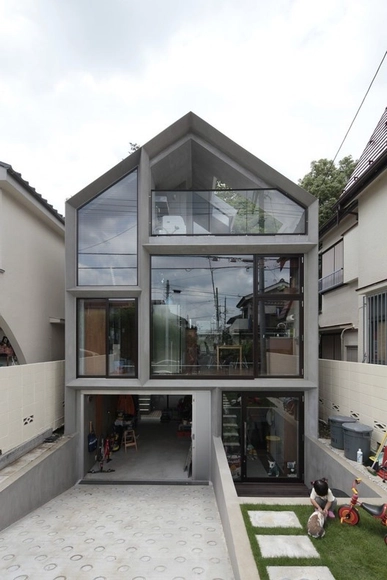
In most countries around the world, value is placed on older buildings. There’s something about the history, originality, and charm of an older home that causes their value to sometimes be higher than newly constructed projects. But in Japan, the opposite is almost always the preference. Newly-built homes are the crux of a housing market where homes are almost never sold and the obsession with razing and rebuilding is as much a cultural thing as it is a safety concern, bringing 30-year-old homes to a valueless market.
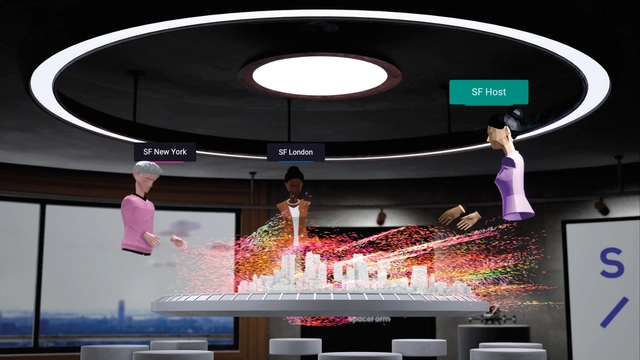
Virtual reality has given architects alternative ways to work. Paired with real-time visualization software, it offers a robust tool with endless capabilities for your design workflow. It can help develop the design, address needs, and win over clients. Here are four key reasons why you need to implement VR into your design workflow.
Kitchens as we know them today have functionality as their main feature and for that their space was historically organized from an industrial logic. The development of home appliances and the precise definition of the layout guarantee a functional floor plan and the optimization of work in the kitchen. As part of this layout we find the worktops, horizontal half-height surfaces that have multiple uses and, therefore, many possible configurations.
A new kind of architecture distinguished by unique regional characteristics emerged in the mid-1990s when in China, architects started practicing independently from government-run design institutes. The leading Chinese architects of this time succeeded collectively in producing a unique architectural body of work when so many buildings built around the world were no longer rooted in their place and culture.
In China Dialogues, Vladimir Belogolovsky charts a panorama of Chinese architecture through the words of its main participants, lifting the veil on a prolific new generation of designers, each sharing a highly intellectualized and conceptual understanding of architecture. Following the course of 21 interviews accompanied by over 120 photographs and drawings of beautifully executed projects uprooted throughout the country since the early 2000s, China Dialogues opens up the thinking process of the country's top architects, providing an insight into their ideas, intentions, and visions in unusually revealing and candid ways.
Recruitment and talent retention is the number one most challenging issue for architecture firms, so in order to attract good talent that doesn't only fit your brand but also elevates it overtime, you have to invest in marketing efforts, sometimes thinking out of the box.
For the past couple of years, the metaverse has been gaining prominence, prompting architects to consider its implications for our relationship with the physical environment and how can architecture contribute to this new virtual space. Architecture in the metaverse is no longer a fringe subject, having been embraced by established firms. "The metaverse is where much of the architectural action and innovation will be happening in the coming period,"says Patrick Schumacher. Unbound from restraints such as physics, material properties and construction costs, the metaverse unlocked a new realm of architectural expression. The following looks at some of the various ways the profession engages with the expanding field of digital environments.
Metal façades give buildings an air of sophistication and modernity. They also bring a cleanness to the façade, due to their precise fabrication and well-resolved connections between other materials and building elements. There are currently multiple product options available for coatings, offering extensive colour options, including metallics, with different levels of durability (natural aging and corrosion). One of the main issues when approaching metal façades is the risk of corrosion, which can create points of weakness in the material and interfere with the aesthetics of the building. So, with this in mind, what do architects need to focus on to ensure that building envelopes age gracefully, while maintaining aesthetics and performance over time?
In 1854, the American writer Henry David Thoreau wrote the classic work “Walden”, recounting his experience of life in the woods and extolling the advantages of simple and self-sufficient life. Right at the beginning of the book, the author comments that, if someone wants to travel 48 km to visit the countryside, it would be faster to walk than to opt for a locomotive.
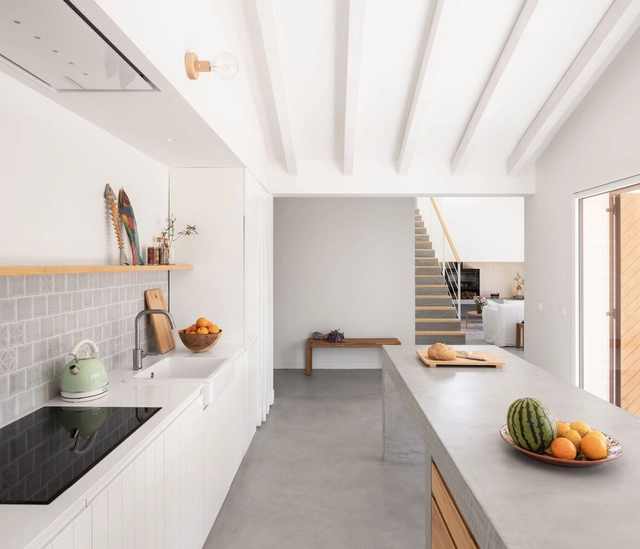
Islands are an essential part of any larger kitchen layout, increasing counter space, storage space, and eating space as well as offering a visual focal point for the kitchen area. Serving a variety of functions, they can be designed in a variety of different ways, with some incorporating stools or chairs, sinks, drawers, or even dishwashers and microwaves. To determine which elements to include and how to arrange them, designers must determine the main purpose or focus of the island. Will it primarily serve as a breakfast bar, a space to entertain guests, an extension of the kitchen, or as something else? And with this function in mind, how should it enhance the kitchen workflow vis-à-vis the rest of the area? These considerations, combined with basic accessibility requirements, necessitate that the design of the island be carefully thought out. Below, we enumerate some of the essential factors of kitchen island design.
Once upon a time, long, long ago, I was lucky enough to get a summer job with Robert A.M. Stern while I was in graduate school. Stern’s new memoir, Between Memory and Invention: My Journey in Architecture (MonacelliPress, 2022), has prompted my own mini-memoir, with some relevant details not included in the book.
I arrived at the office in the early summer, not long after the dissolution of Stern & Hagmann and then Bob’s divorce. I found two young architects-to-be, a sweet but disorganized secretary-receptionist-bookkeeper, and Bob. The office grew during the summer and beyond—and today there are over 200 in the office, including 16 partners in Robert A.M. Stern Architects (aka RAMSA).
Inflatable Architecture has enabled the imaginations of environmental dreamers of all types. From figures like Buckminster Fuller to Ant Farm, inflatables promise to liberate people from the harsh conditions of nature or the tyranny of architecture. Originally developed by the US Military for radar enclosures on the arctic, inflatables were picked up by NASA before their secrets were bestowed upon the public who deployed them to solve all sorts of problems, from enclosing pools to stadiums.
New York's residential design culture extends far beyond the Big Apple. The Hudson Valley is a region that stretches along the Hudson River from Westchester County to Albany. Known for its vineyards, orchards and farms, the river valley includes a series of small towns and remote homes. Today, these rural residences are being designed to explore the connections between people, nature and place.
Artificial lighting plays an essential role in spatial quality. Badly thought-out lights can disrupt an architecture project and even bring harmful effects to occupants' health; while a well-balanced luminotechnic project can highlight positive aspects of the surroundings and make it much more enjoyable. Generally, however, projects tend to be too rigid and not in-tune with the flexibility of contemporary spaces. In addition, a badly made lighting decision can be complex and expensive to rectify. For example, electrical points in slabs, linings or walls are not easily modified if the distribution of a space is changed. At most, when this is resolved with hanging or free-standing lamps, we end up having to deal with bothersome electrical wires throughout the space.
The climate crisis has accentuated changes in the amount of rainfall, causing droughts or storms with large volumes of water, which result in floods that can cause great damage to urban infrastructure. To combat this, the sponge city is a solution that has a green infrastructure to operate the infiltration, absorption, storage and even purification of these surface waters.
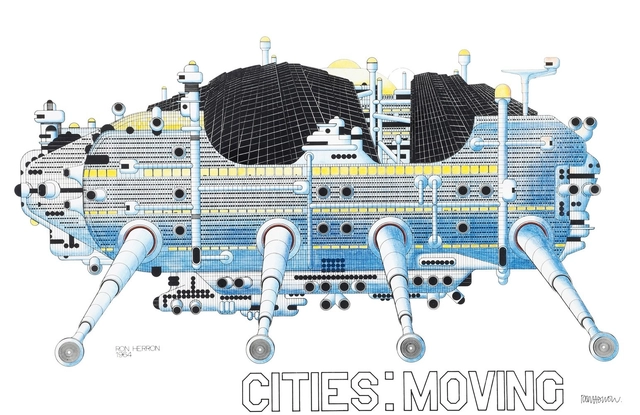
There’s the iconic Cenotaph for Newton drawing, the evocative monochrome illustration by Etienne-Louis Boullée. There are the experimental drawings of Lebbeus Woods, evocative urban visions of a distant future. There are also the well-known drawings of Le Corbusier’s utopian Ville Radieuse. Drawing, and in turn architectural visualizations, have always been a useful medium with which to contemplate architectural concepts of the future. It is fascinating to look back at the architectural visualizations of the future done in the past.
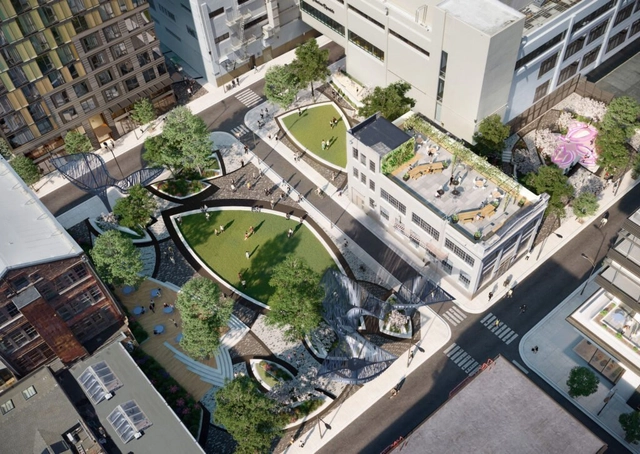
The chance to reimagine a four-and-a-half-acre site containing both historic buildings to be preserved and lots slated for development in a major American city is rare. For the team behind 5M, a project on a nodal site in downtown San Francisco, this prospect came with exciting potential to engage with all aspects of community building and place making. Completed by SITELAB, KPF, and a host of other firms, 5M reveals a transformed, multi-use downtown site following a decade-long process.
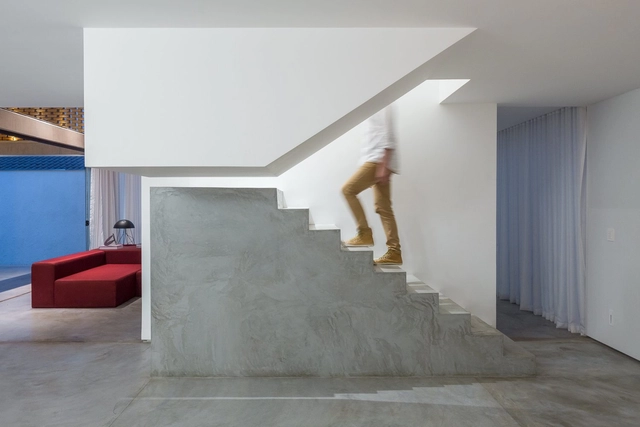
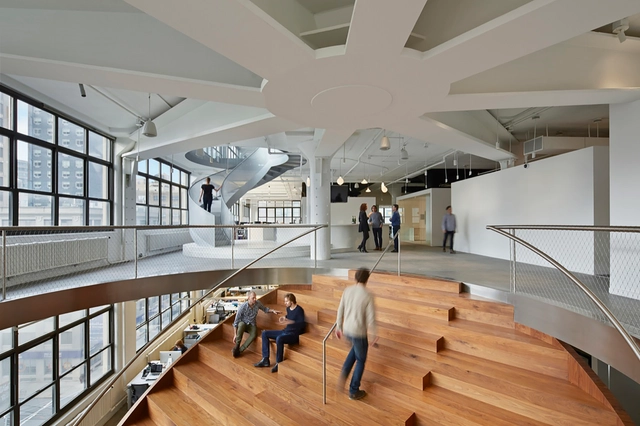
Whether to mark a change of direction, to highlight its first steps or its own presence in a room, stairs that combine two or more materials tend to draw attention by establishing dialogs between particular characteristics of each material. Concrete, steel and wood are some of the most common choices to compose the structure of stairs due to their high strength and versatility. But, when combined, these different materials expand their individual possibilities and reveal how the design can be tailored to their peculiarities and connections.
The combination of textures, colors, and finishes among materials can provide a number of creative solutions for these elements used for vertical circulation, as shown in LÂM’s Home, by AD+studio and House 9A, by 23o5Studio, characterized by stairs with a sturdy and rough base that meets a light and sleek structure of steps. The opposite composition order, a lighter base that meets a robust set of steps, thrives ingeniously in Luis Carbonell's Casa Chulavista and messina | rivas' Angatuba House, where the light wooden stairs' base is followed by raw concrete steps.
Metaverse is the name used to name an immersive, collective and hyper-realistic virtual environment, where people will be able to live together using 3D customized avatars.
It was coined by writer Neal Stephenson in his science fiction book “Snow Crash”, published in 1992. The work tells the story of “Hiro Protagonist”, a character who in real life is a pizza delivery boy, but in the virtual world – called metaverse in the story – is a samurai.
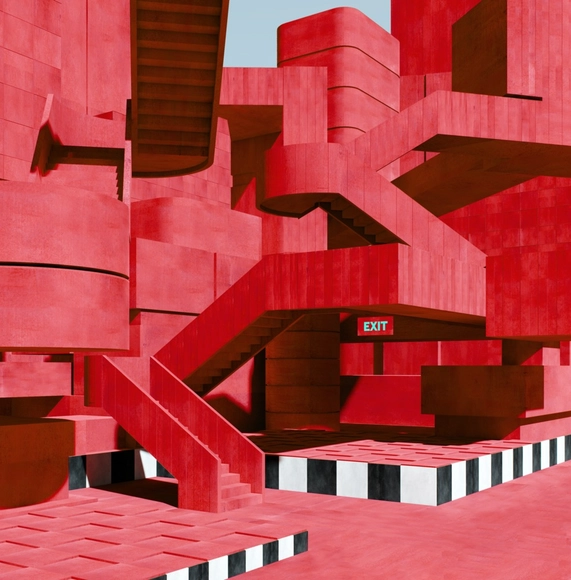
Beyond hyper-realistic renders and accurate depictions of what projects look like once completed, visualizations have become tools to communicate atmospheres and emotions portrayed by architects. The use of mixed media, combined with architectural compositions, art, lighting, and oftentimes music, have generated a new genre of architectural storytelling, one that combines reality with imagination. And as the world immerses in NFT's and experimenting with cutting-edge technologies to create digital environments, visualizations might soon become "the new reality".
ArchDaily had the opportunity to talk to Visual Artist Ceren Arslan about branching out from the architecture practice, how she describes her creative process, her latest project EXIT, and what the future holds for architectural visualizations.
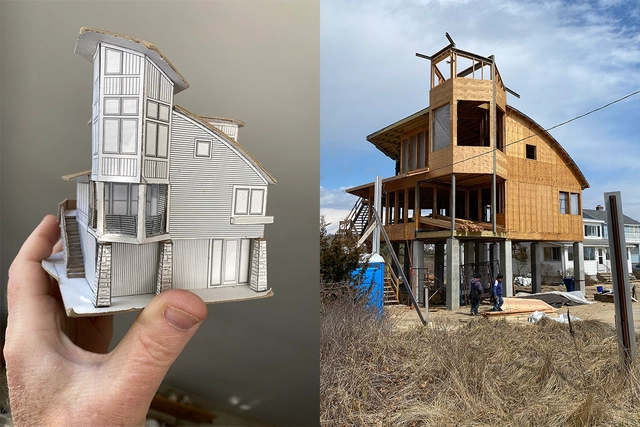
Model and Photograph. Image Courtesy of Duo Dickinson
We deal with buildings every day. We sleep in them, work in them, live our lives using their accommodation. But like a song or a painting, a person usually helps create them, with those who use and build them, then the world receives that work. But before they are built, buildings are just ideas.
What is the purpose of strategic planning? Why should we care as practice owners and what is the function of this effort? Perhaps we can begin to answer this question by defining strategy. Put simply, strategy is a set of goal-directed actions a company can take to gain and sustain a competitive advantage. A competitive advantage, however, is always relative. It defines the best way for a firm to create value for its internal and external stakeholders. Relativity is important. In the practice, profession, and business of Architecture, there are no absolute advantages. To paraphrase Simon Sinek: “Business is an infinite game in which the competitive landscape is always in flux.”
Torre Taikoo Green Ribbon / ARUP. Image Cortesia de ARUP
Discussing carbon neutrality in architecture should not only be based on local materials and new technologies, since there are many aspects that impact the construction production chain. From design to construction, without losing sight of the context and economic system of our society, the construction industry is responsible for a considerable part of the energy consumed worldwide. In order to interfere in this reality, it is necessary to expand the fronts of action, questioning the place of construction in our society.
The International Contemporary Furniture Fair (ICFF) and WantedDesign Manhattan will take place at the Jacob K. Javits Convention Center in New York from 15 to 17 May, 2022. Image Courtesy of ICFF
In the early days of the pandemic, MOMA curator Paola Antonelli and London-based design commentator Alice Rawsthorn started an Instagram Live series called Design Emergency. It documented the more phenomenal design solutions emerging from the Covid crisis – those tackling pressing health and societal needs with unprecedented focus, clarity and speed, often in a very local way. May sees the launch of the book that evolved from the conversations they had with the problem-solving protagonists and moves those conversations on to the next focus for the design world: how to build on the experience and be the agent of change. It’s apt then, as New York’s design shows, the International Contemporary Furniture Fair (ICFF) and WantedDesign Manhattan return to their regular springtime slot from 15 to 17 May, at the Jacob K. Javits Convention Center, that Antonelli’s is a voice we will hear in the key talk 'Design Emergency: Building a Better Future'.





.jpg?1650549341&format=webp&width=640&height=580)
Adam_Mork.jpg?1650549635 "MAD Architects, Harbin Opera House, Harbin, China, 2015. Image © Adam Mørk")


_schranimage.jpg?1650549533 "Studio Zhu Pei, Jingdezhen Imperial Kiln Museum, Jingdezhen, Jiangxi Province, China, 2020. Image © schranimage")
.jpg?1650549341)
.jpg?1650608161)


.jpg?1650608161)