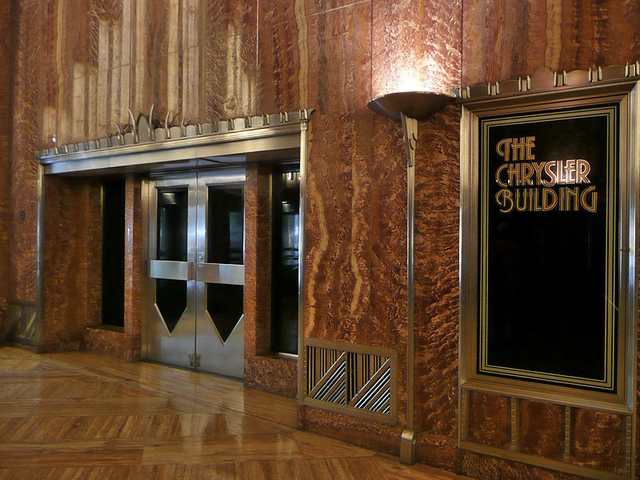
The Chrysler Building interior, Manhatten, New York . Image Courtesy of Dorff / Wikicommons CC BY-SA 3.0
Art Deco or Arts Décoratifs originated in the 1920's, following the Exposition Internationale des Arts Décoratifs et Industriels Modernes held in Paris (1925). However, it wasn’t until the 1930’s that the movement gained momentum across both Europe and the US, broadening Art Deco to cover all elements of decorative art including furniture, interior design, jewelry and architecture. Its popularity stems from its unique origins. Rather than a design movement driven by political or philosophical forces, it was created for the desire of glamorous and alluring change, a reflection of the golden age in Hollywood and a widespread economic boom.
Characterized by its decadence, rich application of color, and geometrical shapes, the movement is dramatically influenced by the discovery of the artifacts of ancient civilizations, and the introduction and admiration of the automobile. A movement heavily influenced by aspects in vogue it sought to create a form of luxury modernism, a step away from a more traditional architecture. It put an emphasis on handcrafted and individually designed elements, rarely to be mass produced.
Over the past two decades, urban highways' social and economic ramifications have been brought into focus as a large part of this mid-century infrastructure comes to the end of its lifespan, prompting conversations over its role in contemporary urban planning. Freeway removal entails the replacement of the transport infrastructure with new urban developments, green amenities and alternative street grids to promote a healthier urban environment and smart growth. In some cases, the idea of removing highways is met with concern over the potential increase in traffic and gentrification of the areas adjacent to the road, but the pandemic has further exacerbated the need for quality public spaces and brought once again into question the hegemony of the car. The following highlights various highway removal projects, discussing how these interventions restore the urban fabric, reknit communities and recover urban spaces for city dwellers.
Cube / HENN Dresden University of Technology. Courtesy of Iurii Vakaliuk
Seen as one of the great promises for the future of construction, carbon concrete mixes strength, lightness and flexibility. In addition, at a time marked by a serious environmental crisis that puts the construction methods of the industry in check, carbon concrete emerges as an alternative that approaches the guidelines of sustainability.
Courtesy of Juan Barrios Duarte (Labrantía Estudio)
With an increasing amount of architectural visualizations being published on social media, it’s easy to get overwhelmed. Adding this to how the famous algorithm works, we end up always being exposed to social media publications that are, in many ways, similar to each other. But for us as architects, designers, and students, social media is not only a platform for networking and sharing our works. It also serves as a source of inspiration. If the algorithm isn’t helping us to discover new and different ideas, then it’s up to us to go out of our way and look for them.
There’s a famous quote—it’s usually attributed to Winston Churchill—that goes, “History is written by the victors.” This cynical and largely erroneous belief could only be true if history was fixed, settled, static. It never is, and that’s precisely why we have historians. It might be more accurately said that history’s first draft is written by the victors. But first drafts, as any writer will tell you, are famously unreliable. So it is with architectural history. Women have played significant roles in the field since the start of the profession, but that is not how history has recorded it. A new book, The Women Who Changed Architecture (Princeton Architectural Press), a collection of more than 100 mini-biographies of important women architects, covering more than a century, hopes to take a step toward correcting that oversight. Recently, I spoke to Jan Cigliano Hartman, the editor of the volume, about creating the book, important and overlooked figures, and why this isn’t a definitive list.
Well managed firm finances can be a raise to glory but if you fail at keeping them under control they quickly turn into a silent assassin. Why? Because, since as architects we don’t get much business education in school one of the common downfalls prove to be mismanaged finances.
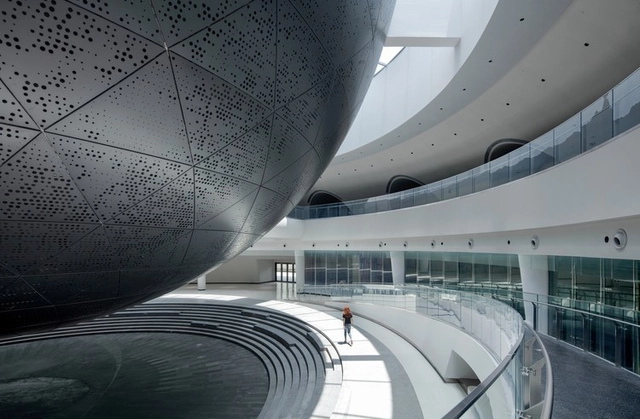
Planetariums are designed for discovery and exploration. Created around immersive experiences, these projects draw our imaginations to new worlds. As theaters for education and entertainment, they also bring people together. Today, architects and designers are reimagining what the modem planetarium can be, and in turn, are inspiring new investigations into the universe and the vast ocean above us.
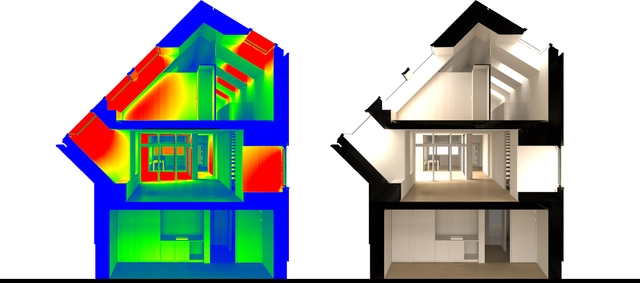
Luminance rendering from Daylight Visualizer. Image Courtesy of VELUX Group
Daylight shapes the experience of a space like no other material and is a fundamental aspect for designing healthy and sustainable buildings. Good daylighting design can improve the health, mood, cognitive abilities and productivity of the occupants at home, school or work while reducing the energy consumption of buildings.
Daylight Visualizer makes it easy to take informed decisions about architectural and daylighting strategies in your projects, and to evaluate compliance with requirements for daylight performance in building regulations and building rating systems.
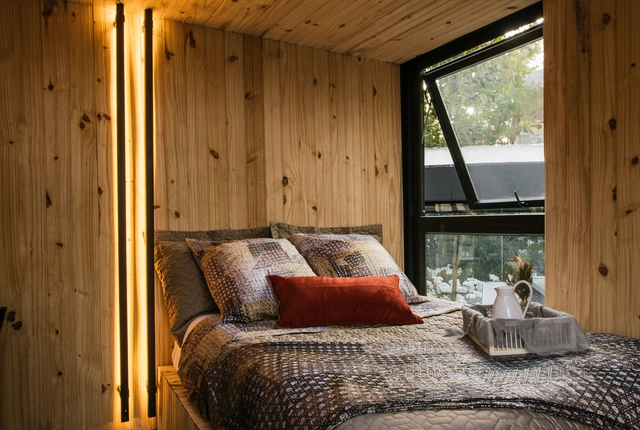
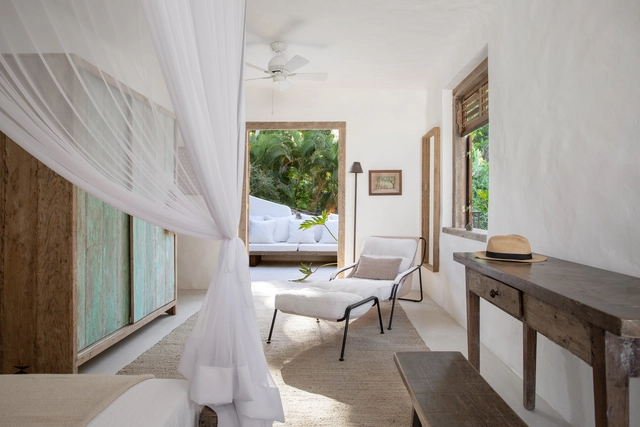
Plywood, laminated timber, MDF sheets and OSB boards are all good, can be economically viable and efficiently fulfill certain functions, but none of them offer the same atmosphere as solid wood. The nobility of this material is usually accompanied by a high cost, but the aesthetic and sensory qualities are unparalleled.
Below, we have gathered examples of projects that use solid wood in furniture elements. Tables and chairs, beds and cabinets made with wood of different species, new or from demolition, refined or rustic, with different textures and colors that can serve as inspiration for your architectural or interior design.
For quaint riverfront views, historical fortifications, and castles, head to Luxembourg. For sky-high remnants of the steel industry, there’s the country’s second largest city, Esch-sur-Alzette. Suffering, until recently, from the 1970’s steel manufacturing exodus, Esch, 10 miles to the northeast of the border of France, is emerging as an unexpected cultural mecca, where industrial infrastructure is being converted en masse into cultural and learning space. This rebirth is being celebrated thanks to a generous flow of cash via its designation as Esch2022: Esch-sur-Alzette European Capital of Culture 2022 (Kaunas, Lithuania and Novi Sad, Serbia, also named European Capital of Cultures this year, share the designation for 2022). For Esch, the title comes with $54.8 million in funds from EU, national, local, and private sources.
Architectural renderings are a great way to showcase projects. They provide an impression of what your built environment will look like once completed. Thanks to real-time rendering software, you can now do more than present beautiful images.
We’ve highlighted five ways to optimize your design workflow by using real-time rendering.
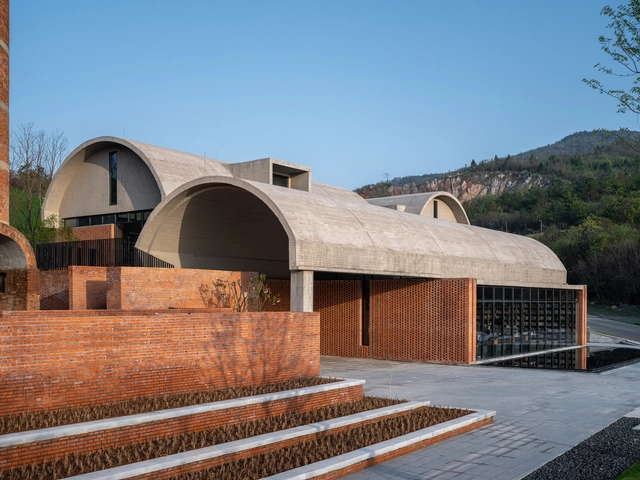
The oldest record of barrel vaults is estimated to date back to 4000 BC. These provided the spans in the Sumerian ziggurat at Nippur in Babylonia, built from fired bricks amalgamated with clay mortar. This type of vault was built as a continuous round arch and became a characteristic architectural element of Roman architecture, later used also in Renaissance architecture.
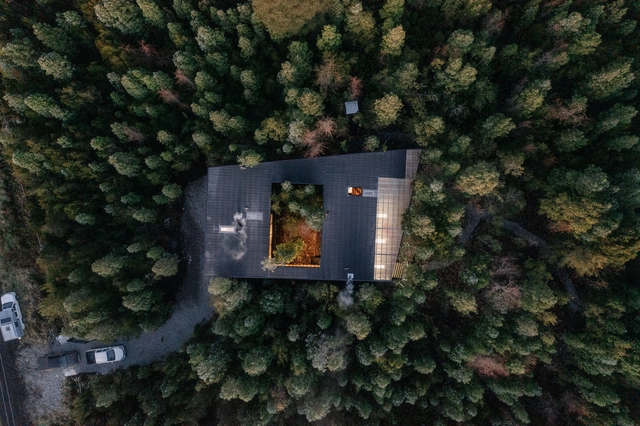
What role do forests play in our daily lives? In what ways can they be converted into living spaces? What strategies can be implemented to reduce the environmental impact of our buildings? On the International Day of Forests, which is celebrated every 21st of March, this year we propose to raise awareness of the links between forests and our daily lives. Even though deforestation continues to advance, forests represent a source of great economic, social and ecological benefits.
Understanding how shadows will act in and around an area is a necessary understanding to ensure greater spatial quality. Shadows can influence natural lighting - therefore, the perception of space - and also issues of thermal comfort. Thus, mapping your projections and visualizing their movements during each season of the year can be fundamental to improve your project. The good news is that there are simple tools that help you visualize this in your city and in natural environments.
https://www.archdaily.com/979759/mapping-shadows-in-cities-the-solar-trajectory-in-digital-and-interactive-toolsEquipe ArchDaily Brasil
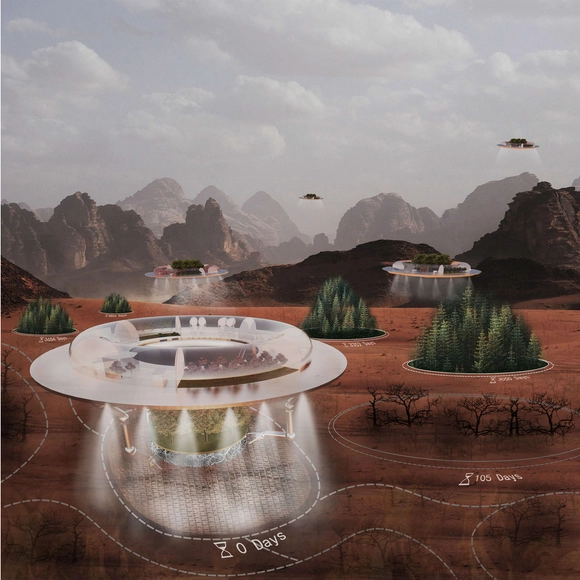
Alternate Realities | AR 2022. Image Courtesy of Charette _ By Lau Yee Mu, Ang Hui Yi, Melissa Ho Er Shwen _ Chia Hui Yen - First Prize
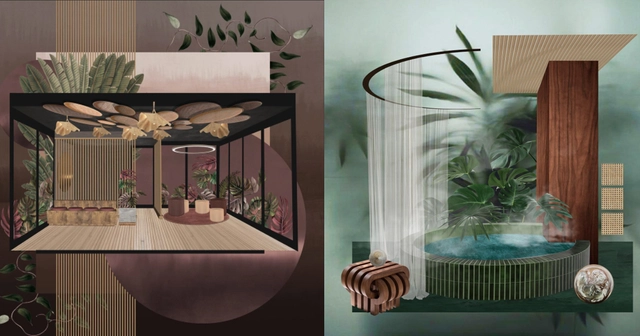
Along with several other imperative factors, the success of an architectural project relies heavily on how it is communicated to its users and builders. Most architects opt for realistic computer generated renders to showcase their projects, while others choose to explore different techniques, translating their architectural narratives through photo collages, sketches, animation, hyper-realistic miniature models, walkthroughs, diagrams, and occasionally, script.
This week’s curated selection of Best Unbuilt Architecture highlights projects submitted by the ArchDaily community that are presented through different media. From a hand-drawn sketch of a coastal redevelopment in Norway to an abstract composition of photography and architectural drawings in Poland, this round up of unbuilt projects showcases diverse architectural typologies and their unique visualizations. The article also includes projects from the Netherlands, Hungary, Poland, United Arab Emirates, and Uzbekistan.
Videos
When matched with warm wood tones, Karcher Design's unmistakable Cosmos Black surface helps create attractive and striking contrasts. Image Courtesy of Karcher Design
With its Cosmos Black and Titan Grey collections, German specialist in door and window handles Karcher Design offers specifiers a universe of options in the creation of striking architectural accents.
With the recent Metaverse hype, let's address the elephant in the room! As more and more people dance around the subject of weather or not it is harmful for sustainably-conscious architecture designers to utilize the Metaverse, I decided to interview Oliver Lowrie, a Director at Ackroyd Lowrie, an award-winning London-based architecture practice dedicated to building the cities of the future, who is already using this technology to enhance Ackroyd Lowrie’s low-energy designs.
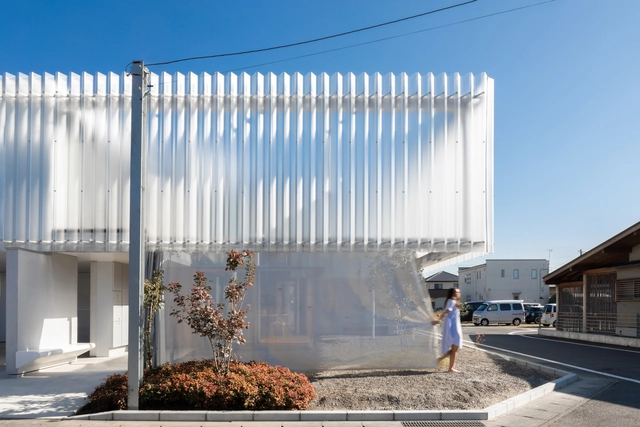
Whether blending in or standing out, embodying transparency or solidity, expressing coarseness or softness, a façade is the medium through which we engage with architecture. It tells a story and can often set the tone for the rest of the interior. But apart from defining a purely visual experience, a building’s envelope must also be practical, durable and have the ability to properly manage natural lighting and ventilation needs. After all, by being the point of contact with the outside, it is responsible for mitigating sounds and providing protection from climatic conditions, such as wind, rain, heat and humidity. Therefore, when designing a facade, it is important to consider a balance between performance and a beautiful aesthetic. Of course, many materials successfully meet these criteria. But when it comes to creating a comforting, light-filled ambiance while ensuring resistance, ease of installation and versatility, the properties of translucent polycarbonate panels seem to be unparalleled.
PVC, as the synthetic material Polyvinyl Chloride is called, or Polyvinyl Chloride, is one of the most produced plastics in the world, reaching 40 million tons per year. Its application is quite varied and in construction it has found different branches, serving both as an input for infrastructure and for finishing.
15-minute cities are a trending urban planning topic that has long been discussed academically and is now slowly being implemented across existing cities in Europe. But now, the first 15-minute city is being designed and built from scratch in Utah. Dubbed “The Point”, the new 600-acre city will be located just outside Salt Lake City, and will be a redeveloped former state prison site where new jobs, housing, public spaces, amenities, and transportation will serve almost 15,000 people in an attempt to explore a prototype for how innovative urban planning concepts can improve the public health and wellness.
Daniel Libeskind (b. 1946, Lodz, Poland) studied architecture at Cooper Union in New York, graduating in 1970, and received his post-graduate degree from Essex University in England in 1972. While pursuing a teaching career he won the 1989 international competition to design the Jewish Museum in Berlin before ever realizing a single building. He then moved his family there to establish a practice with his wife Nina and devoted the next decade to the completion of the museum that opened in 2001. The project led to a series of other museum commissions that explored such notions as memory and history in architecture.
Unilin’s new carefully curated range includes 222 different finishes. The colour choice is honed to contemporary tastes, while matt textures become all important in the mix. Image Courtesy of Unilin
New Unilin Panels designs include the colour-stable and textured matt Master Oak finish – a decorative option the brand says is better than the real thing.
Graphics, even before language and writing, were the first means of communication and significance for humanity. Drawing is the act of replacing reality with representation, that is, replacing objects with images encoded in each of the graphic representation systems.
In architecture, graphics stimulate the imagination and are the basis of project thinking since they do not only constitute our code of communication but configure our ability to express ourselves in disciplinary terms. In fact, at first, the drawing is constructed in the mind of the architect, before it looks for support from any type of instrument.
A call that comes from the cradle, creativity, the act of transforming ideas into materials, are some of the words to introduce Nitsche Arquitetos, which in its practice remains in a constant reinvention from the questions that are posed about space and life. Daughter and sons of artists Marcello Nitsche and Carmela Gross, siblings Lua Nitsche, Pedro Nitsche and João Nitsche founded the office that works on two fronts: architectural projects – headed by Lua and Pedro, architects trained at FAUUSP in 1996 and 2000, respectively – and works of art and visual communication – led by João, a visual artist who graduated from FAAP in 2002.






_7744.jpg?1649258164&format=webp&width=640&height=580)






_Maureen_M._Evans.jpg?1646840531 "© Maureen M. Evans")





.jpg?1649194242&format=webp&width=640&height=580)