Like food and clothing, buildings are essential. Every building, even the most rudimentary, needs a design to be constructed. Architecture is as central to building as farming is to food, and in this era of rapidly advancing technological change farming may offer us valuable lessons.
At last census count there were 233,000 architects in the United States; the 113,000 who are currently licensed represent a 3% increase from last year. In addition there’s a record number of designers who qualify for licensure: more than 5,000 this year, almost the same number as graduates with professional degrees. There is now 1-architect-for-every-2,900 people in the US. A bumper crop, right?
For the last eight years, Moscow has hosted the Moscow Urban Forum, a yearly gathering for experts to reunite to discuss pressing issues of today’s metropolises. Some of the most renowned architects and urbanists, city mayors, government officials, economists, developers, academics, citizens and professionals from diverse fields and nationalities come together in the iconic Russian city and its important venues like Menage or VDNKh. But it was the presence of two of the world’s most influential men in their respective areas of influence which marked the importance of this year Moscow Urban Forum: Rem Koolhaas and Vladimir Putin.
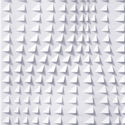
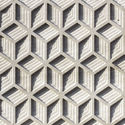
Anoma, headed by EDIDA-winning Indian artist Ruchika Grover, is a product design studio that explores the potential of natural stone. Its surfaces, sculptures, and installations, are created through a unique process, which combines digital manufacturing and traditional hand craftsmanship.
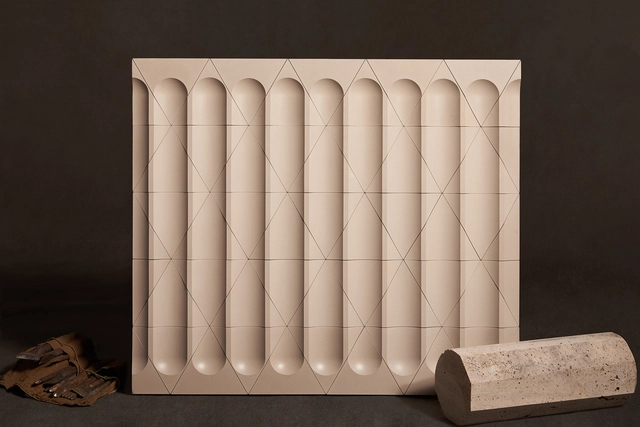
Inspired by two of the oldest techniques in architecture, fluting, and reeding, Brooklyn-based GRT Architects have developed a series of modular concrete pieces that update the Greek tradition, varying its classic composition.
This article was originally published on Archipreneur by architect Chris Barnes who, with his wife Bonnie Robin, runs the practice Field Office Architecture.
There aren’t many architects I know who do not love to travel, and I’ve always felt the two things are intrinsically linked. Maybe it’s our constant quest for visual inspiration and new ideas, or perhaps our fascination for how people live their lives and how wildly that varies from border to border, and the impact that has on our physical environments.
Either way, in the age of Instagram and unavoidable envy at the seemingly constant stream of images of laptops by the beach, cocktail in hand my wife and business partner Bonnie Robin, and I were keen to try this thing called digital nomadism for ourselves.
A new online course offered by the University of Hong Kong (UHK) through knowledge-sharing platform edX will probe the relationship between Asian culture and the continent’s vernacular architecture. Free and open to anyone, the introductory course entitled “Interpreting Vernacular Architecture in Asia” has an inclusive mission: to make the often alienating world of art and architectural history accessible to the general public by removing barriers to entry.
It's no secret that many architectural visualizers find themselves completely at a loss when trying to find clients and complete assignments on a recurring basis. No doubt you've lived this situation: after a brief negotiation, you finally give in and reluctantly get to work. You know your work is worth more than what you're charging for it, but you don't know how to avoid low rates.
If you've never been sure about how much to charge for a render or a 3D model, we've designed a "short method" for determining your fees. With this, you will learn three strategies to price a 3D rendering or whichever other services you provide. To start, the root of the problem isn't your price, it's the lack of strategy in generating potential clients. Once you fix this issue, you will be able to charge standard prices that are in sync with the market and will allow you to work with dignity.
The digital platform rocagallery.com, a project from Roca, aims to be a reference point for design and architecture to news and thought, with more than 30 international writers and content updated every week.
The concept and title Walls of Air was conceived as a response to the theme of Freespace proposed by curators Yvonne Farrell and Shelley McNamara in order to provoke questions about: 1. the different sorts of walls that construct, on multiple scales, the Brazilian territory; 2. the borders of architecture itself in relation to other disciplines.
Therefore, a reflection began on how much Brazilian architecture and its urban developments are, in fact, free. Without the ambition of reaching an answer, but hoping to open the conversation to a large and diverse public, we chose to shed light on processes that often go unnoticed due to their nature or scale. The immaterial barriers built between people or neighborhoods, and the processes of urbanization in Brazil on a continental scale are examples of questions we considered.
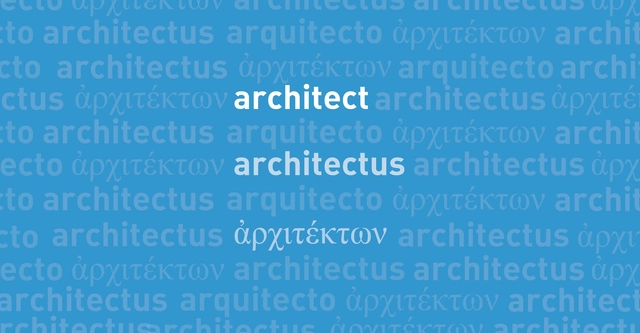
For many architects writing is an integral part of the design process, one that clarifies or pushes ideas into places sketches can't always reach. But for many, the origins of the words we use to explain and classify our work are a mystery. A look at their origins and derivations offers insight - occasionally surprising - into the evolution of architectural language.
Hungarian architects Paradigma Ariadné push the concepts of progression and growth to a literal spatial extreme in their proposal for a new sport complex for the MTK Football Academy. Drawing inspiration from the diagram of traditional European peasant houses, the design stretches into a kind of visual infinity, stacking all the rooms in the building along a single horizontal axis.
Ever enjoy swimming in fresh or salty blue water? Most people find much solace and self-renewal in immersing themselves in the natural world.
As the pioneering oceanographer, Sylvia Earle has said, “Without the blue, there could be no green.” The natural world can no longer be taken for granted as if there were no tomorrow. All relationships best blossom thanks to genuine giving and receiving of the best in life. This is how we ultimately find our true place in the world. Our planet is alive, intelligent, supportive, unconditionally and generously providing abundant life energy, resources, and beauty. We, humans, are being called to align our actions with life-giving choices.
Author Rev. Michael Beckwith stated that “a challenge offers the opportunity of becoming.” Mary Huffington, founder of the Huffington Post, said: “In life, there are happiness chasers and happiness creators. Who do you choose to be?”
The Hungarian artist László Moholy-Nagy was one of the most influential thinkers, designers and art educators of the first half of the twentieth century. His experimentation with light, space and form generated international attention. Among those impressed by Moholy-Nagy's work was Walter Gropius, German architect and founder of the Bauhaus School, who made Moholy-Nagy one of the youngest instructors in the history of the Bauhaus. In his time at the Bauhaus, Moholy-Nagy utilized multi-disciplinary art practices to revolutionize abstract artistic media.
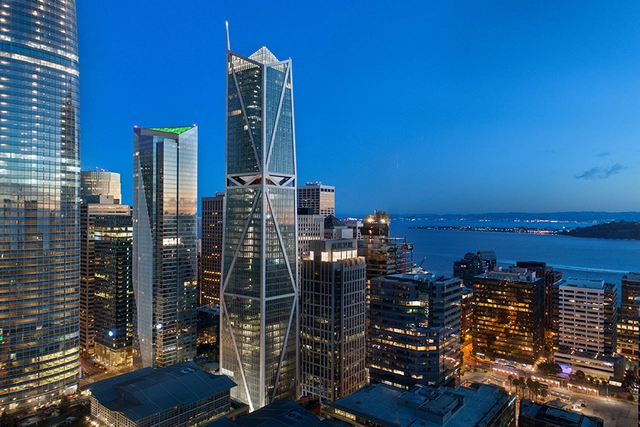
For 181 Fremont, Arup’s radical move was to do away with plans for a tuned mass damper or a sloshing damper on the skyscraper’s roof—common features in tall towers in the U.S. for reducing the natural sway of buildings. Neither damper style goes very far in protecting a building against seismic force, says Ibbi Almufti of Arup. Image Courtesy of Kevin Chu/KCJP
The most remarkable thing about 181 Fremont—San Francisco’s third-tallest tower, designed by Heller Manus Architects—is not the penthouse’s asking price ($42 million). Rather, it’s an innovative yet unglamorous structural detail: a viscous damper system that far exceeds California Code earthquake-performance objectives for buildings of 181 Fremont’s class, allowing immediate reoccupation after a seismic event.
When we think of Istanbul, opulent mosques and bustling bazaars often come to mind. Architect and photographer Yener Torur focuses on a different side of the city, targeting lesser-known neighborhoods to capture stunning images of a hidden, rainbow-colored Turkey.
Often using friends, family, and even himself as models, his photographs create whimsical narratives where color-coordinated figures act as supporting characters in a playful world of tones. Torur describes the search for these buildings as a "treasure hunt," describing his intention to "document a different, less-known part of Istanbul to escape from the one dimensional and orientalist perception."
Sold in standard 4 foot wide sheets since 1928, plywood has been a staple of conventional construction for nearly a century. Dimensionally strong, easily cut, lightweight and capable of creating an effective barrier, plywood and other engineered panels like OSB, particle board, and MDF is ubiquitous, particularly for their use as sheathing material in balloon and timber frame construction systems. Boats, airplanes and even automobile frames have historically been built out of plywood, predating (or replacing) steel, aluminum, and fiberglass. As a simple material capable of being manipulated and shaped in a wide variety of ways, sheet ply was also favored in furniture and architectural designs by modernists including Charles and Ray Eames, Eero Saarinen, Alvar Aalto, and Marcel Breuer.
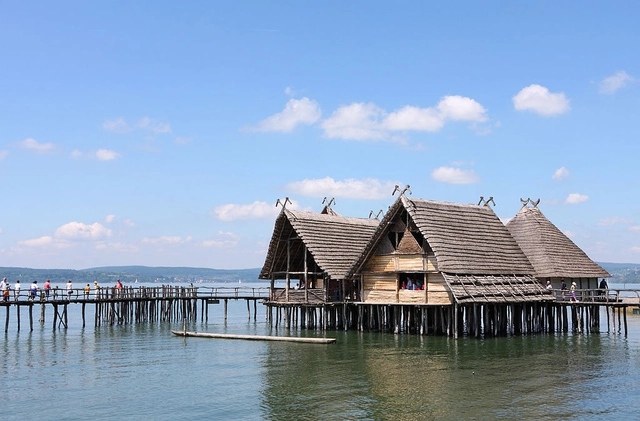
Where do people live around the world? It seems self-evident that most residential architecture is not as focused on aesthetics as the pristine, minimalist villas that cover the pages of design magazines (and, admittedly, websites like this one). As entertaining as it is to look at those kinds of houses, they’re not representative of what houses look like more generally. Most people live in structures built in the style of their region’s vernacular—that is, the normal, traditional style that has evolved in accordance with that area’s climate or culture. While strict definitions of residential vernacular architecture often exclude buildings built by professional architects, for many people the term has come to encompass any kind of house that is considered average, typical, or characteristic of a region or city. Check out our list below to broaden your lexicon of residential architecture.
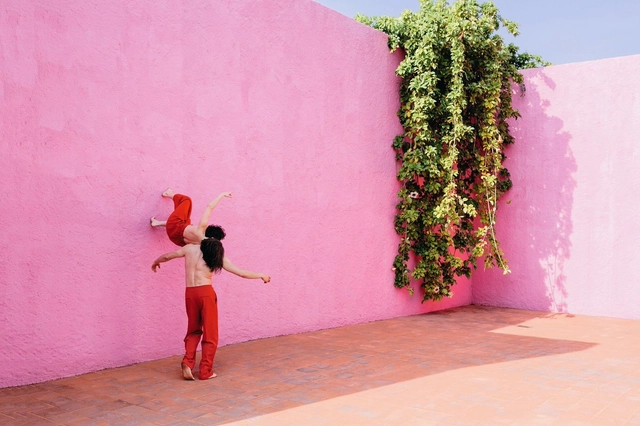
What is a building that is not inhabited? Is it still architecture? Could we say that we live in a daily choreography where our everyday life is in constant movement with the world around us? Different philosophers and theorists have long addressed the issue that architecture is not simply a set of concrete, steel, and glassware ready to protect its users, but rather all the actions it harbors, all the bodies, and set of breaths and movements. This has been reinforced by different theories that approach the body as an actor of place. However, theories of the body in architecture are not as rare as we might believe. From Ergonomics to Le Corbusier's "Modulor," theorist have sought to understand our relationship with architecture.





.jpg?1532965749 "Foliage / Monstera. Image Courtesy of Anoma")