On October 1, 1908, Ford launched its first model car in the American market, the Ford T, starting the automotive industry and establishing new paths for industrialization. Inspired by the manufacturing systems of weapons and sewing machines, in 1913, Henry Ford revolutionized production with the first moving assembly line to produce the Model T; a simple, safe, reliable and cheap car.
The price decreased over time as production became more efficient. The Model T cost $850 in its first year and, as the manufacturing process became more efficient, it decreased to $290 in 1927, the last year it was produced. Industrialization led to optimized costs, time, and logistics.
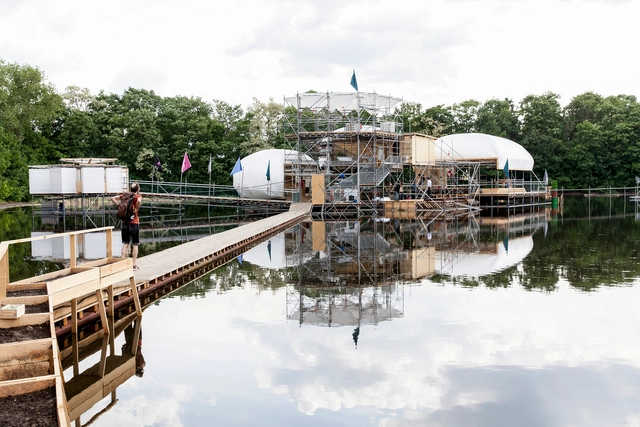
On the north side of Tempelhofer Feld, an airport-turned-park in southern Berlin, lays a large ditch. Surrounded by lots and bungalows and noticeable only to those in the know, this 19th century basin holds rainwater drained from the airport’s defunct runways before it is fed into Berlin’s canal network.
Did you know that 64 million European children spend more time at school than anywhere else other than their home? European children spend approximately 200 days each year at their primary schools. With this information, how do we go about designing healthier classrooms that create productive learning environments? This question is perhaps more important than ever, as this will be the first time since the 1970s that Europe and the UK will see a boom in the construction and renovation of schools. What a tremendous opportunity this is for both architects and educators to rethink what an educational facility should be and how the physical environment can be designed to have a positive impact on learning.
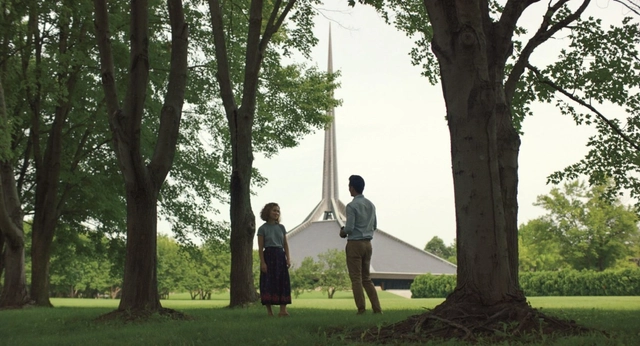
How does the built environment--whether fictitious or entirely founded in reality--impact how we experience and process film? From lesser-known indies to blockbuster movies, the ways in which architecture and the built environment inform everything from scene and setting, to dialogue and character development has far-reaching effects on the audience’s cinematic experience. Below, a roundup of everything from recent releases to classic cinephile favorites uncovers the myriad ways in which film utilizes architecture as a means of achieving a more authentic and all-encompassing form of storytelling.
Culled from our annual documentaries posts, these films feature architecture and architects in more informative and intimate ways. With more and more film festivals dedicated to architecture itself, you can likely catch these on the big screen in a city near you!
https://www.archdaily.com/903284/the-best-architecture-documentariesArchDaily Team
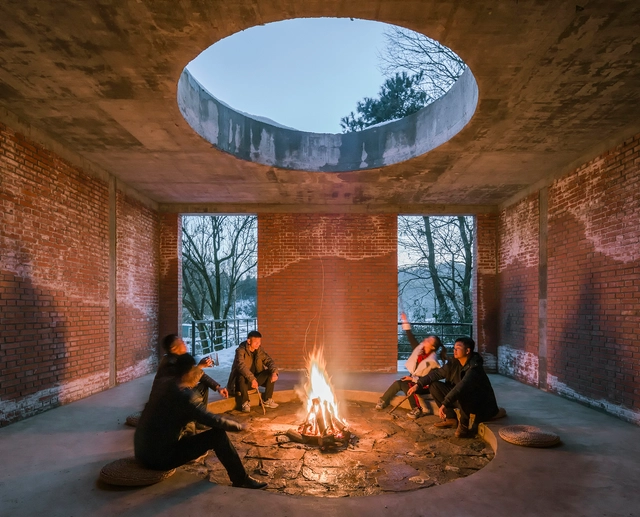
From the beginning of time, human beings have gathered around the fire. The first settlements and huts included in their interior a small bonfire to cook and maintain the heat of its inhabitants. This tradition has continued to the present, and chimneys and fireplaces have developed into the most varied designs and forms, providing possibilities both inside and outside a home.
To give you ideas for materials, structures, and spatial configurations, we present 35 remarkable meeting places around the fire.
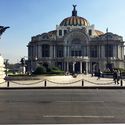
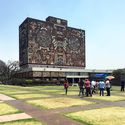
At first sight, when approaching CDMX from the sky, is overwhelming. A sea of buildings indicates an arrival to the fifth most populated capital in the world. The size of the city, makes it difficult to recognize its limits, so it is inevitable to use urban and suburban landmarks such as the Zócalo square (downtown), Tamayo Museum in Chapultepec Park (West), University City, the Frida Kahlo Museum (Coyoacán), and Ciudad Satélite (north exit), to orient yourself.
Located in a strategic geographical position within the traditional routes of design, the city benefits from the connections and close interactions with North America and Europe. Fortunately, these external tendencies are refined within the "local" filter; the vast history and tradition of indigenous Mexican cultures permeate foreign influences making them unique creations, with a marked interest in native materials and working techniques.
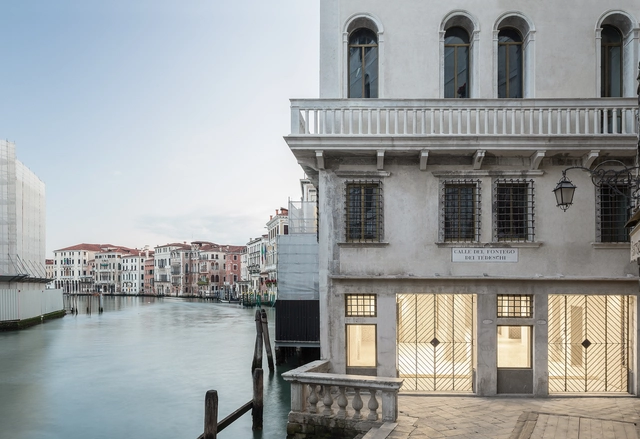
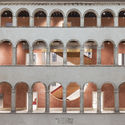
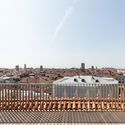
The history of Venice’s architecture, as seen today, is a semblance of styles centuries old. A destination rich in culture, many of Venice’s existing buildings, from homes alongside the thin interior canals to the grand domed churches of Palladio, have remained stagnant in their overall design and layout since the 16th century. Once a hub of Byzantine and European trade, the city now thrives on a steady stream of tourism and a foundational group of local residents.
The structures that make up the city’s compact matrix, once integral to its function as a commercial empire, have come to take on new functions through architectural intervention; notably, architects such as Carlo Scarpa, OMA, and Tadao Ando have had a large hand in this process.
The tale began with a simple idea - a toy that every child, regardless of age and ability, can play, dream, and learn with. But things turned out less than simple. Fights, lawsuits, and even a death all mark the road it took to make a now-ubiquitous toy a reality. The object in question? Lego.
It’s tales such as this one that Alexandra Lange explores in her new book, The Design of Childhood: How the Material World Shapes Independent Kids. Some may scoff at the seemingly trivial subject matter. Surely children, with their boundless imaginations and appetite for play, can discover ways to find fun in anything.
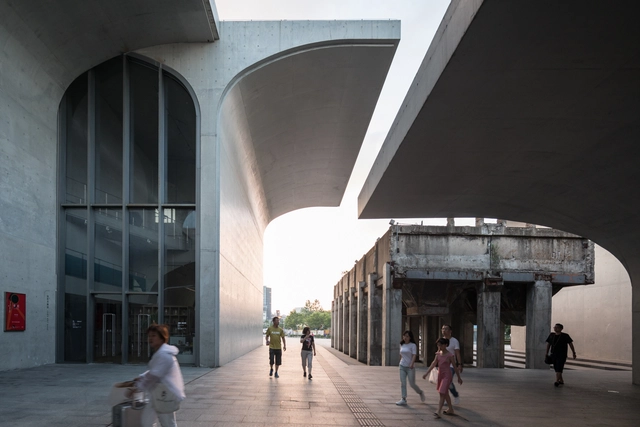
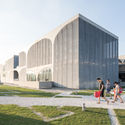
In a creative scene that is already bursting with talent and innovation, Atelier Deshaus' works in China stand out. Their projects, often renovations of existing spaces, do not follow particular rules of style set by others or even themselves. Yet they are united in their subtle and enigmatic take on the experience of space in the ever-changing urban environments in China.
Some gamers work diligently to recreate historically-accurate structures or design their own renditions.
Avid gamers and casual observers alike have probably heard of The Sims, a life simulation video game and one of Electronic Arts' (EA) most popular franchises. The Sims, which has undergone multiple iterations and expanded its virtual universe many times over the past decade, allows players to dream and control elaborate stories for their Sims. This "virtual dollhouse," as The Sims creator Will Wright describes, also lends players the ability to endlessly customize and construct their own houses and cities for their Sims–a feature that has allowed many gamers to interact more closely with the real world of architecture.
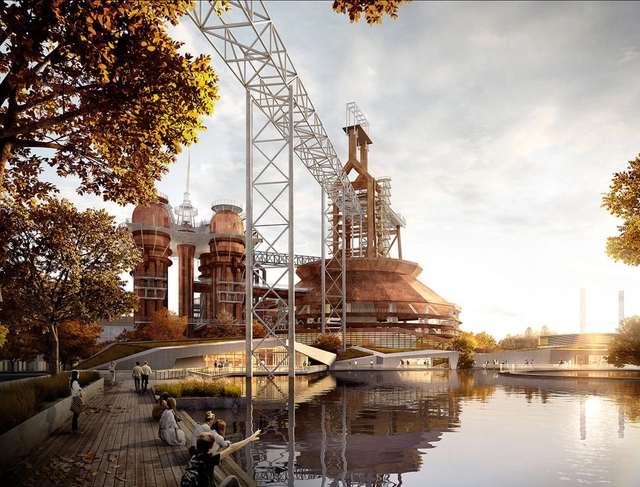
Across the world, developed cities are rebelling against heavy industry. While some reasons vary depending on local circumstances, a common global drive towards clean energy, and the shifting of developed economies towards financial services, automation, and the gig economy, is leaving a common trace within urban centers. From Beijing to Detroit, vast wastelands of steel and concrete will stand as empty relics to the age of steel and coal.
The question of what to do with these wastelands, with defunct furnaces, railways, chimneys, and lakes, may be one of the major urban questions facing generations of architects to come. What can be done when the impracticality of industrial complexes, and the precious land they needlessly occupy, collides with the embodied energy, memories, and histories which few would wish to lose?
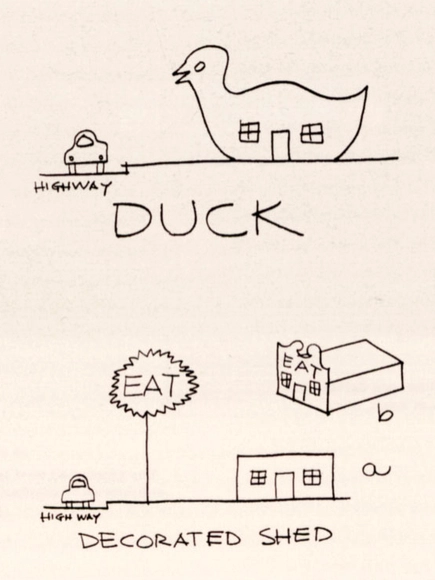
Robert Venturi (1925-2018) was the most influential American architect of the last century, though not primarily for his built work, or because of his stature as a designer. He will never stand beside Wright, or Kahn, or even Gehry in that regard. Between 1965 and 1985 he and his collaborator, Denise Scott Brown, changed the way all architects look at buildings, cities, and landscapes, much in the way that Marshall McLuhan, Bob Dylan and Andy Warhol changed our view of art, media, and popular culture during the same period.
I worked with Bob Venturi during my apprenticeship in the 1970s; I also grew up with his books, buildings and paternal influence. He and my father were one year apart; Denise is the same age as my mother.
https://www.archdaily.com/903226/robert-venturi-and-the-difficult-whole-how-architectures-enfant-terrible-changed-design-foreverMark Alan Hewitt
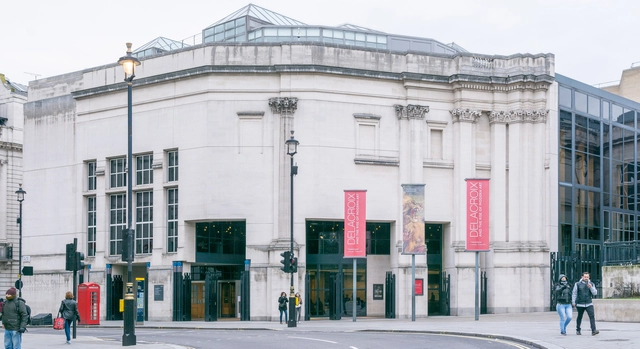
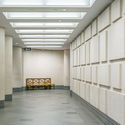
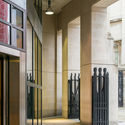
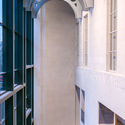
Venturi Scott-Brown’s National Gallery Sainsbury Wing extension (1991) was born into a precarious no-man’s land between the warring camps of neo-Modernists and traditionalists who had been tussling over the direction of Britain’s cities for much of the prior decade. The site of the extension had come to be one of the most symbolic battlefields in British architecture since a campaign to halt its redevelopment with a Hi-Tech scheme by Ahrends Burton Koralek had led to that project’s refusal at planning in 1984.
Twin brothers Chris and Bill Sharples are two of the founding partners of SHoP Architects, a New York-based firm established 20 years ago to bring together diverse expertise in designing buildings and environments that improve the quality of public life.
The firm’s style is difficult to define, but a connective thread throughout SHoP’s portfolio is a design philosophy rooted in constraints. From digital models to next-generation fabrication and delivery techniques, technology is at the center of the firm’s movement toward an iterative approach that, as Chris Sharples says, “is beginning to blur the line between architecture and manufacturing.”
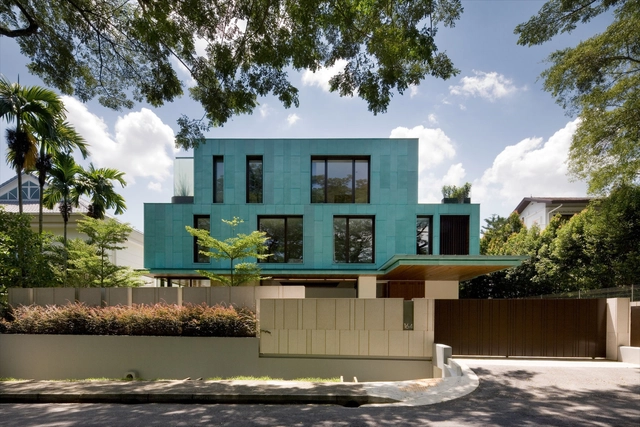
Patinated copper, also called oxidized, is a metal coat that "ages well" with excellent weathering resistance. Due to its capacity for transformation over time, when coming into contact with atmospheric conditions, the material does not require major maintenance, giving a unique aspect to the facades.
In addition to orange-colored plates, this material also gives off a blue / green appearance through a controlled chemical oxidation process. Its coloration is defined by the amount of crystals contained in the surface of the material. With the appearance of natural light, the panels display various shades and nuances of color.
After graduating from Tecnológico de Monterrey, a leading technical school in Mexico, Francisco Gonzalez Pulido worked on design-build projects for six years before leaving for the US where he earned his Master’s degree from Harvard’s GSD in 1999. The same year the architect started working with Helmut Jahn in Chicago where he stayed for 18 years – from intern to becoming the president of the company in 2012, at which point he renamed the firm into Jahn. By then he developed his own body of work there. Last year Gonzalez Pulido started FGP Atelier in his adopted home city.
Today the studio, counts a dozen of architects and is overseeing the design of a couple of high-rises in China, a baseball stadium in Mexico City, and university buildings in Monterrey, among other projects. The following interview was conducted at FGP Atelier in Chicago, during which the architect was explicit about transmitting his view: “Architecture is too rigid, too formal. It is time to break free…I want to build lighter. I want to build smarter.”





Seiffert.jpg?1539004277 "© Daniel Seiffert")


















.jpg?1538652545 "© Laurian Ghintiou")












.jpg?1538563752 "Courtesy of SHoP Architects")