During the second half of the twentieth century, architects all over the world, specifically from Europe, produced a legacy of renowned, modern works in Brazil. Following the principles of masters such as Le Corbusier, names like Lina Bo Bardi, Hans Broos, and Franz Heep held an undeniable influence on Brazilian architecture.
In recent years, the country has been welcoming a variety of buildings designed by foreign architects. Below, we have compiled 10 iconic works by international architects.
This article was originally published on ArchDaily on 13 February 2018.
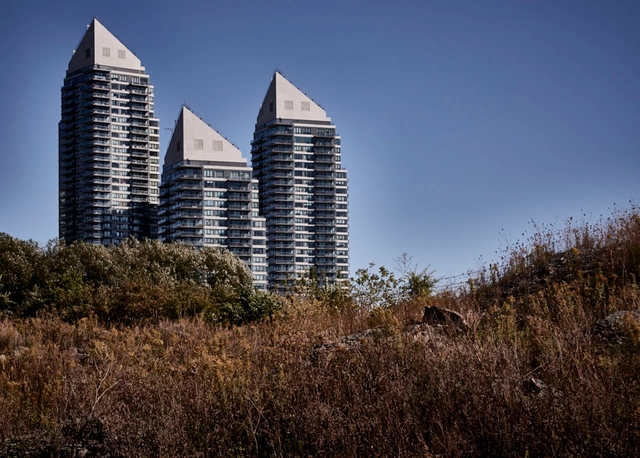
The City of Toronto has a long, fraught relationship with development and vacancy. The map of the initial Toronto Purchase of 1787 between the Mississaugas of the New Credit First Nation and the British Crown, which would later establish the colonial territory that became Toronto, conceives of the landscape as a single, clearly defined vacant lot anxious for development. Or, as artist Luis Jacob better described it, “signifying nothing but an empty page waiting to be inscribed at will.” Over two-hundred years later, as housing availability, prices, and rental shortages drive vertical condominium developments in the city, the politics of the vacant lot have never felt so palpable.
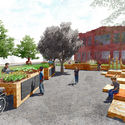
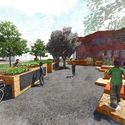
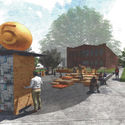
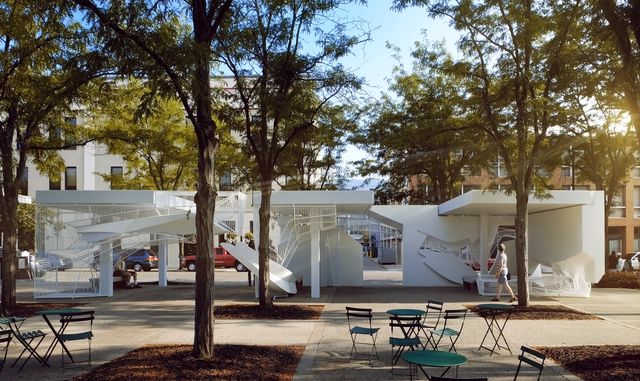
A team of five University of Hartford Master of Architecture (MArch) students recently won the Dream Green, Hartford EcoDesign competition sponsored by the Connecticut Institute for Resilience and Climate Adaptation and hosted by the City of Hartford Mayor’s Office of Sustainability. The competition requested proposals to improve the city through “pop-up” projects that transform underused city spaces while highlighting green infrastructure and sustainable design.
The work of an architect and urban planner can take on many forms thanks to the diverse curricular composition of most graduate courses, with subjects that deal with designing in different scales and contexts. From great urban plans to home renovations, and the metropolis to furniture design, these branches deal with different objects, however, all in common are the use of drawing and models as a tool for representation.
Whatever the project may be, drawing is the way to represent reality, ideas, speculations, and conceptions. Scale, a factor that establishes the level of reading one must make of these representations, determines the link between the real world and the dimensions of the drawing or model. For instance, the scale 1:1 is also known as “full size.”
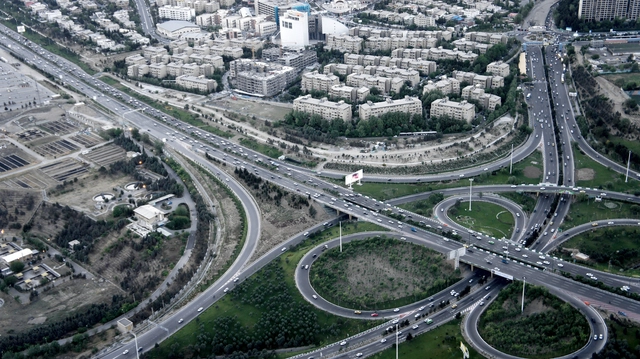
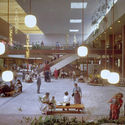
Austrian-born architect Victor Gruen is perhaps best known for pioneering the design of the American mall typology. His visions for these spaces sought to incorporate various aspects of the city into a single enclosed or indoor space, with a particular focus on consumption and commercial activity. His sprawling designs functioned as the perfect complement to America’s burgeoning leisure-driven consumer culture as a booming economy and an increase in car travel reinforced the possibilities of this new postwar way of life. Perhaps lesser-known, however, is Gruen’s commission from the Iranian government to design an urban plan for the city of Tehran in the late 1960s.
Allied Works has, since their founding in 1994, become known for their portfolio of delicately balanced and civic-minded works. Their Clyfford Still Museum in Denver has in particular been recognized in numerous awards and publications - but may perhaps be overshadowed by their most recent built work.
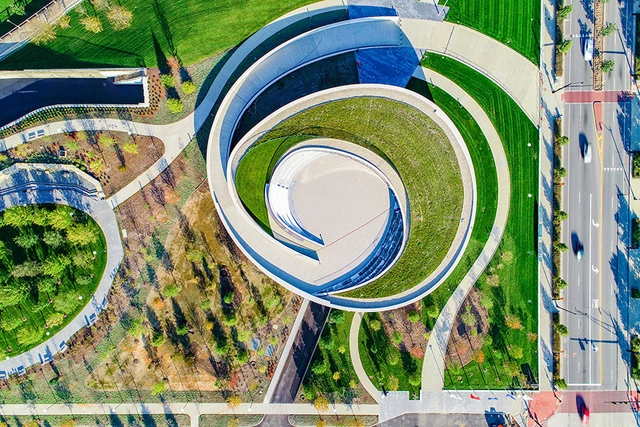
The National Veterans Memorial and Museum, located in Columbus, Ohio elevates what might have been a staid and somber program into a public space with an urban outlook. The museum, composed of intersecting white concrete bands, opens onto a lustrous landscape (designed by OLIN) and connects the formerly neglected riverfront to the small city’s downtown.
Lumion has always set out to define what rendering should be: fast and stress-free with exceptional results. Now, with the latest version of its 3D rendering software, Lumion 9, it’s easier than ever to show off your 3D models in a living environment, with beautiful, real-life skies, an endless variety of landscapes, and exceptional lighting and materials. Oh, and rendering takes minutes, not hours.
The following is an excerpt from Andrew Levitt's recent book "Listening to Design: A Guide to the Creative Process."
Listening fully without any desire to judge or cause change can open the most stubbornly shut door. With deeper listening, the desire to change or judge the other person disappears and is replaced by a willingness to just be present. At first I worried that listening was not enough, but eventually I learned that the process of creativity hinges on the ability to listen. We need to get into the habit of recognizing the authenticity of our inner voices. By hearing that voice without judgement, we can access all kinds of riches. All the ideas in the world won’t help you if they fall on deaf ears. When we get an idea, there are so many ways of ignoring or sabotaging it. Staying true to the inner command is the holy moment of design. But listening is the key to successful collaboration and feedback.
Plastic Island. Image Courtesy of Emily-Claire Goksøyr
Kanye West is, according to Kanye West, a reformed man. After months of making headlines over his bizarre political views, he stated on Wednesday that, “my eyes are now wide open and now realize I’ve been used to spread messages I don’t believe in. I am distancing myself from politics and completely focusing on being creative !!!”
While this most likely means a return to his music career, this statement could also indicate a renewed interest in his design projects. The rapper’s interest in architecture is more than just a passing one; he’s collaborated with noted architects such as Jacques Herzog and Rem Koolhaas and has declared on multiple occasions his desire for everything to be “architected.”
https://www.archdaily.com/905122/this-week-in-architecture-a-little-less-conversationKatherine Allen
More than 40 years after it emerged from South Bronx house parties, hip-hop has become a once-in-a-lifetime concussive force reshaping global cultural. But at its most elemental and foundational, hip-hop is a direct, powerful confrontation with the built environment. “Broken glass everywhere / People pissing on the stairs, you know they just don’t care,” Grandmaster Flash and the Furious Five rapped on their seminal 1982 track “The Message.” “I can’t take the smell, can’t take the noise / Got no money to move out, I guess I got no choice.”
https://www.archdaily.com/905084/how-hip-hop-architecture-is-making-its-own-spaceDante A. Ciampaglia
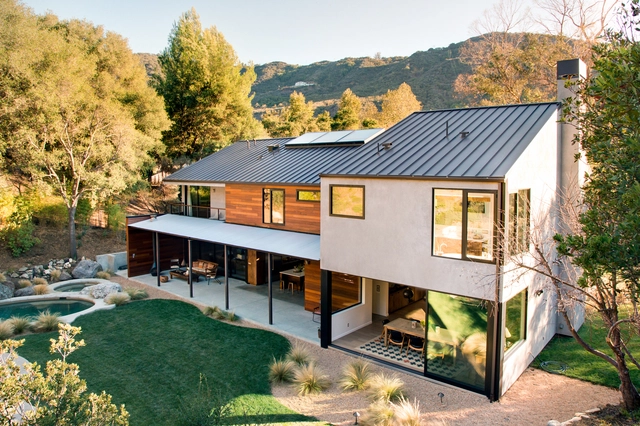
It’s no secret that in many parts of the country, indoor-outdoor living actually gets better when summer turns to fall. The bugs buzz off, the humidity lifts, and the cooler nights beg for the warmth of a fire. Here are five of our favorite indoor-outdoor living spaces for the fall of 2018.
The Exchange / Oyler Wu Collaborative. Image Courtesy of Oyler Wu Collaborative
On its outskirts, you'd be forgiven for assuming that Columbus, Indiana is a suburban American town like any other. But travel downtown and you're suddenly greeted with an unexpected variety of modern architecture. The small midwestern city has for the past half-century been a kind of laboratory for contemporary architecture, attracting designers as diverse as Kevin Roche and IM Pei. Children attend school in a building designed by Richard Meier, congregants attend services in a church designed by Eliel Saarinen.
Surely every architect has wondered how the fluid but complex forms of the architecture of Zaha Hadid Architects are brought to reality. And it's beautiful to see how an initial conceptual idea –probably drawn as a quick sketch– materializes in precise and detailed planimetric drawings.
We have compiled a series of construction details from 9 projects developed by Zaha Hadid Architects that give insight into her distinct style and approach, showing us that, with a little ingenuity and a lot of expertise, even the most impossible-seeming dreams can be built.
King Abdullah Petroleum Studies and Research Centre by Zaha Hadid Architects shortlisted for "Higher Education and Research - Completed Buildings"
The World Architecture Festival is regarded as one of the most wide-ranging and influential architectural events. This year's event will take place in Amsterdam at the RAI Exhibition and Convention Centre from November 28-30. Bringing global voices in architecture, this year's speakers include keynote presenter Rem Koolhaas, Jeanne Gang, David Adjaye, and Li Xiaodong. This year, five lucky ArchDaily readers can win a standard pass to the World Architecture Festival 2018 (worth €1525). Enter the prize draw here.
When the world undergoes major changes (be it social, economic, technological, or political), the world of architecture needs to adapt alongside. Changes in government policy, for example, can bring about new opportunities for design to thrive, such as the influx of high-quality social housing currently being designed throughout London. Technological advances are easier to notice, but societal changes have just as much impact upon the architecture industry and the buildings we design.
The story of the Hastings Pier is an improbable one. Located in Hastings - a stone's throw away from the battlefield that defined English history - the pier was first opened to the promenading public in 1872. For decades the structure, an exuberant array of Victorian-era decoration, entertained seaside crowds but by the new millennium had fallen out of disrepair. In 2008 the pier was closed - a closure that became seemingly irreversible when, two years later, it burnt down.










.jpg?1540844392 "Skjern / Johansen Skovsted Arkitekter River Pumping Stations. Courtesy of Johansen Skovsted Arkitekter")












_Nathaniel_Belcher__Stephen_Slaughter.jpg?1541069020)





.jpg?1540932376&format=webp&width=640&height=580)

.jpg?1540930206 "MAXXI Museum / Zaha Hadid Architects. Image © Iwan Baan")


.jpg?1540932376)







.jpg?1540405202&format=webp&width=640&height=580)
.jpg?1540405410 "Hastings Pier / dRMM. Image © Laurian Ghinitiou")
.jpg?1540404858 "Hastings Pier / dRMM. Image © Laurian Ghinitiou")
.jpg?1540405254 "Hastings Pier / dRMM. Image © Laurian Ghinitiou")
.jpg?1540583713 "Hastings Pier / dRMM. Image © Laurian Ghinitiou")
.jpg?1540405202)