Tiffany Brown with students. Image Courtesy of Tiffany Brown, 400 Forward
A pioneer for justice, equity, diversity, and inclusion in the profession of architecture, Detroit native Tiffany Brown is the founder of 400 Forward, an initiative that seeks, inspires, and mentors the next generation of women designers. Named in light of the licensing of the 400th African American woman architect in 2017, the program aims to familiarize young girls with architecture, giving them tools to address social injustice issues.
Pushing forward the presence of African American women in the profession of architecture -currently standing at less than 0.3% in the U.S- 400 Forward also provides scholarships and tuitions for study material and licensing exams for African American women in architecture. In order to learn more about the initiative, ArchDaily had the chance to talk with founder Tiffany Brown about the program, diversity in the field, and empowering female architects and students.
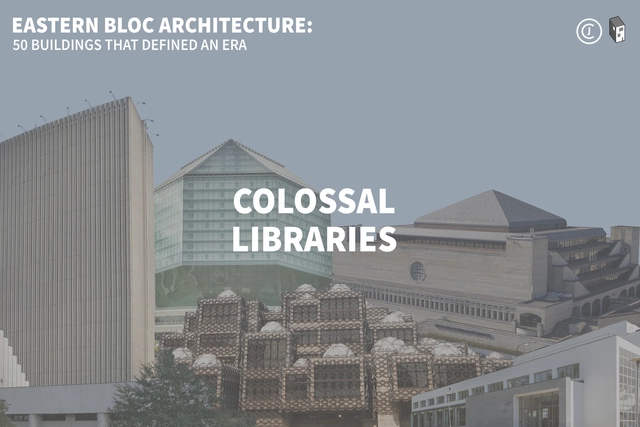
This article is part of "Eastern Bloc Architecture: 50 Buildings that Defined an Era", a collaborative series by The Calvert Journal and ArchDaily highlighting iconic architecture that had shaped the Eastern world. Every week both publications will be releasing a listing rounding up five Eastern Bloc projects of certain typology. Read on for your weekly dose: Colossal Libraries.
https://www.archdaily.com/943219/eastern-bloc-architecture-colossal-librariesLucía de la Torre
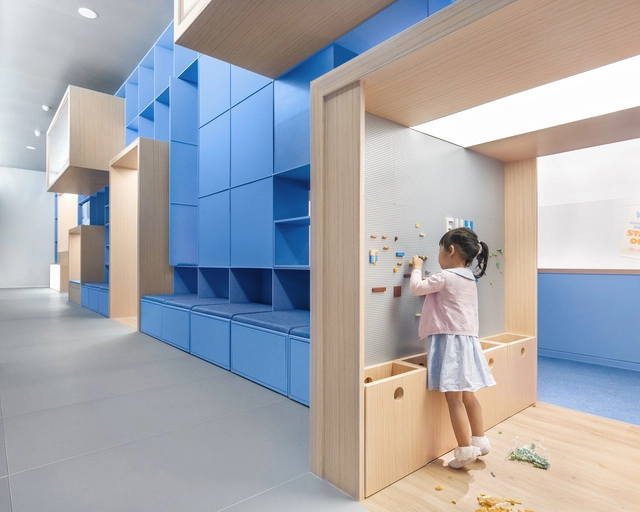
It is unquestionable that environments directly influence the behavior and emotions of their users. Human beings spend approximately 90% of their lives indoors, making it imperative that the spaces we inhabit stimulate positive behavior and emotions, or at least don't influence us negatively. There exists a specific term describing the stimuli that the brain receives from its environment: neuroarchitecture. Several studies have been published on this topic, most focusing on its impact on work environments. This article approaches this concept through a different, yet essential lens: emphasizing its importance in the design of spaces for children in early childhood.
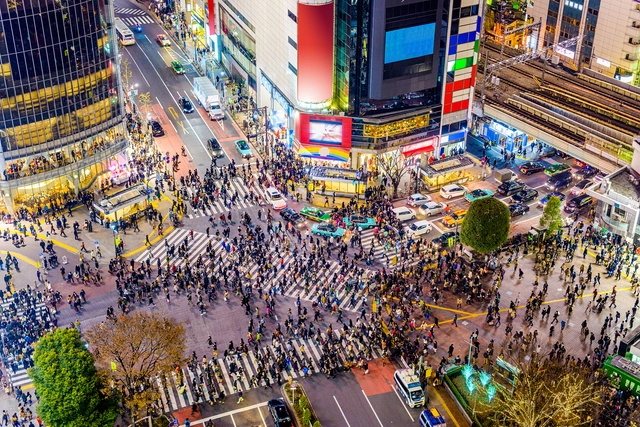
When we talk about public space, we often imagine a park with happy, relaxed people on a sunny day. In actuality, this is a very restricted approach. A young woman does not cross a deserted street at dawn in the same way as a white man wearing a suit or as an immigrant who may not be welcomed by local citizens. Have you ever felt discriminated while visiting a public space?
In this edition of Editors’ Talk, editors from Los Angeles, São Paulo, Argentina, and Uruguay share their views on defining public spaces for everyone
New Generations is a European platform that analyses the most innovative emerging practices at the European level, providing a new space for the exchange of knowledge and confrontation, theory, and production. Since 2013, New Generations has involved more than 300 practices in a diverse program of cultural activities, such as festivals, exhibitions, open calls, video-interviews, workshops, and experimental formats.
New Generations launches a fresh new media platform, offering a unique space where emerging architects can meet, exchange ideas, get inspired, and collaborate. Recent projects, job opportunities, insights, news, and profiles will be published every day. The section ‘profiles’ provides a space to those who would like to join the network of emerging practices, and present themselves to the wide community of studios involved in the cultural agenda developed by New Generations.
ArchDaily and New Generations join forces! Every two weeks Archdaily publishes a selection of studio profiles chosen from the platform of New Generations.
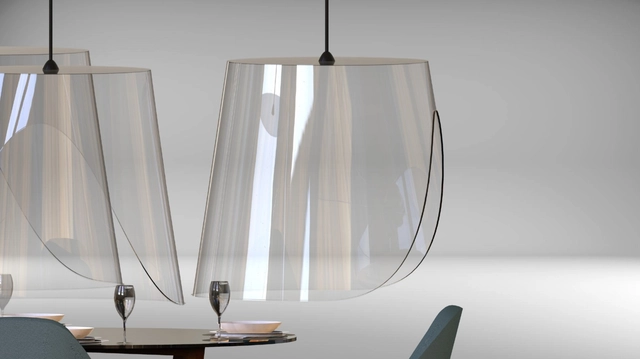
Although chemist and inventor Otto Rohm had first come up with the idea for plexiglass in 1901, it wasn’t until 1933 that the Rohm & Haas company first introduced it to the market under the trademark name Plexiglas. The material, which is considered a lightweight and shatter-resistant alternative to glass, has had a fascinating history and experienced a multitude of different uses in that time. Today, plexiglass continues to be utilized in new and interesting ways, including as a potential means with which to help combat coronavirus spread. Restaurants, stores, and other businesses have begun using plexiglass partitions as protective shields for both workers and customers, especially as cities and towns slowly reopen. Below, we dive into this unusual material, addressing its material properties, its history, and the ways it continues to be used today.
https://www.archdaily.com/943049/what-is-plexiglass-the-protective-plastic-many-are-using-to-combat-viral-spreadLilly Cao
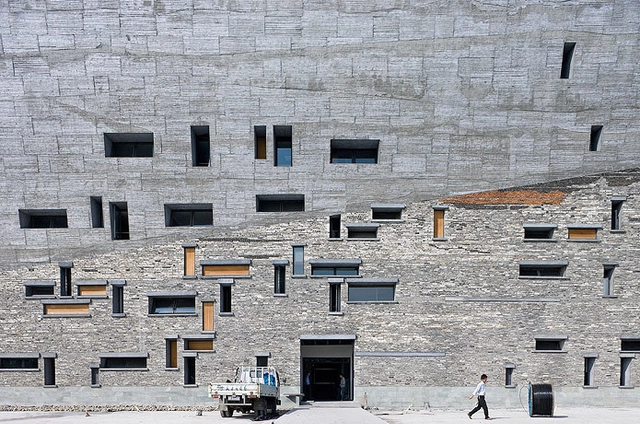
Amateur Architecture Studio, Ningbo History Museum, 2008. . Image Courtesy of Louisiana
Over the past two centuries, cities in China have multiplied and expanded on a large scale, under accelerated urbanization. Mass demolition of the old city fabric, occurring everywhere, is leaving industrial debris and fragmented cultural artifacts buried forever, under shiny new skyscrapers. As old Chinese cities are collapsing and new urban centers are outspreading, a part of the city was lost, the old demolished landscape. Wang Shu and Lu Wenyu, the first Chinese citizens to win the Pritzker Architecture Prize, responded to this past-present relation by working with recycled materials and traditional know-how. In the following, we explore some of this couple's renowned works such as Ningbo History Museum, Ningbo (2008), Xiangshan Campus of China Academy of Art, Hangzhou (2004), and Ningbo Contemporary Art Museum (2005), to examine his humanistic approach to the city.
The images that some visualizers have been presenting have allowed people to be fully immersed in virtually-built environments; exploring the space, observing how the sun rays create a dialogue between light and shadow, experiencing what they might hear or feel as they walk by one room to another, all before excavation work begins and the first block is laid.
In an exclusive interview with ArchDaily, Luxigon's Eric de Broche des Combes talks about his career, creating amplified visualizations and how they influence a project, and what the future holds for the industry.
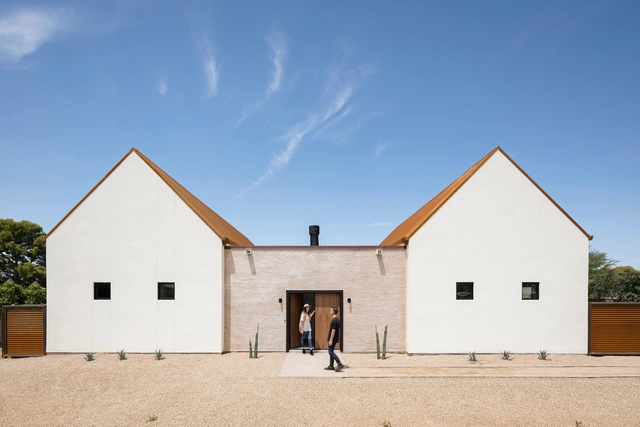
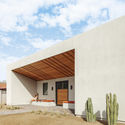
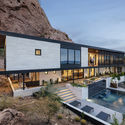
Arizona is located in the western region of the United States. It has geographical borders with Utah, Colorado, and New Mexico, in the United States, as well as with Sonora in Mexico. The state is also situated on the Sierra Madre Occidental and is home to a segment of the Colorado River, as well as the Grand Canyon. Part of Aridoamerica, Arizona's landscape is composed, in its majority, of Cactaceae and desert species.
We are in an unholy mess. It is a pandemic, with insane politics, and centuries of hideous racial injustice screaming out humanity’s worst realities. Each day reveals more disease, more anger, more flaws in our culture than anyone could have anticipated.
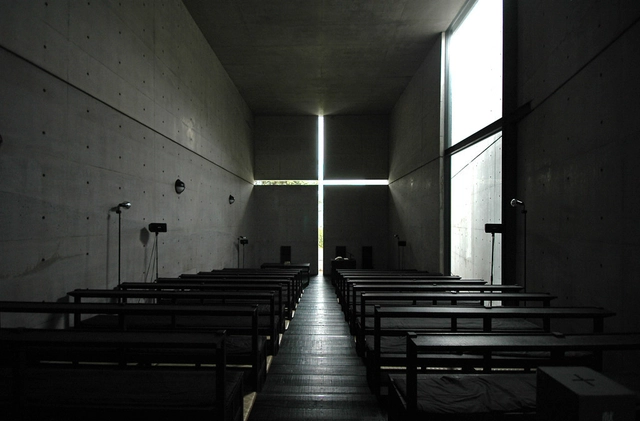
This season’s inscrutable fears are uniquely human. The natural world flourishes amid our disasters. But architecture is uniquely human, too. Architecture’s Prime Directive is to offer up safety. So in this time of danger, it is a good idea to think about the flip side of so much profane injustice and cruelty, Sacred Space? Architecture can go beyond playing it safe and aspire to evoke the best of us, making places that touch what can only be defined as Sacred.
What is Sacred Space? Whether human-made or springing from the natural world, Sacred Space connects us to a reality that transcends our fears. The ocean, the forest, the rising or setting sun may all define “Sacred”. But humans can make places that hold and extend the best in us beyond the world that inevitably threatens and saddens us. Architecture can create places where we feel part of a Sacred reality.
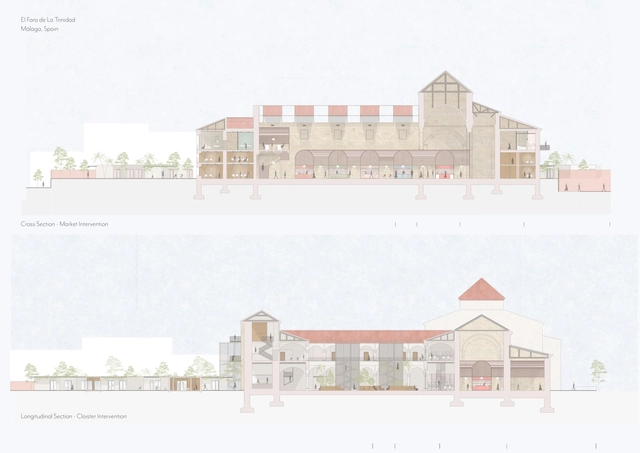
El Faro de la Trinidad - Project by Mirian Otto Hernández Palacios. Image Courtesy of IE University
The relationship between space and well-being has always been a key consideration at IE University’s School of Architecture & Design. As this concept becomes increasingly widespread, the boundaries of what’s possible are being pushed. By providing students with a global vision of architecture and design, they are able to create multipurpose spaces that boost well-being and remain flexible as needs evolve.
As far as written records report, “prehistory” dates back between 35,000 BCE and 3000 BCE in the Middle East (2000 BCE in Western Europe). Ancient builders had a profound understanding of human responses to environmental conditions and physical needs. Initially, families and tribes lived together in skin-covered huts and bone structures. Thousands of years later, human settlements evolved into fortified mud-brick walls surrounding rectangular volumes with pierced openings for ventilation and sunlight.
During the upcoming months, we will be publishing short articles on the history of architecture and how it evolved to set the fundamentals of architecture we know today. This week, we are going back to one of the most prominent and influential periods known to architecture: Greece; Aegean, Archaic, classical, and Hellenistic periods.
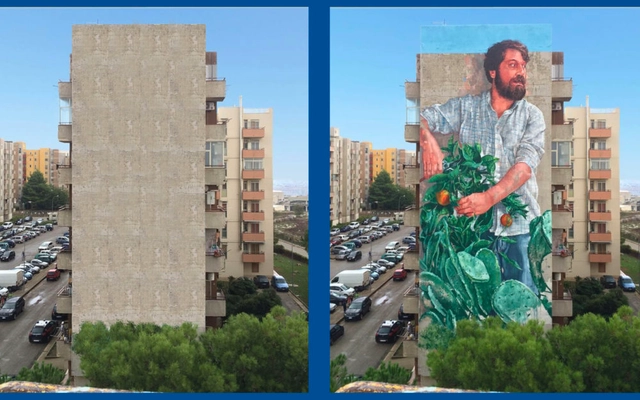
Since 2015, Ragusa, Sicily has hosted FestiWall, an international art festival devoted to enhancing the public realm and improving citizen engagement with the modern section of an old city. The image above shows two views of a residential tower before and after FestiWall. Which one grabs your eye?
We’ll guess you’re drawn to the one with the art at right. Running the image through biometric software predicts you’ll immediately focus on the man in the mural.
https://www.archdaily.com/942916/empathy-in-design-measuring-how-faces-make-placesAnn Sussman & Janice M. Ward
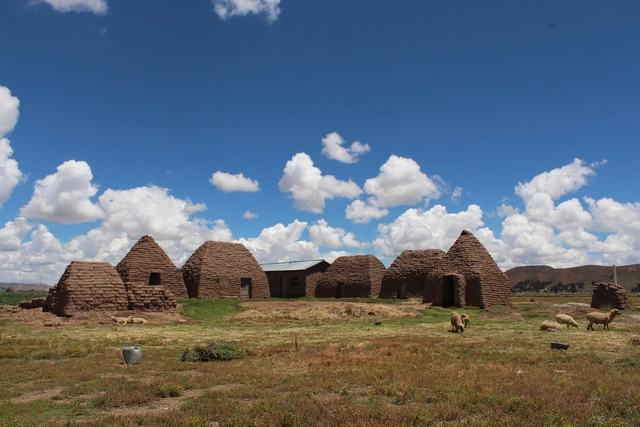
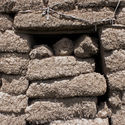
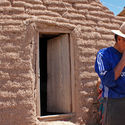
As a part of the XV Taller Social Latinoamericano architectural conference that took place in Puno, Peru, we visited the Iruito Tupi zone in Huancané province alongside Francisco Mariscal, Director of the Puno Cultural Center. For the conference, Mariscal gave a presentation on the history of putucos, pre-Columbian houses made with a mixture of earth and grass.
History has the habit of repeating itself; using the same script, just with different names, figures, and places. Some 10,000 years ago, the Altiplano and the Titicaca lake basin, wedged between modern day Peru and Bolivia, became home to hunters and gatherers who subsisted on the herds of llamas and vicuñas as well as the bounty of birds and fish.
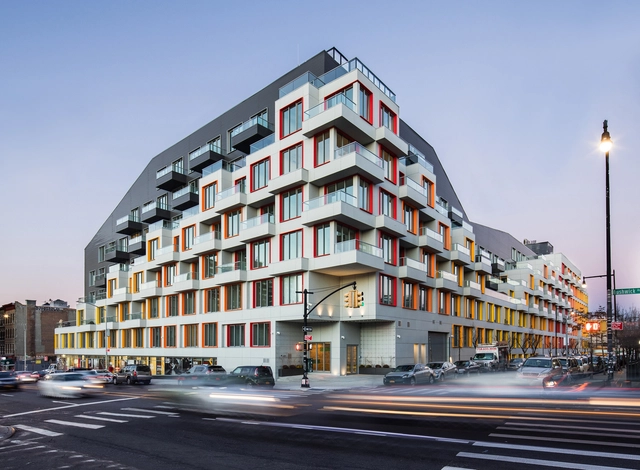
There’s a new kid on the block making noise in Brooklyn’s thriving Bushwick neighborhood. At 7-stories tall, 500 units, and occupying 489,000 square feet of real estate, The Rheingold is one of the most expansive multi-family developments in Brooklyn to date.
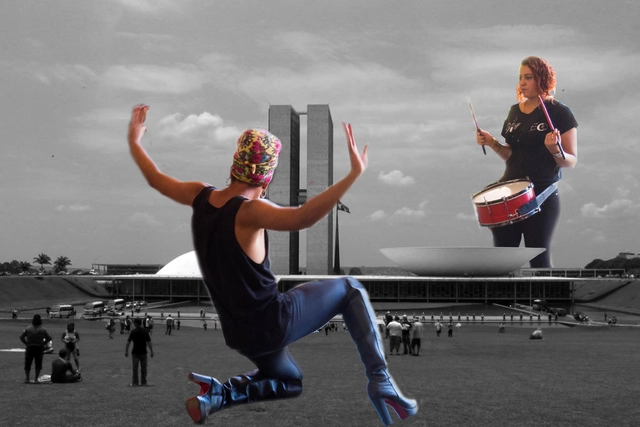
Collage made with photos of Matias Romero and Raquel Aviani/Secom UnB. (licensed under the Creative Commons Attribution-Share Alike 2.0 Generic license and Creative Commons Attribution 2.0 Generic license) via Wikimedia Commons
What would all the built environments be without its users? This question may make it easier to understand that not only do architecture and urbanism sustain themselves as physical spaces, but they also gain meaning mainly through the human and non-human movements and bonds, that - together with the architectural or spontaneous traces that make up the urban landscape - provoke the sensations that each individual feels in a unique way.
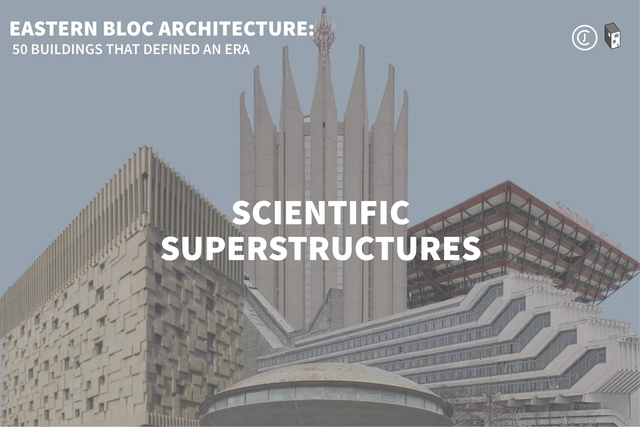
This article is part of "Eastern Bloc Architecture: 50 Buildings that Defined an Era", a collaborative series by The Calvert Journal and ArchDaily highlighting iconic architecture that had shaped the Eastern world. Every week both publications will be releasing a listing rounding up five Eastern Bloc projects of certain typology. Read on for your weekly dose: Scientific Superstructures.