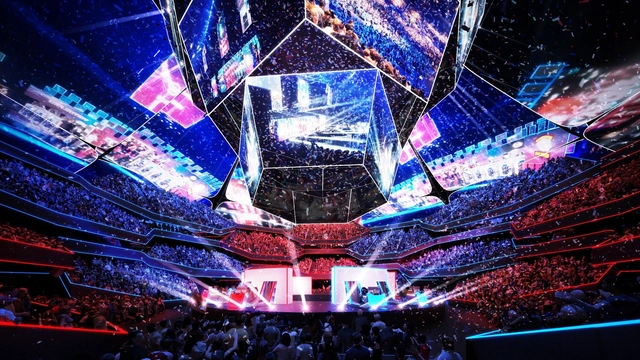
When Rashed Singaby, Principal at HOK, was contacted by a former client about how an existing stadium could be retrofitted to host esports events, he immediately knew this was an opportunity to create a blueprint for a type of space that has never existed before. Singaby and his team formulated a small research group to test and understand both the standards for each type of esports game and classify them into operational substructures. Since each game requires its own type of setup, it was important to ultimately conceptualize the design ideas and make recommendations for how existing spaces could be modified in order to best consume and be involved in the experience of esports activities.
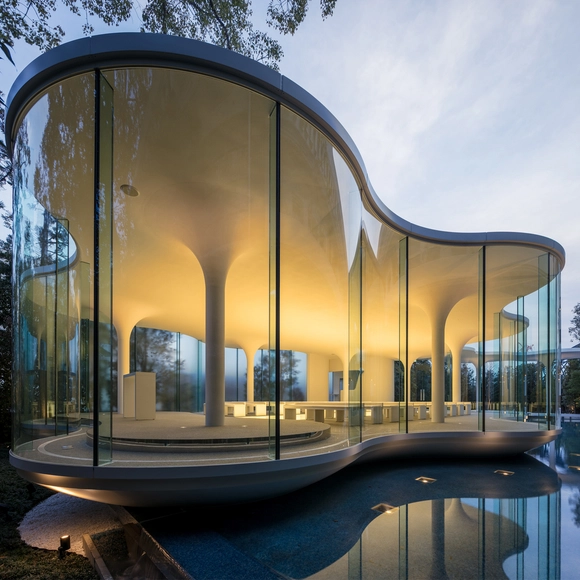
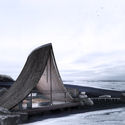
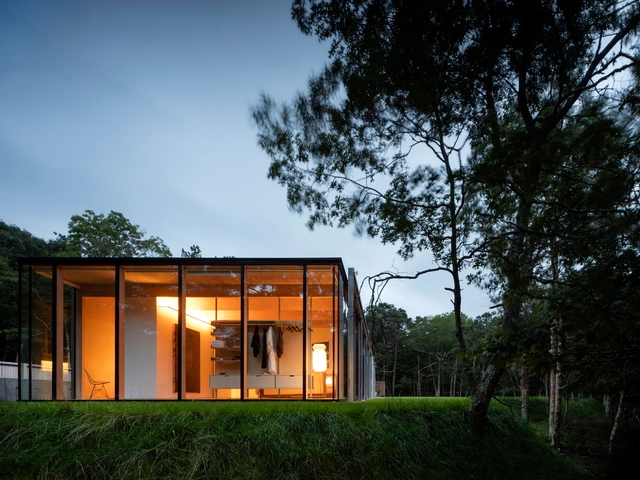
Cloud of Luster Wedding Chapel / Tetsuya Matsumoto. Image Courtesy of A' Design Awards
It's never too early to enter for a chance to showcase your work to a global audience; enter your design now for an A’ Design Award. The international competition was "born out of the desire to underline the best designs and well-designed products" of designers, architects, and innovators from all design fields. Among other design competitions and awards, the A' Design Award stands out for its exceptional scale with over 100 design categories.
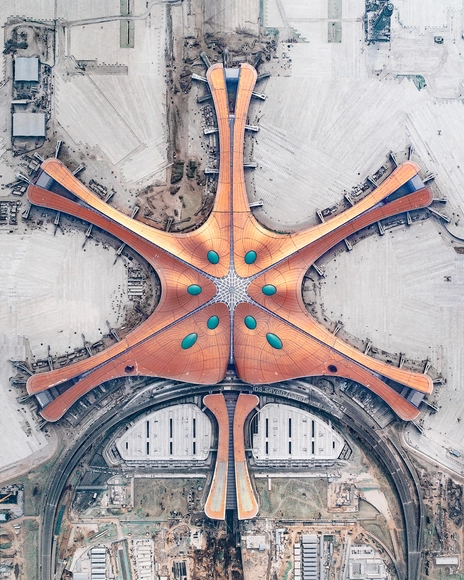
Beijing Daxing International Airport / Zaha Hadid Architects. Image by @seven7panda
In architecture and urbanism, both proximity and distance from a certain object of study, whether on a building scale or urban scale, are frequent strategies that help us better visualize details and also have a broader overall perception, both essential for understanding the object in question. Changing the point of view allows different perceptions of the same place. By moving from the ground level, or from the eye-level, which we are accustomed to in everyday life, to the aerial point of view, we can establish connections similar to those achieved through site plans, location plans, and urban plans.
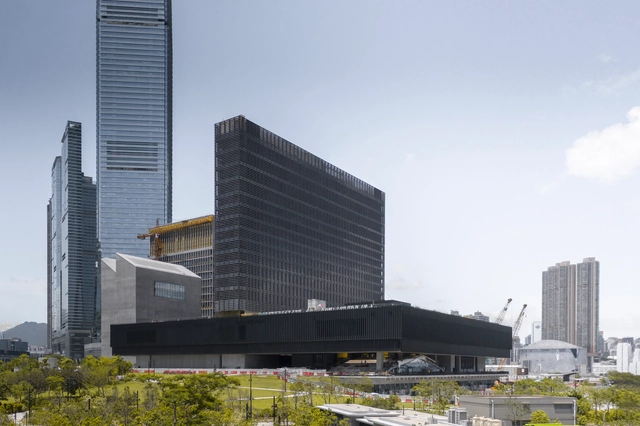
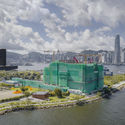
Photographer Kris Provoost has captured new images of Herzog & de Meuron's M+ Museum in Hong Kong. Focusing on 20th and 21st century art, design, architecture and moving image, M+ will be the centerpiece of the West Kowloon Cultural District, and a key venue in creating interdisciplinary exchange between the visual arts and the performing arts in Asia.
Smart homes, the Internet of Things, and contactless technology have become an indelible part of the architecture and interior design industries, with automated lighting, smart HVAC units, and speakers like Alexa or Google Home becoming a principal part of the modern upper middle class home. As new devices and competing systems are continually released, we list some of the most popular home technologies developed by Lutron, alongside tips for how to integrate and choose among them.
https://www.archdaily.com/941241/how-to-design-a-smart-and-contactless-homeLilly Cao
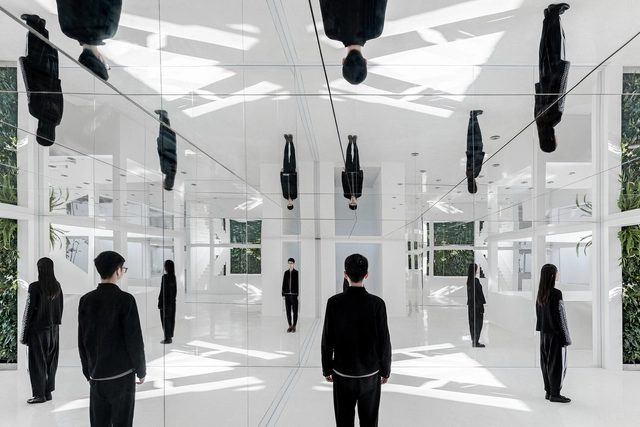
Humans have used mirrors since as early as 600 BCE, employing highly polished obsidian as a basic reflective surface. Over time, people began to use small pieces of gold, silver, and aluminum in a similar manner, both for their reflective properties and for decoration. By the 1st century CE, people had started using glass to make mirrors, but it was only during the European Renaissance that Venetian manufacturers began making mirrors by applying metallic backings to glass sheets, remaining the most common general method of mirror manufacturing today. Since then, mirrors have continued to play both a decorative and functional role in architecture, serving a clean, modern aesthetic despite its ancient origins. Below, we investigate how mirrors are made, provide a brief history of mirrors in architecture, and offer several tips for architects looking to use mirrors in their designs.
https://www.archdaily.com/942109/mirrors-in-architecture-possibilities-of-reflected-spaceLilly Cao
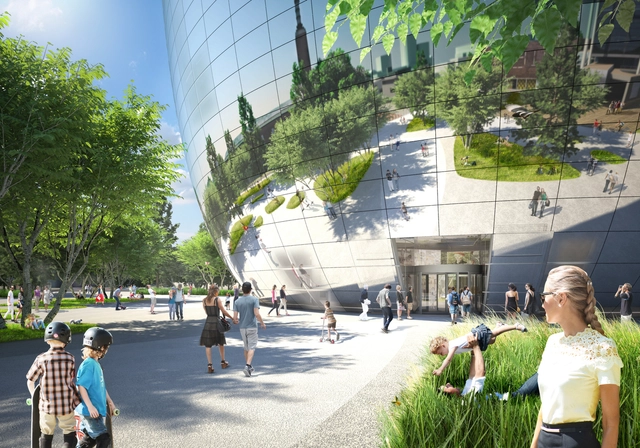
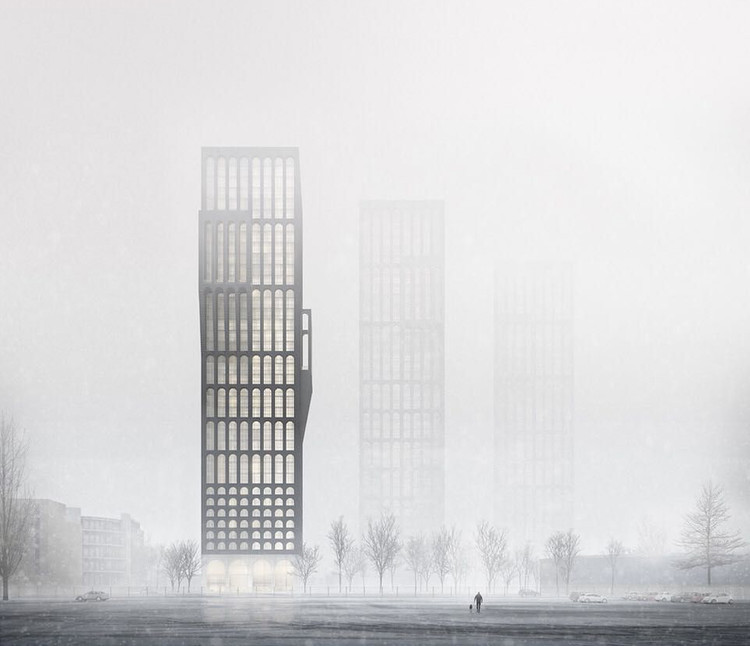
Techniques in visualization have evolved significantly over the years, providing increasingly accurate depictions that give architects a realistic view of their work before the foundation is even laid. For architects and the people they work with, the goal of a visualization is to illustrate the qualities and characteristics of a three-dimensional space that has yet to be built or is in the process of being constructed, by using hand or computer drawn images, videos, and even virtual reality platforms. All of these tools serve as a way of bringing an idea to life, whether for clients or judges in an architectural competition.
During the peak of Postmodernism, and the uprising of notions such as urban renewal and public participation, Aedes Architecture Forum, the first private architecture gallery in the world, opened in 1980 in Berlin. Founded by Journalist Kristin Feireiss and Helga Retzer, both neither architects nor regularly engaged with architecture at that time, Aedes aspired to encourage an international dialogue around the subjects of urban environment, space, and society.
Shortly after its inception, the center became an integral part of the contemporary international architectural scene, carrying out debates, seeking fresh ideas, showcasing the avant-garde, and highlighting young talents. Providing architects with a compelling space to present their architectural and urban ideas, Aedes hosted exhibitions for Zaha Hadid, Venturi Scott Brown, Cedric Price, John Hejduk, OMA (Office for Metropolitan Architecture), Peter and Alison Smithson, and Bernard Tschumi to name a few.
Videos
Project: Quatuor, Brussels, Belgium designed by Jaspers-Eyers Architects and developed by Befimmo. Image Courtesy of DeMicoli & Associates
The exchange of ideas and concepts is a major part of any large modern building project. Architects, investors, general contractors and sub-contractors all use different tools to form both mental and modeled images of what the end result will look like. When some parties rely on renders or fly-throughs and others use 2D drawings, it can lead to communication difficulties. Reynaers discovered that by bringing together collaborators from different disciplines in its Avalon, the fog of misunderstandings evaporates and difficult decisions can be made on the spot.
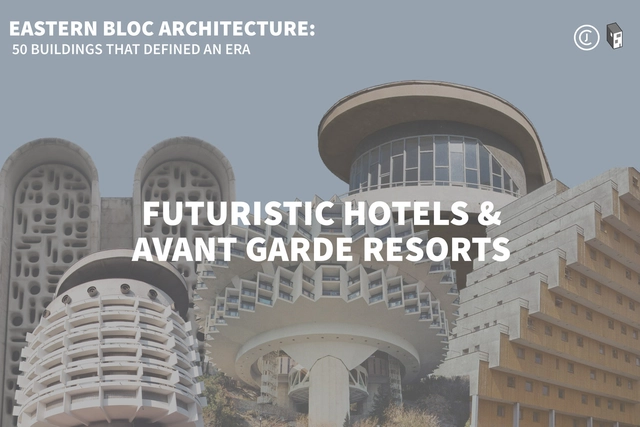
This article is part of "Eastern Bloc Architecture: 50 Buildings that Defined an Era", a collaborative series by The Calvert Journal and ArchDaily highlighting iconic architecture that had shaped the Eastern world. Every week both publications will be releasing a listing rounding up five Eastern Bloc projects of certain typology. Read on for your weekly dose: Futuristic Hotels and Avant-Garde Resorts.
https://www.archdaily.com/942248/eastern-bloc-architecture-futuristic-hotels-and-avant-garde-resortsLucía de la Torre
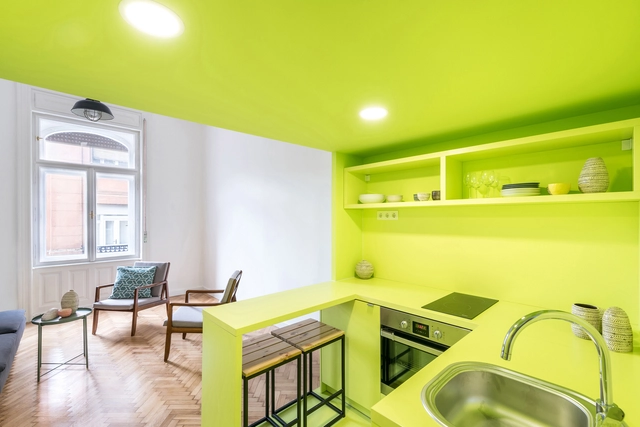
A monochrome environment is a space in which most architectural elements are of a single color. Although it is common for architects to design black or white monochromatic spaces due to its neutrality, it is possible to use almost any color to design a space, taking advantage of their infinite tones, undertones, and shades.
"Volumen virtual suspendido" de Jesús Rafael Soto, Centro Benaven, Chuao, Caracas, 1984. Image Cortesía de ArchivoFotografíaUrbana | Fotografía de Ramón Paolini del fotolibro "Caracas. A doble página"
Through a visual survey, architect and photographer Ramón Paolini explores the evolution of Caracas (Venezuela). The photographs capture the capital's transformation throughout the past forty years, giving viewers an in depth look at one of Latin America's most tumultuous regions, its urban development, and the socio-political aspects behind it. Most importantly, Paolini illustrates his personal vision for this urban space that builds, destroys, and rebuilds with an astounding tenacity.
Panelized facade systems are a popular exterior design element across multiple project types in today’s architecture. Different material and color options create unique and completely customized exteriors versatile enough to fit almost any design style. Ensuring the vision comes to life exactly as imagined, however, can be tedious with Revit’s or ARCHICAD’s innate capabilities alone. The time-consuming manual process of specifying the design, pattern, colors, and fabrication methods of a panelized facade can be simplified and made more intuitive with Steni’s BIM elements.
New Generations is a European platform that analyses the most innovative emerging practices at the European level, providing a new space for the exchange of knowledge and confrontation, theory, and production. Since 2013, New Generations has involved more than 300 practices in a diverse program of cultural activities, such as festivals, exhibitions, open calls, video-interviews, workshops, and experimental formats.
New Generations has launched a fresh new media platform, offering a unique space where emerging architects can meet, exchange ideas, get inspired, and collaborate. Recent projects, job opportunities, insights, news, and profiles will be published every day. The section ‘profiles’ provides a space to those who would like to join the network of emerging practices, and present themselves to the wide community of studios involved in the cultural agenda developed by New Generations.
ArchDaily and New Generations join forces! Every two weeks ArchDaily publishes a selection of studio profiles chosen from the platform of New Generations.
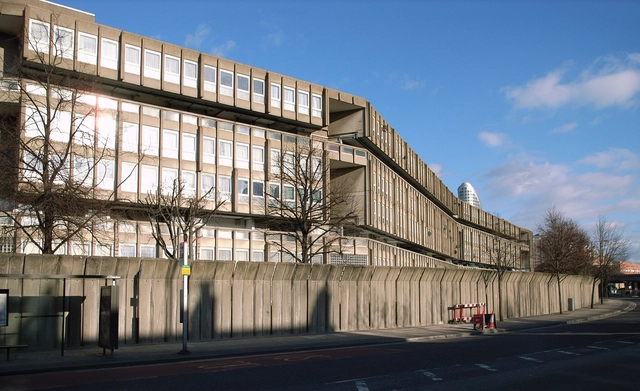
Wife and husband pair Alison (22 June 1928 – 16 August 1993) and Peter Smithson (18 September 1923 – 3 March 2003) formed a partnership that led British Brutalism through the latter half of the twentieth century. Beginning with a vocabulary of stripped-down modernism, the pair were among the first to question and challenge modernist approaches to design and urban planning. Instead, they helped evolve the style into what became Brutalism, becoming proponents of the "streets in the sky" approach to housing.
Since the moment the first all-glass building was proposed by Mies van der Rohe, architects have sought the perfect façade. A well-designed façade system is often the difference between a mediocre and a spectacular design impression. Budget, aesthetic, and performance constraints require careful balancing. While every project is different, developing a decision-making framework greatly simplifies the process.
As architects rely heavily on imagery to convey abstract information to a broad audience, there is a recurrent conversation on the role of visualizations in architecture and how they impact the general perception of the built environment.


















.jpg?1591644193 "Tetrys 607 Apartament / CR2 Arquitetura. Image © Cris Farhat")