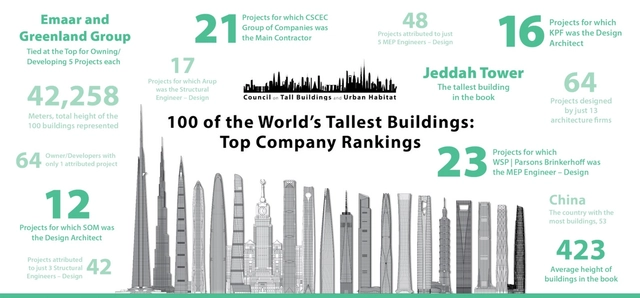
The Council on Tall Buildings and Urban Habitat (CTBUH) has released some of the facts and figures behind the projects appearing in their recent book, 100 of the World’s Tallest Buildings. The construction of tall buildings requires collaboration between many different companies and firms and the efforts of hundreds of people, but a few select firms have been responsible for more of the design and engineering achievements than any other.
Continue reading to see the 18 design architects that have contributed multiple buildings to the top 100 list.
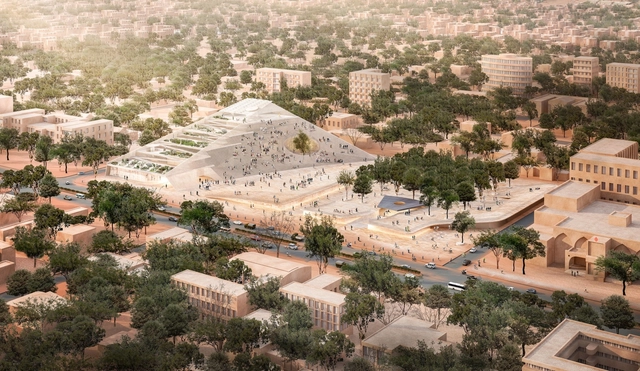
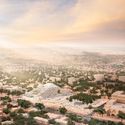
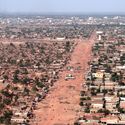
On October 30, 2014, as Burkina Faso President Blaise Compaoré was preparing to make an amendment to the country’s constitution that would eliminate presidential term limits and allow him to extend his 27 year rule, tens of thousands of Burkinabé citizens in the capital city of Ouagadougoubroke through police lines to set fire to several government buildings, including city hall, the ruling party headquarters, and the National Assembly Building. The following day, Compaoré stepped down, ushering in a new era of democratic rule and resulting in the country’s first ever pluralistic and competitive Presidential election in 2015.
But the revolution left the former government complex in tatters and in need of a clear direction forward both culturally and architecturally. A former French colony, Burkina Faso is home to 19 million people, 50 different ethnicities and more than 60 languages. The country would require a new Parliament that could serve as a common ground for these diverse groups, while providing the technology and education necessary to create opportunities and a better quality of life for all Burkinabés.
To find this solution, last year, the new head of Parliament approached architect and Burkina Faso native Francis Kéré to develop a building and masterplan for the Assembly Building. The new building, in the architect’s words, would need to be one that could “not only address the core democratic values of transparency, openness and equality, but could also become a catalyst for growth and development for the capital city of Ouagadougou as a whole.”
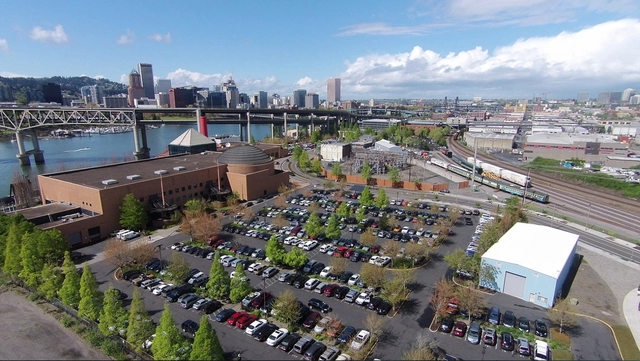
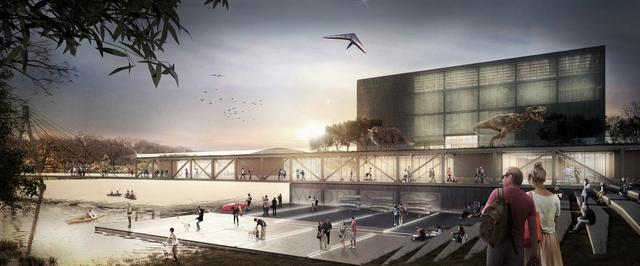
The overall goal of the master plan will be “to provide a market-driven strategy that outlines the best economic and environmental uses of OMSI’s physical property while highlighting the museum’s work as a cultural touchstone, science education resource, and trailhead to connect the community to learning and skill-building opportunities that equip them for 21st century jobs.”
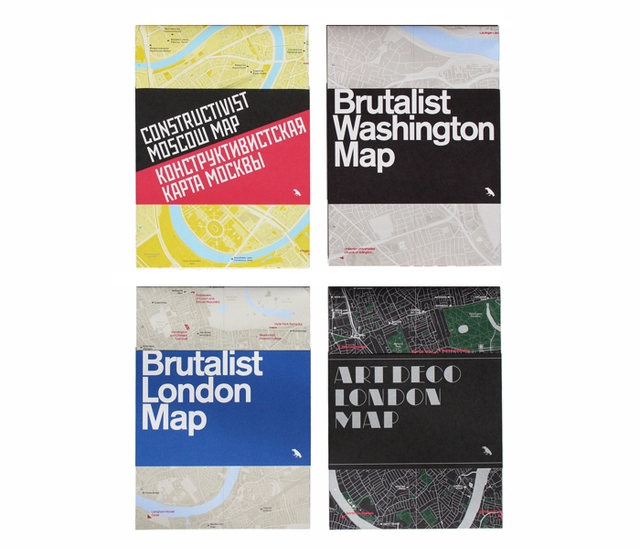
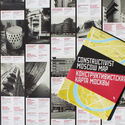
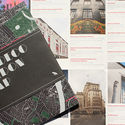
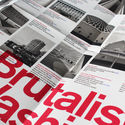
City Guide publisher Blue Crow Media and Deane Madsen, Associate Editor of Design at Architect Magazine, have collaborated to produce the Brutalist Washington Map, which features 40 examples of Brutalist architecture in Washington, D.C. This is Blue Crowe's fourth architectural guide map, following their Brutalist London Map, Art Deco London Map, and Constructivist Moscow Map. One can only expect further releases on the horizon.
This article is part of our "Material Focus" series, which asks architects to elaborate on the thought process behind their material choices and sheds light on the steps required to get projects actually built.
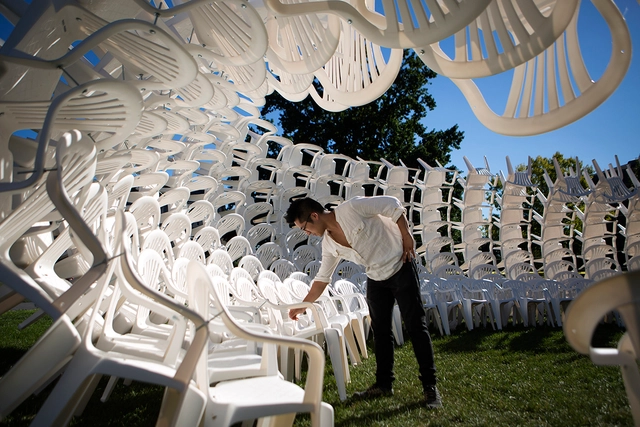
In this exceptionally imaginative and thought-provoking exercise in perceptual shifts, Ithaca- & Brooklyn-based CODA transformed hundreds of humble plastic lawn chairs into a project in the Arts Quad at Cornell University. Viewed from afar as a spiky singular entity, close inspection reveals the simple, unpretentious repeated module. CODA explains, "the object’s features are no longer understood in terms of their use (legs, arms, seat) but in terms of their form (spikes, curves, voids) as, due to their rotation away from the ground, they lose their relationship with the human body." We asked Caroline O'Donnell, principle at CODA, to explain the challenges faced in the development and construction of the fully-recyclable URCHIN.
https://www.archdaily.com/797182/how-coda-used-hundreds-of-white-plastic-chairs-to-build-a-recyclable-pavilionAD Editorial Team
Google and La Biennale di Venezia have teamed up to release an online catalogue of the 2016 Venice Biennale. Hosted on Google’s Arts and Culture platform, the digital archive contains over 3700 images and videos from the 15th International Architecture Exhibition “Reporting From The Front”, curated by Alejandro Aravena, and a selection of National Pavilions and ancillary events.
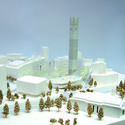
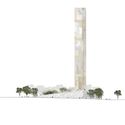
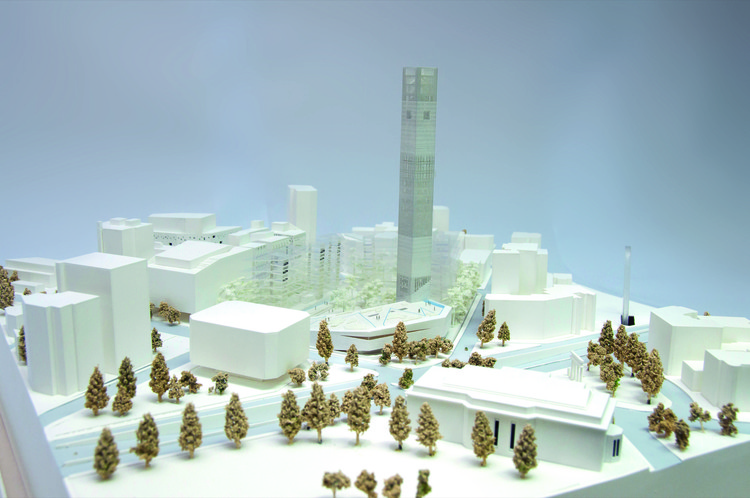
HW architecture, led by Lebanese/French architect Hala Wardé, has been chosen as the winners of an international competition to design the new BeMA: Beirut Museum of Art in Lebanon. The new museum will be located in the heart of Beirut and features a “central campanile tower” that will rise nearly 400 feet into the air as it becomes a new cultural beacon for the city.
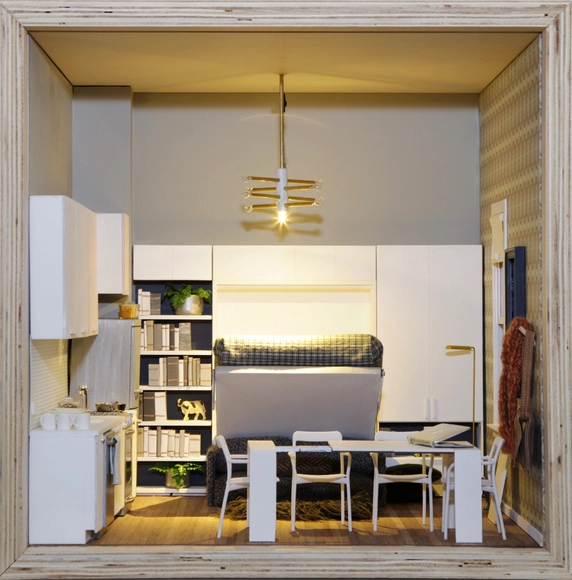
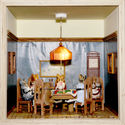
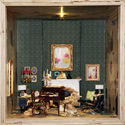
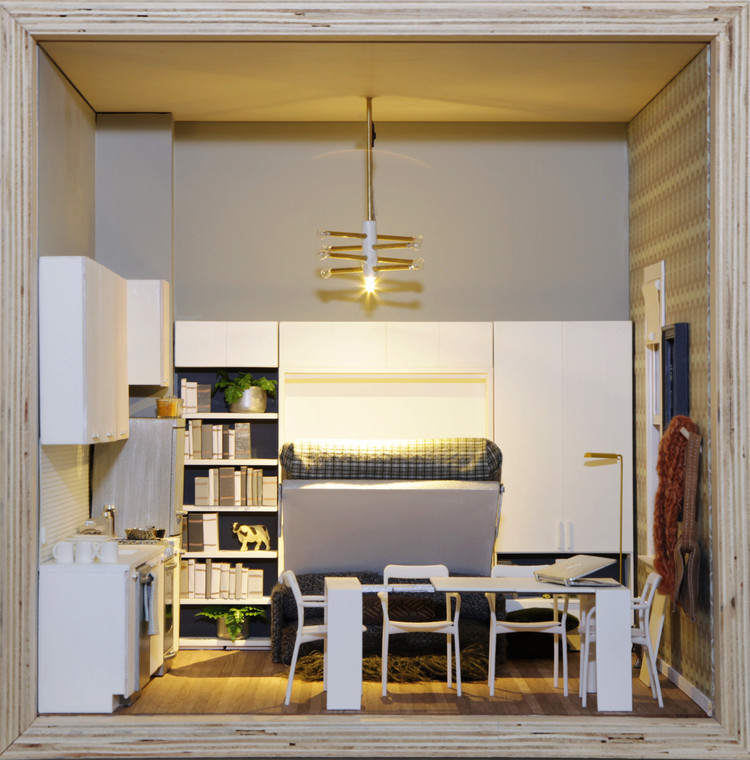
As part of a new exhibition at the National Building Museum in Washington D.C., a group of 24 American architects, designers and architects have been commissioned to create "dream homes" in the format of the contemporary dollhouse. Part of Small Stories: At Home in a Dollhouse, in which twelve historical dollhouses spanning the past 300 years from London's Victoria & Albert Museum of Childhood are being presented in the United States for the first time, these 21st Century interpretations intend to showcase a "diverse array of perspectives, demonstrating the limitless creativity of building in miniature."
Los-Angeles-based CO Architects has released the plans for the Biological Physical Sciences Building (BPSB), a new life sciences facility at the University of California in San Diego. In order to “blend the richly diverse fields” of neurobiology, chemistry, and biochemistry, the seven-story, 128,000-square-foot building will promote collaborative research and visibility in teaching spaces.
Our goal at UC San Diego is to create opportunities to maximize interdisciplinary collaboration between multiple research and academic units, said Jennifer Knudsen, AIA, LEED AP BD+C Principal at CO Architects. We want the building to accommodate a range of research activities and teaching models capable of evolving over time.
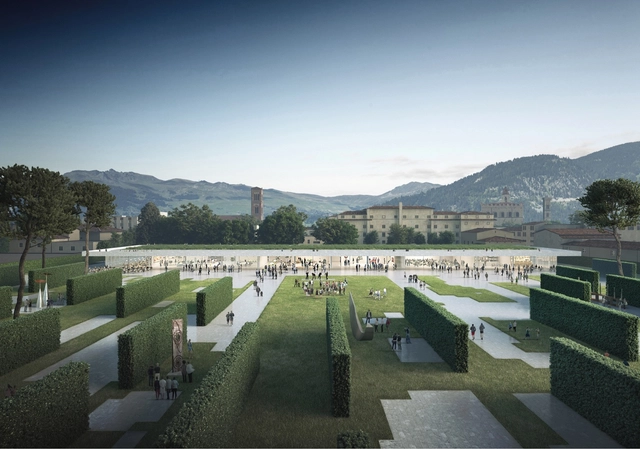
The 230-team competition asked architects to design a new 3-hectare urban park in Prato’s historical city center on the site of the former city hospital, within the perimeter of the city walls. The project is intended to meet the needs of a contemporary city while driving socio-economic development of the city center through “enhancements to its touristic vocation, sustainability and accessibility.”
The jury, chaired by architect Bernard Tschumi, unanimously selected the winning proposal for “its ability to offer to the city of Prato an original, innovative and practical solution.” Commented Tschumi on the design, “The project is remarkable in the way it understands and celebrates the history of Prato and of its medieval walls. At the same time, it looks to the future and to the development of the city and its diverse population.”
The jury also released the full rankings of the 10 finalist teams. Learn about the winning design and see the entries from all 10 of the finalists, after the break.
Researchers from Lund University in Sweden have digitally reconstructed a house in Pompeii to envision what life in the city would have looked like before the destructive eruption of Mount Vesuvius in 79 AD. The large house, thought to have belonged to a wealthy banker named Caecilius Iucundus, is among the first 3D models created by the research team to document and preserve the city. The team has now released video material of their work, showing their creation of a 3D model of an entire block of houses.
The 2016 Lisbon Architecture Triennale, which opened last week, is comprised of a constellation of exhibitions and satellites. One such show—eponymously named The Form of Form—is both an exhibition and a structure in itself – a sequence of rooms designed collaboratively by Mark Lee of Johnston Marklee, Kersten Geers of Office KGDVS, and Nuno Brandão Costa. If "one of architecture’s fundamental legacies is its own form," the curatorial statement declares, "this exhibition [builds] a dialogue that challenges notions of authorship and the limits of form."
Homerton College, a constituent college of the University of Cambridge, announced today the five firms shortlisted in the competition to design a emblematic £7 million ($8.5 million USD) centrepiece building to house a 300-person dining hall for the school. The finalists were selected from an original pool of 155 architects, from which 24 were selected for the longlist.
The competition, organized by Malcolm Reading Consultants, is a part of the College’s wider plan to improve and expand school facilities. Homerton boasts one of the largest student communities at Cambridge, and is one of a few of the University’s colleges capable of housing all undergraduate students in on-site facilities for all four years. To be located on an attractive wooded site, the commission has the potential to determine the character of the school for years to come.
At the ground breaking ceremony this week, officials including His Highness Sheikh Mohammed bin Rashid Al Maktoum, UAE Vice President and Prime Minister and Ruler of Dubai, His Excellency Mohammad Al Gergawi, Chairman of Dubai Holding, and Mohamed Alabbar, Chairman of Emaar Properties, and Micael Calatrava, CEO of Calatrava International announced that upon its completion in 2020, the landmark observation tower will measure in at a height slightly taller than Dubai’s own Burj Khalifa, making it the tallest tower in the world.
“The design and architectural features of The Tower demand unique engineering approaches that are currently being implemented on site. Extensive studies were undertaken in preparation for the groundbreaking, and the learning that we have gained from the experience will add to the knowledge base of mankind,” said Santiago Calatrava.
In the spirit of open access to information, professor Jochen Gros and designer Friedrich Sulzer headed up a research project at the C...Lab of the Hochschule für Gestaltung Offenbach in Germany, where they have developed 50 different wood joinery techniques capable of being fabricated digitally, using tools such as a CNC mill or lasercutter.
Now these files have been made accessible to the public via downloadable files in various data formats (including several Autocad capable formats). They have also provided each joint with a PDF guide to assembly, to make piecing together the wood elements a snap.
https://www.archdaily.com/797107/50-downloadable-digital-joints-for-woodworkingAD Editorial Team
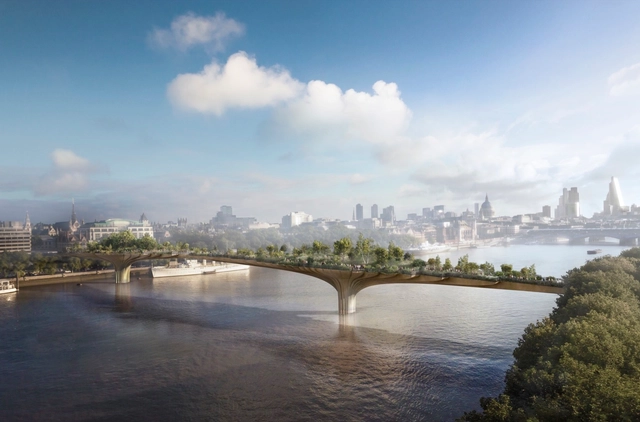
The latest chapter in the saga of London's Garden Bridge, which has seen counter proposals and reactionary follies alike, has revealed major concerns relating to its funding mechanisms. As reported by the Architects' Journal, new findings from the United Kingdom's National Audit Office (NAO), which has studied the decision taken by the Department for Transport's decision to grant £30 million ($37 million) of funding to the Garden Bridge Trust, has discovered that the "sum [£30 million] was provided following a commitment from [the] then Chancellor George Osborne, and despite the DfT’s conclusion that there was ‘a significant risk that the Bridge could represent poor value for money’."
https://www.archdaily.com/797111/uk-nao-presents-report-thomas-heatherwicks-garden-bridge-londonAD Editorial Team
Courtesy of Maksim Atayants & Maksim Atayants Workshop
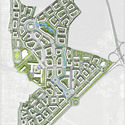
Maksim Atayants and Maksim Atayants Workshop have announced the construction of Laikovo, a new, large, classically-designed city in the Moscow Region that will be built from scratch – which, according to the architects, will be the first classical city to be built from the ground up in Russia in over 100 years.
Intended to embody the best practices of Russian and global urban planning, the city will be designed in the modern classic style in five districts, and will become Moscow’s nearest satellite city, located near Rublyovka, with easy access to the paid expressway, the M-1 double.
50 percent of the 116-hectare city will be dedicated to public space, including a two-hectare park and lake at city center, as well as a main waterway that will become the Moscow Region’s longest artificial channel.












_Credit_Santiago_Calatrava.jpg?1476205643&format=webp&width=640&height=580)

.jpg?1475701455&format=webp&width=640&height=580)
.jpg?1475701388 "Courtesy of Maksim Atayants & Maksim Atayants Workshop")
.jpg?1475701334 "Courtesy of Maksim Atayants & Maksim Atayants Workshop")
.jpg?1475701484 "Courtesy of Maksim Atayants & Maksim Atayants Workshop")
.jpg?1475701455)


