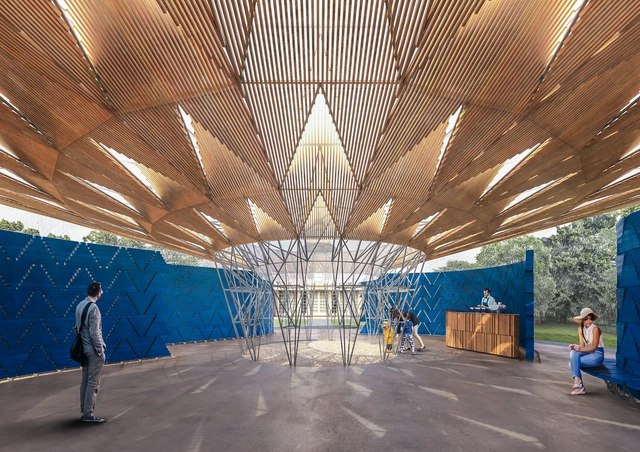
Serpentine Pavilion 2017, Designed by Francis Kéré, Design Render, Interior. Image Courtesy of Kéré Architecture
The Serpentine Galleries have announced that the 2017 Serpentine Pavilion will be designed by Diébédo Francis Kéré (Kéré Architecture), an African architect based between Berlin, Germany, and his home town of Gando in Burkino Faso. The design for the proposal, which will be built this summer in London's Kensington Gardens, comprises an expansive roof supported by a steel frame, mimicking the canopy of a tree. According to Kéré, the design for the roof stems from a tree that serves as the central meeting point for life in Gando. In line with the criteria for the selection of the Serpentine Pavilion architect Kéré has yet to have realised a permanent building in England.
One established 3D-printing technique is using laser to cure light-activated plastic, building up layers one at a time in a time-consuming process. But now tech start-up Daqri has discovered a way of speeding up that process: by using a 3-dimensional hologram.
The Glasgow City Council has selected a multidisciplinary team lead by MVRDV and Glasgow-based Austin-Smith:Lord to transform downtown Glasgow into a “more livable, attractive, competitive and sustainable center.” Titled (Y)our City Center, the strategy calls for a regeneration of the 400 hectare city center that would reorganize circulation and infrastructure while providing new residential options to support Scotland’s economic center.
The Naomi Milgrom Foundation has selected Rem Koolhaas and David Gianotten of OMA for the design of Melbourne’s 2017 MPavilion. The announcement comes after this weekend’s closing of the 2016 MPavilion, designed by Bijoy Jain of Studio Mumbai, which welcomed more than 94,000 visitors to over 287 free events in its 139 day run. Now in its 4th year, the MPavilion program invites architects who have yet to completed a project in Australia to design and construct their first structure in the country.
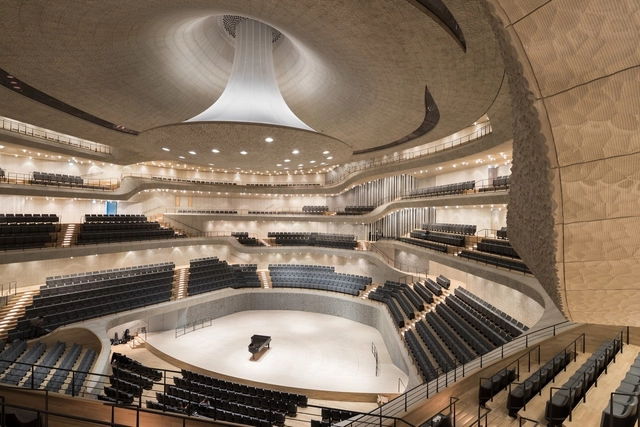
Of all its bells and whistles, the focal point of Herzog and de Meuron’s latest successful endeavor, the Hamburg Elbphilharmonie, is arguably the central auditorium, as explored in this new article by WIRED. An incredible example of the possibilities of parametric design, the hall is comprised of 10,000 individual acoustic panels that line the walls, ceilings, railings and balconies. Each of the panels consists of one million “cells” of varying dimensions, created to help define the sound within the space.
https://www.archdaily.com/805567/the-parametric-process-behind-the-hamburg-elbphilharmonies-auditoriumOsman Bari
After its opening in September last year, the now completed Smithsonian National Museum of African American History and Culture can be seen in full swing, thanks to this new photoset taken by photographer Brad Feinknopf. Designed by Freelon Adjaye Bond / SmithGroup JJR (a collaboration which included Perkins + Will'sPhil Freelon, David Adjaye from Adjaye Associates, Davis Brody Bond, and SmithGroup JJR), the 420,000 square foot building houses numerous galleries and collections, as well as a theater. Maintaining a strong connection to America’s engrained African history and roots through its bronze filigree envelope, the museum asserts a subtle presence in the landscape, coexisting alongside the Washington Monument and National Museum of American History.
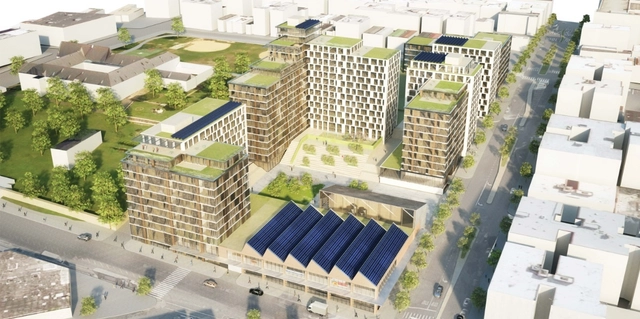
WXY architecture + urban design has unveiled its design for The Peninsula, a five-acre mixed use development for New York City that aims to “create [an] instant [community] with jobs, training, education, and hundreds of affordable apartments.”
Created in conjunction with Body Lawson Associates (BLA) for the New York City Economic Development Corporation (NYCEDC) and the Department of Housing and Preservation Development (HPD), the project will feature retail, light industrial, recreational, and residential space—all of which will be affordable—in the Hunts Point neighborhood of the Bronx.
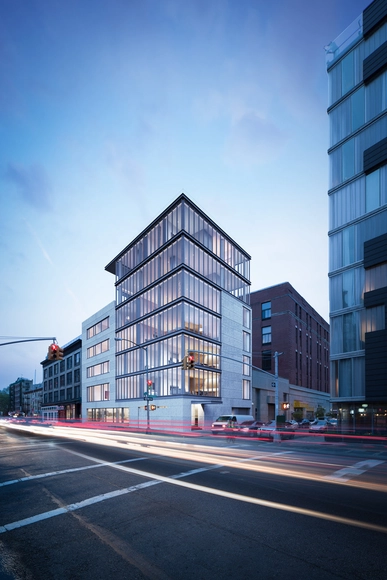
Conceived as an inner sanctuary within downtown Manhattan, the building highlights acoustics as a key consideration, with a façade system and exterior glass enabling a high OITC rating to “ensure a tranquil home environment in the center of this vibrant neighborhood.”
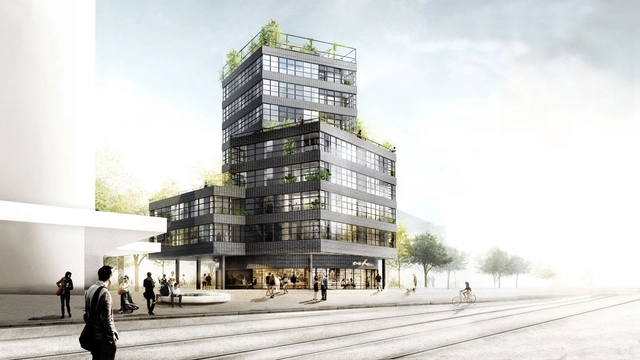
HHF Architects, in collaboration with landscape architects from Westpol, have won a competition with their design for Jardin Métropole, a 30-meter-tall apartment tower and neighboring green space. Located in Biel, Switzerland, the project is expected to become the symbol of the city and contribute to the area’s general enhancement through its angled cube massing and public element.
Based on the theme of a “city garden,” the building will constitute the beginning of a new, park-like passage to Rue du Moulin, and will feature access to gardens with private planting beds, a shared roof terrace, and landscaped loggains.
At Wednesday evening’s ceremony, the husband-wife team opened up about the conceptual ideas driving their yet-to-be-revealed design for the Obama Presidential Library. In a lively discussion with Vanity Fair architecture critic Paul Goldberger, the architects revealed the nature of their working relationship with the President and First Lady, and how their upcoming library may draw from what TWBT learned in designing the Barnes Foundation in Philadelphia.
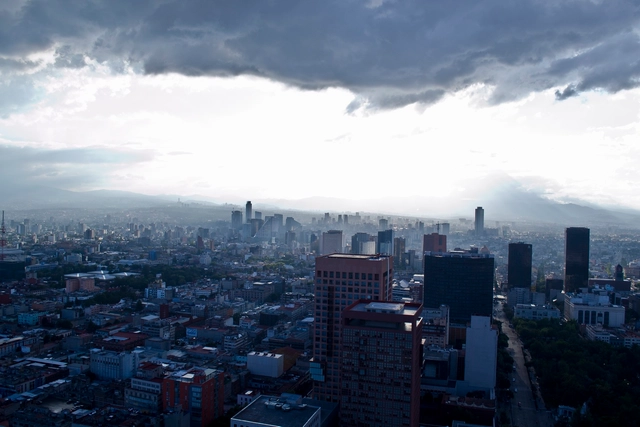
Contrary to some beliefs, climate change is not simply some unidentifiable threat perpetually on the horizon, but a phenomenon that has already had real impact on real world places. To illustrate the effects of our changing environment, the New York Times has launched a new multi-media series called “Changing Climate, Changing Cities,” written by architecture critic Michael Kimmelman, that aims to expose how climate change is “challenging the world’s urban centers.
The first installment takes a look Mexico City, where environmental issues that have already wreaked havoc for centuries, such as water shortage and ground subsidence, are beginning to see their effects multiplied by the city’s changing climate. The piece explains the root of these problems, and their effect of an already fragile infrastructure and social fabric.
Videos
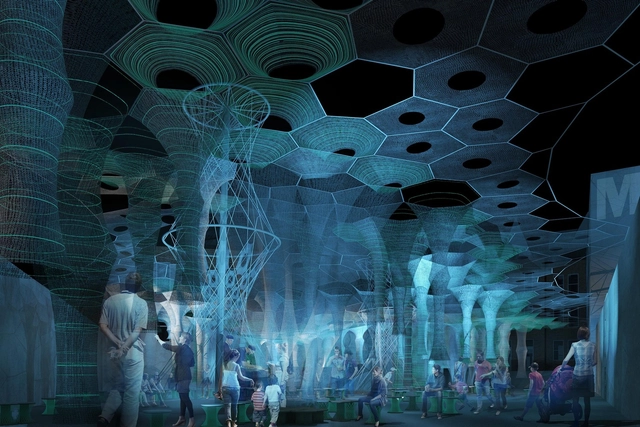
Jenny Sabin Studio. Lumen. 2017 (rendering). Winner of the Young Architects Program 2017, MoMA PS1, New York. Image Courtesy of Jenny Sabin Studio
Lumen by Jenny Sabin Studio has been named the winner of The Museum of Modern Art and MoMAPS1’s annual Young Architects Program. Opening on June 27 in the MoMA PS1 courtyard, this year’s construction is an immersive design that evolves over the course of a day, providing a cooling respite from the midday sun and a responsive glowing light after sundown. Drawn from among five finalists, Jenny Sabin Studio’s Lumen will serve as a temporary urban landscape for the 20th season of Warm Up, MoMA PS1’s pioneering outdoor music series. Lumen will remain on view through the summer.
Now in its 18th edition, the Young Architects Program at The Museum of Modern Art and MoMAPS1 has offered emerging architectural talent the opportunity to design and present innovative projects, challenging each year’s winners to develop creative designs for a temporary, outdoor installation that provides shade, seating, and water. The architects must also work within guidelines that address environmental issues, including sustainability and recycling.
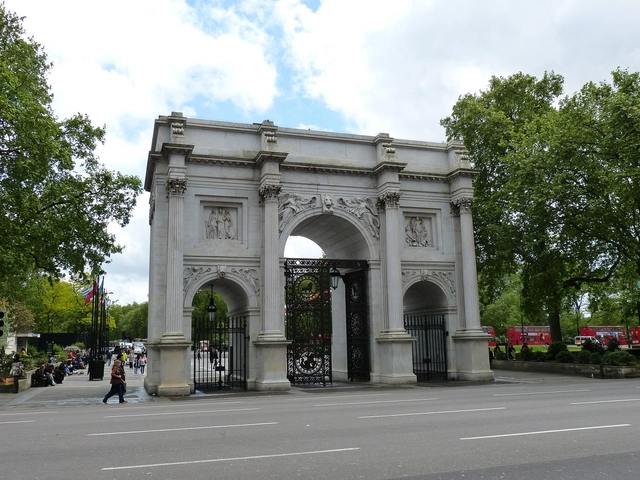
Courtesy of Pixabay User Falco License Public Domain
Researchers at Princeton University’s Department of Civil and Environmental Engineering have discovered that hydroxyapatite, the primary compound found in human teeth and bones, can be used to help preserve the condition of marble, which is prone to cracking and deteriorating as a result of the effects of pollution and the weather.
https://www.archdaily.com/805307/new-type-of-marble-protection-derived-from-human-teeth-and-bonesOsman Bari
This article is part of our 'Innovative Materials' series where we ask architects about the creative process behind choosing the materials they use in their work.
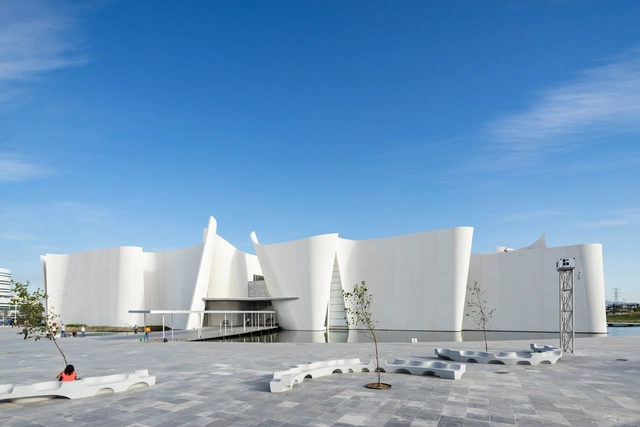
The Museo Internacional del Barroco (International Baroque Museum) by Toyo Ito is located 7km from Puebla, Mexico. The place is noted for its easy access, not only for cars, but also for being connected to a network of bike paths and public transport. In this interview we spoke with Alejandro Bribiesca Ortega and Miriam Carrada.
https://www.archdaily.com/805535/how-architects-realized-the-curving-twisted-slanted-walls-in-toyo-itos-mexican-museumArchDaily Team




.jpg?1487613531&format=webp&width=640&height=580)
.jpg?1487613696 "© Laurian Ghinitoiu")
.jpg?1487613705 "© Laurian Ghinitoiu")
.jpg?1487613547 "© Laurian Ghinitoiu")
.jpg?1487613680 "© Laurian Ghinitoiu")
.jpg?1487613531)
our_city_centre_map.jpg?1487608906&format=webp&width=640&height=580)
our_vibrant_Broomielaw.jpg?1487608889 "(Y)our Vibrant Broomielaw. Image Courtesy of MVRDV")
our_river_park_projects.jpg?1487608968 "(Y)our River Park Projects. Image Courtesy of MVRDV")
our_great_streets_and_spaces.jpg?1487609037 "(Y)our Great Streets and Spaces. Image Courtesy of MVRDV")
our_great_buildings.jpg?1487609017 "(Y)our Great Buildings. Image Courtesy of MVRDV")
our_city_centre_map.jpg?1487608906)












.jpg?1487368487)