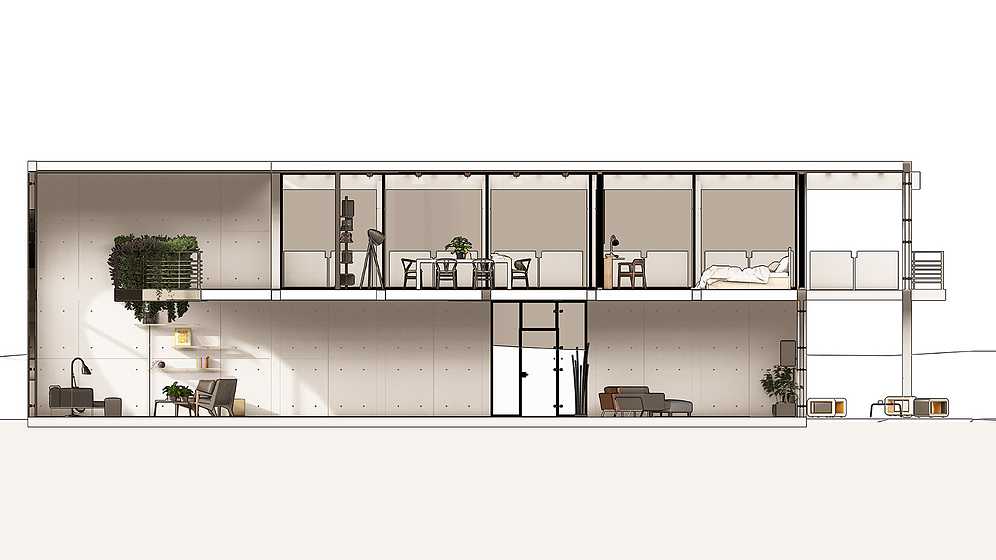
Produce personalized presentation boards that distill complex concepts into simple visual representations with a few helpful tools and effects.


Produce personalized presentation boards that distill complex concepts into simple visual representations with a few helpful tools and effects.
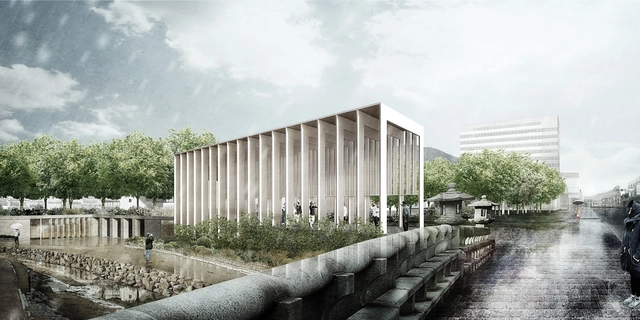
India-based Studio MADe has won the Suncheon Art Platform competition with its proposal, The Hidden Cloister. The competition, hosted by the City of Suncheon, South Korea, sought to revitalize the Old City area with an art square featuring an art center.
Through The Hidden Cloister, Studio MADe aims to create a “psychological ‘void’ in the midst of a high-density area by creating an open-to-sky quadrangle as a pure subtraction of ground.” Thus, the proposal creates a new link in the heart of the Old City by connecting the riverbank and public space.
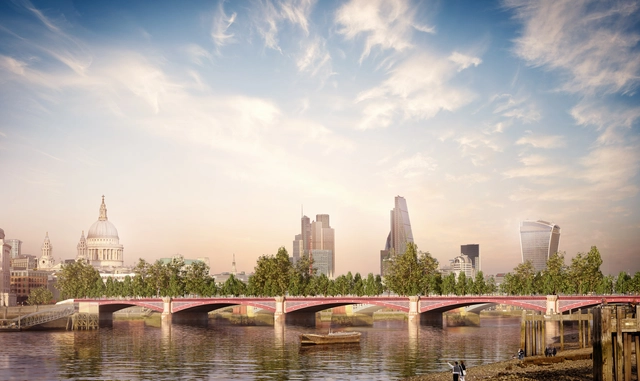
Thomas Heatherwick’s Garden Bridge project has been under fire since plans were announced in 2013, drawing skepticism of the fairness of the competition process, and even being called “nothing but a wasteful blight.” Last month, London's new mayor Sadiq Khan gave a lukewarm endorsement of the project, noting that since £37.7m of the £60m allocated by the government has already been spent, scrapping the project now would end up costing taxpayers more than going forward with it.
The current predicament has inspired architects Allies and Morrison to design an alternative option – one that could both save the taxpayers money and create a new greenway spanning the Thames. Many of the complaints directed toward the original design have been associated with the cost of building a new bridge that would serve limited transportation needs; Allies and Morrison eliminate this issue by simply placing a garden pathway onto an existing piece of infrastructure, the nearby Blackfriars Bridge.
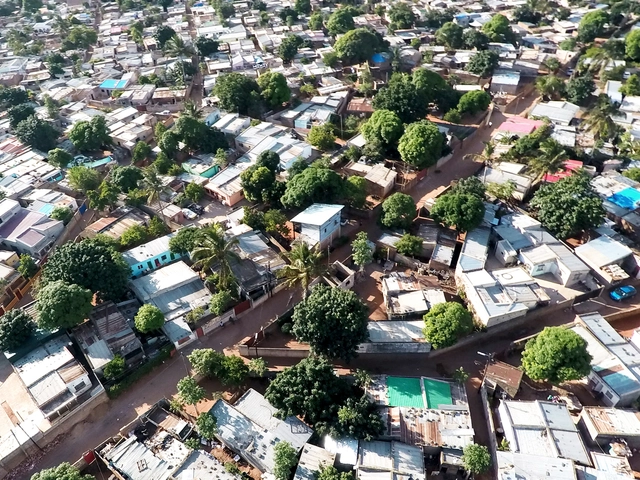
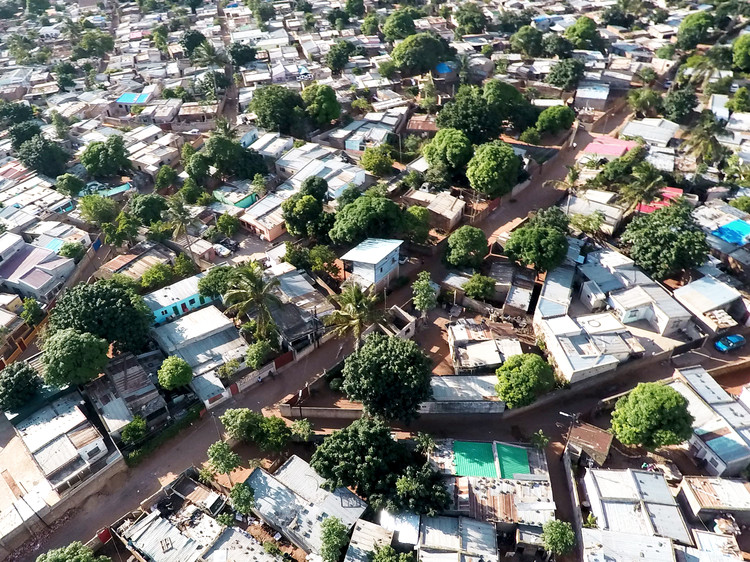
In an effort to create affordable housing in Maputo, Mozambique, Casas Melhoradas is an applied research project aimed at eliminating city slums. Organized by the Institute of Architecture, Urbanism & Landscape, at the Royal Danish Academy of Fine Arts Schools of Architecture, Design and Conservation, in collaboration with the Mozambican NGO Estamos, the Faculty of Architecture and Urban Planning at Universidade Eduardo Mondlane (FAPF) and the Danish branch of Architects Without Borders (AUG), the project is part of research initiative on urban development in the Global South.
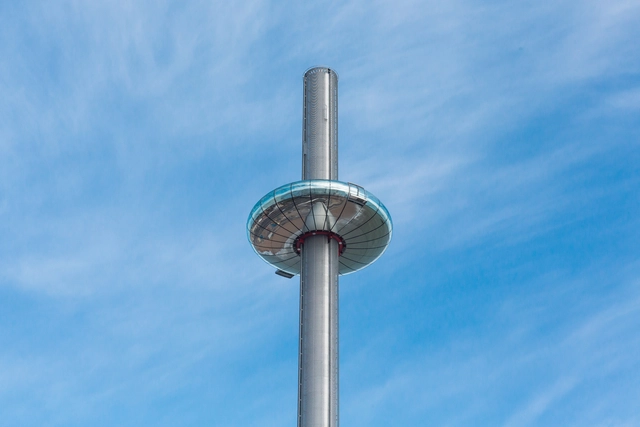
After weeks of movement testing, the British Airways i360 observation pod has achieved its maximum height of 138 meters as the attraction enters final inspection phases in preparation for its opening this summer. As a part of “the world’s tallest moving observation tower,” the 18 meter diameter viewing pod will provide 360 degree views of the British seaside resort towns of Brighton and Hove, the Sussex coast and the English Channel, for to up to 200 passengers at a time.
.jpg?1465998369&format=webp&width=640&height=580)
Herzog & de Meuron's ten-storey extension to London's Tate Modern, which officially opens to the public this week, is the latest in a series of ambitious building projects pursued by the internally renowned gallery of contemporary art. Sitting above The Tanks, the world's first dedicated galleries for live art and film installations, the building's pyramidical form provides 60% more exhibition space for the institution. Two days before its doors welcome art-lovers from around the world, photographer Laurian Ghinitoiu has captured a collection of unique views on this highly anticipated addition to London's skyline.

The Moinian Group announced that they had been collaborating with the late Zaha Hadid to develop a “visionary” new project for New York City. The project, at 220 Eleventh Avenue in West Chelsea, is a multi-residential apartment building with a cultural institution at street level.
This announcement comes after Zaha Hadid Architects pledged to complete all 36 projects that were in construction or design development at the time of her death, as her office continues her powerful legacy.
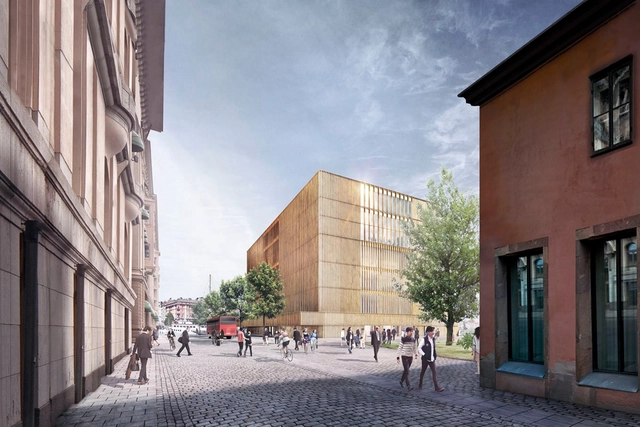
Earlier this month The Guardian reported that the King of Sweden, Carl XVI Gustav, has denounced David Chipperfield's designs for Stockholm's new Nobel Center (Nobelhuset) in the Dagens Nyheter (DN), a national Swedish newspaper, as both too volumetrically large and badly sited. The practice's initial proposal, which was lauded by the awarding jury for its “lightness and openness,” is a glass and stone structure which attempts to “convey dignity” and embody the ideals of the Nobel Prize.
In this video, Jesús Granada takes us inside the Austrian Pavilion at the 2016 Venice Biennale. The exhibition, titled Orte Für Menschen (Places for People), focuses on the creation of innovative housing solutions required to handle Austria’s current refugee crisis. The pavilion displays three projects currently underway in Vienna, where three architect teams have been paired with NGOs to convert abandoned buildings into temporary accommodation for asylum seekers, and later, into long-term residences.
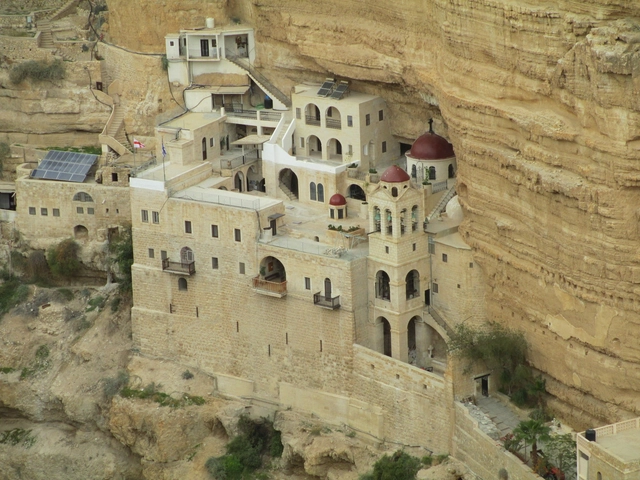
Have you ever wondered which are humanity's oldest cities? Matador Network has compiled a list of the world's ancient metropolises, and perhaps unsurprisingly, nearly all of them are within or adjacent to the Fertile Crescent, a moon-shaped region running from the Persian Gulf through what is today the south of Iraq, Syria, Lebanon, Jordan, Israel, and the Nile River Delta in Egypt. With settings that range from hamlets on the road less traveled, like Susa, Iran, and Sidon, Lebanon, to cities that hold international renown as trade and migratory crossroads, like Beirut and Damascus, these places share an ability to endure through the highs and lows of fortune and conflict. This factor of longevity is all the more remarkable considering that the youngest locales date from 3,000 BC and others extend back another 6,000 years.
Find the complete list of cities on Matador Network, here.
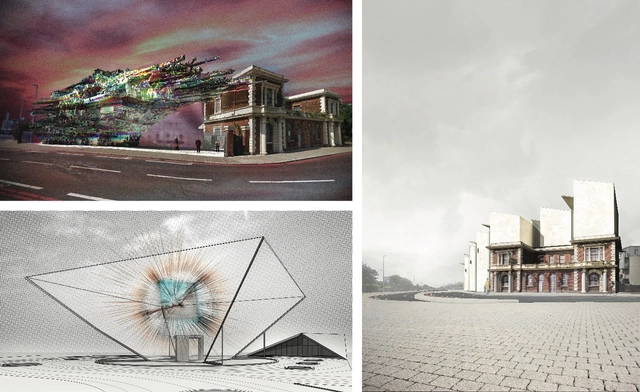
Architecture competition organizers Bee Breeders have announced the winners of the London Internet Museum competition. This speculative project challenged architects to design a museum for “something historically profound and typologically unprecedented — the internet.” Given a site at the former Great Eastern Railway terminal station building, designers were tasked with creating a location that would “connect visitors to both the history of the internet and open them to the possibilities of the future.” Submissions took a wide variety of approaches, and prizes were awarded to projects that rejected the typical associations and precedents that the internet calls to mind.
Continue reading to see the winning entries with brief descriptions.
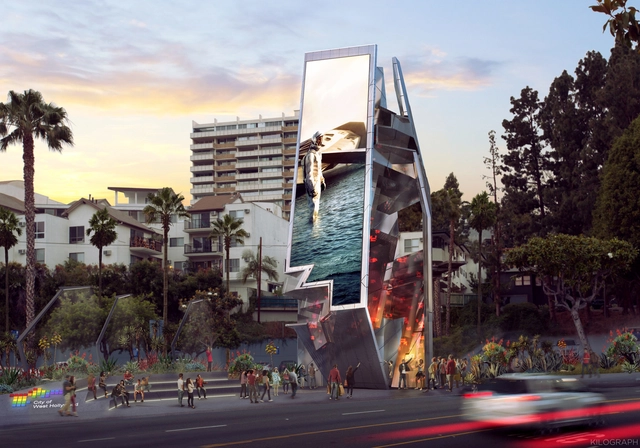
The visual identity of West Hollywood’s Sunset Strip has been synonymous with billboard advertising since the 1960s. Over time, different eras have been displayed through the advertising; from the rock bands and cigarette brands of the 60s and 70s, to the highly commercialised signage of today. As part of an initiative to probe the value of this signage as both an identifier and a valuable public asset, The City of West Hollywood (WeHo) launched The Sunset Strip Spectacular Pilot Creative Off-Site Advertising Sign Competition.
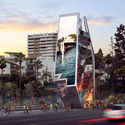
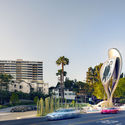
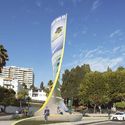
The competition sought a multi-dimensional, kinetic billboard “spectacular,” and attracted firms from advertising, marketing, design, architecture and engineering backgrounds. A pool of nine entrants has been narrowed down to four finalists: JCDecaux/Zaha Hadid Project Management Limited; Orange Barrel Media/Tom Wiscombe Architecture/MoC; Outfront Media/Gensler/MAK; and TAIT Towers Inc. Following public presentations in May, the proposals are now visible to the public before the jury make their recommendation later this month.


.jpg?1464850078&format=webp&width=640&height=580)
As part of ArchDaily's coverage of the 2016 Venice Biennale, we are presenting a series of articles written by the curators of the exhibitions and installations on show.
Britain is suffering from a terrible housing crisis – one that is an incredibly predictable outcome of decades of neoliberal economic policy. The Chilean architect Alejandro Aravena has become well-known for building “half a house” – only completing core infrastructure in social housing, then encouraging residents to finish the other half with their own money over time. In effect, the first generation get a significantly cheaper home, but once the house has been doubled it could be sold at market rate. The discount, and profit, only applies to the original owners.
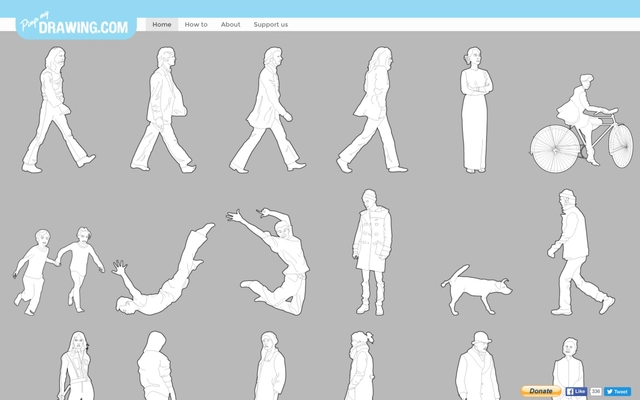
Last year we published a list of 22 websites meant to make an architect's job a little bit easier. From selecting the perfect color scheme to tracking the price of your next big purchase, solving technical problems or simply trying to balance your sleep and caffeine intake, the list sought to offer solutions to a diversity of issues – with something (hopefully) for everyone.
This year we offer an addendum with seven additional sites meant to further allay the ever-stressful life of architects. From using peripherals for additional screen real estate to receiving your daily fill of the top architecture news, or converting PDFs to DWGs and adding scale figures to models, ArchDaily seeks to share more of the best of what the web can offer to architects.
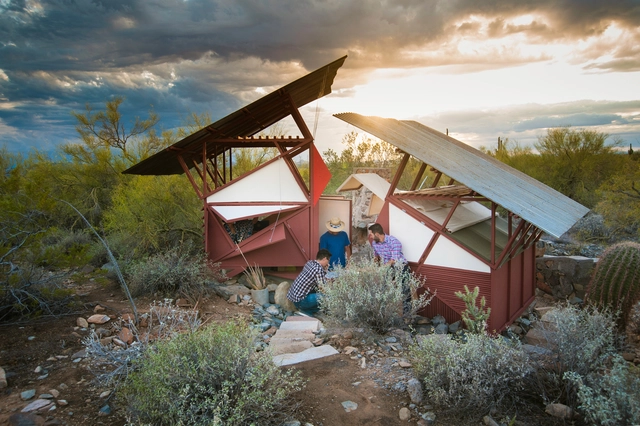
Students from the Frank Lloyd Wright School of Architecture, Taliesin West have designed and built “Little Shelters,” a collaborative project in the Sonoran Desert in Arizona, as part of a design and build studio led by little maps.
The project began with an individual exercise, where students Daniel Chapman, Mark-Thomas Cordova, Jaime Inostroza, Dylan Kessler, Pablo Moncayo, Natasha Vemulkonda, and Pierre Verbruggen each created their own temporary shelters. Partially due to harsh desert conditions, the students, with their instructor David Tapias, later decided to design and build as a collective effort instead.
A new video by JDS Development Group, Building Knowhow: Skybridge, begins with an anecdote of a day when the firemen showed up at the site. “We got a call – the buildings are falling down!” the chief fireman told Michael Jones, director of JDS. Jones responded with a chuckle, "they're supposed to be like that!"
Located on the East Side of Manhattan, the American Copper Buildings, designed by New York-based SHoP Architects, test the boundaries of engineering. In an informative video, JDS Development Group documents the building of a skybridge between the towers, outlining their detail-oriented, step-by-step approach. Located 300 feet in the air, it is New York's first major skybridge in 80 years.

The Royal Institute of British Architects (RIBA) has released the results of their Future Trends Survey for April 2016. The report shows continued growth in employment and workload predictions, as the industry edges closer to pre-recession levels. Notably, it shows a rise in revenue for projects outside of the UK, with this figure jumping for large practices.
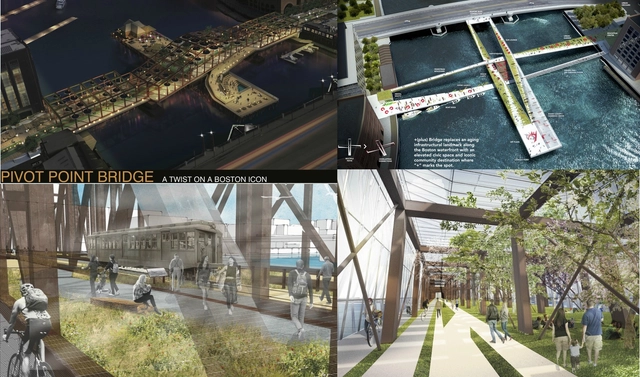
The Boston Society of Architects (BSA) has announced the winners of the Northern Avenue Bridge Ideas Competition. Launched in March, the competition sought to gather ideas for the future of the bridge that center around improving mobility, honoring history, and creating destination. The bridge, which opened in 1908, was closed in December 2014 due to structural integrity concerns.
As it was open to the public, the competition received ideas from architects, designers, historians and community members, overall resulting in 133 submissions, including 99 graphic designs and 34 essays.
Have you ever seen a building that breathes through thousands of pores? That may now be a possibility thanks to Tobias Becker’s Breathing Skins Project. Based on the concept of biomimicry, the technology is inspired by organic skins that adjust their permeability to control the necessary flow of light, matter and temperature between the inside and the outside. In addition to these performative benefits, the constantly changing appearance of these façades provides a rich interplay between the exterior natural environment and interior living spaces.
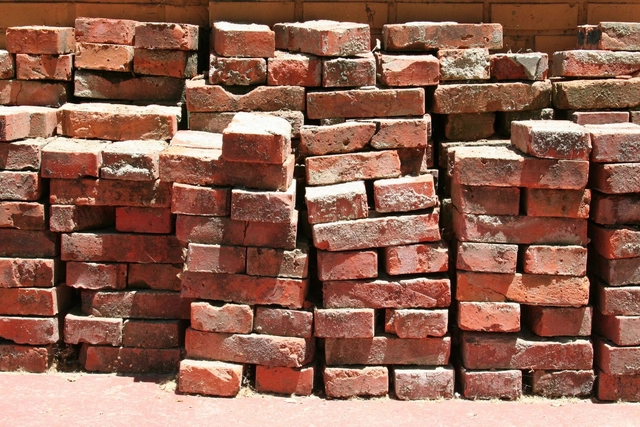
One man’s trash is another man’s building material. Researchers from the Royal Melbourne Institute of Technology (commonly known as RMIT University) have developed a technique for making bricks out of one of the world’s most stubborn forms of pollution: discarded cigarette butts. Led by Dr. Abbas Mohajerani, the team discovered that manufacturing fired-clay bricks with as little as 1 percent cigarette butt content could completely offset annual worldwide cigarette production, while also producing a lighter, more efficient brick.
Skidmore, Owings, and Merrill's Veterans Memorial Coliseum in Portland, Oregon has been on the chopping block for some time now: since the city’s NBA team moved to the Moda Center (known also as the Rose Garden) next door in 1995, the building has struggled to find the funding necessary for maintenance, and since 2009 calls have been made for the demolition of the iconic modernist structure. The threat reached peak levels last October, when the Portland City Council nearly voted to approve a proposal for demolition before ultimately denying it by a narrow 3-2 margin.
Now, preservationists have a new designation to use in their defense. Today, the National Trust for Historic Preservation named the Veterans Memorial Coliseum its newest National Treasure, joining 60 other threatened sites including the Houston Astrodome and Philip Johnson’s New York State Pavilion for the 1964-65 World’s Fair.
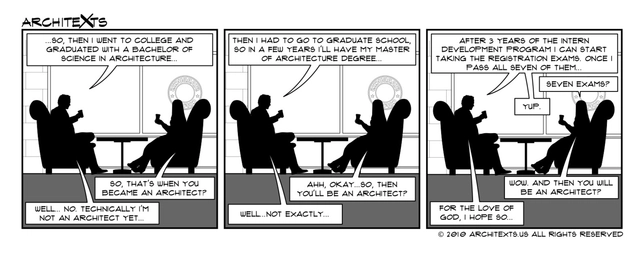
When you declare you want to be an architect, no one tells you how long and difficult the process is. No one tells you that you’re going spend 4-7 years in school, and no one tells you that have to pass seven, or six--or however many exams NCARB says you have take--grueling exams that could take years to complete. Oh, let’s not forget the thousands of specific experience hours required to begin taking those exams (wait, did they change that, too?). No one told us, that’s for sure. Maybe that’s a good thing, because otherwise our webcomic, Architexts, would never have come to be. Laughter is the best medicine, after all, and we’re glad to have the opportunity to spread some laughter to our fellow architects.

_(1).jpg?1465305999&format=webp&width=640&height=580)
In an article for Reading Design, Norman Foster—a passionate aeronaut—describes how the groundbreaking design of the Boeing 747 "Jumbo Jet," the iconic airplane envisioned by engineer Joseph "Joe" Sutter in the 1960s, remains timeless. Likening both its method of construction and means of operation to that of a typical building, Foster asserts that it speaks of "the international hotel style," which he supposes as appropriate: "people come and go, it does not have a great deal of character and it could be almost anywhere."
.jpg?1464275383)

In early March, at the Presidential Palace in Chile, a never before seen event took place for Chilean architecture. Architects, government officials as well as the media gathered for the first Venice Biennale press conference to be held in Spanish.
As the first South American selected to curate the Biennale, Alejandro Aravena was excited as he delivered the latest news on “Reporting from the Front,” the XV International Architecture Exhibition at the Venice Biennale, which opened its doors to the public on May 28:
“The Biennale, the invited architects, as well as the curators, did not intend to do anything other than open a debate in which architecture can be used to improve quality of life through the sharing of knowledge. This debate holds more significance since we are speaking at the Presidential Palace because it conveys the message that these issues are important. Thank you so much for the opportunity and the chance to be here.”
The President’s presence at an event like this is a symbol that consolidates a chapter of progress and achievements in Chilean architecture. In the last two decades, Chilean architecture has positioned itself in the world as a force to be recognized, and Chilean architects are now obtaining international recognition, which would have been unimaginable a few years ago.
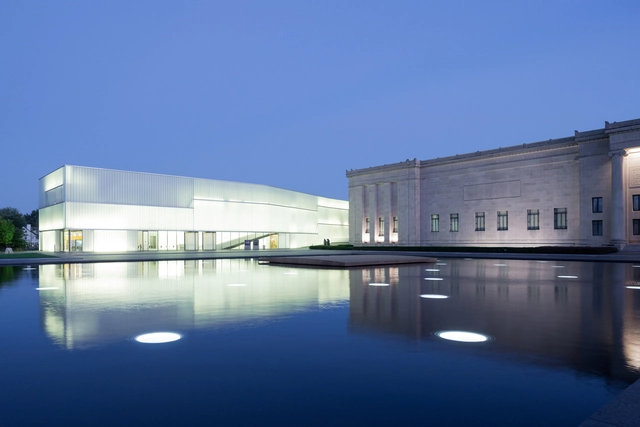
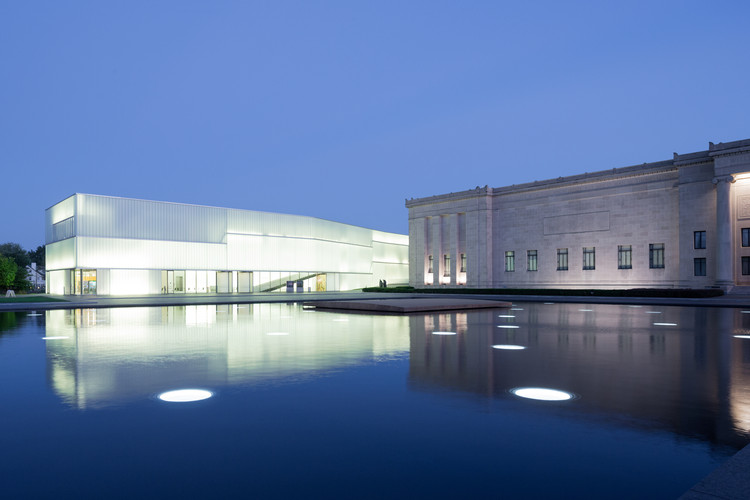
Today marks the ninth anniversary of the opening of the Steven Holl Architect’s Bloch Building for the Nelson-Atkins Museum of Art. To commemorate the occasion, Iwan Baan has visited the project to show how it has settled into place on the museum’s campus, become an architectural icon for Kansas City, and continues to shine as one of Steven Holl's most recognized projects.


.jpg?1465998696 "© Laurian Ghinitoiu")
.jpg?1465998420 "© Laurian Ghinitoiu")
.jpg?1465998587 "© Laurian Ghinitoiu")
.jpg?1465998579 "© Laurian Ghinitoiu")
.jpg?1465998369)
.jpg?1464850424 "© Laurian Ghinitoiu")
.jpg?1464850228 "© Laurian Ghinitoiu")
.jpg?1464850222 "© Laurian Ghinitoiu")
.jpg?1464850126 "© Laurian Ghinitoiu")
.jpg?1464850078)


.jpg?1465573576 "via City of Portland Archives")