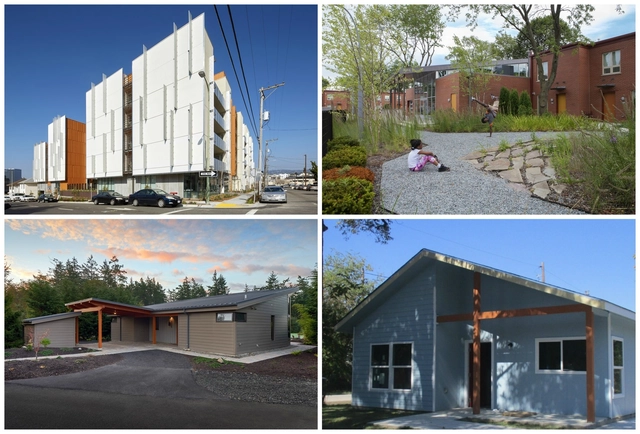
“Each of these developments are innovative housing opportunities offering seniors and families alike a place to thrive,” said HUD Secretary Julián Castro. “These winners prove that affordable and accessible housing can become part of the fabric of any neighborhood and reinforce the principles of inclusiveness and opportunity.”
The prize is given to projects in four categories: Excellence in Affordable Housing Design; Creating Community Connection Award; Community-Informed Design Award; and Housing Accessibility - Alan J. Rothman Award. Read on for a brief description from each of the winners.
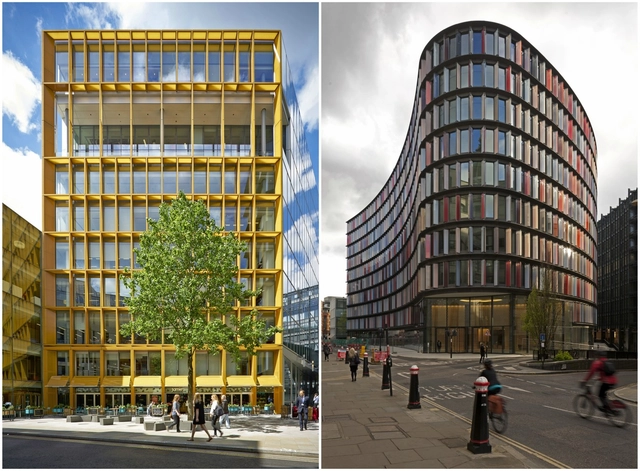
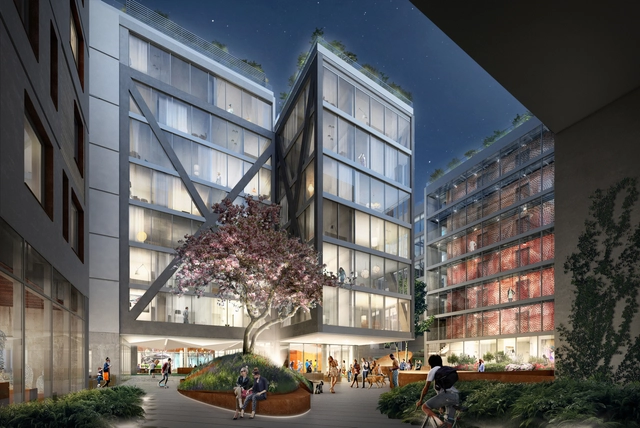
Winner: New Ludgate. Designed by Fletcher Priest Architects and Sauerbruch Hutton. Image
New Ludgate, a retail and commercial development located two blocks east of St. Paul’s Cathedral in downtown London, has been named the City of London Building of the Year 2016. The complex consists of two new buildings, One New Ludgate by Fletcher Priest Architects and Two New Ludgate by Sauerbruch Hutton. The award was given in recognition of “the buildings that support the ambitions of the City of London in delivering a world-class working environment, by evaluating both the quality of the architectural design and the impact the building has had on the city street scene.”
Soriano & Arquitectos Asociados (S&Aa) together with JC Architecture + Near Future Architects + Bernabeu Ingenieros + Urculo Ingenieros has unveiled its plans for 'The Pitcher’s Mounds' a project that received fourth place in a competition to design the Tainan Asia-Pacific International Baseball Stadiums and Training Centers in Taiwan.
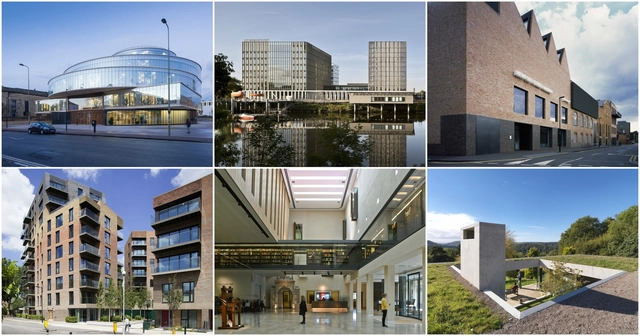
The Royal Institute of British Architects (RIBA) has announced six projects that will compete for the 2016 Stirling Prize, the award for the building that has made the greatest contribution to British architecture in the first year. Selected from the pool of regional winners around the country, the shortlisted buildings range from a small house in the south of England to a new college campus in Glasgow, Scotland. However, in a first for the Stirling Prize, the shortlist features two buildings coming from one client, Oxford University.
"Every one of the six buildings shortlisted today illustrates the huge benefit that well-designed buildings can bring to people’s lives," said RIBA President Jane Duncan. "With the dominance of university and further education buildings on the shortlist, it is clear that quality architecture’s main patrons this year are from the education sector. I commend these enlightened clients and supporters who have bestowed such remarkable education buildings."
The winner of the Stirling Prize will be announced on Thursday 6 October.
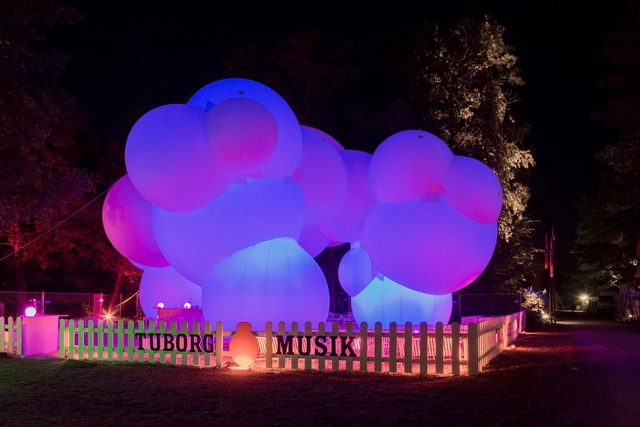
BIG Architects has designed an inflatable mobile pavilion to be displayed at three Danish events, including its original site at the Roskilde Festival 2016. Known as SKUM (Danish for foam), the structure met the challenge of creating an installation that has the ability to be both permanent and fully transportable by creating a whimsical, bubble-like form that can be blown up in just 7 minutes.
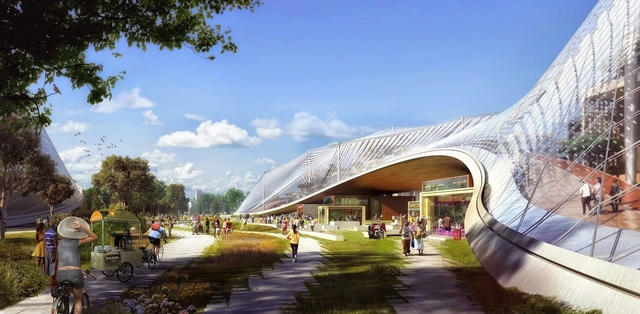
The “Googleplex” is back on. After the Mountain View City Council announced last year that they would be awarding the majority of the land needed to construct the futurist masterplan designed for Google by BIG and Thomas Heatherwick to fellow tech giant LinkedIn, the future of the ambitious glass-canopied corporate campus seemed to be dead in the water, with the architects even releasing images of a pared down design that would occupy a much smaller footprint. But all of that has now changed thanks to a surprising property swap between the two companies that will see over three million square feet of real estate switch hands.
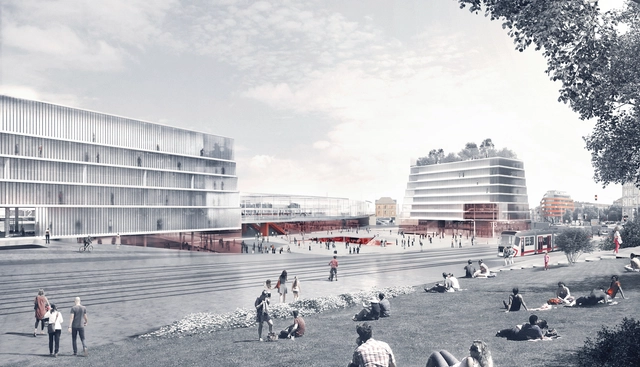
The competition sought out designs to integrate a transport hub into the cityscape of Brno, as well as integrate a design for the undeveloped southern area of the city.
International architecture non-profit Shelter Global has announced the winners of its second annual Dencity Competition, which highlights innovative solutions to improve living conditions for slum dwellers worldwide.
With over one billion people living in slums today, and this number expected to reach two billion by 2030, the Dencity Competition called architects and planners to “consider how design can empower communities and allow for a self-sufficient future.” Thus, the competition is a way to foster new ideas about how growing density in unplanned cities can be addressed.
The winners of the second annual Dencity Competition are:
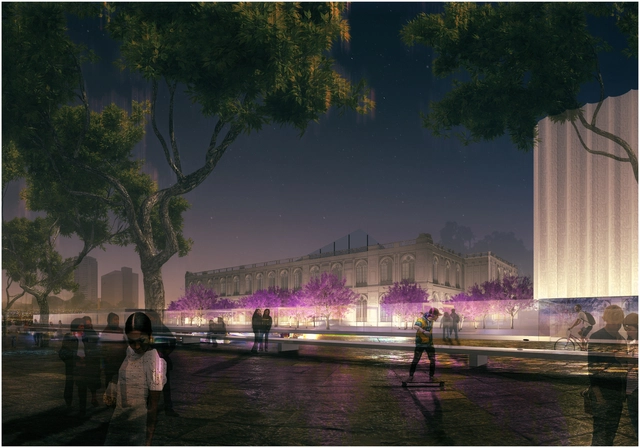
The new addition will include new exhibition halls, a library, classrooms, a cafe/restaurant, storage space, a public square, access to a future subway station and a landscape proposal for the park surrounding the museum. See images of the winning proposal and the two finalists after the break.
https://www.archdaily.com/791250/burgos-and-garrido-plus-llama-urban-design-win-competition-for-lima-art-museum-mali-expansionArchDaily Team
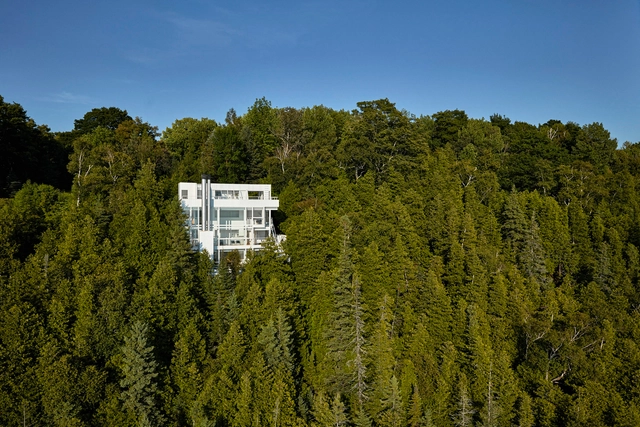
Today, one of Richard Meier’s most notable and acclaimed residences, the 1973 Douglas House, has been named to the National Register of Historic Places, the federal list of cultural resources worthy of preservation across the United States. The announcement comes after an extensive renovation to the property was completed in 2011, and will grant the home the legal status to help ensure the building is maintained for generations to come.
Architect Nguyen Hoa Hiep of a21 studio, in collaboration with Saigon architecture students, have created a cocoon-inspired pavilion. This exhibition is organized annually by Handhome.net in Vietnam in order to connect older generations of architects with students.
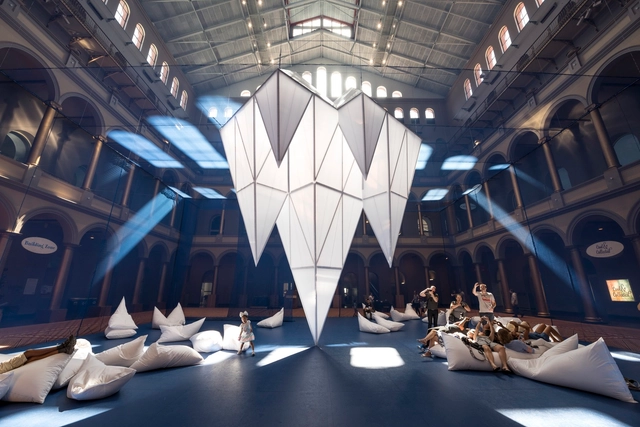
This year’s installment of the National Building Museum’s Summer Block Party Series, James Corner Field Operations’ ICEBERGS, is now open to the public. On display until September 5th, ICEBERGS takes the form of a shimmering, underwater world of glacial ice fields located in the museum’s expansive Great Hall to provide the public with an escape from the hot Washington, D.C. summer.
When posed with a brief for a Japanese-style mobile fashion store, Kooo Architects decided not to respond in a purely visual symbolic way. Rather, they looked at the climate for constructing architecture in Japan, and decided to raise social awareness of the destructive power of earthquakes. Using approximately 1000 disaster hoods to create an 8m diameter partial dome, their design embodies the color and texture of their client's fashion range while reminding the public of the prevalence of natural disasters.
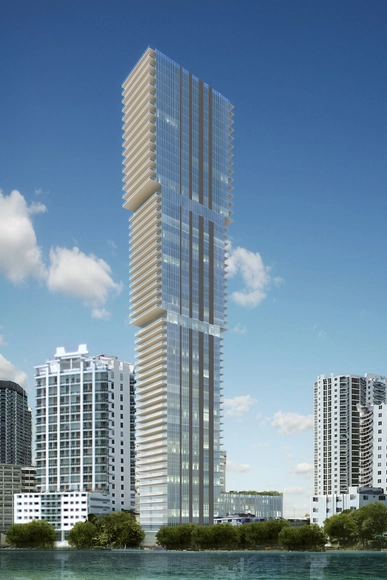
Inspire by Modernist aesthetics, Elysee’s is a luxury condominium where the floor plan expands as it grows higher, “creating a multi-tiered exterior structure.” In this sense, the tower is meant to become three vertical neighborhoods.
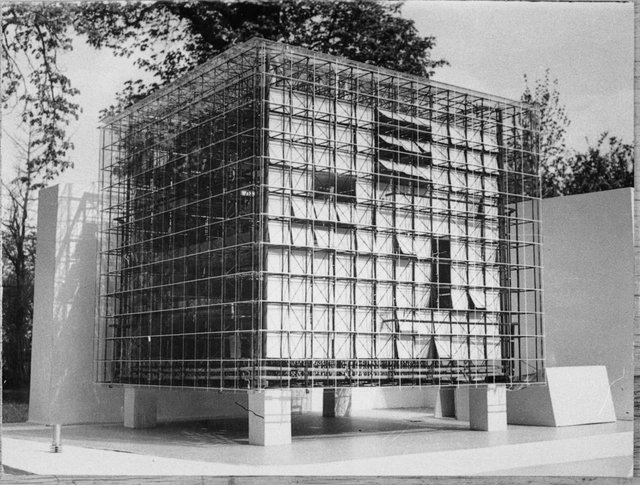
The exhibit, entitled Oskar Hansen: Open Form, will detail “the evolution of Hansen’s theory of Open Form from its origin in his own architectural projects to its application in a firm, visual games, and other artistic practices.”
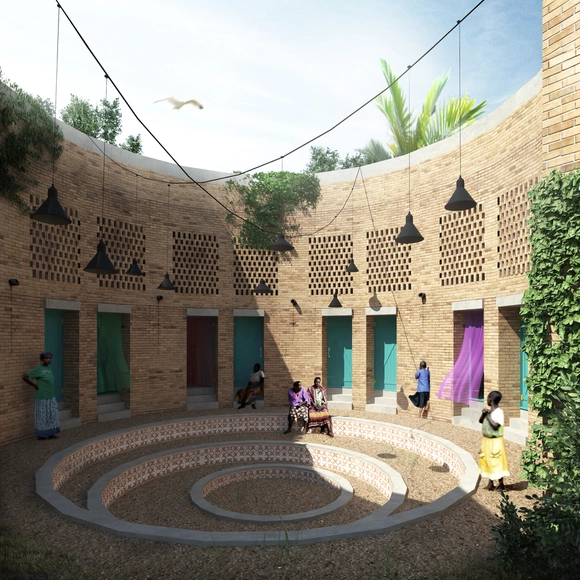
First Prize Winner "Ugandan LGBT Youth Asylum" by Enrico Chinellato and Jacopo Donato . Image Courtesy of Bee Breeders
Bee Breeders, organizers of international architectural competitions, have announced this week the three winners and six honorable mentions of their Uganda LGBT Youth Asylum Center competition. Inspired by recent activism in Uganda, Bee Breeders sought the design of a community center to welcome those in the LGBT community who have been ostracized from their home environments. The judges said that they were looking for designs that focused on social integration, not isolation, celebrating those who created "a community center, not a prison."
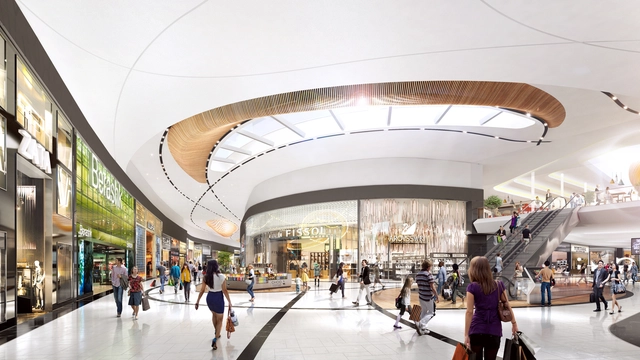
The building permit for MVSA Architects’ 'Mall of the Netherlands' has officially been approved by the municipality of Leidschendam. Commissioned by Unibail Rodamco, the project entails a renovation and extension of the existing Leidsenhage shopping center, as well as an entirely new interior design.
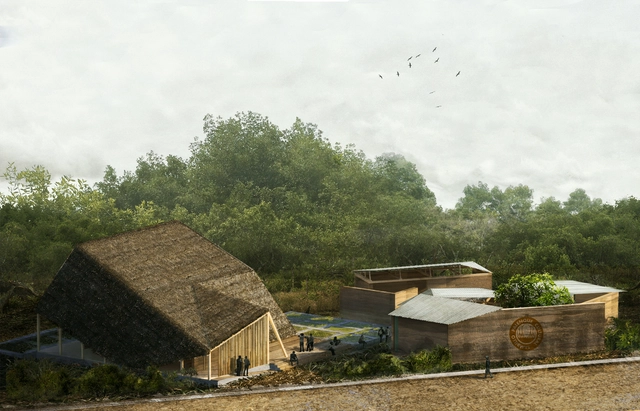
The offices of Caá Porá, Siete86 and Ingeniera Alternativa have released designs for “Palenque Cultural Tambillo,” a cultural center dedicated to the artistic tradition of marimba music in the Afroecuadorean town of Tambillo, Ecuador. Consisting of a performance and meeting hall, two multi-use classrooms, rehearsal spaces, an artisanal instrument workshop and ecologically friendly public bathrooms, the project is planned to become one piece of a network of cultural centers to be built in the UNESCO heritage province of Esmeraldas.
Building on the popularity of Snarkitecture's popular BEACH last year and BIG's massive Labyrinth in 2014, the National Building Museum's 2016 Summer Block Party installation has returned this year with "ICEBERGS," designed by James Corner Field Operations. ICEBERGS is an interactive underwater environment of glacial ice spanning the museum's Great Hall, and invites in the public to escape the hot Washington D.C. summer by exploring climbable bergs, ice chutes, caves, grottos and more.
Take a look at this time lapse video to see how the project came together.
ODA New York has unveiled the plans for Bushwick II, a 1,000,000 square feet apartment development that will occupy two city blocks in Brooklyn’s Bushwick neighborhood in New York.
Located on the former site of the Rheingold Brewery, the project will act as a “city within the city,” and is modeled after “the quintessential European village,” featuring a meandering system of interconnected courtyards.
A new collection of five minute-long Tall Stories—developed by the team behind The Urbanist, Monocle 24's weekly "guide to making better cities—guide the listener through the condensed narratives of a series of architectural projects from around the globe, encompassing their conception, development, use and, in some cases, eventual demise. We've selected eight of our favorites from the ongoing series, ranging from London’s Casson Pavilion to Honolulu's Waikiki Natatorium War Memorial, and the Estadio Centenario stadium in Montevideo.
Bringing together architects, artists, chefs, designers and engineers, pop-up restaurantFood Ink. has laid claim to the title of "world's first 3D-printing restaurant." The restaurant utilizes 3D printers produced by Dutch company byFlow to create dishes out of hummus, chocolate mousse, smashed peas, goat cheese or pizza dough – essentially anything that can take the form of a paste. The paste can then be fed through the extruder to create culinary sculptures.
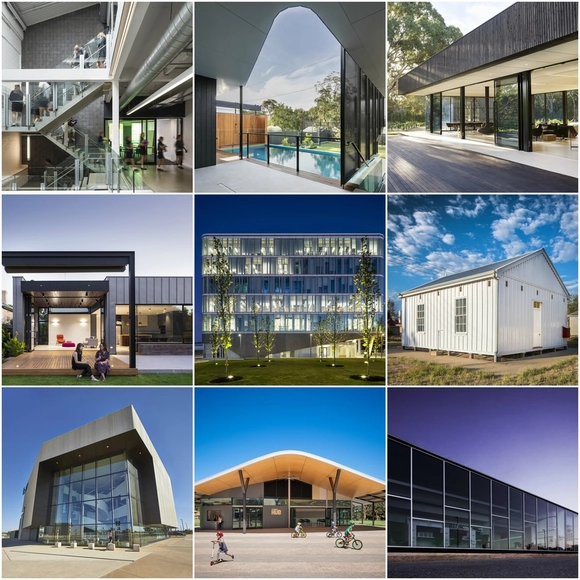
Courtesy of The Australian Institute of Architects
The Australian Institute of Architects has announced the winners of its 2016 SA Architecture Awards, which honor projects undertaken by architects in South Australia that “[respond] to the challenges of today and needs of tomorrow.”
Winners have been sorted into 16 categories, such as Public Architecture, Commercial Architecture, and Sustainable Architecture.
The 2016 Winners of the SA Architecture Awards Are:
As part of ArchDaily's coverage of the 2016 Venice Biennale, we are presenting a series of articles written by the curators of the exhibitions and installations on show.
All architecture is exhibitionist. Exhibitions are not simply sites for the display of architecture, they are sites for the incubations of new forms of architecture and new ways of thinking about architecture. [1] – Beatriz Colomina
An architecture biennale can be more than a place to simply represent and celebrate the status quo in architectural production. The Biennale’s state of exception and its spatial distance from where people normally work open up a space for examining and critically questioning the conditions of everyday work and production. Although, technologically speaking, more is possible today than ever before, in recent years architects’ creative latitude has been greatly reined in by an enormous—and growing—burden of rules and regulations. Against this background, the architectural exhibition is becoming an ever more relevant medium for a critical practice of architecture. Understood in these terms, an exhibition is no longer just a place for representing architecture ex post facto, as it is still often treated today. Instead, the fact of the exhibition space’s autonomy, and its distance from the “real” world of public and private architecture, has a potential that is increasingly being recognized and put to use. Exhibitions are becoming a place for researching and producing an experimental and critical architectural practice: a place not for the presentation of finished products, but for the production of content. The simultaneous limitations and license to experiment lent by the exhibition space focuses the object of research, allowing for the emergence of new insights, interpretations, and meanings. This calls into question the supposed boundary between architecture and the exhibition. Inquirybecomes a form of display.




















.jpg?1467139351&format=webp&width=640&height=580)


