Spring is finally here, which means over 100,000 people are making the trip to the California desert for the 2017 edition of the Coachella Valley Music and Arts Festival. In addition to the top-billed musicians, the event has become known as a showcase for some of the best up-and-coming artists, designers and architects to work on a large-scale, instagram-friendly scene.
With the first weekend now in the books, we’ve rounded up some of the best art/architecture installations from this year’s festival.
For recent architecture school graduates setting off on their careers for the first time, being referred to by the traditional title of “intern” can feel a little trivializing – as a full-time employee with a completed degree and real responsibilities, the title does little to capture a new hire’s true role within the firm.
Cognizant of this discrepancy, the AIA is now taking steps to eliminate the use of ‘intern,’ a term grandfathered in from the days of architectural apprenticeships and more linear paths through the architectural profession.
The Noguchi Museum has selected architect John Pawson and painter Hiroshi Senju as the recipients of the 2017 Isamu Noguchi Award. Now in its fourth year, the annual award was established to honor individuals who “share Noguchi’s spirit of innovation, global consciousness, and commitment to East/West cultural exchange.”
Videos
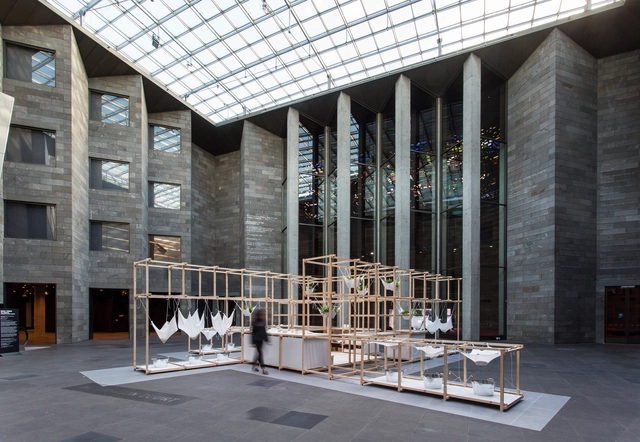
Courtesy of Tobias Titz / National Gallery of Victoria
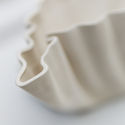
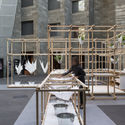
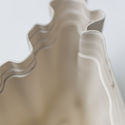
In celebration of the inaugural Melbourne Design Week, which took place in March 2017, Chilean design studio Great Things to People (gt2P) presented their Catenary Pottery Printer, aimed at exploring the boundaries between digital and analog machines. Throughout the design festival, local designers and students used the pottery printer to create their own custom works, with visitors welcomed to watch the craft in action.
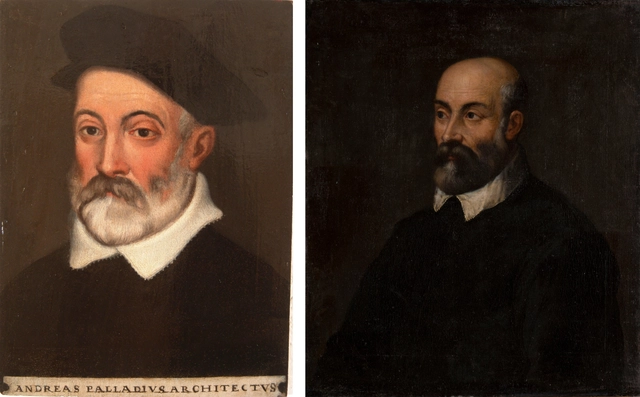
Left: seemingly accurate portrait of Palladio purchased at an antiques store in New Jersey, USA. Right: seemingly accurate portrait of Palladio in a private collection in Moscow, Russia. Image via The New York Times / Palladio Museum
In today's culture of narcissism and celebrity it's an assumed expectation that faces can be put to names. Even in 16th Century Europe, the large majority of notable persons had a likeness made of themselves and displayed for posterity – save for architects, it seems. Take, for instance, Andrea Palladio (1508-1580) – the Renaissance style-setter and author of the groundbreaking treatise The Four Books on Architecture, the seminal text of which inspired the likes of Thomas Jefferson. If challenged, could you easily put a face to Palladio's name? There is no accurate, agreed-upon "official" portrait of the architect – until now, that is.
https://www.archdaily.com/869299/study-determines-that-this-is-probably-what-andrea-palladio-looked-likeAD Editorial Team
One Bangkok will provide retail, hotels, offices, as well as homes for 60,000 people. Image Courtesy of SOM via Atchain
Chicago-based Skidmore Owings & Merrill (SOM) has unveiled plans for One Bangkok, a new 16Ha mixed-use development in the heart of Bangkok, Thailand. Working in collaboration with architects, engineers, sustainability experts and landscape architects, both local and international, SOM seeks to create the single largest private-sector development in Thailand to date - a vertical village providing homes and places of work for an estimated 60,000 people. Through One Bangkok, SOM challenged themselves to translate the vibrancy and energy of Bangkok's neighborhoods into a vertical environment, whilst promoting a 'sense of place' and district-level sustainability.
https://www.archdaily.com/868967/vertical-village-som-leads-design-of-major-mixed-use-district-in-bangkokNiall Patrick Walsh
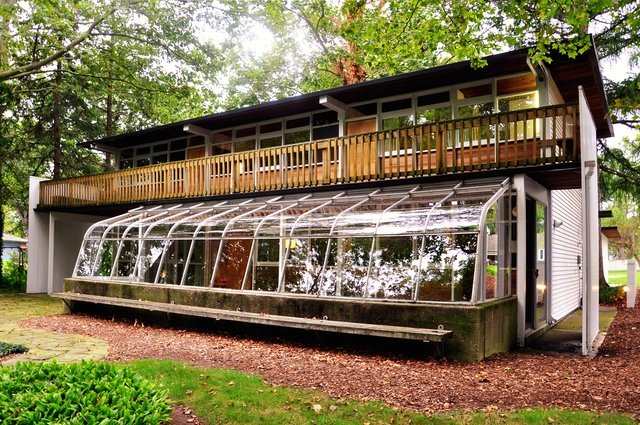
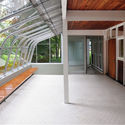
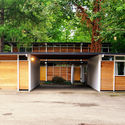
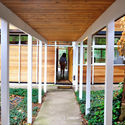
The Eames are mainly known for their furniture and their house in Pacific Palisades, which they also used as an office. Few people are aware of the Max and Esther De Pree House, a rare venture into residential architecture by the Eames.
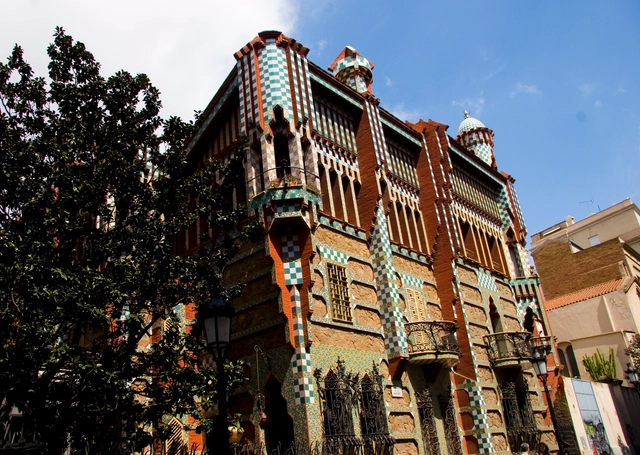
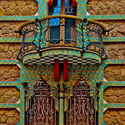
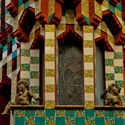
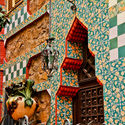
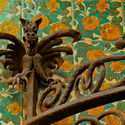
It has been confirmed that the museum opening date for the Casa Vicens in Barcelona has been rescheduled for the second half of 2017. Originally scheduled for the second half of 2016, the reopening of Gaudi's first house was not able to be completed due to the complicated and labor intensive renovations. This will be the first time the house, declared World Heritage site, will be open to the public without it being a residential or private space.
The Casa Vicens, located on 24 Carolines Street, was the first house ever designed by Antoni Gaudí. In 1883 Manel Vicens, promoter of the project, commissioned the architect to build what would be his summer home. At that time Gràcia, now a cosmopolitan neighborhood, was a separate town. Therefore, the project did not contemplate the possibility of other buildings being built around it, and so to this day, it remains a completely freestanding building in a neighborhood characterized by its compact character, narrow streets, and high density of population.
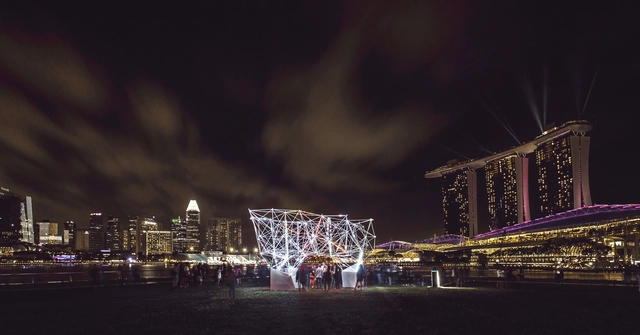
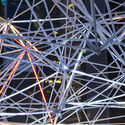
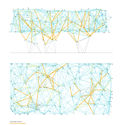
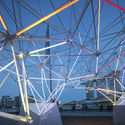
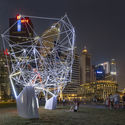
A luminous tetrahedral mesh spanning 10 meters, (Ultra) Light Network is the latest 3D printed innovation achieved by Singapore University of Technology and Design (SUTD) Professors Felix Raspall and Carlos Banon, who were also behind this mesh pavilion last year. Displayed at this year’s iLight Marina Bay in Singapore, the interactive light sculpture is an exploration of how full-scale 3D printed components can create a system to “address not only structural requirements but also power transmission, and information communication within a seamless and continuous aesthetic.”
Suspended over its visitors, the display engages the public through responses to their movements below, controlled by over 50,000 distinct LED pixels and their parent algorithm. This is made possible through five Teensy microcontrollers, working in conjunction with three ultrasonic sensors at the base of the structure, resulting in a lively and illuminating experience.
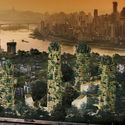
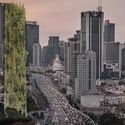
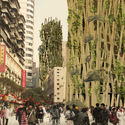
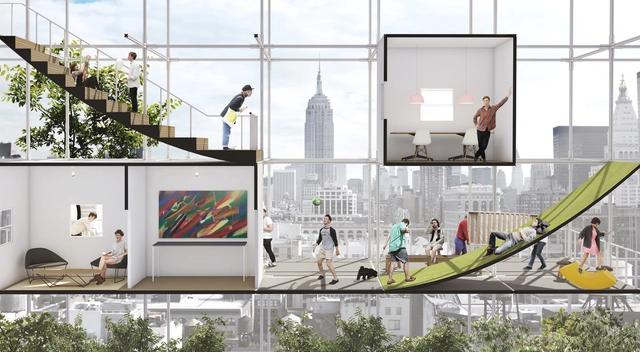
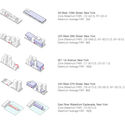
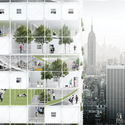
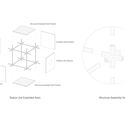
One of the great ironies of modern urban life is the underlying disconnect that exists amongst us global citizens, despite living and functioning within such dense and close proximities. In order to address this issue in the context of China’s urban landscape, New York firm NO ARCHITECTURE has proposed two alternatives to the typical high-rise – two vertical residential typologies that feature a combination of courtyards, terraces, and gardens, and could be located in a wide variety of cities.
“Conceived around a series of cascading shared walls, ventilated courtyards, stepped terraces, and wind towers, these new vertical organizations re-connect urban living to nature, suggesting how we can live in close proximity today and can continue to do so sustainably for generations to come,” explained the architects.
https://www.archdaily.com/869108/no-architecture-emphasizes-urban-sustainability-and-interaction-with-alternative-residential-towers-in-chinaOsman Bari
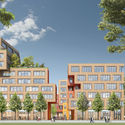
Beomki Lee and Chang Kyu Lee of Atelier L have unveiled their speculative project, Instant City: Living Air-Right, which proposes that affordable housing and public programs be built in the air rights of existing buildings in New York City.
As a response to the lack of home ownership in the city, the project aims to provide living space, as well as to foster community in an overlooked space.
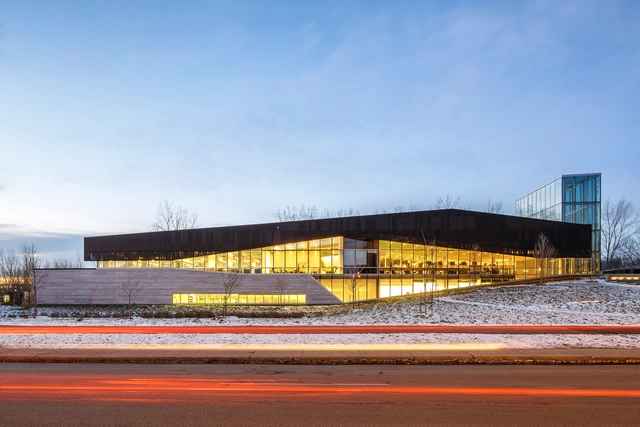
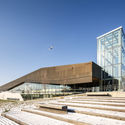
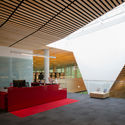
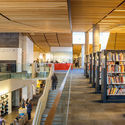
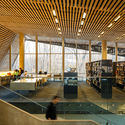
"The library offers a variety of beautifully lit and welcoming spaces throughout, maximizing daylight and views and the use of natural elements, such as wood, to create an environment that contributes to health and wellbeing,” said the jury. “Their approach to high-performance building through whole systems design and strategy has resulted in an impressive achievement.”
Hyperloop One has revealed the results of the second round of the Hyperloop Global Challenge, which is seeking proposals for future routes for their vacuum-powered transportation system. The semifinalists include 11 different routes connecting various major American cities. Check them out below.
A total of 85 buildings from the British capital have been shortlisted for the 2017 RIBALondonAwards, including projects from Wilkinson Eyre, AHMM, Allies and Morrison, Herzog & de Meuron, and Rogers Stirk Harbour. All 85 buildings will now be visited and carefully assessed by one of four regional juries, before the regional winners are selected in June of this year. Winning projects will continue on to compete for the RIBA Stirling Prize - the UK's highest honor for architecture.
See a complete list of shortlisted buildings after the break.
“I could not be more excited to realize our first European project in my hometown. Designed not just as a series of buildings but as an exploration of the spaces between the buildings, Die Macherei is an innovative design for a new way of working and interacting, integrating social activity and behaviors to promote a sense of community,” expressed Matthias Holwich, principal at HWKN.
With the 2017 Salone del Mobile now behind us, photographer Laurian Ghinitoiu has shared a collection of photographs from Milan Design Week. From housing prototypes to immersive "digital installations", the annual design show—which is often touted to be the fourth largest of any kind in the world—this year brought together a wide range of practitioners and design companies. In Milan, unusual collaborations are the order of the day.
The Chicago Architecture Biennial has announced partnerships with six Chicago museums and institutions that will serve as “community anchor” sites during the event’s run from September 16, 2017–January 7, 2018. This selection of sites will play host to events, exhibitions and other programming surrounding the festival, in hopes of encouraging Biennial attendees to explore other parts of the city and experience a few of Chicago’s historic museums.
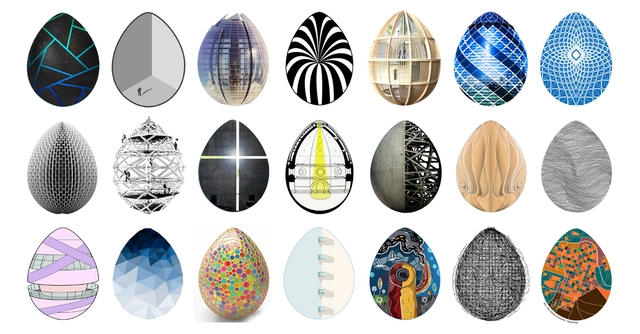
Year after year we are never disappointed by the witty, creative, and inspiring designs of ArchDaily readers from across the globe. From over 700 submissions, here are the most egg-celent!
https://www.archdaily.com/869135/easter-eggs-for-architects-and-architecture-loversAD Editorial Team
The American Institute of Architects (AIA) has named the fourteen projects selected as recipients of the 2017 Housing Awards. Now in its 17th year, the AIA’s Housing Awards program was established to recognize "the best in housing design and promote the importance of good housing as a necessity of life." Projects are awarded in four categories: One/Two Family Custom Housing, One/Two Family Production Housing, Multifamily Housing and Special Housing.
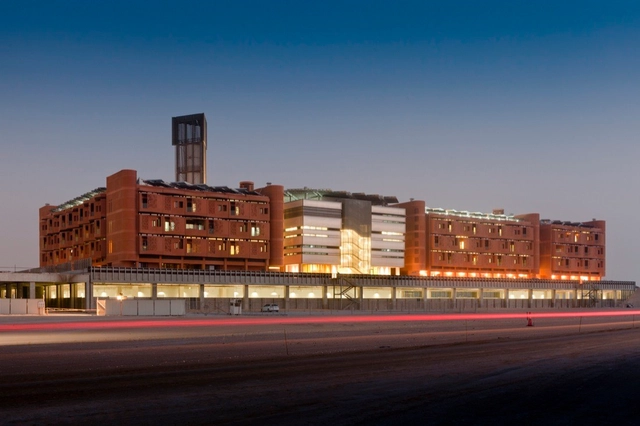
Masdar Institure. Image Courtesy of Foster + Partners
The Norman Foster Foundation has announced plans for its new Madrid-based headquarters to be opened in June this year, whose inauguration will be marked by the first session of the global forum Future is Now, addressing future social, economic and design concerns architecture will face. With the intersection of art, technology, and design, the Foundation facilitates multifaceted thinking and discourse among architects and designers. The opening of its new headquarters is a vital step in “establishing a world-class archive and inaugurating an international program of research, education, and interdisciplinary projects.”
According to the Foundation, “the decision to establish the Foundation as an independent entity, separate from the architectural practice of Foster + Partners, grew out of the perceived need for a permanent physical space that could house the Archive and study center, receive students and graduates, and present programs and projects."
https://www.archdaily.com/868821/norman-foster-foundations-madrid-headquarters-to-inaugurate-with-global-forum-in-juneOsman Bari
Houses of Parliament – Then and Now. Image Courtesy of Expedia
Go on a virtual stroll through century-old London, with this new interactive map produced by Expedia. Named “Historic London,” the app takes you through 14 notable sites throughout the British capital, from Buckingham Palace to a view of St. Paul’s Cathedral from Fleet Street. Archival images of the sites from the late 1800s and early 1900s are overlayed onto the streetview of today, so you can easily compare what has and hasn’t changed over the last 100 years.
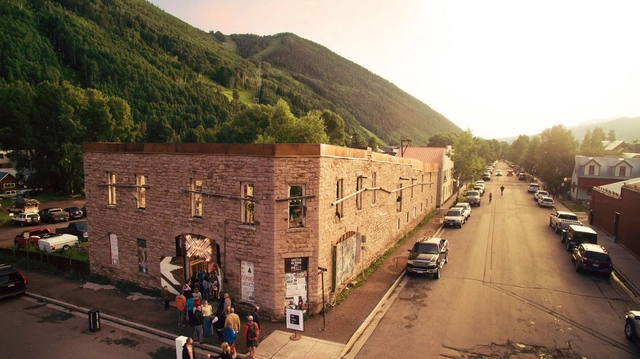
Telluride Arts has announced the three finalist firms that will compete for the adaptive reuse and transformation of the historic Telluride Transfer Warehouse in the arts district of Telluride, Colorado. Selected from an initial list of 30 firms from across the country, Gluckman-Tang, LTL and NADAAA were chosen as finalists based on “their sensitivity to the Telluride Arts and Telluride Historic Landmark Districts, their experience with historic restoration, and their previous design experience with public spaces for the arts.”
The three firms will now develop conceptual designs for the building, with the vision of “[creating] an architectural and cultural landmark in the heart of Telluride that provides contemporary, public art space that deepens and expands the cultural life of Telluride.”
Drawing on a touchscreen or trackpad can be a huge pain – but when you’re on the go, sometimes that may be your only option to quickly convey an image. To the rescue, Google has unveiled its latest AI experiment, AutoDraw, which uses machine learning to pair your wobbly doodle with a corresponding artist-drawn image – like autocorrect for sketching.
https://www.archdaily.com/869005/googles-new-autodraw-feature-will-complete-your-drawings-for-youAD Editorial Team
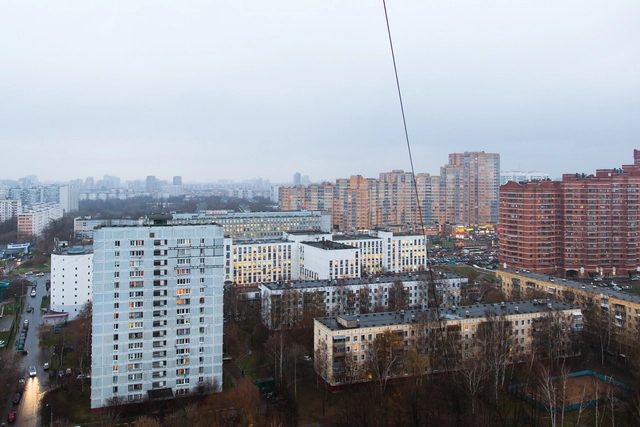
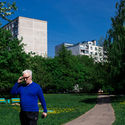
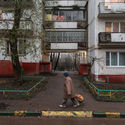
The Moscow government has just launched the biggest demolition program in the city’s history. Its goal is to get rid of 8,000 5-story residential buildings constructed in the Soviet era—it is probably the biggest program of erasure of modernist architectural heritage in world history. The main assumptions of the plan, as well as the press comments following it, show that we have forgotten what modernism was about, and what the real values of this architecture are.
A few years ago I published an essay titled Belyayevo Forever, dedicated to the preservation of generic modernist architecture. I focused on Moscow’s microrayons—vast, state-funded housing estates built in the Soviet era. In the essay, I explained the spatial and cultural values these prefabricated landscapes had. I also speculated about how one would go about preserving architecture that completely lacks uniqueness. The essay ended with a provocative statement: we should put Belyayevo—the most generic of all Soviet estates—on the UNESCO heritage list.





_Atchain_(2).jpg?1491918884&format=webp&width=640&height=580)
_Atchain_(2).jpg?1491918884 "One Bangkok will provide retail, hotels, offices, as well as homes for 60,000 people. Image Courtesy of SOM via Atchain")
_Atchain_(3).jpg?1491918690 "Situated adjacent to Lumphini Park, the scheme offers 8Ha of public space. Image Courtesy of SOM via Atchain")
_Atchain_(4).jpg?1491918823 "Streetscapes, public plazas and greenspaces all contribute to a welcoming sense of place. Image Courtesy of SOM via Atchain")
_Atchain_(1).jpg?1491918919 "A variety of towers will feature individual identities such as green terraces and sky gardens. Image Courtesy of SOM via Atchain")
_Atchain_(2).jpg?1491918884)













.jpg?1492020579&format=webp&width=640&height=580)
.jpg?1492020513 "SO-IL. Image © Laurian Ghinitoiu")
.jpg?1492020331 "COS × Studio Swine. Image © Laurian Ghinitoiu")
.jpg?1492020534 "SO-IL. Image © Laurian Ghinitoiu")
.jpg?1492020424 "DS+R. Image © Laurian Ghinitoiu")
.jpg?1492020579)