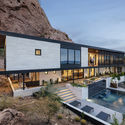
The Dome in the Desert by Wendell Burnette

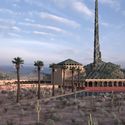
The Dome in its Sonoran Desert landscape. © 1985 Julius Shulman

This article, written by Arizona-based architect Wendell Burnette of Architects, recounts the story of Paolo Soleri’s ‘The Dome’ in the desert. 

A glass house in the desert? Was it an architectural caprice, a folly, or was it a solution to the problems of desert living whose appropriateness is still not recognized? Having had the experience of living in The Dome for a full year, through all the seasons, I felt it incumbent upon myself to take a fresh look at this remarkable work of architecture.

Paolo Soleri, its designer, was born in 1920 in Turin, received a PhD in architecture from the Torino Politecnico, and in 1947 came to America to study with Frank Lloyd Wright, remaining with him for just over a year. Mark Mills, who assisted Soleri in the construction of The Dome, was born in 1921, received an architectural engineering degree from the University of Colorado, and studied with Wright for four years. It was at that Soleri and Mills became friends. In 1948, when they and two other apprentices were working on an experimental structure at West, which became what is known as the Sun Cottage, there was a misunderstanding with Wright that led to all four of them leaving. Soleri and Mills went to work with a developer, providing design work for some condominiums at the base of Camelback Mountain, below the north face in Paradise Valley. Soleri developed a scheme that involved a tower element supporting a hex form canopy and he and Mills built a mockup of Camelback out of concrete block and wood. It was shortly after this that “the Cli,” as she was fondly called, came along.

The complete article after the break…

Remembering Paolo Soleri 1919-2013

© www.arcosanti.org

Today the world has lost one of its great minds. Paolo Soleri, architect, builder, artist, writer, theorist, husband, father, born on Summer Solstice, June 21, 1919, has died at age 93.

Paolo Soleri spent a lifetime investigating how architecture, specifically the architecture of the city, could support the countless possibilities of human aspiration. The urban project he founded, Arcosanti, 65 miles north of , was described by NEWSWEEK magazine as “…the most important urban experiment undertaken in our lifetimes.”

His own lifetime of work is represented in models, drawings, books, lectures and museum exhibits throughout the world. Soleri’s exhibition in 1970 at the Corcoran Museum in Washington DC – and the concurrent publication of his landmark book, CITY IN THE IMAGE OF MAN – changed forever the global conversation about urban planning on our living planet. His term, “Arcology” joining the words architecture and ecology to represent one whole system of understanding human life on the earth is meant to serve as the basis for that conversation.

More on the life of Paolo Soleri after the break…

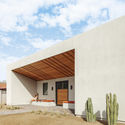
Dialogue House / Wendell Burnette Architects

© Bill Timmerman

Architects: Wendell Burnette Architects
Project Team: , Christopher Alt
Client: Thomas and Laura Hyland
Structural Engineer: Rudow + Berry, Inc.
Electrical Engineer: C.A. Energy Designs
Landscape Design: Debra Burnette Landscape Design
Contractor: The Construction Zone, Ltd.
Area: 2,700 ft2
Year: 2012
Photographs: Bill Timmerman

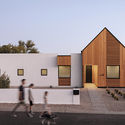
Levin Residence / Ibarra Rosano Design Architects

© Bill Timmerman

Architects: Ibarra Rosano Design Architects
Location: Marana, , USA
Design Team: Luis Ibarra, Teresa Rosano, Jennifer Martin
Area: 3,520 sqft
Year: 2009
Photographs: Bill Timmerman

Anonymous Benefactor Saves the David and Gladys Wright House

Courtesy of Time, Inc. via the Frank Lloyd Wright News Blog

Christmas has come early for the international community of architects and preservationists, as an anonymous benefactor has saved the endangered David and Gladys Wright House in Phoenix, . Culminating a six month saga, the Frank Lloyd Wright Building Conservancy is proud to announce that it has facilitated the purchase of the historic property through an LLC owned by an anonymous benefactor. The transaction closed today, December 20, and is no longer a demolition threat.

The Wright home will now be transferred to the hands of an Arizona not-for-profit organization responsible for the restoration, maintenance and operation of the structure. The change in ownership guarantees the house will survive and be preserved. Landmark status is expected to follow shortly.

More information on the David Wright House after the break…

South Mountain Community Library / Richärd+Bauer

© Bill Timmerman

Architect: Richärd+Bauer
Location: ,
Client: Maricopa County Community Colleges District, City of Phoenix
Size: 54,600 sf
Cost: 16.3M
Completion Date: August 2011
Photography: Bill Timmerman, Mark Boisclair Photography

Perspectives: The David Wright House

‘Perspectives: The David Wright House’ will be hosted by ASU on November 5, 2012

On November 5, the Design School at will be hosting a panel discussion centered around the David Wright House and the question of architectural preservation in the city of Phoenix. Speakers will include Burton Barr Central Library architect Will Bruder, The Design School’s director, and more. The conversation will touch on efforts have been underway over the last three months in Arizona to preserve the David Wright House, one of Frank Lloyd Wright’s “ most innovative, unusual and personal works of architecture,” from demolition by developers.

The Latest in the Wright House Demolition Saga: The Developers Tell Their Side

Courtesy of Curbd LA

The David Wright House, a hidden gem that Frank Lloyd Wright designed for his son, still stands, but its fate remains precarious.

On October 9th, the Arizona Planning Commission met to discuss the proposed landmark designation for the house, an event which attracted over 100 people. According to The New York Times, only 3 people voted against the designation, including the house’s current owners, the developers of 8081 Meridian, John Hoffman and Steve Sells.

When the pair bought the house back in June for only $1.8 million (from the pair the Wright’s granddaughters had sold the house to for $2.8 million), they thought it was “too good to be true.” The property alone could make up to $1.4 million; the pair hoped that by splitting the lot they could make even more.

Unfortunately however, Mr. Sells had no idea of the house’s architectural significance. As he told The New York Times, he didn’t know the difference “between Frank Lloyd Wright and the Wright brothers. ”

More on the Developers’ side of this demolition tale, after the break…

Lighthouse for the Dutchman / Urban Playground

Courtesy of

Designed by Urban Playground, the ‘Lighthouse for the Dutchman’ project was proposed for the chapel at the entry of the Los Dutchman State Park in , Arizona. Through a rearrangement of an embryological, mathematical reference known as “Shrek’s Surface”, spatial varieties are derived as a way to alter the combined experiences of both the spiritual and natural environment in the Arizona desert. The prototypical, curved surface is morphed and manipulated, creating contextual and functional relationships that are then translated into a series of parameters for the building’s morphology. More images and architects’ description after the break.

University of Arizona Medical Center South Campus / Cannon Design + CDG Architects

© Timothy Hursley

Architects: Cannon Design, CDG Architects
Location: Arizona,
Principal in Charge: Michael J. Smith
Project Director: Beth Radovanovich
Lead Designer: Carl Hampson
Project Manager: James Pricco
Photographs: Timothy Hursley, Bill Timmerman

‘Peritoneum’ Shade Structure / Arizona State University Student Team

© Tim Trumble, Dian (Woodia) Yu, Anna Christy

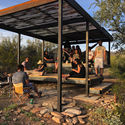
Designed and built by a very talented student team at Arizona State University, the Peritoneum shade structure reflects their collaboration and interdisciplinary skills as they employed their respective talents for this temporary shade structure. Originally built on a plaza space on the university campus, the project was recently moved to be displayed in a major art district in downtown Phoenix along Roosevelt Row. The design, which won the ASLA Student Award of Excellence 2012, is an undulating blue structure that evokes a calming, cooling environment, and captivates others by its daring interpretation of typical shade structures. More images and the students’ description after the break.

Video: The late Pedro E. Guerrero speaking at the Julius Shulman Institute

Last April, we announced the opening of Pedro E. Guerrero: Photographs of Modern Life – a retrospective exhibition organized by the Julius Shulman Institute (JSI) at Woodbury University that honored the incredible life and career of the great 20th century architectural photographer, Pedro E. Guerrero (1917-2012). JSI was thankful to have Guerrero join the exhibition’s opening night, where he entertained the crowd with his charismatic personality as he shared fascinating stories from his life.

Sadly, the world is still in mourning over Guerrero’s passing last week, as he died at the age of 95 on Thursday, September 13, 2012, at his home in Florence, .

Woodbury University and the would like to share a few words from JSI director Emily Bills:

“The Julius Shulman Institute is deeply saddened to hear of the passing of Pedro E. Guerrero. We were honored to host a retrospective of his work last April, which included the lively, and often hilarious, conversation he shared with Hunter Drohojowska-Philp. Guerrero will be remembered as one of the great architectural photographers of the twentieth century, capturing the essence of work by Frank Lloyd Wright, Edward Durell Stone, Marcel Breuer, Joseph P. Salerno, and many others. He will be dearly missed.”

Read Guerrero’s obituary in the New York Times and the LA Times to learn more about his epic life and career. Continue after the break to view some of his best photographs that were featured at the exhibition. 

Burton Barr Central Library / Will Bruder+PARTNERS

© Bill Timmerman

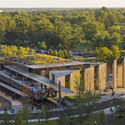
The Phoenix Central Library stands as an iconic structure that straddles Interstate 10 as it passes through the Margaret T. Hance Deck Park Tunnel in Phoenix, . Designed by Bruder DWL Architects with ongoing work by Will Bruder+Partners in 1995 to house an expansive volume collection of 1,000,000 within 280,000 square feet, it has also served as a catalyst to the local community and fostered a sense of pride. It features numerous details that enhance the overall user experience and incorporates strategic building tactics that respond to the harsh Sonoran Desert. More details after the break.

will bruder+PARTNERS Splits into Two

Agave Library / will bruder+PARTNERS © Bill Timmerman

Starting today, one of ’s most well-known architecture firms will no longer be will bruder+PARTNERS. After a successful 17-year history, the practice has branched into two independent firms with diverse architectural offerings due to a “natural evolution of individual and collective goals relating to firm size, design methodology and management.” Together, the internationally respected firm has created landmark buildings throughout the state, including projects such as the Burton Barr Library and the Agave Library. And now, each will go their separate ways as the firm has split into Will Bruder Architects and WORKSBUREAU.

Continue after the break to learn more about each firm.

Minding Design: Neuroscience, Design Education and the Imagination

via Taliesin, the Frank Lloyd Wright School of Architecture

We are primarily biological beings whose senses and neural systems have developed over millions of years. And, although we now spend over ninety percent of our lives inside buildings, we understand very little about how the built environment shapes our thoughts, emotions and well-being. Breakthroughs in neuroscience help us to understand the many ways our buildings determine our interactions with the world around us. This expanded understanding can help us design in a way that supports our minds, our bodies and our social and cultural evolution.

The symposium, Minding Design: Neuroscience, Design Education, and the Imagination, a collaborative effort between the Frank Lloyd Wright School of Architecture and the Academy of Neuroscience for Architecture, brings together renowned architects Juhani Pallasmaa and Steven Holl with scientists and to explore the implications of these advances on the education of those who design our built world.

Lavance Shade Screen / Benjamin Hall & Michael Lavance

Courtesy of Benjamin Hall &

The Lavance Shade Screen, a project designed and built by Benjamin Hall & Michael Lavance, was created out of appreciation for the desert climate and its harsh effects on specific materials. This inspiration and architectural concept led to this unique and regionally specific approach in providing much needed shade to a custom residential outdoor barbecue and bar near the downtown of , Arizona. More images and architects’ description after the break.

3 American Cities: Future Forecasting

© Wikimedia Commons / Jonik

The recently published a reprint from the National Associates Committee journal Forward by author Wellington Reiter, FAIA. The hot topic essay goes into great detail discussing how three U.S. – Detroit, Phoenix, and New Orleans – are serving as examples of the impacts of adverse planning and general continuation of unsustainable behavior.  While in times past these have flourished, and grew on the assumption that the trend would continue inevitably, they are sharp reminders of the consequences of naivety in regards to long term sustainability. More after the break.

Phantom Developments of the Southwest

© Wikimedia.org / Gobeirne

During the housing boom in and the surrounding suburbs, enormous swaths of land were graded and prepared for endless subdivisions as far as the eye could see. Following the burst of the housing market and prolonged recession, these unfinished construction sites have sat vacant – remnants of unbridled optimism in the Valley of the Sun. A recent article on NPR.org discusses some of the alternative visions for re-appropriating these phantom lots that propagate the greater Phoenix area. Various methods of breathing new life into these chasms left behind include rezoning the numerous residential lots for mixed-use, or tearing up the infrastructure and letting nature take back control. For those unfamiliar with the rapid pace of development that was taking place prior to the recession, Maricopa, a small town just south of Phoenix was approving over 600 residential home permits per month. With an inventory of over 16,000 dedicated to residential homes, the measures that are required to remediate the impact of such an ambitious plan need to be ingenious.

While the Southwest has suffered from the housing bust significantly more than many other states, it will undoubtedly always remain a destination for its unequaled sunny days, warm weather and amazing desert landscape.

See this article on similar circumstances in the Rust Belt region.

Photographs: Wikimedia.org User: Gobeirne
References: www.NPR.org, www.philly.com

Exhibit: Frank Lloyd Wright: Organic Architecture for the 21st Century

Frank Lloyd Wright at West, 1955. Courtesy Frank Lloyd Wright Foundation, , Arizona

In celebration of the 75th anniversary of Taliesin West, Frank Lloyd Wright’s winter home, studio and architectural campus in Scottsdale, Arizona, Phoenix Art Museum presents Frank Lloyd Wright: Organic Architecture for the 21st Century. The exhibit will explore Wright and his relevance today through a survey of more than 40 projects shown through rarely seen drawings, models, furniture, films and photographs.

The Arizona exhibit will be open to the public from December 18th, 2011 to April 29th, 2012 at the Steele Gallery in the Phoenix Art Museum.

Tucson-based Architects Line and Space Wins 2011 AIA-Arizona Architectural Firm of the Year Award

San Diego National Wildlife Refuge – © Mike Torrey

Architecture firm Line and Space, has been selected as the 2011 Architectural Firm of the Year by the Arizona Chapter of the American Institute of Architects (AIA). The award recognizes a firm that has produced distinguished architecture for over ten years, has made significant contributions to the profession and the community, and has transcended local boundaries in making these contributions. Awarded by an out of state jury comprised of architects, the honor was given to at the Institute’s Celebrate Architecture Awards Gala held in Phoenix on October 22.

AIAS FORUM 2011 To Be Held In Sunny Phoenix Arizona

© AIAS

The annual AIAS FORUM meeting for 2011 will take a break from the snow of the past two years (2009 Minnesota, 2010 Toronto) and be held in sunny downtown Phoenix, FORUM is the annual meeting of the AIAS and the premier global gathering of architecture and design students. The conference provides students with the opportunity to learn about important issues facing architectural education and the profession, to meet students, educators, and professionals with common interests, and to interact with some of today’s leading architects through keynote addresses, tours, workshops and seminars, last years FORUM was attended by over 1,000 young and ambitious architecture students and AIAS members. This years Keynote Speakers will be Jeffrey Inaba, founder of C-Lab and former project manager with Rem Koolhaas and OMA, Brad Lancaster, author of www.harvestingrainwater.com, and University of Californa, San Diego architect and professor Teddy Cruz.