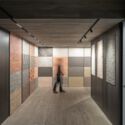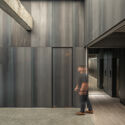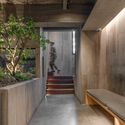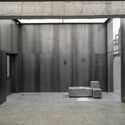
‘The Slabs’ – Italian Pavilion Expo 2015 Proposal / MenoMenoPiu Architects + BE.ST Architect

Courtesy of +

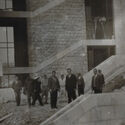
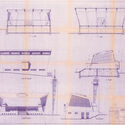
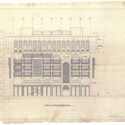
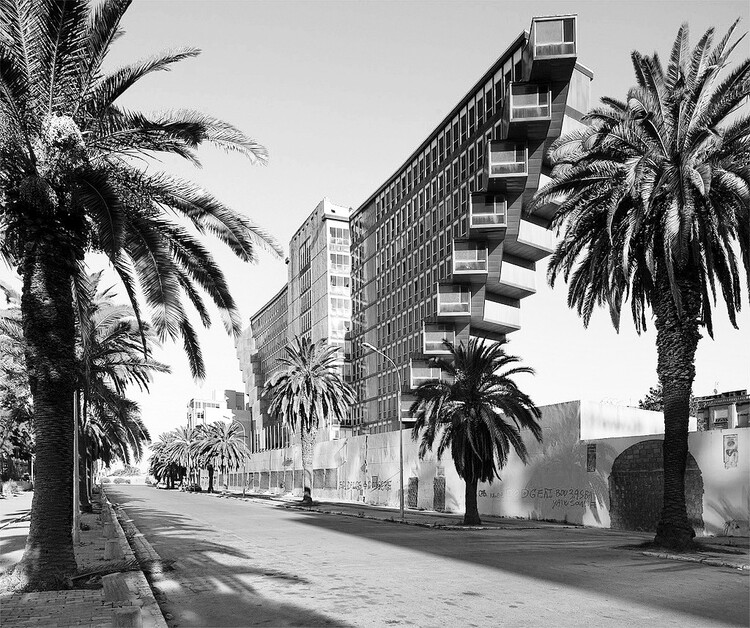
MenoMenoPiu Architects + BE.ST Architect shared with us their proposal for the Italian Pavilion Expo 2015. Titled ‘The Slabs’, their design consists of a light cage where the technical innovation is embedded within the structure: revolutionary glass columns sustain traditional slabs clad in marble. Simple and elegant in its structural system, marble and glass are intertwined to express the Italian architectural tradition of proportion and elegance. More images and architects’ description after the break.

San Juan Cliffside / Prentiss Architects

© Jay Goodrich

Architects: Prentiss Architects
Location: , WA, USA
Area: 2500.0 ft2
Year: 2010
Photographs: Jay Goodrich

Two Islands Wins Inaugural Flat Lot Competition in Flint

Courtesy of Flint Public Art Project

Update: Our friends at have launched a Kickstarter campaing so you could also be part of the project. By pledging £5, you can have your own photo used in the ceiling of Mark’s House (or £20 for a bigger one). You can send a photo, a sign, a collage or even a QR code, so get creative! Click here for all the information.

Occupying no more than eight parking spaces on Flint, Michigan’s central downtown parking lot, this temporary summer pavilion designed as an abstract, reflective and floating representation of a Michigander, Tudor-style home has been chosen as the winning scheme in the inaugural presented by Flint Public Art Project and the Flint Chapter of the American Institute of Architects. 

More information on the winning scheme after the break…

The Me Too House / LADAA

Courtesy of

Architects: LADAA
Location: Sagunto, , Spain
Architect In Charge: Sergio Adelantado, Sara Lopez Blanco
Constructor: NIDEKER S.L
Area: 707.0 sqm
Year: 2013
Photographs: Courtesy of LADAA

Addis Abeba Chamber of Commerce Headquarters Winning Proposal / BC Architects

Courtesy of BC Architects, ABBA architects, and Adey Tadess

BC Architects, in collaboration with ABBA architects and Adey Tadesse, won the competition for the Chamber of Commerce Headquarters in with their approach towards a “glocaldesign”. With the goal of sensibly involving local materials in this mid-high-rise building, this resulted in a local nature stone façade system inspired by a ‘Netela’ (threaded Ethiopian textile which so nicely shows the threads of cotton and which has a character of both shadow and transparency). More images and architects’ description after the break.

Kemuri Shanghai Restaurant / Prism Design

©

Architects: Prism Design
Location: , China
Design Team: Tomohiro Katsuki, Masanori Kobayashi, Reiji Kobayashi
Area: 200.0 sqm
Year: 2012
Photographs: PRISM DESIGN, Nacasa & Partners Inc.”(Eiichi Kano)

Artis Headquarters / Roswag Architekten

© Daniela Friebel

Architects: Roswag Architekten
Location: , Germany
Architect In Charge: Eike Roswag
Project Leader: Jan Schreiber
Planning: Maria Scheicher, Oriol Domínguez Martínez
Area: 1,978 sqm
Year: 2010
Photographs: Daniela Friebel

Casas Reais / Concheiro de Montard

© Luis Díaz Díaz

Architects:
Location: Santiago de Compostela,
Architect In Charge: Isabel Concheiro, Raphaël de Montard
Area: 89 sqm
Year: 2012
Photographs: Luis Díaz Díaz

MoMA Selects Diller Scofidio + Renfro as Architect of the Folk Art Museum

© Michael Moran

The Museum of Modern Art has commissioned  (DS+R) to design its controversial expansion that will overtake the former American Folk Art Museum in New York. This news comes after an intense backlash from prominent architects, preservationists and critics worldwide pressured MoMA to reconsider its decision to raze the iconic, Tod Williams and Billie Tsien-design museum in order to make way for its new expansion.
In response, DS+R has requested that MoMA gives them the “time and latitude to carefully consider the entirety of the site, including the former American Folk Art Museum building, in devising an architectural solution to the inherent challenges of the project,” as stated by Glenn D. Lowry, MoMA’s director, in a memo sent on Thursday to his trustees and staff. He added, “We readily agreed to consider a range of options, and look forward to seeing their results.”

More on the DS+R’s commission and the fate of the Folk Museum after the break…

Fuyi River Housing Sales Center / Lab Modus

©

Architects: Lab Modus
Location: City, Taiwan
Project Team: Kevin Chang (Principal), Jeanne Lin (Designer)
Area: 600 sqm
Year: 2013
Photographs: Lab Modus

Nowhere but Sajima / Yasutaka Yoshimura Architects

© Yasutaka Yoshimura

Architects: Yasutaka Yoshimura Architects
Location: Kanagawa, Japan
Client: Nowhere Resort
Structural Engineer: Akira Suzuki/ASA
General Contractor: Heisei Construction
Area: 176.65 sqm
Year: 2009
Photographs: Yasutaka Yoshimura, Chiaki Yasukawa

Council Approves Cornell’s Net-Zero Tech Campus on Roosevelt Island

© Kilograph

City Council has approved Cornell’s two-million-square-foot tech campus planned to break ground in 2014 on New York’s Roosevelt Island. Masterplanned by Skidmore, Owings and Merrill (), the ambitious carbon positive campus will offer housing for 2,000 full-time graduate students, world-class education facilities, a hotel, a corporate co-location building, and more than an acre of public open space. Construction will commence with the first, state-of-the-art academic building that will be designed by Thom Mayne, founder of Morphosis, who will incorporate the latest environmental advances, such as geothermal and solar power, to achieve net-zero energy for the landmark structure.

Media Library Drachten / ADP Archtitects

© Gerard van Beek

Architects: ADP Archtitects
Location: , The Netherlands
Architect In Charge:
Collaborators: SH Studio
Area: 650.0 sqm
Year: 2012
Photographs: Gerard van Beek

A Clearer Definition for Smarter Smart Growth

High Line, , is a good example of what is to come. Image © Iwan Baan

As cities become more conscious of their environmental and social impact, smart growth has become a ubiquitous umbrella term for a slew of principles to which designers and planners are encouraged to adhere. NewUrbanism.org has distributed 10 points that serve as guides to development that are similar to both AIA’s Local Leaders: Healthier Communities through Design and New York City’s Active Design Guidelines: Promoting Physical Activity and Health in Design.  Planners all appear to be on the same page in regards to the nature of future development.  But as Brittany Leigh Foster of Renew Lehigh Valley points out, these points tend to be vague; they tell us “what” but they do not tell us “how”.  10 Rules for Smarter Smart Growth by Bill Adams of UrbDeZine San Diego enumerates how to achieve the various design goals and principles that these various guides encourage.
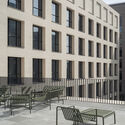
Origo Coffee Shop / Lama Arhitectura

© Radu Malasincu

Architects: Lama Arhitectura
Location: ,
Architects In Charge: Dan Enache,Calin Radu, Radu Nenita
Area: 65 sqm
Year: 2013
Photographs: Radu Malasincu

New Central Library in Berlin Winning Proposal / Envés Arquitectos

© 24studio

Designed by Envés Arquitectos, their proposal for the New Central Library in was named as one of the winners of the competition, which is conceived as an open, public, free and comfortable meeting place; summing up, an urban lobby. This flexible place is able to interact with a changing user (from a kid to an ancient), but simultaneously ensures the area’s accessibility and right usage. The library also aims to become an activity catalyst, a landmark to be perceived from far away. More images and architects’ description after the break.

Architecture City Guide: Beirut

© Flickr User Omar Chatriwala

Following a brutal 15-year civil war that tore the city apart, Beirut has recovered remarkably; it was voted the number one destination to visit by the Times in 2009, and, more recently, received a similar title by Frommer’s. The city is in the second phase of one of the biggest urban reconstruction projects in the world, run by Solidere, which has brought architects like Steven Holl, Herzog & DeMeuron, Zaha Hadid, Vincent James, and Rafael Moneo to the local scene. In less internationalized parts of the city sit the landmarks of the 1960s and 1970s, Beirut’s pre-war glory days, including buildings by names such as Alvar Aalto, Victor Gruen, and the Swiss Addor & Julliard. With a city growing as fast as Beirut it is impossible to have a final city guide, so we look forward to hearing your suggestions and building on this over the years.

Photos and a map of Beirut’s most exciting buildings after the break…

Lenbachhaus Museum / Foster + Partners

© Nigel Young /

Architects: Foster + Partners
Location: , Germany
Design Team: Norman Foster, David Nelson, Stefan Behling, Christian Hallmann, Ulrich Hamann, Klaus Heldwein, Florian Boxberg, Leonhard Weil, Judith Kernt, Henriette Hahnloser, Eike Danz, Diana Krumbein, Simon Weismaier, Christopher Von Der Howen, Inge Tummers, Jörg Grabfelder, Katrin Hass, Tillmann Lenz
Area: 12,328 sqm
Year: 2013
Photographs: Nigel Young / Foster + Partners

Cultural Landscape Path / Archiplan Studio

© Martina Mambrin

Architects: Archiplan Studio
Location: Virgilio,
Year: 2013
Photographs: Martina Mambrin

Courtesy of X+UN Architecture

Bavarian History Museum Competition Entry / X+UN Architecture

The design of the Bavarian history museum by X+UN Architecture… takes into account the impact of the most important landmarks surrounding the site. Located in Regensburg, it is placed on the bank of the Donau River, which acts as a

House in Monasterios / Ramon Esteve

© Mayte Piera

Architects: Ramon Esteve
Location: Monasterios,
Year: 2008
Photographs: Mayte Piera