Often, all that is needed for that big break in your career is getting experience at the right firm. But getting your foot in the door is daunting, especially if your ideal firm is one where thousands of other architects are applying constantly, regardless of whether a vacancy has been advertised. In this article originally posted on The Architect's Guide, Brandon Hubbard reaches out to some of the world's top architecture firms (Zaha Hadid Architects, Snøhetta, Perkins+Will, BDP and Callison) to find out how you can maximize your chances in the application process.
I recently reached out to several of the world’s top architecture firms and asked them a series of questions on what they look for in potential architecture job applicants.
After my discussions with these firms I discovered a common theme in how they acquire many new hires. As I covered in a previous article, Want a Great Architecture Job? Don't Send a Resume, many new employees are found through personal references and word of mouth. Developing these relationships within the architecture community is essential for a successful career.
The questions are structured to cover the various steps of the architecture job application process, from the first point of contact to the interview.
Update: On September 1st, the Japan Sport Council launched a new competition to find another design for Japan’s New National Stadium - this time for a design and build project with more stringent cost restrictions. Today, contractor Nikken Sekkei and Zaha Hadid Architects have confirmed that they will be re-entering the contest together, bringing forward work from their original design. “Our firm is certain that retaining the team of Design Supervisor and designers will deliver the best National Stadium, and we have invited Zaha Hadid Architects to join the design team” said Nikken Sekkei in a statement. “Applying this knowledge and experience of the project, this team can further develop the design to the new brief as a cost-effective proposal to realize the world’s best National Stadium.” The article below was originally published on August 26th.
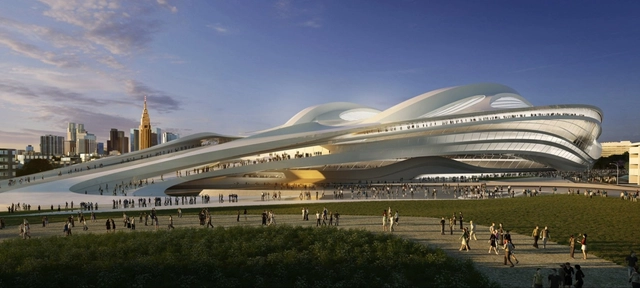
In mid-July, Japanese prime minister Shinzo Abe declared that ZHA's design for a New National stadium would not be completed and that plans for the Tokyo Olympics-Paralympics stadium would "start from zero." In response Zaha Hadid Architects has just issued a press release and a link to a 23-minute video presentation. The video, ZHA explains, "outline[s] in detail the unique design for the New National Stadium which has been developed over two years to be the most compact and efficient stadium for this very special location in Tokyo. Zaha Hadid Architects welcomes a new contractor bidding process for the New National Stadium to reduce costs and ensure value for money in terms of quality, durability and long-term sustainability."
Watch the video - or if you haven't got 23 minutes, read our synopsis - after the break.
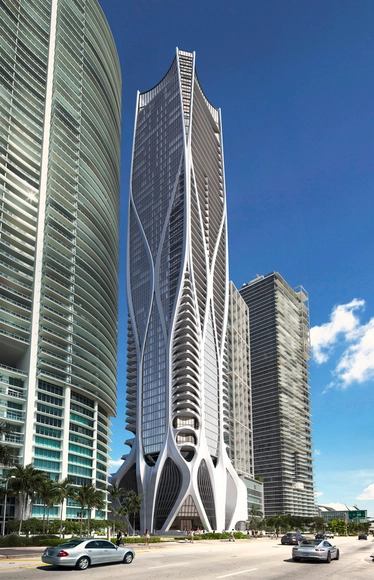
Following the ground breaking last December, construction has begun on Zaha Hadid’sOne Thousand Museum in Miami, with 9,500 cubic yards of concrete already poured. Designed in association with the local architect of record, O’Donnell Dannwolf Partners Architects, the residential skyscraper will rise 62 stories, comprising half- and full-floor residences, duplex townhomes, and a single duplex penthouse, overlooking Museum Park and Biscayne Bay at 1000 Biscayne Boulevard. As a burgeoning area, Museum Park—once called Bicentennial Park—is home to the Peréz Art Museum Miami and will soon be home to the Frost Museum of Science.
Clearly, brevity is not one of ZHA's strong suits, so for those who don't have 30-plus minutes to chew their way through both video and statement, the basics are as follows: the official reason given by the Japanese government for scrapping the stadium has been the rising costs of the design. ZHA have countered this complaint by saying that the rising costs are not a result of their design but of an uncompetitive tender process for the construction, and of skyrocketing construction prices across the whole of Tokyo. They add that by starting the project from scratch, Japan risks overshooting their 2020 deadline for the Olympic venue.
An extra complication is added by the widespread public dislike of the stadium's design, scale and location - most notably coming in the form of a petition led by Fumihiko Maki and Toyo Ito - which has caused some to speculate that Japan's Prime Minister Shinzo Abe is secretly bowing to political pressure. In response, ZHA's video emphasized the features of the design which were either required by the brief or an attempt to respond to the context, in an attempt to absolve themselves from blame.
However, with the decision to start anew now over a month old, the question remains: will ZHA's attempts to win back the project be enough? More importantly, should this campaign be taken seriously?
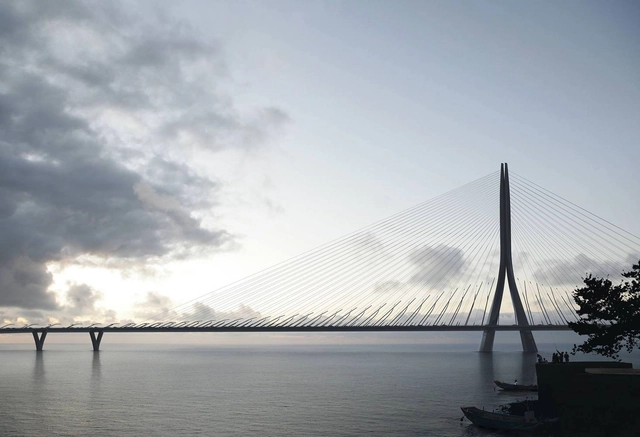
Zaha Hadid Architects has been announced as winner of the Danjiang Bridge International Competition in Taiwan. The new bridge was designed to "make a conspicuous landmark against the backdrop of Tamsui's famous sunset," says ZHA director Patrik Schumacher. It will be comprised of a cable-stayed bridge design that will minimize its "visual impact" by needing only one concrete structural mass to support its 920-meter-long span.
"The Danjiang Bridge will be the world’s longest single-tower, asymmetric cable-stayed bridge," said ZHA in a press release. Read on to see how the bridge will be constructed.
Following the news earlier this month that their design for Tokyo's 2022 Olympics stadium would be scrapped, Zaha Hadid Architects have released a comprehensive statement about the project's cancellation. Despite the many critics of the project's design - including Toyo Ito and Fumihiko Maki - it was ultimately the project's increasing costs that sparked its demise. However, the 1400-word statement from ZHA attempts to put distance between the firm and the claim by the Japan Sport Council (JSC) that much of the increase in costs was due to a complex design, instead arguing that "At every stage over the two years of development, the design and budget estimates were approved by the JSC" and adding a number of times that "ZHA worked proactively to reduce the estimated cost throughout."
Read on after the break to find out where ZHA pins the blame for the cost increases and to read the statement in full.
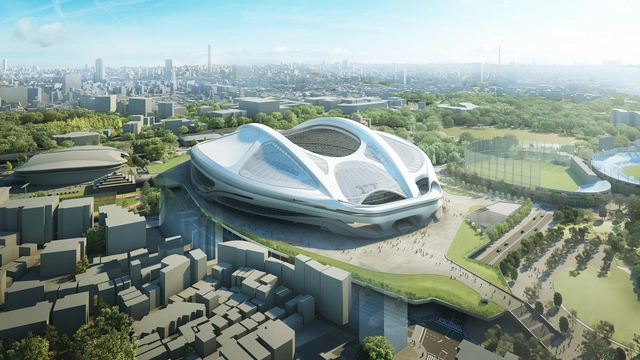
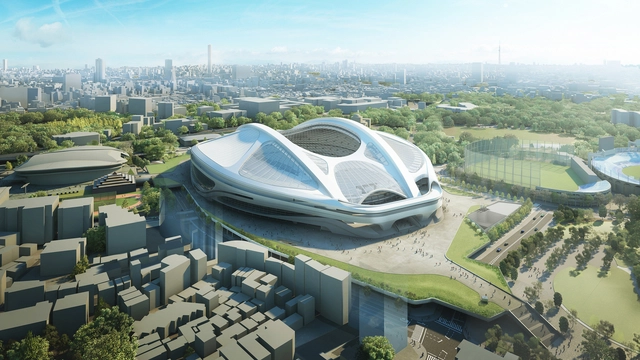
Following the news in 2012 that Zaha Hadid Architects had won a competition to design the 80,000-seat Tokyo National Stadium as a centerpiece for the 2020 Tokyo Olympics, Japan’s Prime Minister has announced that the plans are to be scrapped. Citing spiralling costs as a key reason, Shinzo Abe has declared that the stadium, which was set to replace the existing Kasumigaoka National Stadium, would not be completed in time for the 2019 Rugby World Cup nor the 2020 Olympic Games as originally planned.
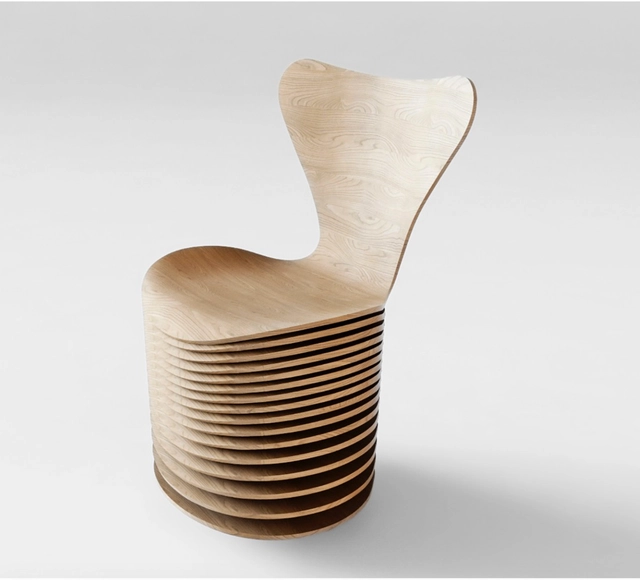
Bjarke Ingels Group. Image via www.fritzhansen.com
Sixty years ago Arne Jacobsen designed the Series 7 chair - the "Sevener." Unlike many other Jacobsen designs, the chair was not designed for a specific use, leaving it to interpretation. In light of the chair's 60th anniversary, Fritz Hansen commissioned "seven cool architects" - BIG, Zaha Hadid, Jean Nouvel, Snøhetta and three others - to recreate the chair. The results, after the break.
Despite harsh criticism for being too large and costly, Tokyo's 2020Zaha Hadid-designed National Stadium will be realized. As USA Today reports, the Japanese government has announced its decision to move forward with the design, saying any major modifications would lead to construction delays.
The 80,000-seat stadium has already undergone some design changes, due to backlash led by Pritzker laureatesToyo Ito and Fumihiko Maki; it's most recent design is said to be more "efficient, user-focussed, adaptable and sustainable." However controversy continues as the city and central government must now decide how to split the stadium's estimated $2 billion bill.
Malevich's Tektonik (1976-77). Image Courtesy of Zaha Hadid Architects
The first retrospective exhibition of her work in Russia, Zaha Hadid at The State Hermitage Museum provides unprecedented insight into the work of Zaha Hadid in a mid-career retrospective highlighting her exploration of the Russian Avant-garde at the beginning of her career, and the continuing influence of its core principles on her work today.
The exhibition, in the historic Nicolaevsky Hall of the Winter Palace, showcases many of the seminal paintings, drawings, models and design objects of Hadid’s forty-year repertoire; conveying the ingenuity and dynamism of her architectural projects in variety of media including film, photography and installations.
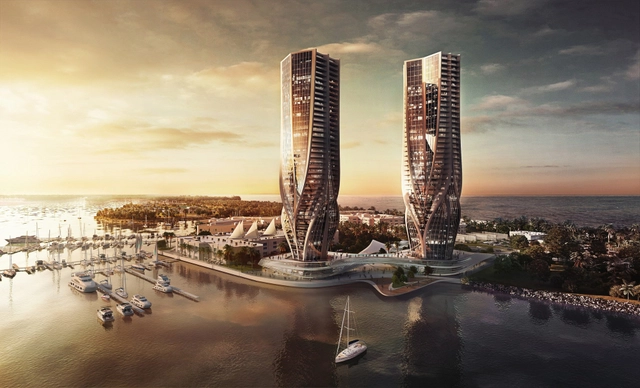
Zaha Hadid has unveiled plans for two "sculptural" towers and a new privately-owned cultural precinct at Mariner's Cove on Australia's Gold Coast. Commissioned by Sunland Group, the $600 million mixed-use project will include two 44-story residential towers, ground floor retail, a 69-suite boutique hotel and underground aquarium, along with an art gallery, museum and outdoor sculptural gardens.
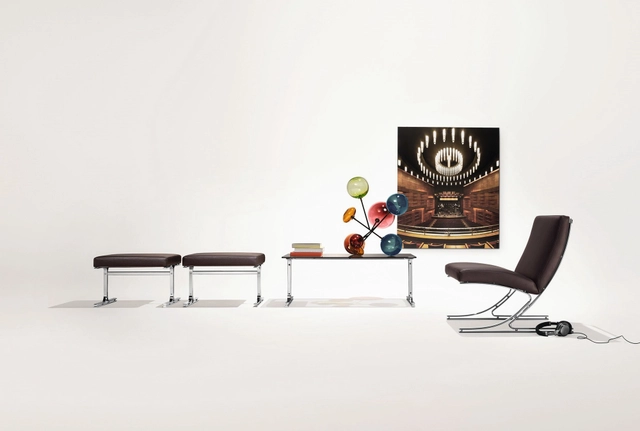
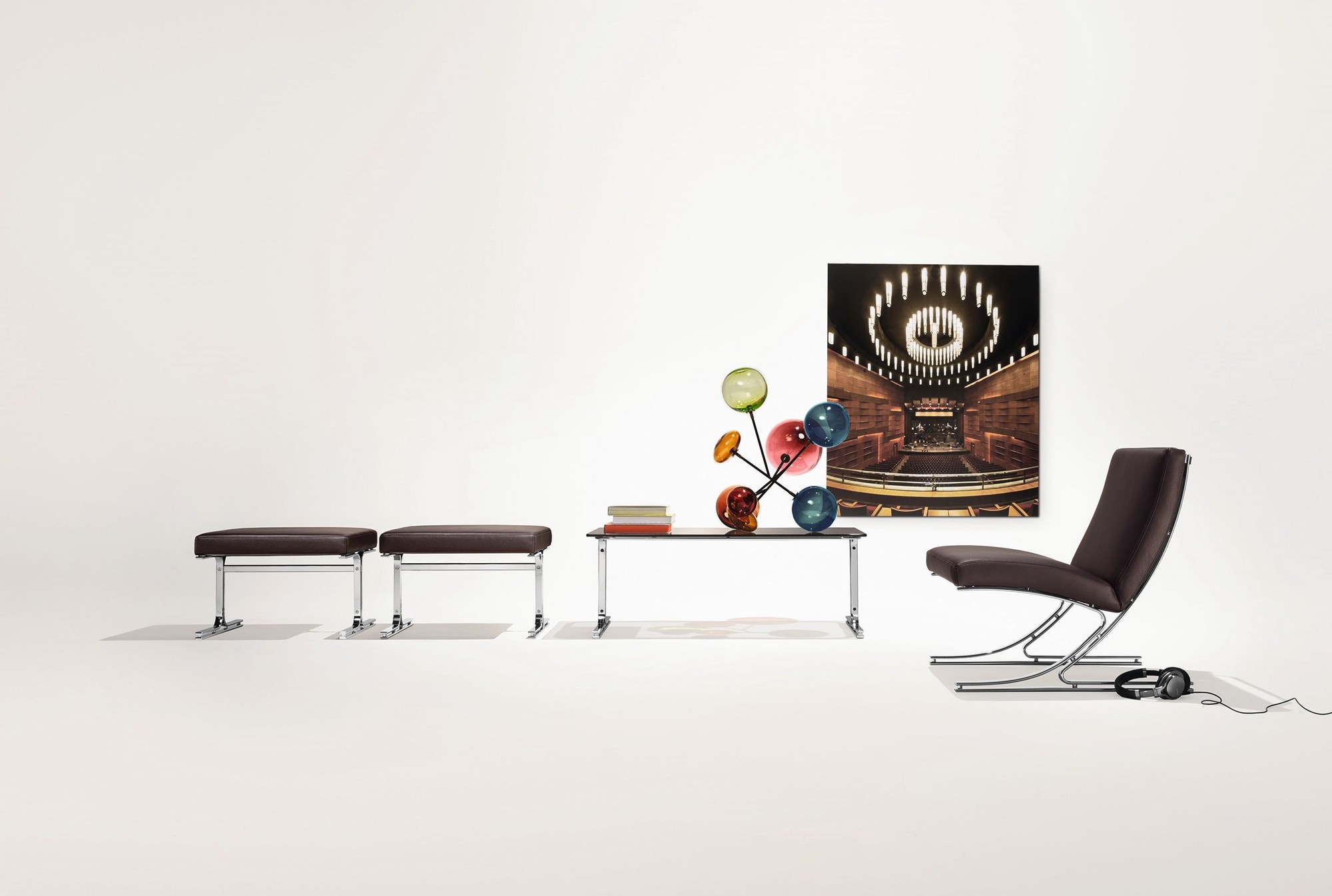
The 54th edition of Milan Design Week (also known as Salone del Mobile) recently came to a close. In celebration of its success, we have compiled a list of the most talked about architect-designed products showcased this year. Take a look after the break to see new products from Rem Koolhaas, Zaha Hadid, David Chipperfield, and more.
Schumacher says that critics "should perhaps slow down a bit in their (pre-)judgement and reflect on their role as mediators between the discourse of architecture and the interested public." In the 1,400 word post, he goes on to elaborate that so-called icons and the star system are inevitable results of this mediation, adding that "explanation rather than dismissal and substitution should be seen as the critics’ task."
Read on after the break for more highlights from Schumacher's argument
Crafted from pure silver and standing at 40-centimeters-tall, the Loa and Vesu vases by Zaha Hadid Architects are as bold and dynamic as the firm's architecture. In this fascinating video, watch Austrian silversmiths Wiener Silber Manufactur handcraft the ornamental vases in their Viennese studio using a combination of traditional and modern techniques. Designed by Zaha Hadid, Patrik Schumacher, and a team of four designers, the vases reference "the volcanic forces of expansion and compression, subtle fluctuations and distortions of ripples", and are both as functional as they are sculptural.
"I cannot, in whole conscience, recommend architecture as a profession for girls. I know some women who have done well at it, but the obstacles are so great that it takes an exceptional girl to make a go of it. If she insisted on becoming an architect, I would try to dissuade her. If then, she was still determined, I would give her my blessing–she could be that exceptional one." – Pietro Belluschi, FAIA from the 1955 New York Life Insurance Company brochure, “Should You Be an Architect?”
ADP Ingeniérie (ADPI) and Zaha Hadid Architects (ZHA) have unveiled designs for what will be the world’s largest airport passenger terminal - the Beijing New Airport Terminal Building. The Daxing scheme, based off the bid-winning planning concept by ADPI, hopes to alleviate traffic from Beijing’s existing Capital Airport, which is operating beyond its planned capacity.
“Initially accommodating 45 million passengers per year, the new terminal will be adaptable and sustainable, operating in many different configurations dependent on varying aircraft and passenger traffic throughout each day,” stated ZHA in a press release. “With an integrated multi-modal transport centre featuring direct links to local and national rail services including the Gaotie high speed rail, the new Daxing airport will be a key hub within Beijing’s growing transport network and a catalyst for the region’s economic development, including the city of Tianjin and Hebei Province.”
The current state of architectural design incorporates many contemporary ideas of what defines unique geometry. With the advent of strong computer software at the early 21st century, an expected level of experimentation has overtaken our profession and our academic realms to explore purposeful architecture through various techniques, delivering meaningful buildings that each exhibit a message of cultural relevancy.
These new movements are not distinct stylistic trends, but modes of approaching concept design. They often combine with each other, or with stylistic movements, to create complete designs. Outlined within this essay are five movements, each with varying degrees of success creating purposeful buildings: Diagramism, Neo-Brutalism, Revitism, Scriptism, and Subdivisionism.
A 176-pound (80 kilograms) chunk of concrete cladding has fallen from year-old Library and Learning Centre at the University of Economics Vienna. This, unfortunately, isn’t the first time the Zaha Hadid-designed structure has malfunctioned; last year, an “assembly error” was deemed the reason why a large piece of fiberglass-reinforced concrete crashed down in front of the building’s entrance.



.jpg?1440551337&format=webp&width=640&height=580)
.jpg?1440552361 "© Zaha Hadid Architects. Image by Methanoia")
.jpg?1440551737 "© Zaha Hadid Architects. Image by Methanoia")
.jpg?1440552179 "© Zaha Hadid Architects. Image by Methanoia")
.jpg?1440552139 "© Zaha Hadid Architects. Image by Methanoia")
.jpg?1440551337)
.jpg?1440680814&format=webp&width=640&height=580)
.jpg?1440680780 "© Zaha Hadid Architects. Image by Methanoia")
.jpg?1440680830 "© Zaha Hadid Architects. Image by Methanoia")
.jpg?1440680860 "© Zaha Hadid Architects. Image by Methanoia")
.jpg?1440680764 "© Zaha Hadid Architects. Image by Methanoia")
.jpg?1440680814)








.jpg?1423153388&format=webp&width=640&height=580)

