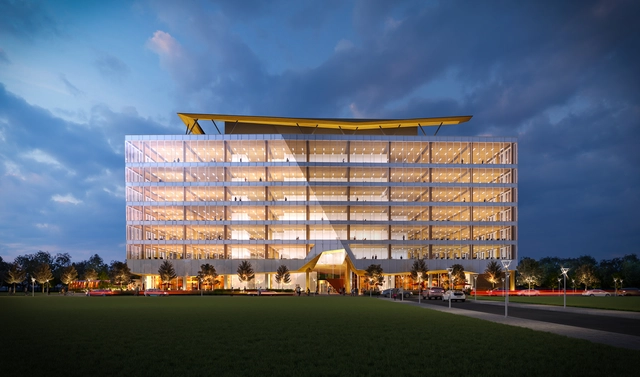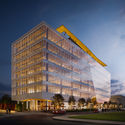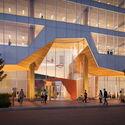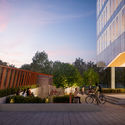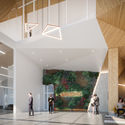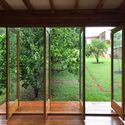
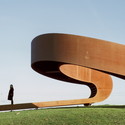
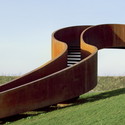
Australia’s largest engineered timber commercial building has opened in Brisbane, designed by Bates Smart. At 10 stories, and 45 meters in height, the “25 King” open plan office complex is the tallest timber structure in Australia, and “establishes new frontiers in the design of commercial buildings.
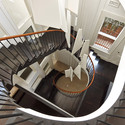
The scheme’s aesthetic is centered on the goal of “bringing a clear expression of its exposed timber structure to the building’s transparent envelope and promoting a warmer, more natural workplace environment of the future.”
The 'Long Lodge' proposal for residential cabins along the Appalachian Trail, recently named the Honor Award Winner of the 2018 Maine Mass Timber Design Competition, highlights simple yet creative ways to spotlight the possibilities and natural beauty of timber as a construction material. The winning four-person design team created a lodge that not only serves as a temporary living space but rather becomes a memorable spatial experience through the effects of the structural design choices.
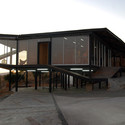
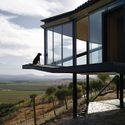
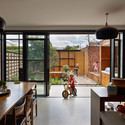
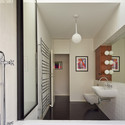
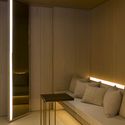
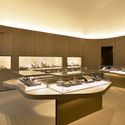
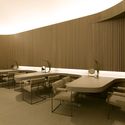
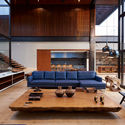
Wood is one of the oldest building materials used in architecture. Versatile, it can be used in structural solutions, coatings, partitions, fittings and, very often, in furniture. Another quality of the material is its sustainability - if well managed during planting, cutting, and treatment processes, it can be considered renewable and low carbon, adding value to the completed building.
Audain Art Museum (Whistler, British Columbia) / Patkau Architects
The design and construction community is revolutionizing the way we think about wood in construction. Growing pressure to reduce greenhouse gas emissions, coupled with a desire for aesthetically appealing designs, have resulted in a wood momentum that is being celebrated by architects and engineers around the world.
Greatly influenced by the modern movement--and in particular the presence of Le Corbusier--contemporary Indian architecture reflects a mixture of traditional and western references. Using mainly local materials such as brick, concrete and stone, Indian buildings stand out with their high visual impact and a assertive heaviness.
Because of its scarcity, wood is mostly used in details and finishes rather than as main structures. Some of the most successful architects in India have managed to gracefully balance the use of concrete and wood in a gentle gesture that evokes elegance and rough textures.
Here we present some of the best examples of contemporary Indian architecture that have used both concrete and wood in a harmonious and attractive way.
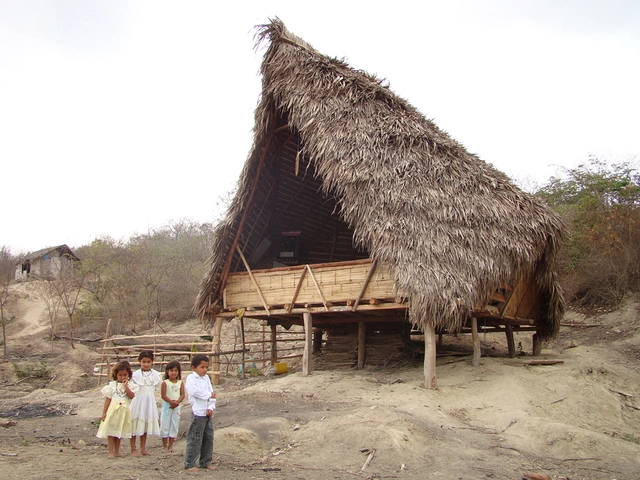
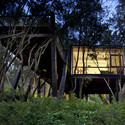
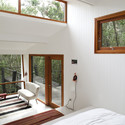
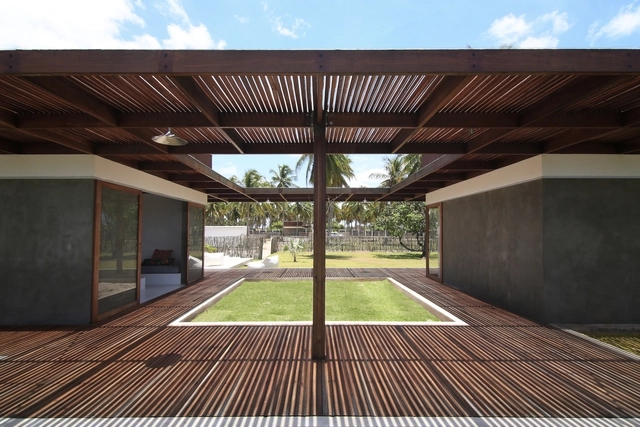
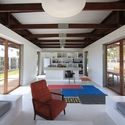
Wood has been an indispensable material in the history of civilization. Different regions from around the world have used it for specific climatic conditions. Mexico, as we have mentioned on several occasions, is an extensive country where different climates, resources and ways of life fit. Therefore the application of wood in architecture has been developed in a number of ways, from its structural use to produce roofs for Mayan huts to projects that seek to revive vernacular architecture.
While the handling of this material is difficult due to its specific detail management, it presents a multitude of benefits from its aesthetic appeal, air circulation, and even smell. Take a look at 16 Mexican projects that use wood in wondrous ways.
A table and a bench. A coffee table and a mirror? Perhaps it’s a stool and a cutting board.
This is not a furniture identity crisis, it’s Varia, a six-piece, mix-and-match furniture collection that can create over 25 pieces of furniture, saving money, space, and time. The creators, Jamie and Laura Kickstarted their project after Jamie found herself constantly moving from one place to another, and in need of versatile material instead of having old, unnecessary furniture pieces. With just a couple of lightweight metal frames and solid hardwood accessories, the collection is ideal for compact urban living and can be transformed into different furniture pieces in no time.
In brief, this is Varia, and it is pretty much anything you want it to be.
Varia's Kickstarter ends on August 31, support Jamie and Laura's project here.
Oregon has become the first state in the U.S. to allow timber buildings to rise higher than six stories without special consideration. The recent addendum to the state's building code is the result of Oregon’s statewide alternate method (SAM), a program that allows for alternate building techniques to be used after an advisory council has approved the “technical and scientific facts of the proposed alternate method.” The decision stands as a precedent for future construction across the United States.
MAD Architects have completed their restoration work on the Kiyotsu Gorge Tunnel in Japan’s Niigata prefecture, transforming the historic lookout tunnel into a trail of artistic spaces. The “Tunnel of Light” was opened as part of the 2018 Echigo-Tsumari Triennale, cutting through 750 meters of rock formations to offer a panoramic view across one of Japan’s great landscapes.
MAD’s scheme seeks to “transform points along the historic tunnel through the realization of several architectural spaces and artistic atmospheres." Inspired by the five elements of wood, earth, metal, fire, and water, the scheme explores the relationship between humans and nature, and "re-connects locals and visitors alike with the majestic beauty of the land."
Sold in standard 4 foot wide sheets since 1928, plywood has been a staple of conventional construction for nearly a century. Dimensionally strong, easily cut, lightweight and capable of creating an effective barrier, plywood and other engineered panels like OSB, particle board, and MDF is ubiquitous, particularly for their use as sheathing material in balloon and timber frame construction systems. Boats, airplanes and even automobile frames have historically been built out of plywood, predating (or replacing) steel, aluminum, and fiberglass. As a simple material capable of being manipulated and shaped in a wide variety of ways, sheet ply was also favored in furniture and architectural designs by modernists including Charles and Ray Eames, Eero Saarinen, Alvar Aalto, and Marcel Breuer.
MIT Mass Timber Design, a cross-disciplinary design workshop at the Massachusetts Institute of Technology, have developed a building prototype that aims to tackle the world’s growing energy crisis, “one of the biggest challenges of the 21st century.” Extensively using the wood-based building design and construction technology mass timber - a method growing in popularity within North America - the project utilizes the “efficiency, speed, precision and versatility” of prefabricated timber construction elements to realize a multi-functional, sustainable building. The longhouse typology, often one of the first permanent structures of a civilization, is a common across the world, but in adapting its construction to face modern-day issues, the team hopes to create a space that “builds upon this rich cultural icon.”
This year’s Maine Mass Timber Design Competition is intended to generate design ideas and test implementation of an emerging technology that hold specific promise for the state economy.
DESIGN ABSTRACT
Remote Mass Timber Wilderness Lodge - Open Ideas Competition
Maine Huts & Trails maintains a network of backcountry trails and remote wilderness lodges woven through the woods and mountains of western Maine that provide a unique opportunity to explore and discover this beautiful region. The goal of this year’s competition is to study and develop a design concepts for a new hut on a established backcountry site, as
The installation of wood laminate flooring may seem basic or even alien to what we do as architectural designers, but that should not be the case. When we understand the characteristics of the materials we specify and their assembly processes, we can design in a more efficient manner, adjusting our proposals to the requirements of the project.
With this in mind, below we present a step-by-step assembly process for EGGER's UNI fit wood laminate flooring—a type of flooring that sits above the slab and does not require the use of screws or glue. The elements of this system join together with "click" system, allowing the installed floor to sit freely over what is below it.
Imagine a sports stadium that could expand and contract with its fan base and team’s fortunes, one that could pick up and move to greener (and more lucrative) pastures.
Given team owners’ history of playing fans against each other, making stadiums more mobile isn’t likely to give pennant-wavers a sense of security, but the concept is an incredible breakthrough for building technology. Endlessly modular and made of ultralow-impact mass timber, this vision of low-carbon construction, conceived by engineered-wood manufacturer Rubner Holzbau and prefabricated stadium designer Bear Stadiums, could soon materialize at a soccer pitch near you.
Today we celebrate Canada Day by paying a special tribute to timber construction and Canada's close ties with wood--as evidenced by its maple tree leaf emblem.
Canadian architects have excelled in timber design and architecture at various scales. These 15 examples of Canadian timber projects and their drawings range from temporary installations to an 8-story high-rise wooden structure building. With sustainability and precision in the details, wood continues, and will always remain, one of our favorite building materials.
Brock Commons Tallwood House | Photo: KKLaw; Prefabricated panels aid in a project’s efficiency.
Wood as a building material is experiencing a bit of a renaissance. Though elemental and deceivingly simple, applied technology has transformed the building material. If you have questions about how to choose and use wood, Think Wood's mission is to provide access to the expanding pool of research and information.
In support of this year’s AIA theme, Blueprint for Better Cities, Think Wood is at the AIA Conference on Architecture to share research and resources on the benefits of wood and how it offers better solutions for the communities where we work, live and play. If you're at the conference be sure to stop by the Wood Pavilion at booth 757. If you can't make but are interested in learning more, read on to see the benefits of wood.
https://www.archdaily.com/896903/the-benefits-of-mass-timber-building-on-show-at-aia-conference-on-architecture-2018AD Editorial Team