1. ArchDaily
  2. Urbanism

Urbanism: The Latest Architecture and News

Towards a New Urbanism (Or Three)

Subscriber Access | 

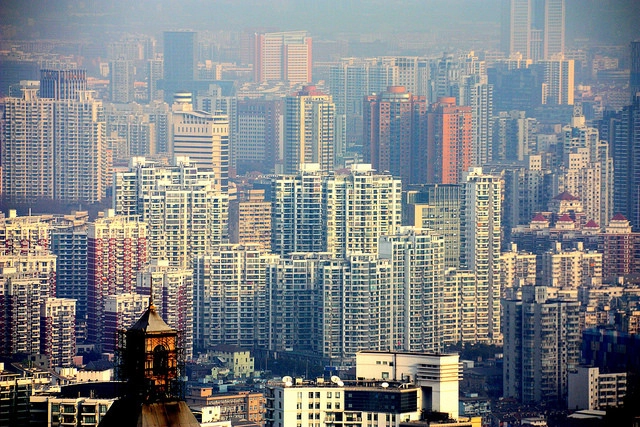
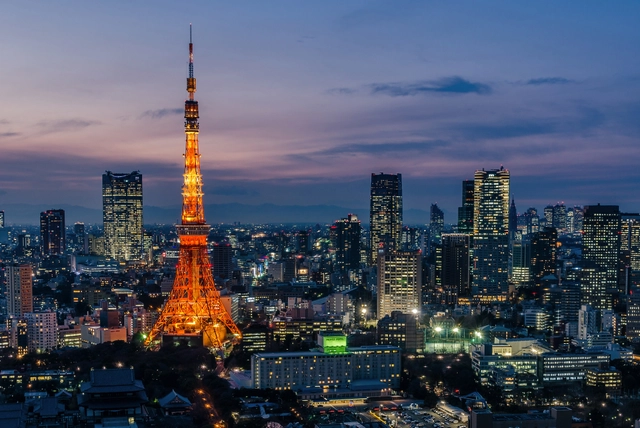
If you read a lot of articles about cities and urbanism, you're probably familiar with the words "half of the world's population now lives in cities." For a number of years, these words have been frequently used in the opening sentences of articles, hoping to convince readers in just a few seconds of the importance of the subject at hand. In fact, according to the World Health Organization these words are no longer even true: in 2014 the urban portion of the world's population has already reached 54%. In other words, every nine months the world adds enough new urbanites to fill a city the size of Tokyo, with an increase of nearly 300 million new urban dwellers since we reached the tipping-point in 2008.

The rise of cities has been so dramatic that UN Habitat has declared today, October 31st 2014, as the first annual World Cities Day.

Of course, all of this means that there has never been a better time to be an urbanist than right now. Or does it?
What Urbanists Can Learn From Low-Income Neighborhoods

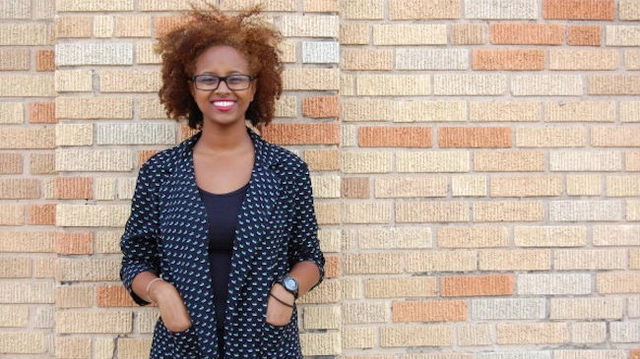
"For the most part, the way urbanists view black neighborhoods (and other low-income neighborhoods and communities of color) are as problems that need to be fixed. At the heart of what I want to say is what can we as urbanists learn from these neighborhoods?" So asks Sara Zewde, a landscape architecture student at Harvard's Graduate School of Design and this year's Landscape Architecture Foundation’s Olmsted Scholar, in a fascinating profile on Metropolis Magazine. Read more about Zewde and her work here.

Strelka Institute Compiles 41 Interviews on the Future of Urbanism

Subscriber Access | 

A collection of 41 interviews conducted by students at the Strelka Institute, entitled Future Urbanism, is now available online. The interviews feature architects, urban planners, sociologists, researchers, and other professionals from fields related to urban studies, emphasizing the Strelka Institute's mandate for interdisciplinary thinking. To take a look at the interviews, see here.

TED Talk: How Public Spaces Make Cities Work / Amanda Burden

Subscriber Access | 

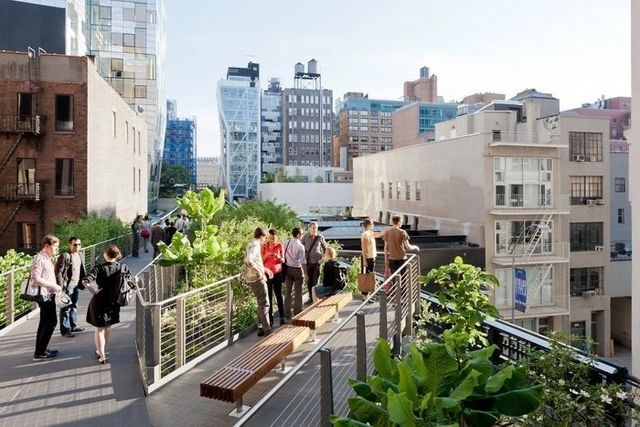
Amanda Burden, former animal behaviorist turned New York’s chief city planner, has discovered what makes cities desirable: great public spaces. During her time with the Bloomberg administration, Burden oversaw the fruition of the city’s most transformative public projects, including New York’s beloved High Line. In the video above, she reveals the many unexpected challenges of planning (and maintaining) parks people love, and why it is so important for cities to have great public spaces.

ELEMENTAL Proposes Pedestrian Path To Connect Districts of Santiago

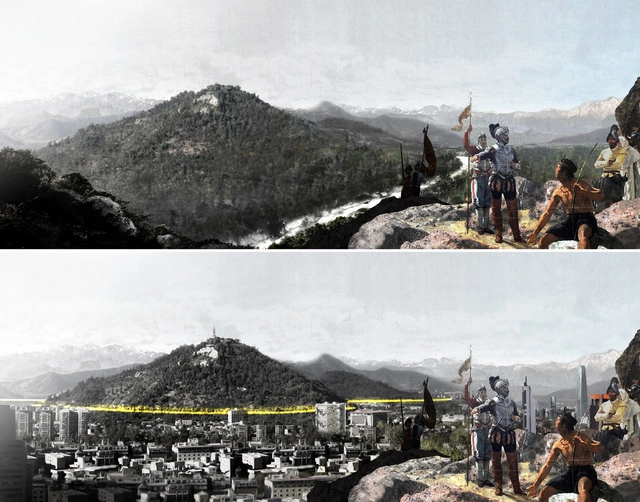
ELEMENTAL has given us details on a proposed 14.5 km pedestrian and bike path within Santiago, Chile that will run along the base of San Cristobal Hill and connect the city's many distinct communities. According to ELEMENTAL, the proposal - named "Metropolitan Promenade" - seeks to facilitate the use and quality of the city's public spaces.

The total project will cost about $16 million USD and will be constructed in two stages. The first is expected for March 2015 and will deal with 7.2 kilometers in the western sector of the park. The second stage, which should be ready in September 2015, will complete the following 7.3 kilometers in the eastern sector of the park.

Read the full architect's description, after the break.

ELEMENTAL Proposes Pedestrian Path To Connect Districts of Santiago - Image 2 of 4ELEMENTAL Proposes Pedestrian Path To Connect Districts of Santiago - Image 3 of 4ELEMENTAL Proposes Pedestrian Path To Connect Districts of Santiago - Image 4 of 4ELEMENTAL Proposes Pedestrian Path To Connect Districts of Santiago - Image 5 of 4ELEMENTAL Proposes Pedestrian Path To Connect Districts of Santiago - More Images+ 7

The Rise of the Poverty-Stricken Mega-City

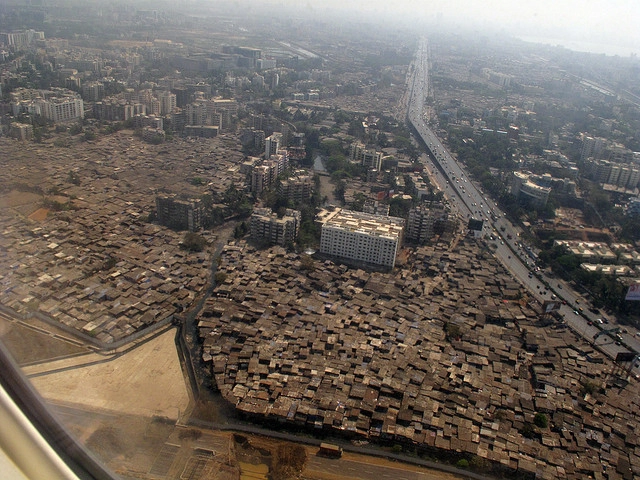
In this article on the Atlantic Cities, Richard Florida delves into recent research by Edward Glaeser, the author of Triumph of the City, which investigates the emergence in recent decades of mega-cities in developing nations. Though cities have long been connected to prosperity he points out that in these new cities, residents remain poor. The answer it seems is linked to our globalized economy, as well as the under prepared governments in these countries. However Glaeser and Florida don't see this as a reason for panic, or to abandon urbanization, but rather to ensure that urbanization is supported more effectively by government. You can read the full article here.

Could Facebook Help Us Understand Urban Migration?

According to this article on Quartz, Facebook is now so widely-used (providing readily available information about the hometowns of millions - or even billions - of people) that it can help researchers analyze migration patterns and trends. Find out more here.

Design: A Long Term Preventative Medicine

The American Institute of Architects (AIA) and MIT’s Center for Advanced Urbanism has produced a new report examining urban health in eight of the USA’s largest cities, which has been translated into a collection of meaningful findings for architects, designers, and urban planners. With more than half of the world’s population living in urban areas - a statistic which is projected to grow to 70% by 2050 - the report hinges around the theory that “massive urbanization can negatively affect human and environmental health in unique ways” and that, in many cases, these affects can be addressed by architects and designers by the way we create within and build upon our cities.

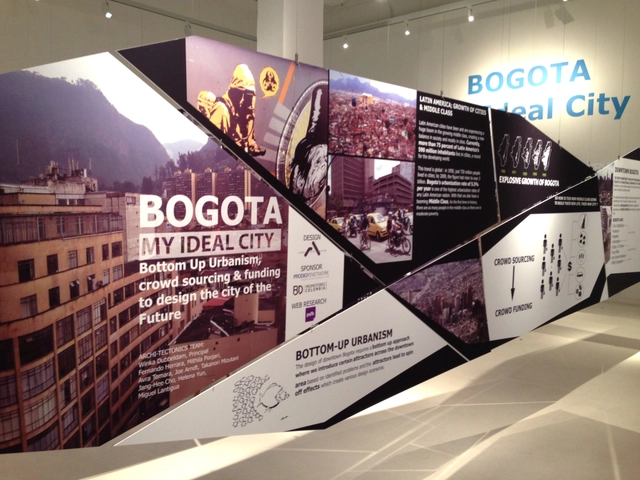
Winka Dubbeldam: "My Ideal City" of the Future

Subscriber Access | 

Winka Dubbeldam believes there is power in the people. 

As a public intellectual, she has invested her efforts in researching the concept of "bottom-up" and "systems" design at academic institutions like Columbia, Harvard and the University of Pennsylvania - where she now serves as chair of the department of architecture. As principal of the New York-based firm, Archi-Tectonics, she demonstrates how these concepts work in both theory and practice.

In between the consistent cadence of client meetings and academic functions, Winka has been vocal about the future of cities, traveling overseas and giving TED Talks. Her most recent project revolves around a bilingual website, Mi Ciudad Ideal (My Ideal City), which has led her to Bogotá, Colombia where she is leading efforts to crowdsource and document the opinions of hundreds of thousands of urban residents in hopes to better understand what makes the "Ideal City." ArchDaily recently caught up with Winka to discuss the project's foundation and how it works.

What Will Be Mandela’s Spatial Legacy?

Subscriber Access | 
What Will Be Mandela’s Spatial Legacy? - Featured Image
Rendering for Greenpoint Stadium. Image Courtesy of http://bensnewgreenpointstadium.webs.com/

From the window of an airplane it's all too plain that apartheid has been deeply written into the South African landscape. Even the smallest town appears as two distinct towns. One features a spacious grid of tree-lined streets and comfortable houses surrounded by lawns. The other, its shriveled twin, some distance away but connected by a well-traveled road, consists of a much tighter grid of dirt roads lined with shacks. Trees are a rarity, lawns non-existent. This doubling pattern appears no matter the size of the population: here, the white town; over there, the black township. -- Lisa Findley, “Red & Gold: A Tale of Two Apartheid Museums.”

There are few systems of government that relied so heavily upon the delineations of space than the Apartheid government of South Africa (1948-1994). Aggressively wielding theories of Modernism and racial superiority, South Africa’s urban planners didn’t just enforce Apartheid, they embedded it into every city - making it a daily, degrading experience for South Africa’s marginalized citizens.

When Nelson Mandela and his party, the African National Congress, were democratically elected to power in 1994, they recognized that one of the most important ways of diminishing Apartheid’s legacy would be spatial: to integrate the white towns and the black townships, and revive those “shriveled twin[s].”

As we remember Mandela - undoubtedly the most important man in South Africa’s history - and ponder his legacy, we must also consider his spatial legacy. It is in the physical, spatial dimensions of South Africa’s towns and cities that we can truly see Apartheid’s endurance, and consider: to what extent have Mandela’s words of reconciliation and righteous integration, truly been given form?

SHoP Architects Selected for Design of Iconic Site in Downtown Detroit

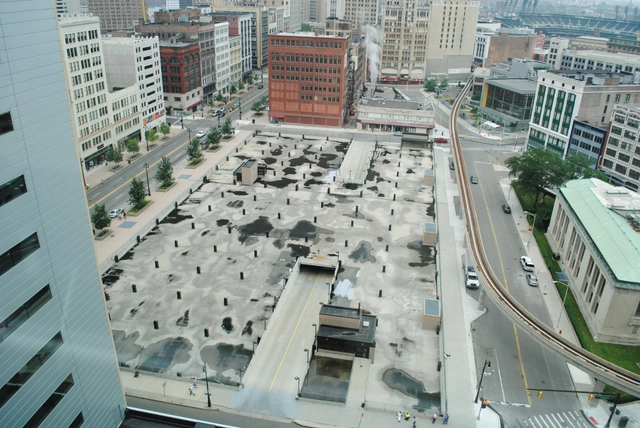
One of Detroit's most prominent vacant sites is slated to become one of its most iconic buildings. SHoP Architects will partner with Detroit-based Hamilton Anderson Associates to transform the site formerly occupied by Hudson's Department Store. Located at Grand River and Gratiot in the city's Central Business District, the two-acre site has remained a scar in the urban landscape since the implosion of the Hudson's building in 1998.

HAO Makes Counter-Proposal To "Save" Sugar Factory from Development in Brooklyn

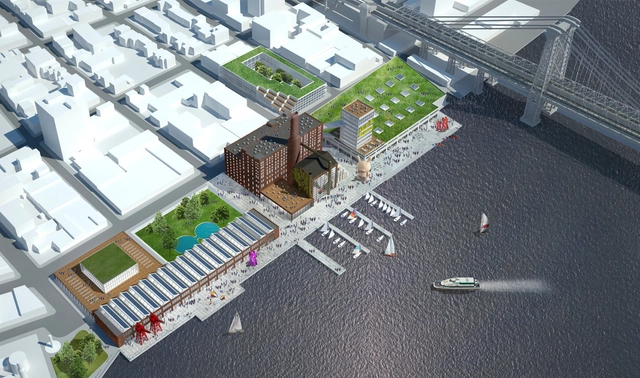
HAO, together with community group, Williamsburg Independent People, hope to save the historic Domino Sugar Factory site and halt the current masterplan by SHoP Architects which proposes an additional 2,200 luxury apartments along the East River waterfront in Brooklyn, New York.

HAO's counter proposal seeks to adaptively reuse the existing factory buildings, including the iconic Civil War-era Domino Sugar Refinery — which has defiantly held its ground amidst heavy redevelopment in surrounding areas. Not unlike SHoP's proposal, HAO aims to regenerate these spaces into a "world-class cultural destination" that combines public and private programs.

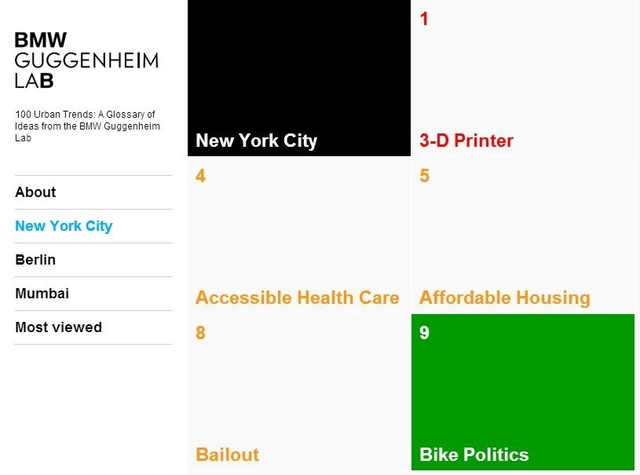
100 Urban Trends: A Glossary of Ideas

The BMW Guggenheim Lab, a mobile think-tank focused on the study of urban life, has returned to New York City for its homecoming exhibition currently on view at the Guggenheim Museum till January 5, 2014. After two years of research and touring Berlin and Mumbai, the lab aims to present major urban themes in art, architecture, education, science, sustainability and technology."100 Urban Trends: A Glossary of Ideas" is a compilation of definitions of the most pressing issues in urban centers today, contextualized to reflect how different cities interpret them. Architects, planners and students take note: From street facades to bailouts, gentrification to trash mapping, this resource archives years of discussion into one user-friendly interface. Explore the glossary, here.

Höweler + Yoon Architecture and Audi to Develop Pilot Project for BosWash: Shareway 2030

Last year interdisciplinary architecture firm Höweler + Yoon Architecture were announced the winners of the Audi Urban Future Award for the project Boswash:Shareway 2030. The City Dossier in Boston, held this May, was organized as a series of workshops between Höweler + Yoon Architecture and Audi experts in developing steps to realize aspects of the Boswash: Shareway vision. Part research project, part feasibility study, part road map to the future of mobility - the focus of the workshops is to propose a pilot project that can be tested in the proposed region of Boston - Washington.

We featured the project last year as it highlights how the landscape of urban development has changed. The focus of "Shareway" is the string of high-density metropolitan areas, their suburbs and ex-urbs along I-95 between Boston, MA and Washington, DC. The I-95 corridor caters to some fifty million inhabitants, many of whom commute into metropolitan areas for work. Mobility and transportation are critical to the economic vitality of these urban areas; "Shareway" proposes an intentionally re-engineered "highly orchestrated and deliberately produced platform from which we might imagine alternate paths, different trajectories, or new cultural dreams" whereby imagining an "alternate life for the road" is imagining a new American Dream.

Read on for more on the progress of this project after the break.

Strelka Talks: Architecture and Community / Reinier de Graaf

Subscriber Access | 

"The Community" might be the most frequently used term over the last 50 years of Architectural and Urban discourse. For decades, "the community" has served as a legitimization for anything from Team X to New Urbanism, from Celebration to "vancouverism". But what is "the community"? Where should we look for the proper definition? How did communities appear in the past and how do they form today? Can 'the community" influence the design of its own space, territoiry or context? If yes, what could be the relationship between the community and architecture in the future?

In his Strelka talk Reinier de Graaf is trying to answer these and other, even more complex questions.

Via the Strelka Institute.

2013 MAPEO Workshop Hopes to Explore Experimental Mapping Techniques

A new Kickstarter campaign is hoping to raise a goal of $3,500 to fund the second annual MAPEO Borderless Workshop - a workshop that focuses on community mapping and brings diverse people and minds together to think about cities within the US-Mexican border region. By rallying individuals from different disciplines with different backgrounds, MAPEO aims to "learn more about our own cities, evaluate urban challenges and come up with ideas on how to improve our life in cities in a very quick and meaningful exercise."

A Clearer Definition for Smarter Smart Growth

Subscriber Access | 

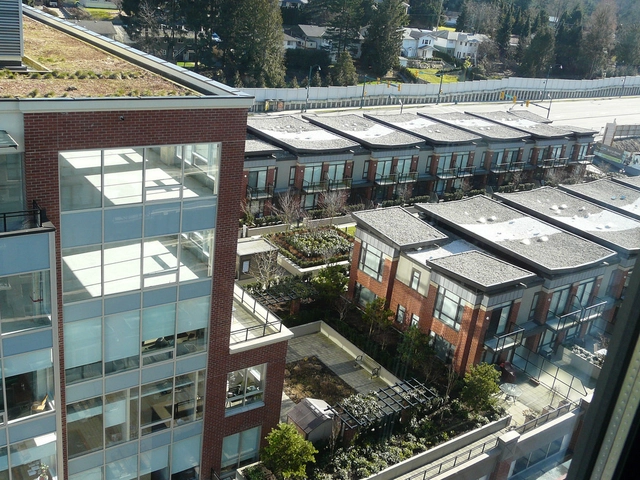
As cities become more conscious of their environmental and social impact, smart growth has become a ubiquitous umbrella term for a slew of principles to which designers and planners are encouraged to adhere. NewUrbanism.org has distributed 10 points that serve as guides to development that are similar to both AIA's Local Leaders: Healthier Communities through Design and New York City's Active Design Guidelines: Promoting Physical Activity and Health in Design. Planners all appear to be on the same page in regards to the nature of future development. But as Brittany Leigh Foster of Renew Lehigh Valley points out, these points tend to be vague; they tell us "what" but they do not tell us "how". 10 Rules for Smarter Smart Growth by Bill Adams of UrbDeZine San Diego enumerates how to achieve the various design goals and principles that these various guides encourage.

Follow us after the break for more.

The Debate Over Making It Right in the Lower Ninth Ward

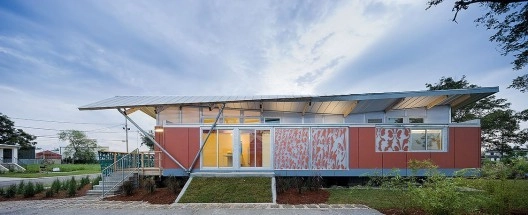
Ever since the New Republic published Lydia DePillis's piece entitled "If you Rebuild it, They Might Not Come" - a criticism of the progress of Brad Pitt's Make It Right Foundation - numerous blogs and journals have been in a uproar, defending Make It Right's efforts at rebuilding the vastly devastated Lower Ninth Ward and presenting a much more forgiving perspective on the progress of the neighborhood since the engineering disaster that exacerbated the effects of Hurricane Katrina in 2005. To date, 86 LEED Platinum homes have been designed and constructed by world-renowned architects including Frank Gehry and Morphosis, at a cost of approximately $24 million. Make It Right has promised to build up to 150 such homes, but DePillis's article points out how amenities in the neighborhood are low and how the number of residents returning to the neighborhood is dwindling. Make It Right has made a commitment and the debate that ensues questions whether it is going far enough in delivering its promise to rebuilding community.

Find out more after the break.