City of the Future is a bi-weekly podcast from Sidewalk Labs that explores ideas and innovations that will transform cities.
In the fourth episode from season 2, hosts Eric Jaffe and Vanessa Quirk discuss the future of electrification with Gretchen Bakke, author of The Grid: The Fraying Wires Between Americans and Our Energy Future, and Sidewalk Labs’ director of sustainability Charlotte Matthews.
City of the Future is a bi-weekly podcast from Sidewalk Labs that explores ideas and innovations that will transform cities.
In the third episode from season 2, hosts Eric Jaffe and Vanessa Quirk discuss the future of mobility in cities and share ideas that would make it way easier to get around without owning a car. In the podcast, author Horace Dediu talks about micro-mobility; TriMet's Bibiana McHugh tells the story behind GTFS and the OpenTrip Planner; MaaS Global CEO Sampo Hietanen explains the concept of Mobility as a Service (MaaS); and Sidewalk Labs' Corinna Li explains what Mobility on Demand could be like in the city of the future.
City of the Future is a bi-weekly podcast from Sidewalk Labs that explores ideas and innovations that will transform cities.
In the second episode from season 2, hosts Eric Jaffe and Vanessa Quirk discuss the future of retail with author Mark Pilkington, social entrepreneur Sarah Filley, Sidewalk Labs’ Director of Development Carrie Jackson, and others.
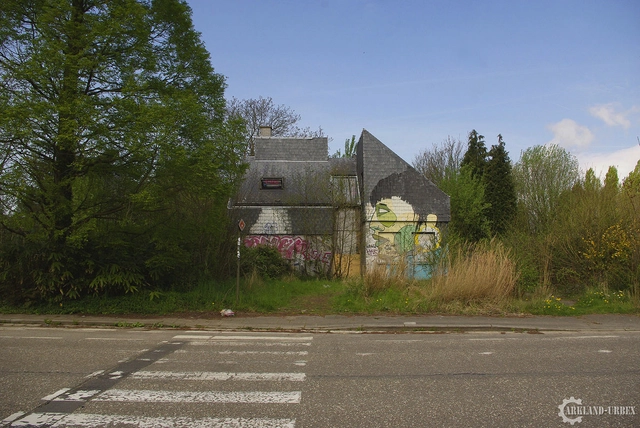
Street art has long surpassed mere trend to become an integral part of cities' cultural identities. What was once considered vandalism is now not only accepted but encouraged. The works of once-prosecuted artists such as Banksy and Shepard Fairey are now collector's items; murals can cost anywhere from $1,000 to $20,000 or more. Through their works, artists may even have the power to save cities.
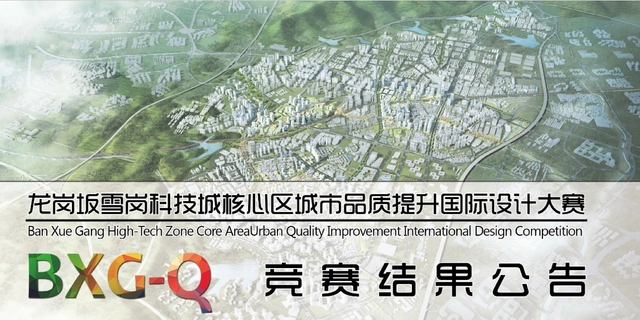
Starting preparation from June 2017, Ban Xue Gang High-Tech Zone Core Area Urban Quality Improvement International Design Competition has generated 8 superior plans of 4 competition programs initially on May 2018.
This competition is an important measure to improve the quality of Ban Xue Gang High-Tech city in the future, not only requiring the efforts of the government and professionals, but also the support and participation of the society and the public. The organizer has widely collected opinions and suggestions of the public and relevant government departments on the 8 shortlisted plans by the online questionnaire and convening consultation meetings. And the calibration meeting was held on October 31, 2018, and officially confirmed the first and second winners of each competition program. The results of the competition and related matters are announced as follows:
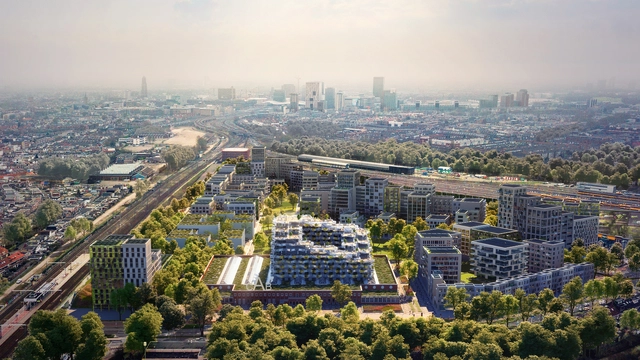
That’s the goal, at least. Mecanoo has released designs for a large-scale development in Utrecht inspired by “blue zone” regions - areas where residents tend live atypically long and healthy lives. Currently there are only five recognized blue zones worldwide: Sardinia, Nicoya, Loma Linda, Okinawa, and Ikaria.
https://www.archdaily.com/898134/will-mecanoos-blue-district-in-utrecht-promote-a-generation-of-urban-centenariansKatherine Allen
OMA has released updated images of their Feyenoord City masterplan after reaching initial city approval in 2016. Developed for the Feyenoord football club in Rotterdam, the project comprises a mixed-use district and a new 63,000 seat stadium along the River Maas.
https://www.archdaily.com/897920/oma-releases-updated-images-for-feyenoord-city-masterplanKatherine Allen
You can’t define modern civilization without mentioning its cities. These urban settlements vary in culture, size and specialty, with certain areas becoming more significant throughout the development of a region. Historically, the size or population of a settlement was a general indicator of its importance—the bigger city, the more power it yields—however, with the large rural-to-urban migration of the last century, it has become harder to define what makes a city important. There are many types of urban landscapes, and for architects and planners it is vital to efficiently categorize settlement types in order to successfully develop designs and city plans. The following list provides four key definitions that have emerged in the last century.
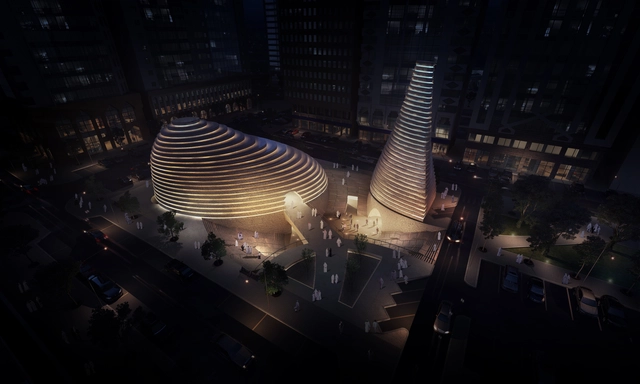
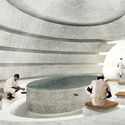
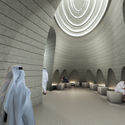
The Dubai-based firm, X-Architects, have found inspiration in the cultural and architectural heritage of Islam for their new design. The Revelation Mosque, a +2500 square meter project, aims to create a new "heart of the neighborhood" in Abu Dhabi, UAE. In creating a generous urban void among a towering context, the proposal offers an immersive escape from everyday life, where the public (regardless of religion) can gather, communicate, and interact with one another.
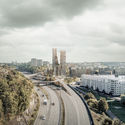
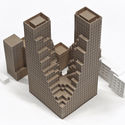
Kjellander Sjöberg Architects have won the competition for Nacka Port, a new sustainable and dynamic urban block. The award-winning architecture firm, which is one of the leading architectural offices in Scandinavia will build the project in an area between Nacka and Stockholm, Sweden.
Out of the three architecture offices who were invited to compete, the latter being held in discourse with the Nacka Municipality and Architects Sweden, Kjellander Sjöberg’s proposal contributes to a “vibrant urban context with an inviting and varied program."
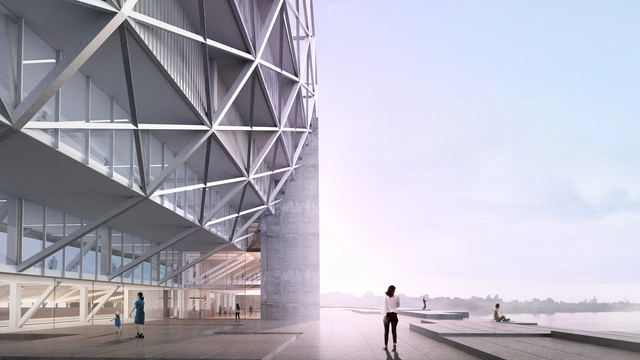
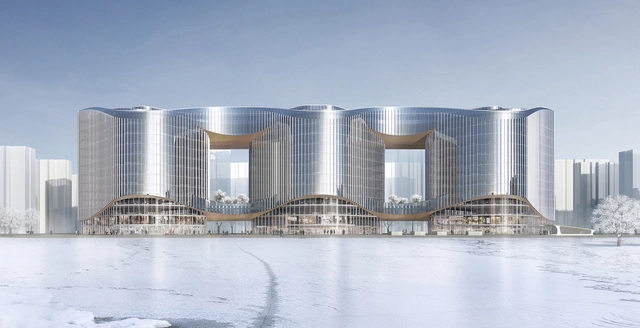
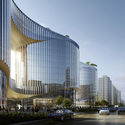
The internationally recognized architecture firm Aedas has unveiled their design for the Zhenghong Property Air Harbour Office Project. The sprawling and interconnected 196 foot-tall three-tower complex is proposed for the city of Zhengzhou, the capital of the Henan Province in central China—one of the regions' largest transportation hubs. Occupying a relatively narrow site, the towers are woven together by a rhythmic glass facade inspired by the formal qualities of the winding Yellow River.
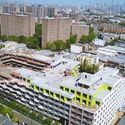
ODA New York’s design for Bushwick II, a high-end residential complex on the former site of Brooklyn’s Rheingold Brewery, is coming to life in the fast-growing neighborhood of Bushwick, New York. Developed by All Year Management, 123 Melrose is already being clad. Meanwhile, Rabksy Group’s development, 10 Montieth, recently topped out.
Together, the projects will cover three full city blocks, totaling 1.35 million gross square feet. Bushwick II will be the largest housing increase this neighborhood of Brooklyn has ever seen.







.jpg?1529231453 "© <a href='https://commons.wikimedia.org/wiki/File:Lujiazui,_Pudong,_Shanghai,_China_-_panoramio_(11).jpg'>Haluk Comertel</a> licensed under <a href='https://creativecommons.org/licenses/by/3.0/deed.en'>CC BY 3.0</a>")








_Bloomimages_7.jpg?1505315925 "Courtesy of ODA New York")
_Bloomimages_8.jpg?1505315959 "Courtesy of ODA New York")
_Bloomimages_1.jpg?1505315031 "Courtesy of ODA New York")