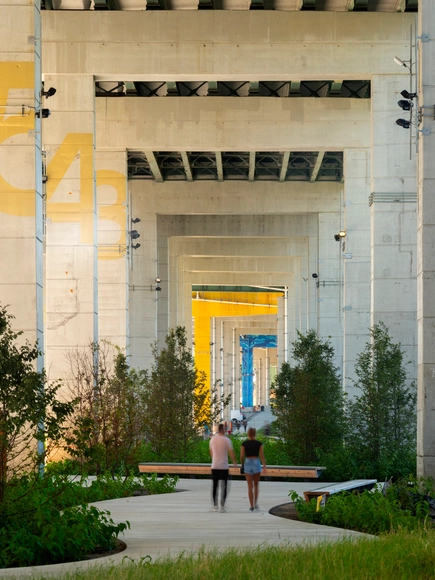
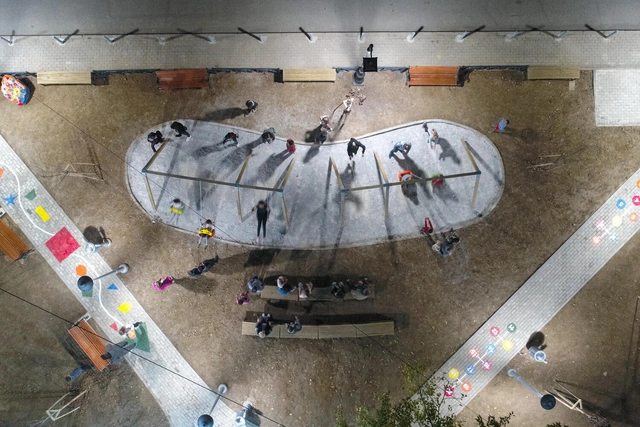
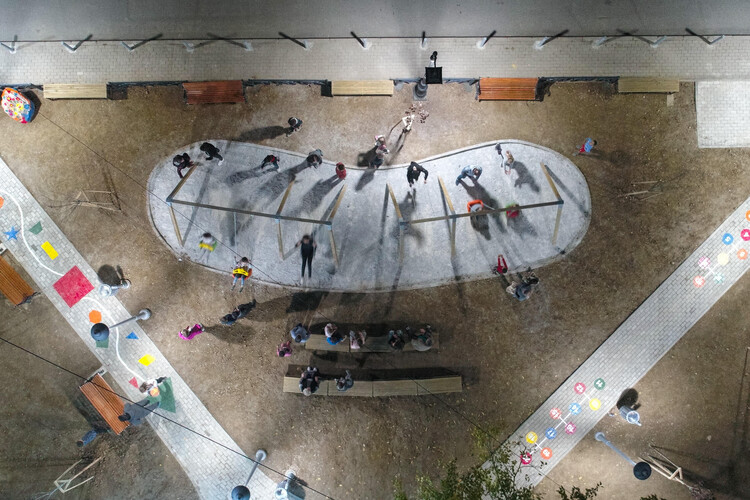
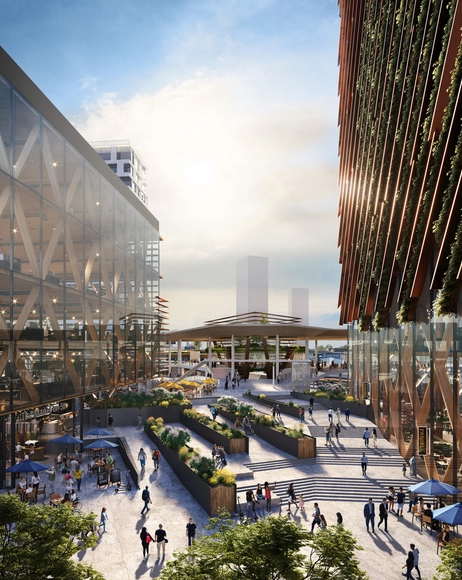
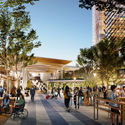
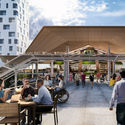
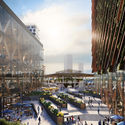
"Deck parks are increasingly in vogue in the Southwest’s downtown cores but aren’t a good fit for El Paso," writes Sito Negron. Recently a lot of cities around the world have been rethinking urban spaces dedicated to transportation, introducing public areas over highways while expanding the vehicular realm. In this week's reprint from the Architect's Newspaper, the author explores the limits of this trend and questions its implementation in some cases.
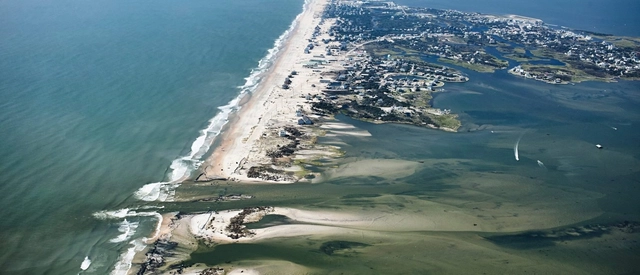
In this week's reprint, Martin C. Pedersen talks with John Englander, author of Moving to Higher Ground: Rising Sea Level and the Path Forward, about the “unstoppable” sea-level rise. The article explores the importance of planning for this challenge right away. In fact, "we have some time, but not all the time in the world" states John Englander.
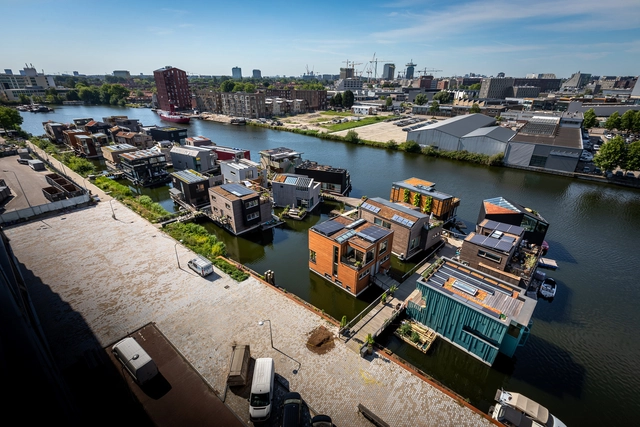
Schoonschip is Amsterdam’s innovative circular neighbourhood, a community-driven project set to become a prototype for floating urban developments. With a masterplan designed by Dutch architecture practice Space&Matter, the project comprises 46 dwellings across 30 water plots connected by a jetty and features decentralised and sustainable energy, water and waste systems. With the last of its buildings completed this year, the development showcases a valid adaptation strategy in the face of climate change and rising sea levels.
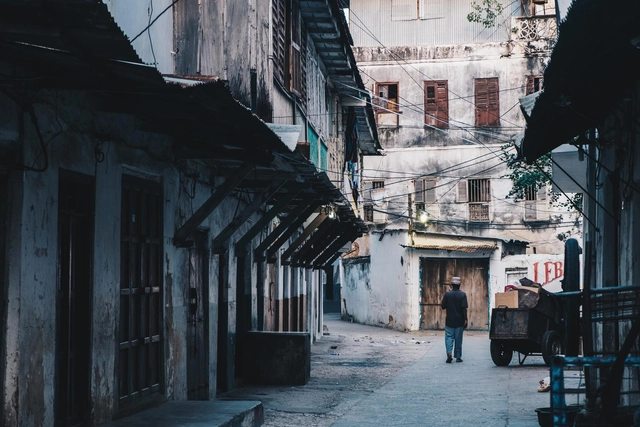
The world of travelling is a multifaceted one. There are the everyday trips one takes for work or school, commuting to a set location during the week, usually within the confines of a city. There are the longer trips too, the trips which usually involve getting into an aeroplane to visit someplace a bit farther from where the traveller usually resides. These trips are frequently done for business purposes, but for those who have the means to afford it, these trips are undertaken for learning and leisure – where the traveller can be defined as a “tourist”.
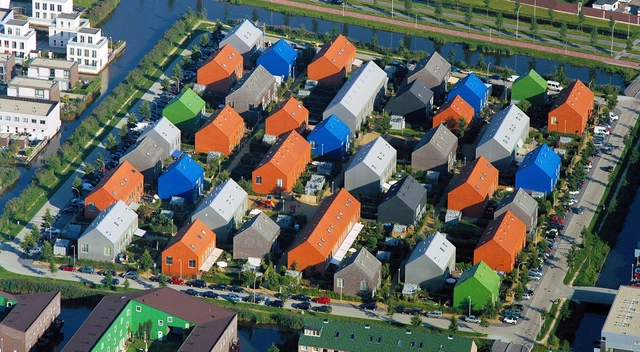
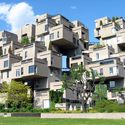
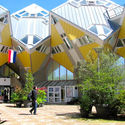
In this week's reprint, author Walter Jaegerhaus explores the U.S. housing challenge, drawing a timeline of the evolution of different architectural solutions, from around the world. Seeking to "inspire designers today to create new housing options", and hoping "that the U.S can again embrace its experimental origins and try out new ideas and methods", the article highlights examples from Europe and the Americas.
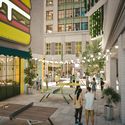
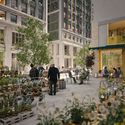
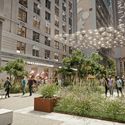
ODA has just launched its latest project, an urban vision for the future of the streets of New York. The project titled Beyond the street- Reimagining the flower district proposes to transform a city block from the outside in, altering the pedestrian experience and introducing new zoning changes that would give landowners air rights or tax credits in exchange for handing over their inner courtyards to be transformed into public/private spaces.
ArchDaily had the chance to talk with Eran Chen, founding principal and executive director of ODA, about the firm’s very special proposal that seeks to improve our urban environment. Check the interview and watch ODA’s explanatory movie.
MVRDV has revealed the design of "De Oosterlingen", a series of seven sustainable residential buildings on Amsterdam’s Oostenburg Island. The proposed buildings are distributed in a 'barcode' composition, forming an apparent unified design but with an animated skyline and unique characteristics such as varying roof shapes and façades of wood, glass, recycled brick, and bio-based composite.
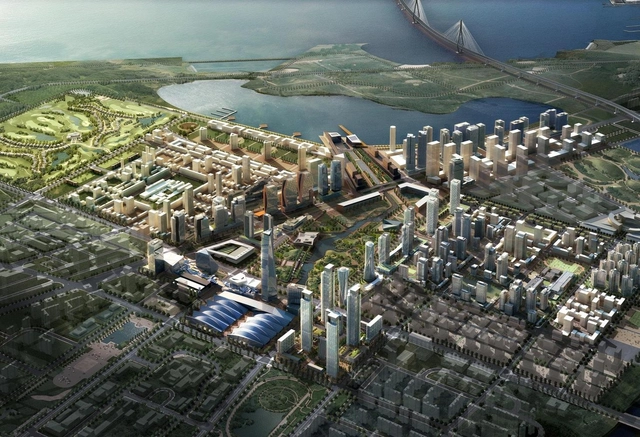
What does it take to build a smart city from nothing? Or maybe the better question is, what does it take to build a smart city from nothing and make it successful? For over a decade, architects and urban planners worked hand in hand to create Songdo, a brand new business district that sought to represent South Korean advancements in technology and infrastructure. Songdo was once a model for how we would live in cities of the future- but now, the reality of what this smart city quickly became has us rethinking how the combination of technology and community might have gone wrong.
For this month, The Dirt and author Jared Green share with us a study about urban heat islands, exploring new approaches that have been designed to both reduce urban temperatures and help communities adapt to a hotter world, In three cities: New York City, Copenhagen, and Abu Dhabi.
https://www.archdaily.com/962913/urban-heat-islands-are-increasingly-dangerous-but-planners-and-designers-have-solutionsJared Green
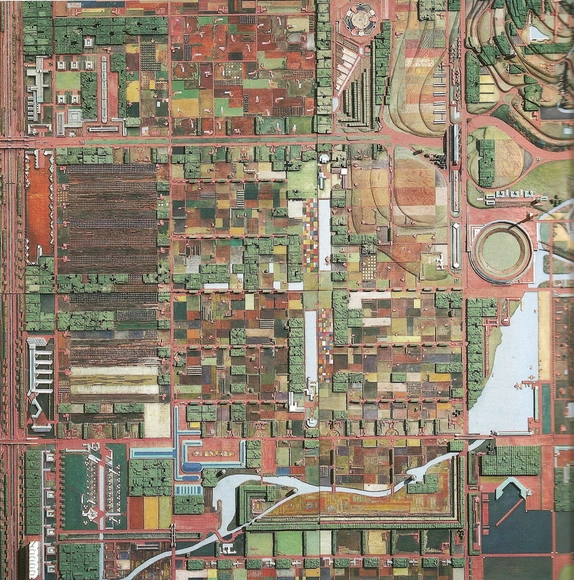
Broadacre City by Frank Lloyd Wright. Image Courtesy of Juan Miró
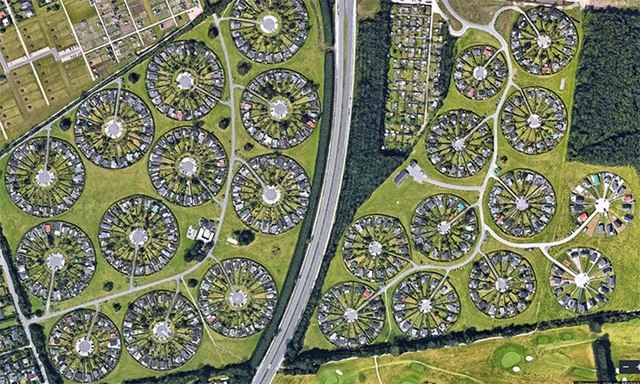
Juan Miró, co-founder of Miró Rivera Architects reflects in an opinion piece on the value of American cities. Stating that "when we idealize cities like Copenhagen, we risk losing focus of the fundamental historical differences between the urban trajectories of European and American cities", the architect and educator draws a timeline of events and urban transformations, in order to explain why it would be more relevant to look on the inside when planning U.S cities, rather than taking examples from the outside.
Cities are so deeply rooted in the history of mankind that we hardly ask ourselves why we live in them or what the reason is for us to group together in urban settlements. Ciro Pirondi, Brazilian architect, points out that we live in cities because we like to have someone to talk to, while Paulo Mendes da Rocha classifies the city as “the supreme work of architecture.” The city is the world that man builds for himself. These are immense collective constructions, palimpsests, and collages of stories, achievements, and losses.
Earth has been mostly urban since 2007. By 2050, the percentage of people living in cities should reach 70%. In the coming years, megacities with more than 10 million inhabitants are expected to multiply, mainly in Asia and Africa, and often in still-developing countries. Such a projection raises questions about sustainability and climate change that cities inevitably catalyze. It also raises questions about how cities can provide an adequate quality of life for its inhabitants, and how they can prosper and develop in contexts that are often not ideal. How can urban spaces benefit their population and vice versa? While old centers will require transformations and updates, city peripheries will require new homes and public facilities, in addition to adequate infrastructure. How can this process help urban centers become more intelligent, using the technology already available to benefit their inhabitants in a creative and efficient way?
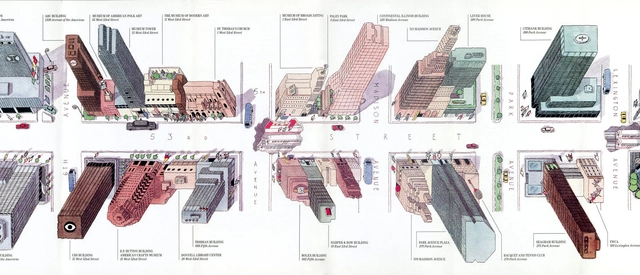
Martin Pederson interviewed this week Antonis Antoniou and Steven Heller, author of Decoding Manhattan, a new book that compiles over 250 architectural maps, diagrams, and graphics of the island of Manhattan in New York City, talking about the origin story of the book, the process of research, and the collaboration.
It would be an understatement to say that architecture is a profession that closely mirrors economic conditions. In this practice, we’ve all heard the stories or felt the experiences of recessions that were quickly followed by projects put on hold, a decreased pipeline of new business, and the unfortunate impact of layoffs and furloughs. The cyclical nature of the design field, paired with the pressure to meet the spatial needs for a growing global population in a time where the value of land has continued to sky-rocket means that architecture is naturally subjected to economic impacts in a significant way. But some economic theories predict that instead of the economy dictating the ebbs and flows of the design profession, architecture might be one of the influences causing economic downturns.
Following the Industrial Revolution, many European cities faced an unprecedented rise in the rate of population growth, intensified by the migration of people from rural areas to urban areas seeking better opportunities.
Although cities became more inviting, problems such as pollution and the growth of informal settlements also intensified. Meanwhile, the countryside provided proximity to nature and an abundance of natural resources, but it also suffered from isolation and a decrease in employment opportunities.
Dozens of neighborhoods in New York City have been upzoned based on contrived, and even false claims made by the city, which promised more diversity, affordable housing, minimum displacement, and other worthy goals. None of those projections materialized, but this is never acknowledged. Worse, the upzoning created the opposite conditions: less diversity, fewer affordable units, and whiter, wealthier neighborhoods. This, too, is never acknowledged. But the damage is done—and developers are having their way—following the new zoning. Then it’s onto the next neighborhood, with the same approach. Roberta Brandes Gratz explores in her article city planning and city promises in New Tork City, disclosing zoning regulations that lead to the opposite of what they preach.
Kosovo - Implementation during Covid-19. Image Courtesy of UN-Habitat, Global Public Space Programme
The Un-Habitat or the United Nations agency for human settlements and sustainable urban development, whose primary focus is to deal with the challenges of rapid urbanization, has been developing innovative approaches in the urban design field, centered on the active participation of the community. ArchDaily has teamed up with UN-Habitat to bring you weekly news, article, and interviews that highlight this work, with content straight from the source, developed by our editors.
As the fight against coronavirus keeps on bringing many cities around the world to a standstill, the need to support urban entities and local governments is greater than ever. Although the pandemic has drastically changed our relationship with the public realm, due to all the imposed but necessary restrictions, from physical distancing to limiting access, the demand for public space has not decreased. People still need to go outside, commute, work, study, play, socialize, and maintain a healthy mental state. Discover in this article UN-Habitat’s key areas of focus for an effective urban response for COVID-19 that local and national governments should focus on to prevent the spread of the virus and to develop resilience to and preparedness for events of a similar nature.
Courtesy of Steelblue for the City of Sacramento / Perkins&Will
Global architecture firm Perkins&Will, in collaboration with ARUP, Grimshaw Architects, EPS , AIM Consulting, and the City of Sacramento, have transformed the city's historic train station into a self-reliant and regenerative transportation hub, making it one of the most sustainable public areas in California. The design team worked alongside the local community to create a people-centric 31-acre master plan that reflects what the community envisions for a public train station and gateway to the city of Sacramento.
















.jpg?1623754842&format=webp&width=640&height=580)

.jpg?1623754916 "© Proloog")
.jpg?1623754848 "© Proloog")

.jpg?1623754842)