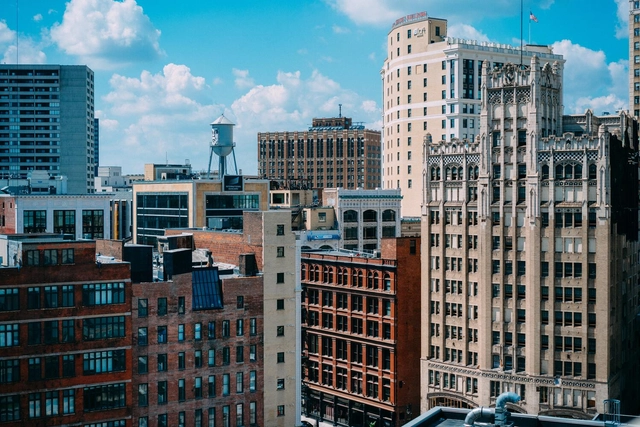
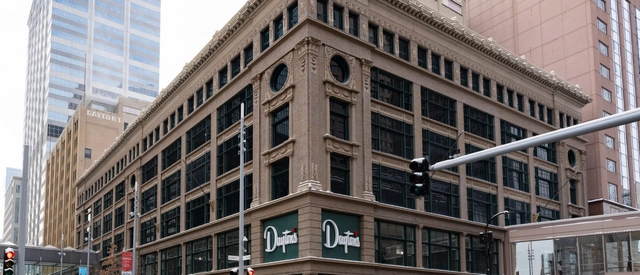
"For more than a generation, federally funded historic tax credits (HTCs) have been instrumental in incentivizing developers to revive and reuse historic buildings and keep them economically viable, rather than replace them with shiny new objects. These credits create jobs, promote responsible development, and leverage billions in private investment to enable income-generating buildings". Read the interview between Justin R. Wolf and Meghan Elliott, founding principal of New History, a firm specializing in adaptive reuse.
https://www.archdaily.com/966687/why-use-is-the-best-form-of-preservationJustin R. Wolf
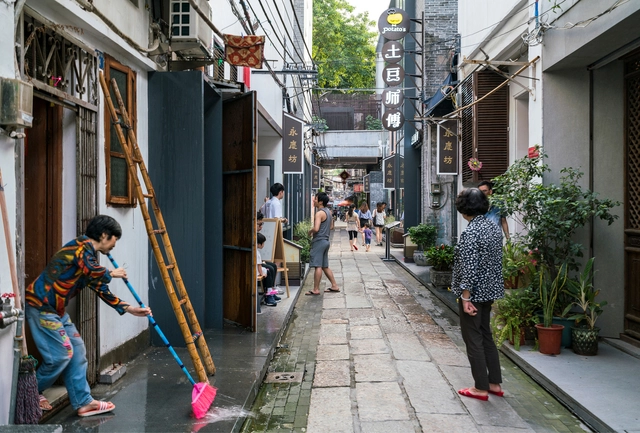
ASLA 2020 Urban Design Honor award. Yongqing Fang Alleyways: An Urban Transformation. Guangzhou, China. Lah D+H Landscape and Urban Design. Image Courtesy of The Dirt
People living in dense cities are among the least happy. Their rates of depression are 40 percent higher than other populations, and their rates of anxiety are 20 percent higher. Why? Because the built environment is directly linked with happiness and well-being, and too often urban environments fail to put people at ease.
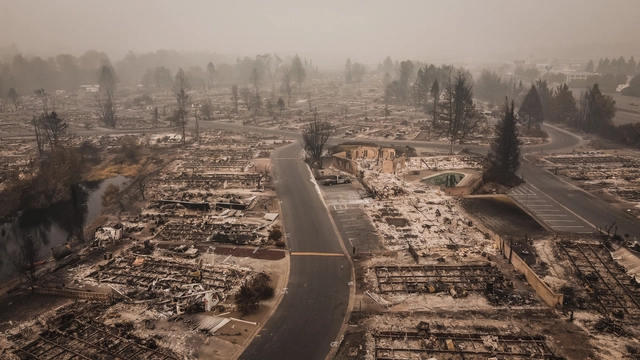
via Shutterstock by ArboursAbroad. ImageAerial View of the Almeda Wildfire in Southern Oregon
The Intergovernmental Panel on Climate Change, the UN's body for assessing the science related to climate change, has recently published a comprehensive report documenting the extent of global warming. The paper provides new time estimates for crossing the 1.5 degrees Celsius threshold, urging immediate and large-scale action to reduce greenhouse gas emissions. Following the publication of the report, UK Architects Declare has issued a statement inviting decision makers to a dialogue on how to collectively address the climate crisis while at the same time calling for the design professionals to re-evaluate their practice to support meaningful change.
Although disability laws have been put in place decades ago, architects are still struggling with disability requirements. A recent article by CityLab explored how the rise of speed and efficiency-driven cities have overlooked accessibility, neglecting the needs of people who are physically unable to live or keep up with these dense neighborhoods. And while the "15-Minute City", one that allows people to walk or bike to most essential services within 15 minutes of their home, may seem as the future of built environments, it does not cater to disabled individuals or their movements.
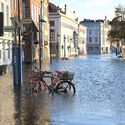
Recent extreme weather events and the acceleration of climate change, paired with decarbonization efforts that are not on track, make climate-related disruption unavoidable for urban environments, raising the issue of climate-risk adaptation. Moving past what can be done to prevent climate change, there is a strong imperative to develop strategies to prepare urban environments to cope with inevitable challenges such as sea-level rise, floods, water scarcity or extreme heat. The following discusses how cities can build resilience and adapt to undergoing and expected future climate threats.
Jeffry Burchard explores in his essay the "opportunity found by extending the life and purpose of viable existing buildings", that have shaped our cities. Arguing that "we have an abundant supply of buildings", the author proposes four essential steps to transform existing buildings.
This week's curated selection of Best Unbuilt Architecture highlights different competition-winning designs submitted by the ArchDaily Community. From large scale urban developments to small interventions in the landscape, from commercial projects to public spaces and urban planning strategies with an environmental focus, this article showcases a variety of design approaches, programs and scales. The proposals featured are the results of local and international competitions, either creative concepts or projects currently in progress.
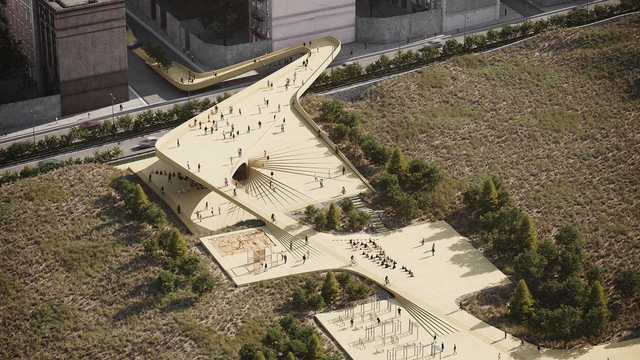
The award-winning entries include a range of different projects, designed by both young architects and established firms. An adaptive reuse project for office towers in New York, the redevelopment of an industrial site in China, an abstract installation for a Russian festival, or a masterplan focused on climate resilience and ecosystems protection are a few of this week's highlights.
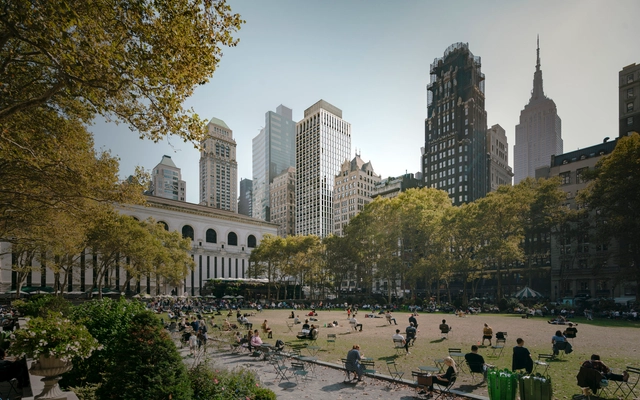
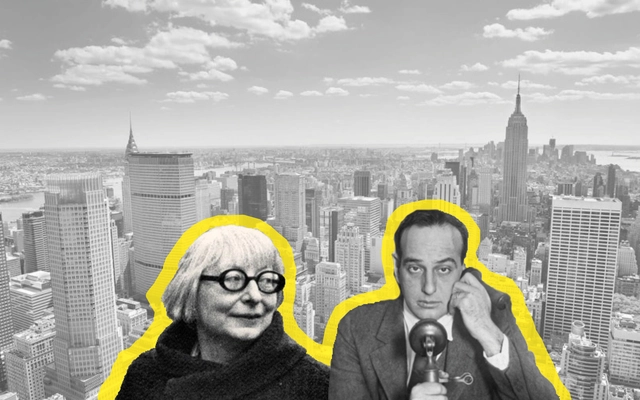
The development of cities has historically been a slow-moving process. In the everchanging urban landscape that faces the pushes and pulls of a variety of social, economic, and financial factors, it’s been hard to pinpoint just one main reason over another why each city has evolved over time into the way that we experience it today. And as designers and planners speculate about what the future of our cities should be, sometimes the reason that our cities look and operate in the way that they do has come down to a few famous battles between individuals with competing schools of thought.
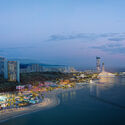
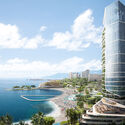
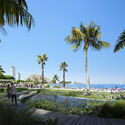
UNStudio has won the competition to redesign Sochi Waterfront with a masterplan that creates the framework for a vibrant urban environment for the local community while shaping a new identity for the notorious leisure resort on the Black Sea coast. Dubbed SoCo, the proposal seeks to create a year-round destination that would provide visitors with new attractions within Russia’s most important holiday destination, building on existing natural and cultural resources. At the same time, the design strategy focuses on shaping a close connection to the landscape and natural environment, building the foundation for inclusive neighbourhoods that would bring together various social groups.
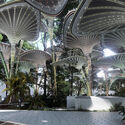
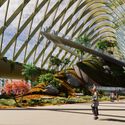
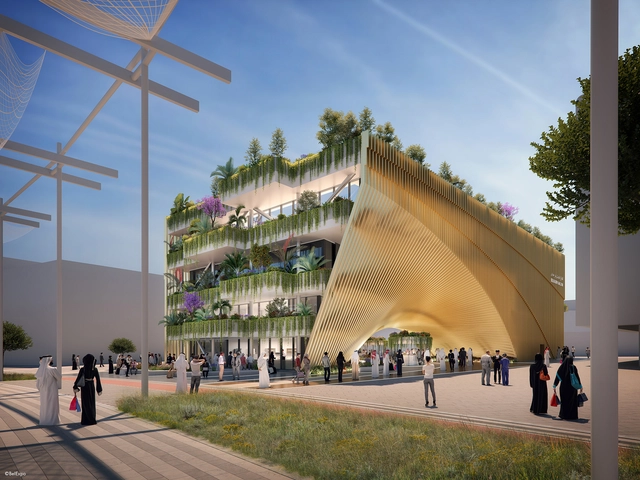
Titled "The Green Arch", the Belgian pavilion at the 2020 Dubai Expo highlights the emergence of connected green cities through its industrial, technological, and scientific knowledge. The pavilion, which is part of the Mobility district of the exhibition, consists of an arched, floral monolith that combines "Latin romanticism in the field of art and Anglo-Saxon technical precision in the industrial branches". The pavilion is designed by Belgian architects ASSAR ARCHITECTS and Vincent Callebaut Architectures, and will be represented by BelExpo, an autonomous department under the Belgian Ministry of Economy.
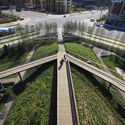
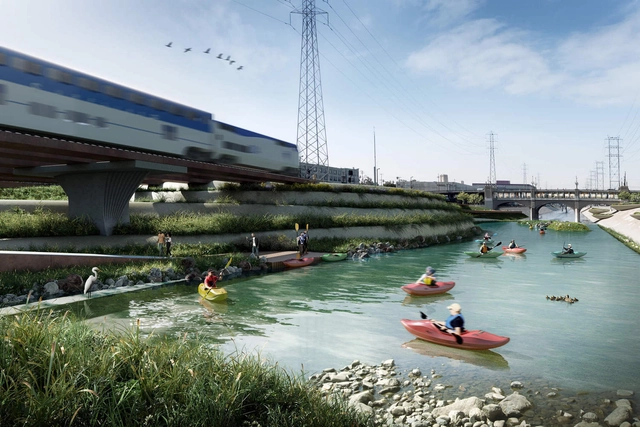
Studio-MLA is adopting lessons learned from their Los Angeles River design project design, shown here, to the River-Side Gateway master plan. Image Courtesy of Studio-MLA
Following a lengthy search, the California city of Riverside and its Parks, Recreation, and Community Services Department have selected Studio-MLA as the lead designer of the River-Side Gateway Project Suite, a string of nine sites along a seven-mile stretch of the Santa Ana River. Funded by the California Coastal Conservancy, the search committee sought a design team that could best revitalize the open spaces and trails along the northern edge of Riverside, the largest city in the Inland Empire region of California with a population of over 300,000.
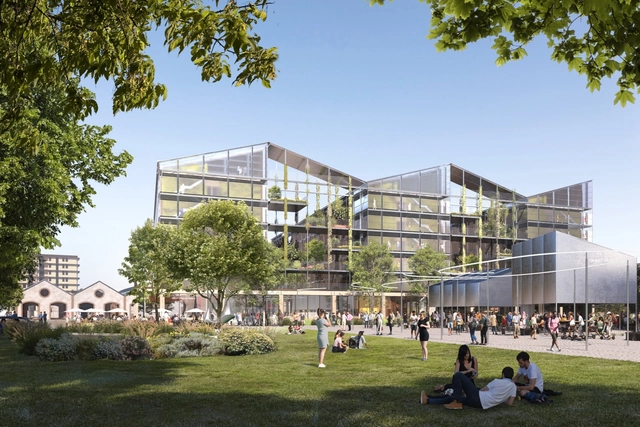
Skidmore, Owings & Merrill was selected to design the Olympic Village for the 2026 Milan-Cortina Olympics following an international competition of 71 architecture studios from nine different countries. The project is part of the updated Porta Romana Railway Yard Master Plan, and will create a new center of activity in Porta Romana with minimal environmental impact. The self-sufficient project will feature residential, commercial, and public spaces, that change configurations based on the Olympics event.
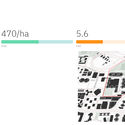
Global design firm Sasaki has announced the launch of Density Atlas, a new online platform for planners, urban designers, developers, and students immersed in the public realm, to have a better understanding about density. The platform explores the limitations of density and defines a more standardized set of metrics for understanding and comparing density across different global contexts, such as in urban centers, college campuses, or community under development.
Urban planning is often based on the assumption of ongoing demographic and economic growth, but as some environments face urban shrinkage, a new array of strategies comes into play.The shrinking city phenomenon is a process of urban decline with complex causes ranging from deindustrialization, internal migration, population decline, or depletion of natural resources. Referencing the existing research on the topic, the following showcases approaches to this phenomenon in different urban environments, highlighting the need to develop new urban design frameworks to address the growing challenge.
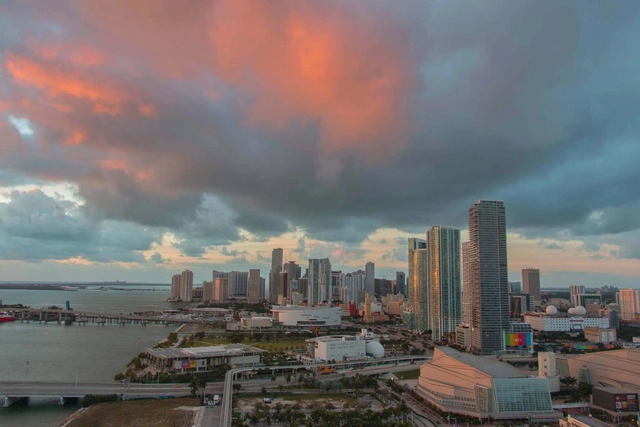
Earlier this month, the city of Miami released a draft version of its comprehensive plan to combat the effects of climate change. The so-called Stormwater Master Plan (SWMP) will be implemented to alleviate the threat of flooding throughout the city, improve the quality of water in Biscayne Bay, and fortify its coastline against stronger and more frequent storm surges over the next 40 years, at an overall cost estimate of $3.8 billion.
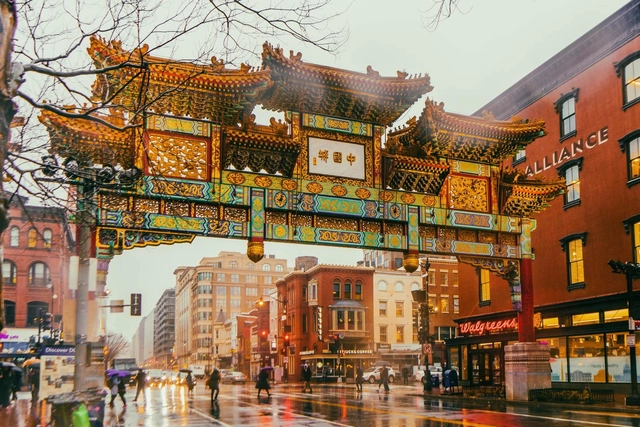
The global landscape of today has been moulded by centuries and centuries of human migration. This movement of people, of individuals and communities travelling far away from their place of origin to eke out better lives for themselves, has seen the evolution of the architectural and urban character of cities – moulded by the diverse influences fuelled by migration. This has meant that around the world, enclaves have popped up in cities, migrants carving out spaces for themselves which have a different character to other areas of a city.
The Nordic Neighbourhood Thinking Camp is a Nordic arena to share experiences, reflections and ideas about neighborhood development and strategic urbanism.
Combining presentations from acclaimed Nordic urban practitioners and thinkers, focused workshops, symposiums and social gatherings, the camp goes beyond the celebratory pitches. The ambition is to help foster ideas and bring forward practices that make a difference in terms of social and environmental sustainability.
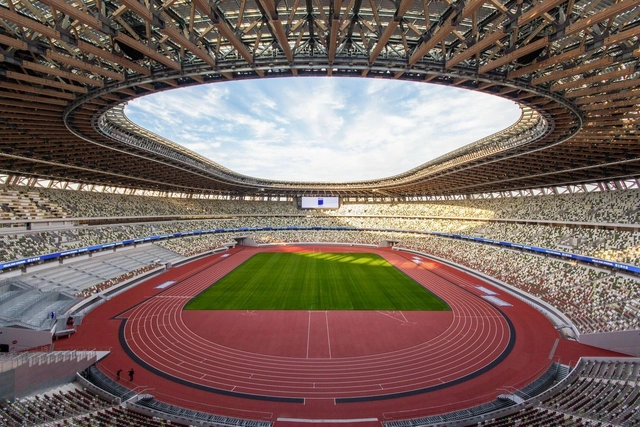
Since their inception in 1896, modern-day Olympics have been regarded by hosting cities as an opportunity to project to the world a specific image of themselves, to subsidize large infrastructure projects, or to rapidly unfold redevelopment schemes. Past the frequently discussed eye-catching stadiums, there is a complex story of Olympic urbanism, which encompasses the large scale developments catalyzed by the event. Exploring the urban and architectural legacy of the Games, the success stories, the white elephants, and the administrative agendas, the following discusses what the Olympics leave behind in the hosting cities.


















.jpg?1626687665 "Courtesy of BelExpo")



.jpg?1626424112 "© SOM | Pixelflakes")
.jpg?1626424111 "© SOM | Pixelflakes")
.jpg?1626424138 "© SOM | Pixelflakes")
.jpg?1626424121 "© SOM")