When approaching the design of cultural spaces such as museums, performance venues, or places of research and study, architecture and design professionals often have to assemble pieces of a uniquely challenging puzzle in order to make the structure resonate with a variety of visitors and occupants. Hitting the right chord can be difficult, especially when trying to combine forms into a whole that pays respect to a building's intended use while being timeless in its universality.
One way of making sure a sense of culture is omnipresent: adaptive reuse. The practice of breathing life into historic structures has been on the rise in recent years and is particularly well-suited to creating spaces that address and embody contemporary issues while connecting their inhabitants to the past. But it's not just a sense of updated heritage that makes them stand out; adaptive reuse buildings can fight urban sprawl and unsustainable building practices simply by way of existing.
Every year, the QS World University Rankings by Quacquarelli Symonds (QS) releases an updated list of best university programs worldwide. In the field of Architecture and the Built Environment, the list includes 250 institutions. The ranking evaluates institutions across all continents. This year, The Bartlett School of Architecture (part of UCL) maintains its position in first place, as the top 10 list sees a reorganization of the selected universities, with no new entrants. Tsinghua University is the only one among them to improve its position since last year, rising from eighth to joint seventh.
In a letter published on MIT's School of Architecture and Planning’s website, 16 deans from prominent architecture schools in the U.S, explain their position to stop participating in the annual survey that ranks universities. "Design education is not a popularity contest. Although generally our schools have been highly ranked in past DesignIntelligence reports and benefitted from the attention, we believe that it is time to stop participating", declares the statement signed by scholars, deans, and department chairs of MIT, Harvard, Columbia, Princeton, Yale, Rice, and UCLA, to name a few.
Stating clearly their position to boycott future ranking, the decision came after two years of informal discussions where the methodologies used behind these academic surveys were questioned, as well as their consequences. In fact, the letter adds that "however well-intentioned they may be, we believe that the DI rankings have the potential to create a disservice to the public".
In order to help architects and students to get to know the best International Master’s available in the world, BAM’s annual ranking compares and evaluates programs, from the best schools of architecture, through a comparative and objective methodology, developed by 13 international experts. For the 2022 edition, different Master’s Degree Programs from the recent QS Ranking – Architecture / Built Environmenthave been selected to take part in BAM’s Ranking.
Similar to previous years, in 2022, Harvard and Columbia maintained their leading positions in first and second place. MIT made a comeback to the list with two master's programs, in the fourth position, the Master of Science in Architecture Studies in Urbanism (SMArch Urbanism), and in the sixth position, the Master of Science in Architecture Studies in Design (SMArchS Design). Universidad Politécnica de Madrid and ETH Zurich were both ranked third, offering the best master’s program in Europe. Pontificia Universidad Católica in Chile occupied the 18th position, presenting a top master's degree in South America, followed closely in the 20th position by the Universidade de São Paulo.
DELFT, THE NETHERLANDS - AUGUST 19, 2017: Students at work in the Library of the Technical University Delft, The Netherlands. Image via Shutterstock/ by T.W. van Urk
Delft University of Technology in the Netherlands took the second place while UCL, in the United Kingdom, came third. ETH Zurich, Harvard, and the National University of Singapore (NUS) maintained fourth, fifth, and sixth place. The Manchester School of Architecture was upgraded to seventh position this year, moving the University of California, Berkeley (UCB) to eighth place and the Tsinghua University in Beijing, China to the ninth. Politecnico di Milano, in Italy, remains a non-mover at 10.
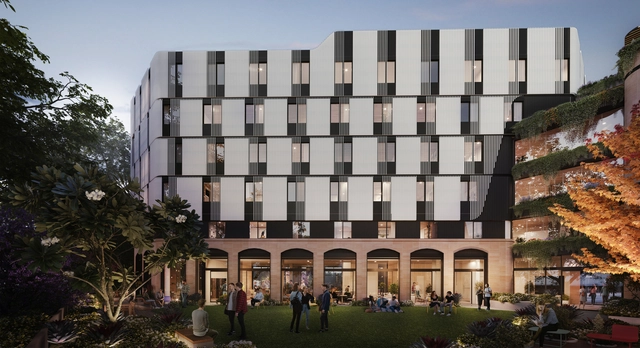
John Chapman House. Image Courtesy of Plus Architecture
Student housing takes on many forms around the world, but most commonly, it’s envisioned as close quarters in a bleakly designed dormitory. While prospective students choose universities based on academic rigor, athletic programs, extracurricular activities, and future career opportunities, they’re now wanting to know what living on and off-campus will be like- and it has forced designers to rethink the traditional designs of dormitories into something more innovative that better reflects what students want (and expect) in their university homes.
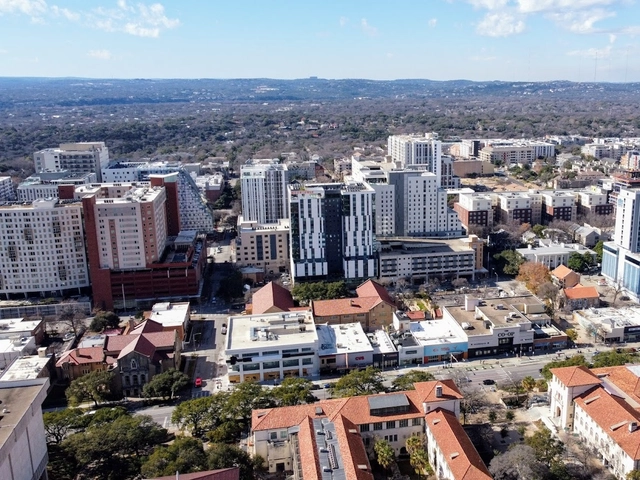
West Campus Neighborhood, Austin, Texas. The University of Texas campus is in the foreground. Image Courtesy of Jack Myer/The Daily Texan.
Juan Miró, co-founder of Miró Rivera Architects reflects in an opinion piece on the student housing situation in the United States. The architect explores different dormitory conditions across the country and questions whether these leading public universities "enthusiastically endorse the idea of putting thousands of its students in windowless rooms in the name of density and efficiency".
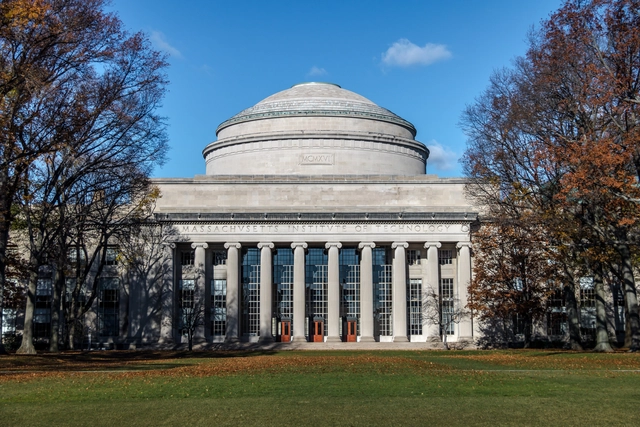
CAMBRIDGE, USA - December 01, 2016: Massachusetts Institute of Technology (MIT) Dome - Cambridge, Massachusetts, USA. Image via Shutterstock/ By Diego Grandi
Every year in March, the QS World University Rankings reveal the top universities to study each profession, covering 51 different subjects. Grading schools based on academic reputation, employer reputation, and research impact, the annual QS- Quacquarelli Symonds has unveiled that for the second year in a row, in the 2021 Architecture/ Built Environment division, the Massachusetts Institute of Technology (MIT) is still in the first position.
The annual QS- Quacquarelli Symonds ranking for top universities has been unveiled. Based on academic reputation, employer reputation, and research impact, the ranking highlights every year the best universities for each profession. In the 2020 Architecture/ Built Environment division, the list reveals that the Massachusetts Institute of Technology (MIT) is back on top.
As part of the 5th edition of the Lisbon Architecture Triennale program, this call invites architecture students to engage in deep thought, in an exercise of collective research on constructive rationality. This competition for ideas is open to master degree students from worldwide architecture schools. A selection of proposals will be part of the exhibition “Natural Beauty”, curated by Tristan Chadney and Laurent Esmilaire, alongside a genealogy of works, from the 16th century to the present, that relate to constructive rationality.
Global higher education analysis firm Quacquarelli Symonds (QS) has revealed its rankings of the world’s top universities for the study of Architecture / Built Environment for 2018. The eight edition of the survey compared 2,122 institutions across the globe offering courses in architecture or the built environment, narrowing down the list based on criteria including academic and employer reputation.
For the fourth straight year, MIT has topped the rankings, once again coming out ahead of the Bartlett School of Architecture and the Delft University of Technology (TU Delft) in 2nd and 3rd respectively. Read on for the full rankings.
The architectural team comprised of Davis Brody Bond and Kieran Timberlake has unveiled its newest updates on the design for 181 Mercer, a 735,000-square-foot complex for New York University that will replace a 35-year-old gym facility and become NYU’s largest classroom building, as well as a space for performing arts, athletics, and students and faculty housing.
The aim of the “Training” competition is to develop a design proposal for the sport facility typology, intended as a place where physical activity and/or sports entertainment can occur. Participants are asked to create innovative and unconventional projects on this theme, questioning the very basis of the notion of sport facility. After the recent closure of the European football cup and the Olympic games, you are asked to reinvent the way sports can be practiced, and how they can be used to entertain.

Total Engineer Team RSVP has unveiled the renovation design for the Main Building of the Eindhoven University of Technology in the Netherlands, which, once completed, will be the most sustainable university building in the world. On September 27, the design was awarded as BREEAM Outstanding under the BREEAM-NL sustainability label of the Netherlands, with a score of 93.86%.
The university building, which will be called Atlas upon completion, was designed by a multidisciplinary team consisting of Team V (architect), Van Rossum (construction engineer), Valstar Simonis (building installations engineer), and Peutz (building physics engineer and sustainability expert).
Firms Lyons and m3architecture have been selected to design the Sustainable Futures Building at the St Lucia campus of the University of Queensland.
The new building will house the School of Chemical Engineering, and is intended to amplify the University’s profile as a hub of chemical engineering leadership in Australia, the Asia-Pacific region, and a global stage.
Ennead Architects has recently celebrated the completion of the steel core of a new 295,000-square-foot Biological Sciences Building (BSB) and Museum of Natural History with a topping out ceremony at the University of Michigan. Due to open in 2018, the BSB will bring together the departments of Molecular, Cellular and Developmental Biology, Ecology and Evolutionary Biology, the Research Museums of Paleontology and Zoology, and a re-envisioned Museum of Natural History.
There is a dichotomy to the business of educating architects. While the real world profession is a collaborative field, one in which projects of even the largest and most publicly-acclaimed offices are team-led initiatives, the study of architecture is often insular, myopic, and devoid of such partnerships. Certainly there is a benefit to this style of teaching - it builds confidence for one thing - but it is troubling to think that in a socially-oriented and practically-minded field like architecture, there can be such major disconnects between the process of designing and the act of building. As many critics of current architectural education have pointed out, incorporating design-build projects into school curriculums is a pragmatic solution oriented towards correcting such imbalances.
The fact that more schools don't have programs for students to both design and build their projects is especially perplexing when most universities, particularly those located in the United States, are in such a prolonged period of institutional and budgetary expansion. With many schools now governed like corporate entities, it’s surprising that architecture programs and students are not treated like in-house resources. Why aren’t architecture students treated like assets, the same way that student doctors and nurses are brought into university led medical facilities or scientists into campus research labs?