1. ArchDaily
  2. United Nations

United Nations: The Latest Architecture and News

What Does the Future Hold for Coastal Cities Following the Aftermaths of Climate Change?

Subscriber Access | 

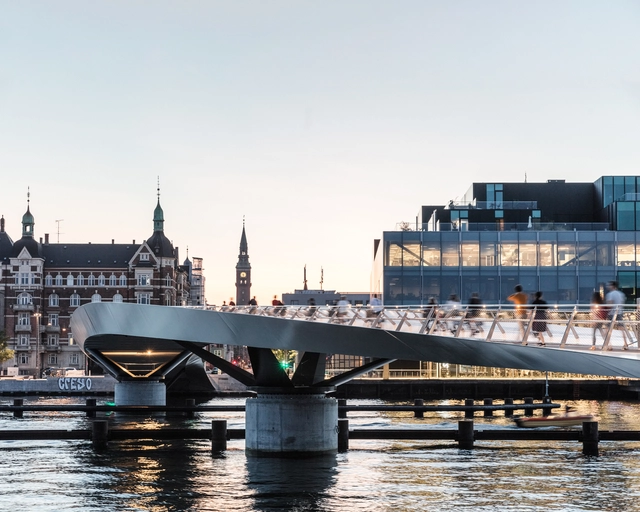
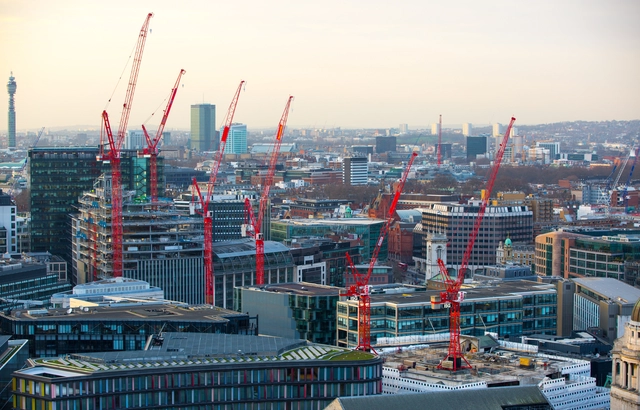
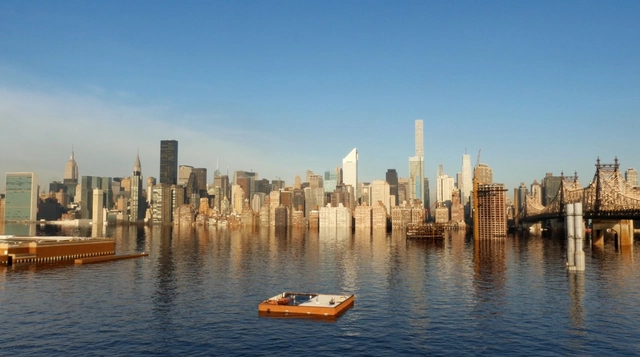
Coastal cities have always been a point of attraction for residents, tourists, and businesses. Alongside the aesthetic features, their proximity to the sea has made these cities a focal point for maritime transportation with the construction of ports, as well as hotspots for recreational and aquacultural activities. However, the past decades saw these particular regions threatened with a shortened lifespan; rising water levels, floods, and recurring cyclones, along with other natural disasters, have endangered coastal communities, putting their population, ecosystem, and built environment at risk. 

What Does the Future Hold for Coastal Cities Following the Aftermaths of Climate Change? - Imagem 1 de 4What Does the Future Hold for Coastal Cities Following the Aftermaths of Climate Change? - Imagem 2 de 4What Does the Future Hold for Coastal Cities Following the Aftermaths of Climate Change? - Imagem 3 de 4What Does the Future Hold for Coastal Cities Following the Aftermaths of Climate Change? - Imagem 4 de 4What Does the Future Hold for Coastal Cities Following the Aftermaths of Climate Change? - More Images+ 3

The IPCC’s Latest Report Highlights the Impacts, Adaptations, and Vulnerabilities of Climate Change

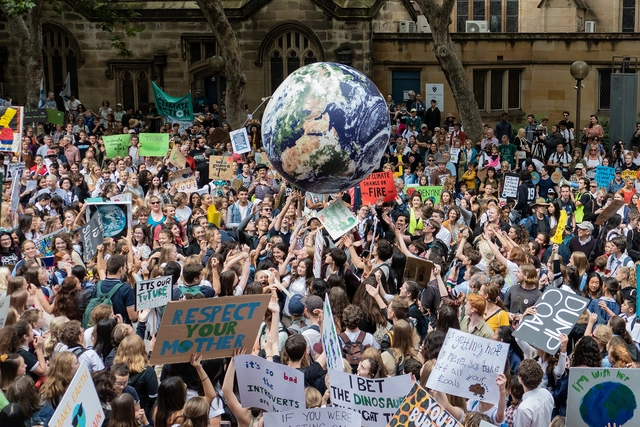
Following an extensive report on the impacts of climate change last year, the second installment of the Intergovernmental Panel on Climate Change (IPCC), the United Nation's body for assessing the science related to climate change, addresses the current and anticipated impacts of climate change on ecosystems, biodiversity, and human communities across the globe, along with action plans on how the natural world and human societies could adapt to these changes before reaching an "irreversible" state.

The IPCC’s Latest Report Highlights the Impacts, Adaptations, and Vulnerabilities of Climate Change - Image 1 of 4The IPCC’s Latest Report Highlights the Impacts, Adaptations, and Vulnerabilities of Climate Change - Image 2 of 4The IPCC’s Latest Report Highlights the Impacts, Adaptations, and Vulnerabilities of Climate Change - Image 3 of 4The IPCC’s Latest Report Highlights the Impacts, Adaptations, and Vulnerabilities of Climate Change - Image 4 of 4The IPCC’s Latest Report Highlights the Impacts, Adaptations, and Vulnerabilities of Climate Change - More Images+ 1

SOM Proposes to Transform the Built Environment into a "Forest" of Absorbing Carbon at COP26

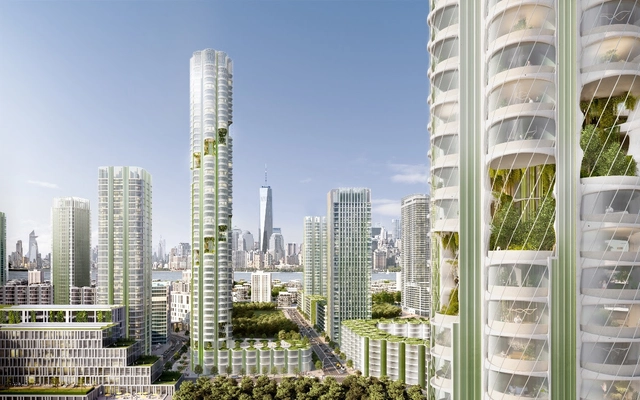
"What if the built environment could be a solution to the climate crisis, rather than part of the problem? What if buildings could act like trees – capturing carbon, purifying the air, and regenerating the environment?" Responding to these questions, Skidmore, Owings & Merrill (SOM) has proposed Urban Sequoia, an architectural concept inspired by the ecosystem at the 2021 UN Climate Change Conference in Glasgow - COP26. The design features “forests of buildings" that isolate carbon and produce biomaterials that create a new ecological and resilient urban environment.

SOM Proposes to Transform the Built Environment into a "Forest" of Absorbing Carbon at COP26 - Image 1 of 4SOM Proposes to Transform the Built Environment into a "Forest" of Absorbing Carbon at COP26 - Image 2 of 4SOM Proposes to Transform the Built Environment into a "Forest" of Absorbing Carbon at COP26 - Image 3 of 4SOM Proposes to Transform the Built Environment into a "Forest" of Absorbing Carbon at COP26 - Image 4 of 4SOM Proposes to Transform the Built Environment into a Forest of Absorbing Carbon at COP26 - More Images

World’s Cities Day 2021: Resilience, Climate Crisis and Sustainable Urbanization

Subscriber Access | 

As cities grow in scale, dimensions, and amplitude, taking in 60% of the world population, the United Nations has designated the 31st of October as “World Cities Day”, an opportunity to talk furthermore about global urbanization, addressing challenges, encouraging opportunities across borders and highlighting responses. Focusing this edition on the theme of “Adapting Cities for Climate Resilience”, this day, part of Urban October, seeks to raise awareness about the climate crisis and its repercussions on the built environment.

Cities, at the center of the global challenges, are hubs for institutions, society, economy, commerce, and transportation. Understanding the importance of “Thinking the City”, we have compiled in this roundup, articles published by ArchDaily’s editors that offer planning tools and guidelines, tackle the different components of the urban realm and highlight worldwide as well as contextual questions and responses.

At COP26 Architects Plan on Urging Decision Makers to Establish Tangible Action Against Climate Change

At COP26 Architects Plan on Urging Decision Makers to Establish Tangible Action Against Climate Change - Featured Image
Photo by Danist Soh on Unsplash

The 26th UN Climate Change Conference of the Parties (COP 26) debuted yesterday in Glasgow, bringing together more than 190 world leaders, with the aim of accelerating action to reach the goals of the Paris Agreement and UN's Convention on Climate Change. Leading architecture organizations and figures are attending the two-week summit to show the AEC's industry's commitment to reduce carbon emissions and urge decision-makers to implement clear targets to achieve global climate goals.

At COP26 Architects Plan on Urging Decision Makers to Establish Tangible Action Against Climate Change - Image 1 of 4At COP26 Architects Plan on Urging Decision Makers to Establish Tangible Action Against Climate Change - Image 2 of 4At COP26 Architects Plan on Urging Decision Makers to Establish Tangible Action Against Climate Change - Image 3 of 4At COP26 Architects Plan on Urging Decision Makers to Establish Tangible Action Against Climate Change - Image 4 of 4At COP26 Architects Plan on Urging Decision Makers to Establish Tangible Action Against Climate Change - More Images

IPCC’s Latest Report Reveals Widespread and Intensifying Climate Change

The Intergovernmental Panel on Climate Change, the UN's body for assessing the science related to climate change, has recently published a comprehensive report documenting the extent of global warming. The paper provides new time estimates for crossing the 1.5 degrees Celsius threshold, urging immediate and large-scale action to reduce greenhouse gas emissions. Following the publication of the report, UK Architects Declare has issued a statement inviting decision makers to a dialogue on how to collectively address the climate crisis while at the same time calling for the design professionals to re-evaluate their practice to support meaningful change.

IPCC’s Latest Report Reveals Widespread and Intensifying Climate Change - Image 1 of 4IPCC’s Latest Report Reveals Widespread and Intensifying Climate Change - Image 2 of 4IPCC’s Latest Report Reveals Widespread and Intensifying Climate Change - Image 3 of 4IPCC’s Latest Report Reveals Widespread and Intensifying Climate Change - Image 4 of 4IPCC’s Latest Report Reveals Widespread and Intensifying Climate Change - More Images

Copenhagen named UNESCO World Capital of Architecture for 2023

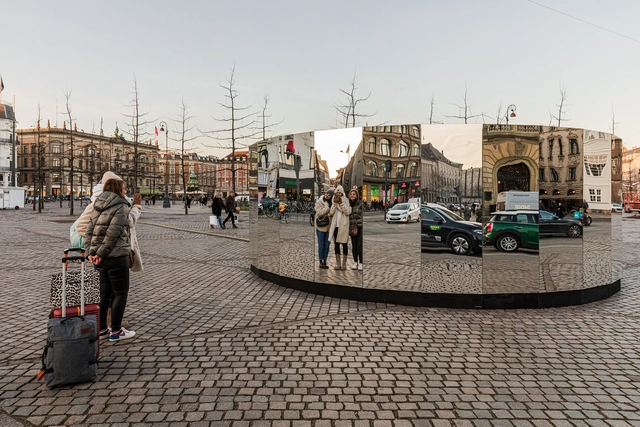
Following Rio de Janeiro’s inaugural hold of the title, Copenhagen has been named World Capital of Architecture for 2023 by UNESCO and will host the International Union of Architect’s World Congress 2 years from now. At its second edition, the initiative supported by UNESCO in partnership with UIA is meant to highlight the role of architecture and urban planning in shaping a sustainable future and tackling global challenges. Designated triennially, the city World Capital of Architecture will become an international forum for debate around issues related to the urban environment.

Copenhagen named UNESCO World Capital of Architecture for 2023  - Image 1 of 4Copenhagen named UNESCO World Capital of Architecture for 2023  - Image 2 of 4Copenhagen named UNESCO World Capital of Architecture for 2023  - Image 3 of 4Copenhagen named UNESCO World Capital of Architecture for 2023  - Image 4 of 4Copenhagen named UNESCO World Capital of Architecture for 2023  - More Images

AMO Brings a Version of Countryside Exhibition At the United Nations Headquarters

OMA's research and publication branch AMO has taken over the fences of the United Nations Headquarters in New York for a public exhibition showcasing a follow-up of the 2020 Countryside, The Future project. Curated by Rem Koolhaas and Samir Bantal, director of AMO, Countryside at the United Nations, invites reflection and public discussion on the topics of agricultural innovation, ecological change and food production in anticipation of the UN Food Systems Summit taking place in September 2021.

AMO Brings a Version of Countryside Exhibition At the United Nations Headquarters - Image 1 of 4AMO Brings a Version of Countryside Exhibition At the United Nations Headquarters - Image 2 of 4AMO Brings a Version of Countryside Exhibition At the United Nations Headquarters - Image 3 of 4AMO Brings a Version of Countryside Exhibition At the United Nations Headquarters - Image 4 of 4AMO Brings a Version of Countryside Exhibition At the United Nations Headquarters - More Images+ 8

BIG and UN Collaborate on Floating, Modular Eco-City

As part of UN-Habitat’s New Urban Agenda, Bjarke Ingels Group has proposed a vision for the world’s first resilient and sustainable floating community, designed to accommodate 10,000 people. “Oceanix City” is a response to the prediction that by 2050, 90% of the world’s largest cities will be exposed to rising seas, resulting in mass displacement, and the destruction of homes and infrastructure. The scheme is anchored in the UN Sustainable Development Goals, enacting circular flows of food, energy, water, and waste.

BIG and UN Collaborate on Floating, Modular Eco-City  - Image 1 of 4BIG and UN Collaborate on Floating, Modular Eco-City  - Image 2 of 4BIG and UN Collaborate on Floating, Modular Eco-City  - Image 3 of 4BIG and UN Collaborate on Floating, Modular Eco-City  - Image 4 of 4BIG and UN Collaborate on Floating, Modular Eco-City  - More Images+ 10

SPARK Architects' 3D Printed "Big Arse Toilet" Transforms Waste into Energy in India

In support of World Toilet Day on November 19, SPARK Architects launched their prototype for a 3D printed toilet module titled, "Big Arse Toilet" alongside a slogan stating that "Sparks gives a sh*t." Though the pun-filled humor is definitely attention-grabbing, the project tackles serious issues of hygiene and sanitation as part of the UN initiative to eliminate open defecation by 2025. With the perpetuating cycle of malnutrition, disease, and poverty, poor sanitation is the leading cause in nearly a third of the deaths in low- and middle-income regions in several countries such as India.

Easily transportable, the toilet module converts human waste into biogas into electricity using a micro combined heat and power (CHP) unit. Essentially producing "free" energy, SPARK's proposal combats the issue of open defecation and uses the abundant natural waste in remote communities in Indian villages where there is low accessibility to electricity.

SPARK Architects' 3D Printed "Big Arse Toilet" Transforms Waste into Energy in India  - Image 1 of 4SPARK Architects' 3D Printed "Big Arse Toilet" Transforms Waste into Energy in India  - Image 2 of 4SPARK Architects' 3D Printed "Big Arse Toilet" Transforms Waste into Energy in India  - Image 3 of 4SPARK Architects' 3D Printed "Big Arse Toilet" Transforms Waste into Energy in India  - Image 4 of 4SPARK Architects' 3D Printed Big Arse Toilet Transforms Waste into Energy in India  - More Images+ 5

Alternative Ways for Architects to Architect

Subscriber Access | 

The more architecture students that I converse with, the more I hear this common dissent amongst them: “I don’t want to become an architect.” Despite participating in long studio hours for a five-year professional degree, somehow very few peers actually want to become the kind of architects that create buildings.

Aside from the conventional alternatives of interior or graphic design, there is a rising trend in the popularity of firms that use architectural skills for beyond the scope of designing luxury condominiums for wealthy clients. For prospective architects (and current ones), below are examples of firms that may not be what one initially imagines to do with their degree, but a taste of the potential of what they can.

Alternative Ways for Architects to Architect - Image 1 of 4Alternative Ways for Architects to Architect - Image 2 of 4Alternative Ways for Architects to Architect - Image 3 of 4Alternative Ways for Architects to Architect - Image 4 of 4Alternative Ways for Architects to Architect - More Images+ 3

UN and Yale University Unveil "Tiny House" as the Future of Eco-Living

In an effort to spark public discussion and new ideas on how sustainable design can manifest as decent, affordable housing, Yale University has collaborated with UN Environment and UN-Habitat to unveil a “tiny house” fully powered by renewable energy. At 22-square-meters, the eco-house is designed to “test the potential for minimizing the use of natural resources such as water.”

The prototype was unveiled during the United Nations High-Level Political Forum on Sustainable Development, constructed from locally-sourced, bio-based renewable materials. While the first prototype is designed for the climate and context of New York, future iterations can be adapted for site-specific conditions around the globe. Design and fabrication of the module was carried out by Gray Organschi Architecture, working in direct partnership with the Yale Center for Ecosystems in Architecture.

UN and Yale University Unveil "Tiny House" as the Future of Eco-Living - Image 1 of 4UN and Yale University Unveil "Tiny House" as the Future of Eco-Living - Image 2 of 4UN and Yale University Unveil "Tiny House" as the Future of Eco-Living - Image 3 of 4UN and Yale University Unveil "Tiny House" as the Future of Eco-Living - Image 4 of 4UN and Yale University Unveil Tiny House as the Future of Eco-Living - More Images+ 21

Álvaro Siza and Others Imagine Possible Scenarios for a Reconstructed Syria

Sketch for Syria, a project initiated by by Marco Ballarin and Jacopo Galli at IUAV, Venice, has brought together 150 architects from 26 nations in a large-scale effort to "imagine, trace and share possible scenarios" for Syria, following the recent devastation of the lives of its citizens and a significant amount of its architectural heritage.

In response to the United Nations' (UN-ESCWA) drafting of an agenda on July 14th, 2016 to consider ways of reconstructing the country, this drawing project has attracted contributions from the likes of Álvaro Siza, Philippe Rahm, Peter Wilson, and Francisco Aires Mateus.

Álvaro Siza and Others Imagine Possible Scenarios for a Reconstructed Syria - Image 1 of 4Álvaro Siza and Others Imagine Possible Scenarios for a Reconstructed Syria - Image 2 of 4Álvaro Siza and Others Imagine Possible Scenarios for a Reconstructed Syria - Image 3 of 4Álvaro Siza and Others Imagine Possible Scenarios for a Reconstructed Syria - Image 4 of 4Álvaro Siza and Others Imagine Possible Scenarios for a Reconstructed Syria - More Images+ 14

Shigeru Ban to Design Up to 20,000 New Homes for Refugees in Kenya

Pritzker Prize winning architect Shigeru Ban has signed an agreement with UN-Habitat, the United Nations agency tasked with guiding sustainable development, to design up to 20,000 new homes for refugees in Kenya’s Kalobeyei Refugee Settlement. Currently home to more than 37,000 refugees, the settlement is quickly outgrowing its original capacity of 45,000 – over 17,000 have arrived this year alone, with numbers expected to continue to increase.

“The key thing will be to design and construct shelter where no or little technical supervision is required, and use materials that are locally available and eco-friendly. It’s important that the houses can be easily maintained by inhabitants.”

See the 17 Le Corbusier Projects Named as UNESCO World Heritage Sites

The UN Education, Scientific and Cultural Organization (commonly referred to as UNESCO) has named 17 projects in 7 countries by revolutionary Modernist architect Le Corbusier to their list of World Heritage Sites. Given to places of special cultural or physical significance, the designation will help to protect and preserve the buildings for future generations. Citing Le Corbusier’s inventive architectural language, UNESCO praised the collection of projects for “[reflecting] the solutions that the Modern Movement sought to apply during the 20th century to the challenges of inventing new architectural techniques to respond to the needs of society.”

“The inscription on the World Heritage List of 17 buildings of sites by Le Corbusier represents a strong encouragement to continue all along Le Corbusier's built work to maintain this living heritage and to hand it down to future generations,” said Fondation Le Corbusier President Antoine Picon in a statement. “It also contributes to the understanding of that complex and fragile legacy and helps its dissemination to the widest audience.”

Continue after the break for the full list of projects and images.

Malkit Shoshan on How the City is a Shared Ground for the Instruments of War and Peace

Can architects have a truly active role in pressing social problems? Malkit Shoshan, the curator of the Dutch Pavilion at the 2016 Venice Biennale, thinks so. Her career is evidence of this: advocating for the incorporation of a fourth 'D' in the criteria of the UN (Defence, Diplomacy and Development) in its peacekeeping missions around the world, Shoshan has sat at the same table as military engineers and policy makers to analyze the urban impact peacekeepers have left around the world.

For the Dutch Pavilion, Shoshan has focused on the case of the joint mission of the Netherlands and the UN in Gao (Mali). In 2012, Gao was declared capital of the Independent State of Azawad, a nation not recognized by the international authorities, following Mali's Tuareg rebellion. "Although [these peacekeeping missions] occupy large plots of land in hundreds of different cities around the world, it is rarely discussed or addressed by our profession," says Soshan in the following interview.

We spoke with the curator of the Dutch pavilion after her recent visit to Mali to discuss the principles of the Netherlands in the next Venice Biennale; the impact of military drones in public spaces and why, according Shoshan, there is a close relationship between architecture, public policy and ideology. "[With design,] we can make resources available to communities that are exhausted by militarized conflicts, long periods of drought, famine and disease," she says.