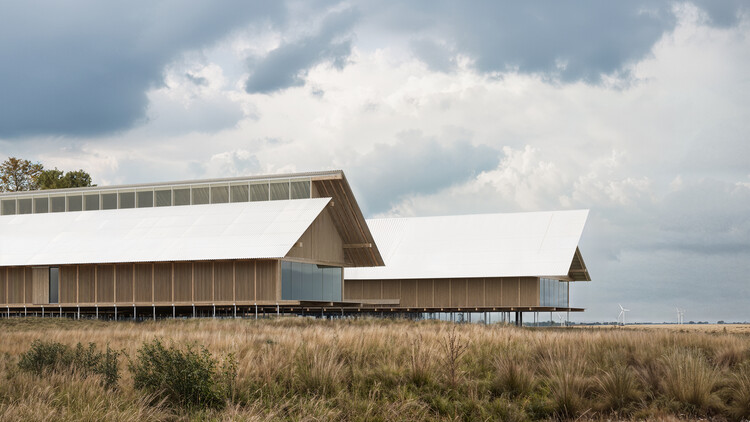
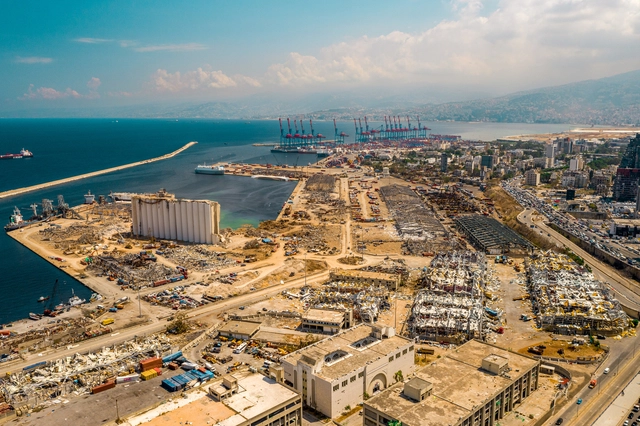
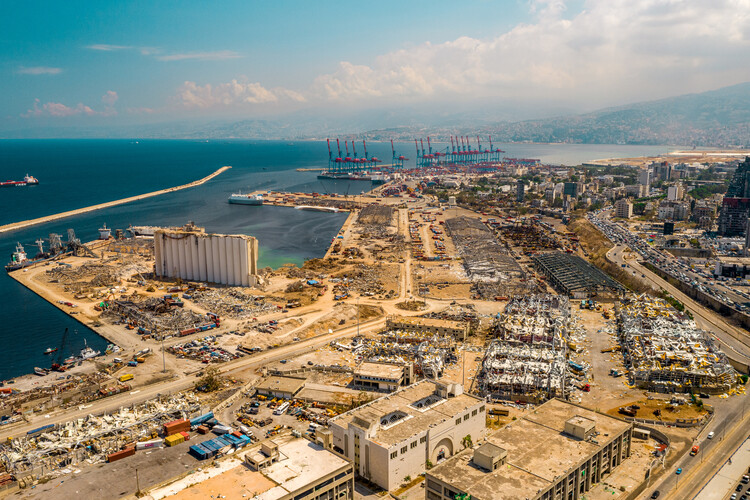
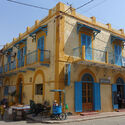
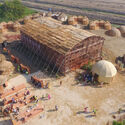
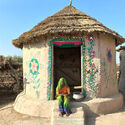
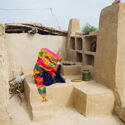
As one of the major signature events taking place in connection with Copenhagen as the UNESCO World Capital of Architecture in 2023, Open House Copenhagen has revealed more than 50 sites included in its program. The event represents an invitation for visitors to take a look inside iconic buildings that are typically only visible from the outside. Included in the list are examples of floating architecture on Refshaleøen, one of Arne Jacobsen’s masterpieces, along wth unusual spaces such as the interior of a power plant or an underwater passage tunnel. Open House Copenhagen takes place on the weekend of March 25–26 2023. The event is open for everyone and is free of charge, but registration is required.
Yanacancha-Huaquis Cultural Landscape, Peru. Image Courtesy of World Monuments Fund
The World Monuments Fund (WMF) announced a commitment of more than US$10 million to go towards preservation projects to protect culturally significant places from around the globe in urgent need of intervention. The initiatives vary in scope, from winterization efforts at Ukrainian heritage sites to protecting remote archeological sites representative of Peru’s Chachapoyas Civilization. The suite of projects launching in 2023 aims to address and help mitigate the threats that heritage sites are facing: conflict, climate change, and underrepresentation.
Subject to the forces of capital, migrating populations, and political circumstances, our planet’s cities are constantly evolving. This continuous evolution is evident in the built fabric of settlements, as architects and planners build upon layers of the built environment, with some having the strenuous task of having to integrate the historic urban areas of cities successfully with contemporary architectural interventions and systems.
The cities of this category are frequently in an internal conflict — oftentimes having to grapple with the sometimes contradictory aims of both sustaining local populations and welcoming outside investment and national development projects.
A major 7.8 magnitude earthquake hit central Turkey and north-west Syria this Monday, February 6, with a second 7.4 magnitude quake reported a few hours later in the same region, according to reports from the Guardian. Among the most affected areas is Gaziantep, located 150 miles from the border with Syria and 50 miles from the earthquake’s epicenter in Kahramanmaraş. Tremors were felt as far away as Lebanon, Greece, Israel, and the island of Cyprus. Authorities are still assessing the number of victims, as local and international rescue teams have been deployed to search for survivors. Early estimates report that over 1,700 buildings have collapsed or have been critically damaged, as confirmed by Turkey's Vice President Fuat Oktay.
The World Heritage Committee decided to inscribe the Historic Center of the Port City Odesa, Ukraine, on the World Heritage List. The decision symbolizes the recognition of the outstanding value of the site and the commitment of the 194 States Party of the Convention not to undertake any deliberate step that may damage it and to help protect it. The site has also been inscribed on the List of World Heritage in Danger, which gives it access to international financial or technical assistance to ensure its protection and, if necessary, assist in its rehabilitation, according to UNESCO.
Denmark has continually topped the survey for the happiest countries, according to the World Happiness Report. For urban designers, Copenhagen, the capital of Denmark, has become one of the most cited case studies regarding carbon-neutral infrastructure, pedestrian and bike-friendliness, and the outstanding qualities of its public realm. According to the Dansk Arkitektur Center, over 10,000 architects are expected to visit Copenhagen in the following year, to join the guided tours, exhibitions, debates, and cultural events that put design and architecture in the spotlight.
Skyscrapers are an unmissable characteristic of contemporary settlements. From São Paolo to New York, from Seoul to Dubai – these towering structures are a ubiquitous part of the urban fabric. The conventional image one has of these structures is of curtain-walled facades, but in Yemen – an ancient example goes against this trend. Central Yemen is home to the city of Shibam, surrounded by a fortified wall. It’s also home to a dazzling example of architectural ingenuity – tower houses that date back to the 16th century, stretching up to seven stories high.
Kyiv, Ukraine, September 2021: Maidan Nezalezhnosti square - aerial drone view. Monument of Independence.. Image via Shutterstock
Friday, June 3, marks 100 days of war in Ukraine. One of the many devastating effects has been de destruction of urban and rural environments. Ukraine’s cultural and architectural heritage is under threat. As of 30 May, UNESCO has verified damage to 139 sites affected by the ongoing hostilities. The list includes 62 religious sites, 12 museums, 26 historic buildings, 17 buildings dedicated to cultural activities, 15 museums, and seven libraries. According to UNESCO, the most affected buildings included in the list are in Kyiv. Still, damages are also found in the regions of Chernihiv, Kharkiv, Zaporizhzhya, Zhytomyr, Donetsk, Lugansk, and Sumy. This represents a preliminary damage assessment for cultural properties done by cross-checking the reported incidents with multiple credible sources. The published data will be regularly updated.
On the occasion of UNESCO’s International Day of Light, The Daylight Awardhas announced the 2022 Laureates; Yvonne Farrell and Shelley McNamara of Grafton Architects for their architecture, and Anna Wirz-Justice for her research. The winners were commended for their continuous exploration and prominent humanistic spirit regarding the celebration of daylight in their respective practices, allowing it to celebrate and enhance the quality of life.
Russia’s invasion of Ukraine unleashed a major humanitarian and refugee crisis, with 4.2 million people fleeing into neighbouring countries and 6.5 displaced internally. According to the United Nations Office for the Coordination of Humanitarian Affairs (UNOCHA), 18 million people are projected to become affected in the near future with the current scale and direction of the ongoing military violence. In addition to the threat to human lives, Ukraine’s culture is also at risk, as cities and historic buildings are being destroyed. In March, the United Nations Educational, Scientific, and Cultural Organization (UNESCO) has expressed concern over the damage caused to historic landmarks in Ukraine and called for the protection of its cultural heritage. The following are some of Ukraine’s most prominent architectural landmarks, which are now in danger of being destroyed amid the conflict.
The United Nations Educational, Scientific, and Cultural Organization (UNESCO) has expressed concern over the damage caused to historic landmarks in Ukraine and called for the protection of its cultural heritage. At the same time, the organization has taken action within its capabilities to help safeguard the endangered sites. Ukraine is home to seven World Heritage sites, including the 11th-century Saint-Sophia Cathedral and the entire ensemble of the Historic Centre of Lviv. In addition, several sites in the recently damaged cities of Kharkiv and Chernihiv were on the tentative list for potential nomination to World Heritage status.
This month, UNESCO has announced a series of decisions concerning important heritage sites, giving rise to conversations around preservation and urban development. Last week, the World Heritage Committee decided to strip Liverpool of its heritage status, as the new developments are considered detrimental to the waterfront's integrity. These projects placed the city on the List of World Heritage in Danger in 2012, a designation which Venice managed to avoid earlier this week, due in great part to the recent ban on cruise ships.
Following Rio de Janeiro’s inaugural hold of the title, Copenhagen has been named World Capital of Architecture for 2023 by UNESCO and will host the International Union of Architect’s World Congress 2 years from now. At its second edition, the initiative supported by UNESCO in partnership with UIA is meant to highlight the role of architecture and urban planning in shaping a sustainable future and tackling global challenges. Designated triennially, the city World Capital of Architecture will become an international forum for debate around issues related to the urban environment.
At the heart of it, architecture is an inter-disciplinary profession. Ranging from structural engineers to quantity surveyors, a design project thrives from the collaboration of individuals from various fields of work. An often-overlooked connection is the link between the fields of architecture and archaeology, which in more ways than one have a lot in common. In a time of increased awareness on issues of sustainability and heritage, the expertise present in the field of archaeology plays a vital part in the preservation of architectural landmarks of historical significance. This expertise can also play a significant part in creating sensitive architectural interventions suitable for their context, contemporary in their design while responding to historical precedents.

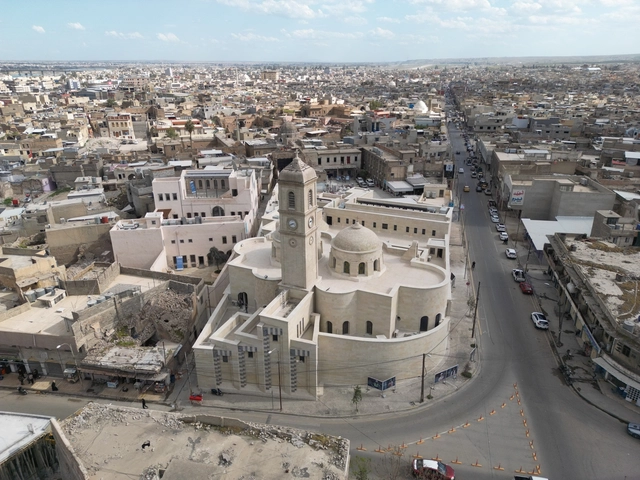
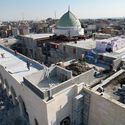
Last November, UNESCO, the Iraqi Ministry of Culture, and the Iraqi Sunni Endowment jointly announced an international design competition for the reconstruction and rehabilitation of the historical Al Nouri Complex in Mosul. One of the oldest cities in the world, Mosul ("the linking point" in Arabic) is beginning a recovery process following years of conflict, guided by an initiative aptly titled "Revive the Spirit of Mosul." The rehabilitation of the Al Nouri Complex, which dates originally to the twelfth century and has constituted a core facet of city life since, is a central part of this initiative, and is intended to signal the city's resilience, hope, social cohesion, and reconciliation in the aftermath of the conflicts. Six months after the competition was originally announced, winners have finally been chosen.
https://www.archdaily.com/959744/meet-the-winners-for-the-reconstruction-and-rehabilitation-of-mosuls-al-nouri-complexLilly Cao
Dutch design practice Mecanoo has shared initials details of the new Macau Central Library as part of a UNESCO World Heritage Site. Designed for the Cultural Affairs Bureau of the Macau SAR Government, the project will be located by the Tap Seac square on the site of the former Hotel Estoril, the first casino resort in Macau. Activating the square and public realm, the library will encourage visitors to uncover and utilize this new public amenity.