David Marks, architect of iconic British structures including the London Eye and the British Airways i360 tower, has passed away at the age of 64 following a long illness.
Co-founder of the London-based practice Marks Barfield Architects with his wife Julia Barfield, Marks was known for his visionary designs for the public realm and entrepreneurial spirit. In proposing both the Eye and the i360 tower, the husband-wife team took considerable financial responsibility for the project’s success. This forward-thinking lead to the replication of the firm’s ideas in cities around the globe.
Earlier today, the UK Prime Minister Theresa May made her closing speech at the Conservative Party Conference in Manchester. In a speech which focused on the fallout of Brexit and the economy, May devoted considerable attention to the issue of the UK housing market, announcing a plan to add £2 billion to the government's existing £7 billion affordable housing fund—a fund which local governments, private housebuilders, and housing associations can apply to for grants to subsidize construction of affordable housing.
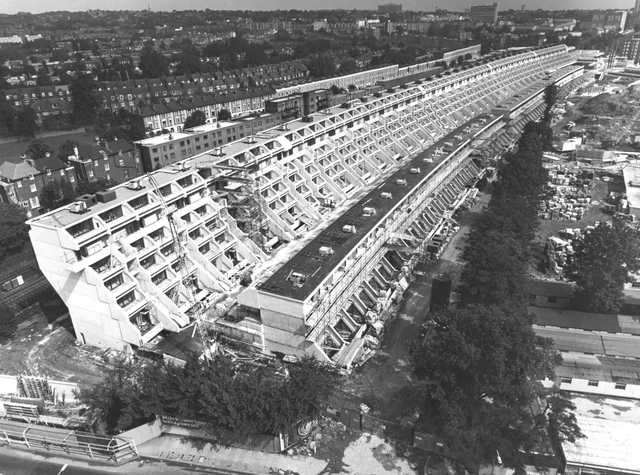
However, the Royal Institute of British Architects (RIBA) has strongly criticized the government's proposal, arguing that £2 billion will not be nearly enough to address the scale of the problem—by most estimates, the country is falling short of housing demand by hundreds of thousands of units annually, and house prices are increasingly out of reach for the young and the poor. In response, the RIBA argues for a much greater investment in social housing, highlighting its recent decision to award its Gold Medal to 20th Century social housing architect Neave Brown and stating that "we need a concerted program of public investment in new social housing across the country and that means spending a lot more than was announced today." Read on for RIBA President Ben Derbyshire's full statement:
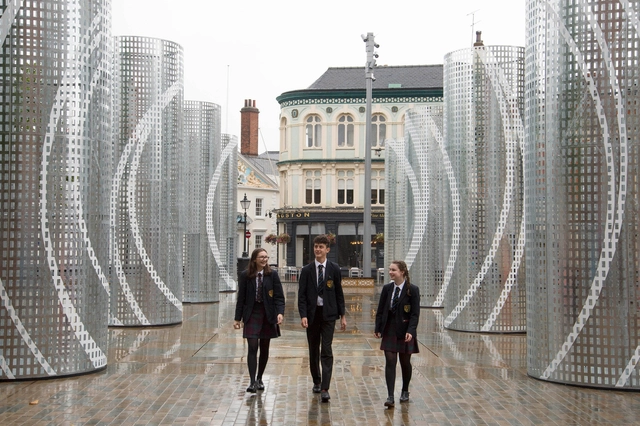
A Hall for Hull with "Trois Points de Vue" by Chilean practice Pezo von Ellrichshausen and Swiss artist Felice Varini has been unveiled in the British city of Hull. Jointly commissioned by the Royal Institute of British Architects (RIBA) and Hull UK City of Culture 2017, the "monumental" outdoor installation has "transformed" Trinity Square [Hull] with sixteen galvanized-steel columns, arranged in a grid formation in front of Hull Minster, to form a new civic room for the city.
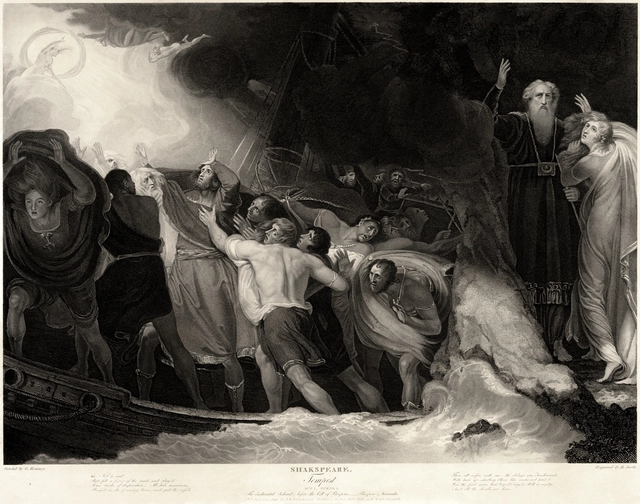
The British Council have revealed Island as the theme of the British Pavilion at the 2018 Venice Architecture Biennale. In the exhibition, Adam Caruso, Peter St. John (Caruso St. John), and Marcus Taylor will engage "with current political themes," and was submitted by means of an open call with reference to Shakespeare’s The Tempest:
Be not afeard; the isle is full of noises; Sounds and sweet airs, that give delight and hurt not.
https://www.archdaily.com/880660/caruso-st-john-marcus-taylor-to-transform-the-british-pavilion-into-a-politically-charged-meeting-space-at-2018-venice-biennaleAD Editorial Team
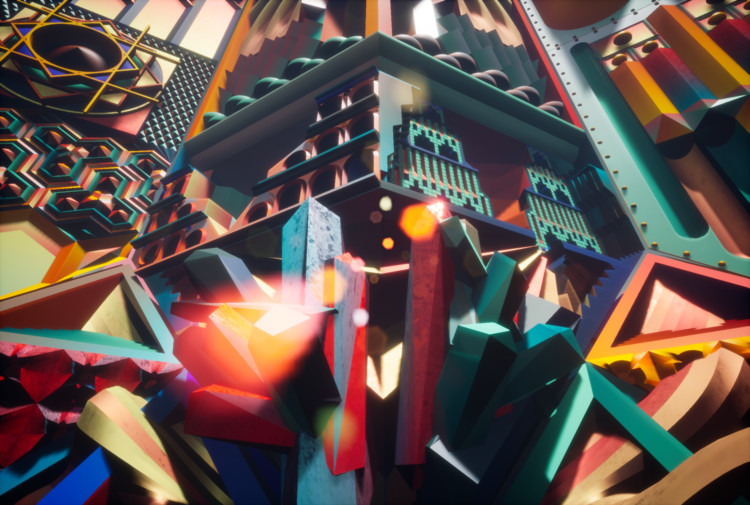
This essay by Space Popular references an installation currently on display at Sto Werkstatt, in London. You can experience it in virtual reality, here.
The Glass House has no purpose other than to be beautiful. It is intended purely as a structure for exhibition and should be a beautiful source of ideas for “lasting” architecture but is not intended as such. According to the poet Paul Scheerbart, to whom it is dedicated, the Glass House should inspire the disillusion of current architecture’s far-too-restricted understanding of space and should introduce the effects and possibilities of glass into the world of architecture.
Bruno Taut [above] described his Glashaus for the 1914 Werkbund Exhibition in Cologne, Germany, as a "little temple of beauty"; as "reflections of light whose colors began at the base with a dark blue and rose up through moss green and golden yellow to culminate at the top in a luminous pale yellow.”[1] The Glass Pavilion, designed based on its potential effects on those who perceived it, was supposed to create vivid experiences. The site was the human mind.
This short article, written by the author and critic Jonathan Glancey, coincides with the launch of the inaugural Architecture Drawing Prize – a competition curated by the World Architecture Festival, the Sir John Soane's Museum, and Make. The deadline for the award has been extended to September 25, 2017, and successful entries will be exhibited in both London and Berlin.
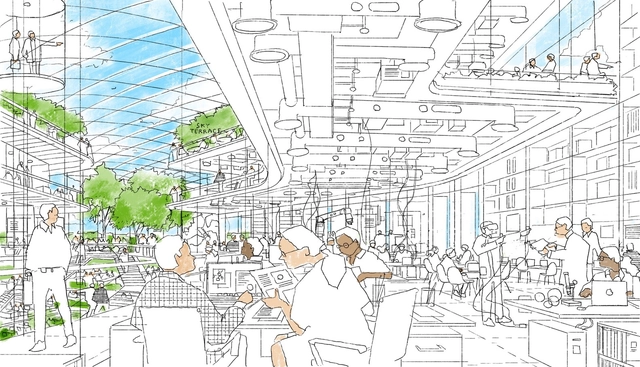
For architects, says Narinder Sagoo, Head of Design Communications at Foster + Partners, drawings are about story telling. They are also a highly effective way of raising questions about design projects. Although the history of architecture—certainly since the Italian Renaissance—has been mapped by compelling drawings asserting the primacy, and reflecting the glory, of fully resolved buildings, there is another strain of visualisation that has allowed architects to think through projects free of preconceptions.
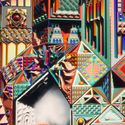
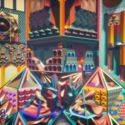
"The Glass Chain" (Die Gläserne Kettein its native German) was an exchange of written letters initiated by Bruno Taut in November 1919. The correspondence lasted only a year, and included the likes of Walter Gropius, Hans Scharoun, and Paul Gösch. In the letters, the penfriends—thirteen in all—speculated and fantasized about the possibilities of glass, imagining, in the words of Fredrik Hellberg and Lara Lesmes (Space Popular), "fluid and organic glass follies and colourful crystal cathedrals covering entire mountain chains and even reaching into space."
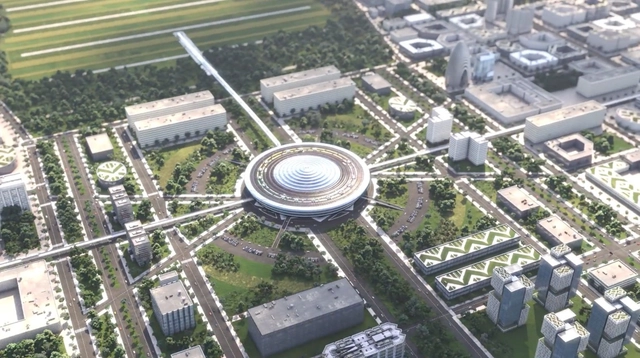
Hyperloop One has announced the 10 winners of its Hyperloop One Global Challenge, which sought to identify the most impactful potential Hyperloop routes across the globe. From hundreds of applicants, 10 systems located in 5 different countries were selected by a panel of experts from fields of infrastructure, technology and transportation as the strongest.
The Westminster Council has approved plans for the Foster + Partners-led transformation of the Snowdon Aviary at ZSL LondonZoo. Designed by English architect and theorist Cedric Price in collaboration with Frank Newby and Lord Snowdon, the Grade II-listed structure became the first aviary in the UK to allow visitors to walk through a natural bird habitat when it opened to the public in 1962.
The revamp will preserve many of the original design qualities from the original structure, while updating safety and viewing strategies for its new inhabitants: a family of colobus monkeys and parrots. To make the monkeys feel at home, the design features a series of platforms and vertical elements, allowing visitors to learn about the animals as they swing, jump and explore their surroundings.
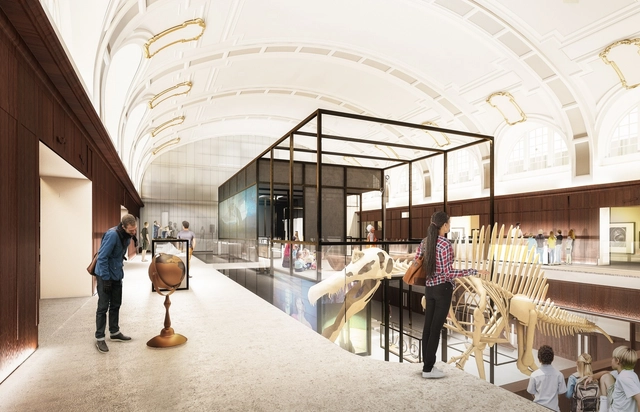
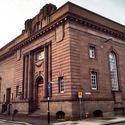
Mecanoo has been selected to design the renovation of the historically landmarked Perth City Hall in Scotland, transforming the building into a new cultural facility through a series of sensitive interventions and a reimagined space flow. Envisioned as a new gateway to Perth, the scheme will pull from the city’s history and culture to create a place that is accessible to all.
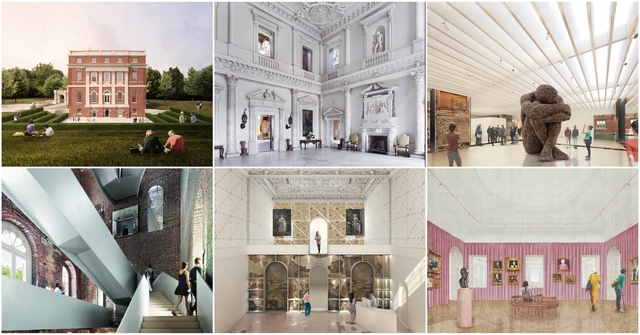
Six teams have been shortlisted in a competition to restore and renovate the historic Clandon Park mansion in the county of Surrey, England, after the National Park property received heavy damage from a fire in 2015.
Organized by Malcolm Reading Consultants, the competition tasked teams with restoring and updating the interiors of the 18th-century Palladian house, as well as designing new flexible event spaces and visitor facilities within the existing building footprint.
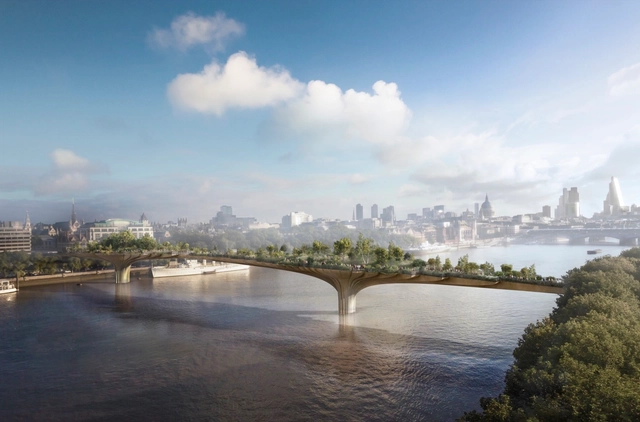
The saga of London’s controversial Thames Garden Bridge project has finally come to end, as the Garden Bridge Trust has announced the official “closure of the project” after losing the support of the public and London Mayor Sadiq Khan.
"It is with great regret that Trustees have concluded that without Mayoral support the project cannot be delivered,” said Lord Mervyn Davies, Chairman of the Garden Bridge Trust in a statement released today.
“We are incredibly sad that we have not been able to make the dream of the Garden Bridge a reality and that the Mayor does not feel able to continue with the support he initially gave us.”
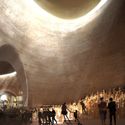
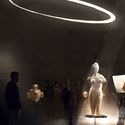
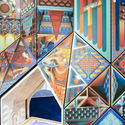
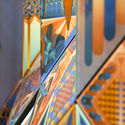
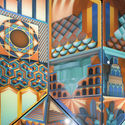
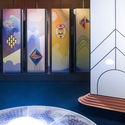
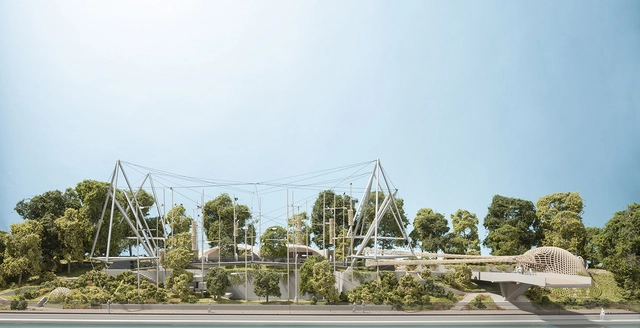
The team led by US-based architects wHY has been selected as the winner of the Ross Pavilion International Design Competition, beating out proposals from Adjaye Associates, BIG, Flanagan Lawrence, Page\Park Architects, Reiulf Ramstad Arkitekter and William Matthews Associates + Sou Fujimoto Architects.
Featuring an international collaboration of architects, engineers and creative agencies – including Edinburgh-based design studio GRAS, Groves-Raines Architects, Arup, Studio Yann Kersalé, O Street, Stuco, Creative Concern, Noel Kingsbury, Atelier Ten and Lawrence Barth – the team envisioned a rolling terrain for the West Princes Street Gardens site that the jury lauded as both exciting and respectful of its historic setting.
"It's quite evident that you're prepared to abandon traditional ways of sitting," Bernard Keeffe exclaims as he collapses into a bright yellow beanbag in Norman Foster's home. "For years," he continues, "people have thought that if they sat down they would have to sit on a chair, but now you have demonstrated that this is not necessary!" In this lengthy 1971 interview with Lord Foster, drawn from the archives of Thames TV, Keeffe questions the practice's early hi-tech approach to architecture in the context of a landscape in which buildings were becoming "ever more complicated."
https://www.archdaily.com/876459/norman-foster-discusses-the-dawn-of-high-tech-architecture-in-this-1971-interviewAD Editorial Team
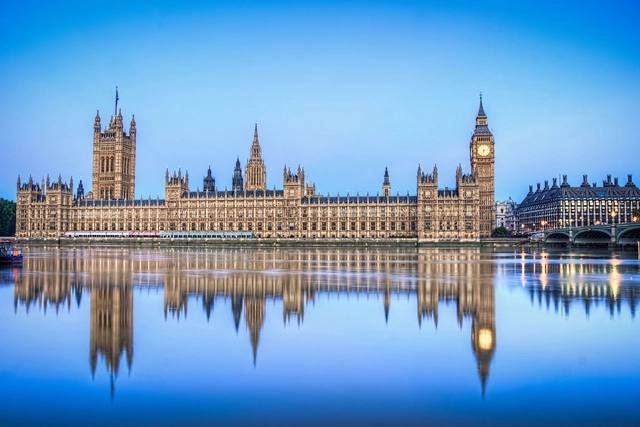
Palace of Westminster, London. Image Courtesy of BDP
Following a two year-long bidding process, British-based international practice BDP (Building Design Partnership) have been chosen to restore and safeguard the future of the Palace of Westminster, the seat of the United Kingdom's parliament. OutbiddingFoster + Partners, Allies and Morrison, and HOK the project is expected to run into billions of pounds and could see the two chambers—the House of Commons and the House of Lords, plus all ancillary support staff—move out of the iconic building for to a decade.
https://www.archdaily.com/876018/bdp-to-restore-london-palace-of-westminster-and-secure-future-for-united-kingdom-houses-of-parliamentAD Editorial Team
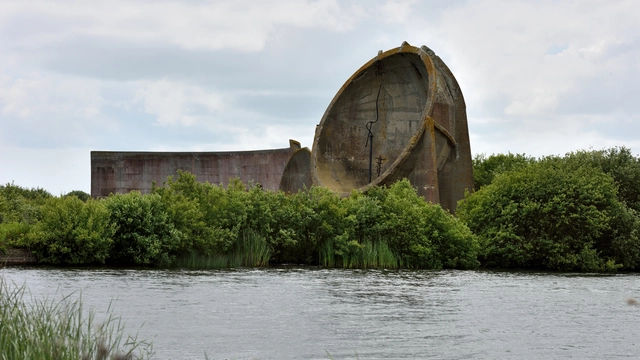
Denge (Greatstone-on-Sea, Kent, Great Britain). Image Courtesy of Tom Lee (licensed under CC BY-SA 2.0)
These vast concrete dishes, which can be found along the northern and easterly British coastline, are sound mirrors. Originally designed to capture the sounds of incoming enemy aircraft as they approached the United Kingdom from across the English Channel and the North Sea (although one was also built at Baħar iċ-Ċagħaq in Malta), these military listening devices acted as a rudimentary early warning system in the decades before Radar was developed and deployed.
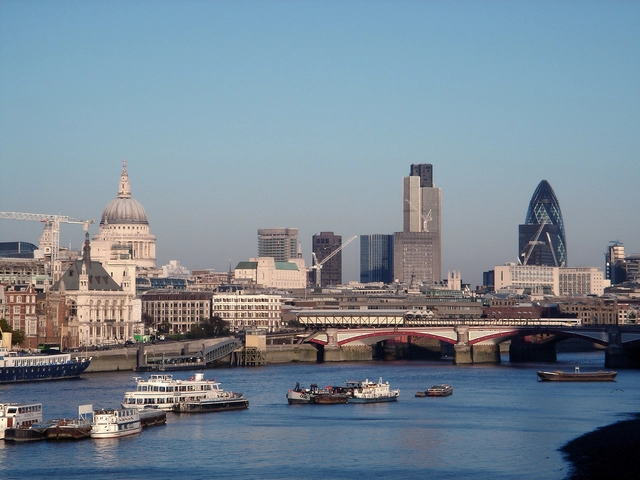
London Skyline in 2005. (Licensed by CC BY-SA 3.0). Image Courtesy of Wikimedia Commons User: Mewiki
The Mayor of London, Sadiq Khan, has appointed fifty "Design Advocates" to support his efforts in ensuring that development across the British capital is "high-quality, inclusive, and sustainable." Well-known names—such as Sir David Adjaye, Peter Murray and Alison Brooks—have been nominated alongside a broad range of architects, activists and thinkers, including Russell Curtis, Daisy Froud, Dan Hill, Richard Lavington, Tom Holbrook, Rory Hyde, Adam Khan, and Maria Smith.
https://www.archdaily.com/875740/david-adjaye-peter-murray-and-alison-brooks-among-mayor-of-londons-new-team-of-design-advocatesAD Editorial Team













_wHY.jpg?1501596121&format=webp&width=640&height=580)
_wHY.jpg?1501596093 "© wHY")
_Malcolm_Reading_Consultants_and_wHY.jpg?1501595222 "© wHY")
_wHY.jpg?1501596107 "© wHY")
.jpg?1501596070 "© wHY")
_wHY.jpg?1501596121)