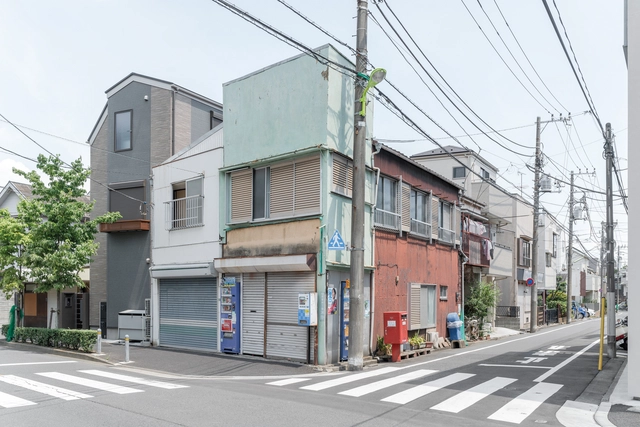
For this year's edition of the Venice Biennale, the Japan Pavilion invites visitors to reflect on the movement of goods fuelling mass consumption and rethink sustainability and reuse in architecture. Titled Co-ownership of Action: Trajectories of Elements, the project curated by Kadowaki Kozo involves dismantling an old wooden Japanese house and transporting it to Venice to be reconstructed in a new configuration with the addition of modern materials. The exhibition exemplifies how old materials could be given an entirely new existence by putting the current movement of goods in the service of reuse rather than consumption.
Sustainable design in the United States is for many a sort of Rorschach test. The construction industry is either making steady progress toward the ultimate goal of a carbon-free building sector, or it’s moving entirely too slowly, missing key targets as the ecological clock keeps ticking. The perplexing truth to all of this is: both are ostensibly true. In recent decades the industry has become significantly more energy efficient. We’ve added building stock but flattened the energy curve. The cost of renewables continues to drop. But way more is required, much more quickly. At the same time, huge hurdles remain. Without a renewable grid and stringent energy codes, it’s hard to see how we can fully decarbonize the building sector in even 20 years, let alone at the timeline suggested by increasingly worried climate scientists. It’s the classic good news/bad news scenario (or vice-versa, depending on your mood).
There’s nothing green about your back-up generator. Manufacturing it released tons of CO2 into the atmosphere; so did shipping it from the factory to the dealership to your backyard. There it will sit, idle, waiting to be deployed only when the much cleaner—but underfunded—public infrastructure fails. At that point, it will fill the air with additional pollutants. There may be perfectly good reasons to buy an emergency generator but being green—that is, protecting the environment—isn’t one of them.
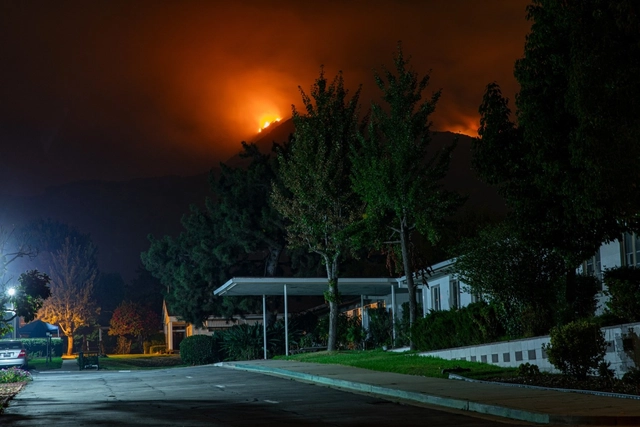
This August, as hundreds of wildfires darkened the sky above my home in Corte Madera, California, thousands of miles away in Florida, my family braced for wind and flooding as two hurricanes barreled towards the Gulf of Mexico. We all hunkered down, anxiously, as climate change-fueled disasters wreaked havoc. For weeks, the air quality in California was too hazardous for us to open our windows or go outside. In Pensacola, the Gulf storm surge was several feet deep around my family’s home and the powerful winds downed mature oak trees in their yard.
Architects and designers of the built environment are often conceptualized in popular culture as progressive change agents whose canvas of steel and glass brings light to the public realm. At least one global survey of the public’s trust in various professions places architects in a top-ranked cohort that includes medical professionals and first responders. But in the United States, the architecture profession is surprisingly older and much less progressive than one might imagine.
https://www.archdaily.com/945591/the-drawdown-review-suggests-that-architects-move-toward-scalable-climate-solutionsJesse M. Keenan
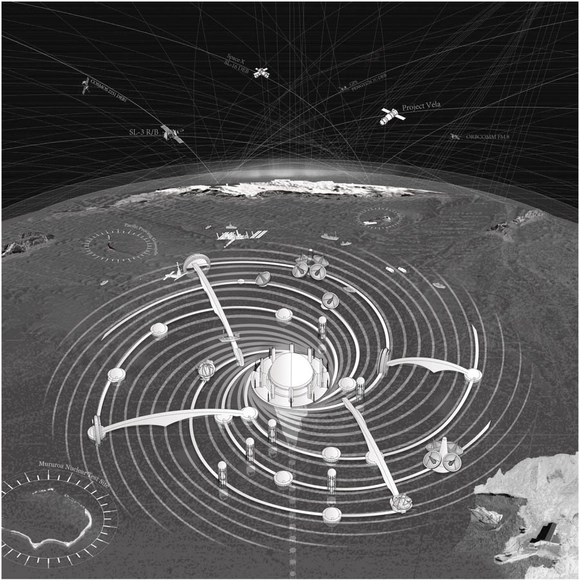
Cosmorama, a part of the U.S. pavilion at the Venice Biennale in 2018, comprised three sets of illustrated geographic stories: Mining the Sky, Planetary Ark, and Pacific Cemetery (a portion of which is pictured above). Courtesy Design Earth
I can’t stop thinking about refugia. In the years, months, and days before the COVID-19 pandemic, the term was confined to the literature and philosophy of climate crisis, referring to pockets of life that through geographic isolation or species resilience manage to hang on in spite of the environmental forces against them. Think of clusters of Pacific Northwest barnacles nestled high on coastal outcroppings to avoid falling prey to sea snails. Or old-growth forests insulated from rising temperatures in cool mountain valleys.
As self-quarantine set in earlier this spring, the word refugia, at least for me, expanded in definition from specific ecological condition to conceptual touchstone—a necessary leap to metaphor when faced with planetary crisis. The magnitude of this pandemic falls outside human comprehension, but for the luckiest of us, refuge is manageable: a place of relative safety, of sourdough starters and online Jazzercise classes.
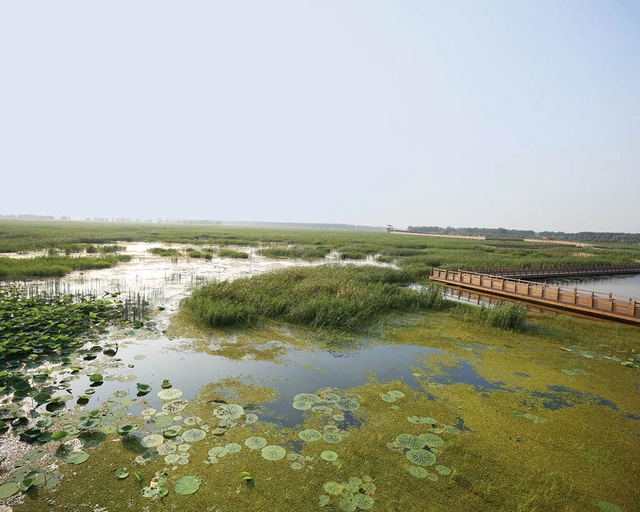
Design With Nature Now revisits Ian McHarg’s eponymous 1969 book and takes stock of current practices and projects of resilience in landscape design the world over, such as AECOM’s Weishan Lake National Wetland Park in Shandong, China. Courtesy AECOM
Moving away from its early exclusive focus on natural disasters, resilient architecture and design tackles the much tougher challenge of helping ecosystems regenerate.
Thirty years ago, as a high school student at the Cranbrook boarding school in suburban Detroit, I wrote a research-based investigative report on the environmental crisis for the student newspaper. I had been encouraged to do so by a faculty adviser, David Watson, who lived a double life as a radical environmentalist writing under the pseudonym George Bradford for the anarchist tabloid Fifth Estate. His diatribe How Deep Is Deep Ecology? questioned a recurring bit of cant from the radical environmental movement: Leaders of groups like Earth First! frequently disparaged the value of human life in favor of protecting nature.
Herman Miller GreenHouse (interior), William McDonough, Holland, Michigan, 1995. Image Courtesy of Herman Miller Archives
While the United States’ green-building industry was still relatively slow in the early 1990’s, Herman Miller, who are known for their architectural experimentation, decided to construct a new facility for Simple, Quick, Affordable (SQA), a company that bought used office furniture to refurbish them and sell them to smaller businesses. To do so, they chose to build sustainably, a design approach that was not yet utilized in the region.
Designed by New York architect William McDonough, the 295,000 sq ft building (approx. 90,000 sqm) was built in Holland, Michigan in 1995. The facility’s design qualities, such as storm-water management, air-filtering systems, and 66 skylights, helped set the standards for the U.S. Green Building Council LEED Certification.
Green building was always part of the firm's DNA, though a little more than ten years ago Lake|Flato formed an internal studio that would focus on landscape and resource management.
For over three decades, San Antonio’s Lake|Flato Architects have advanced the cause of critical regionalism in South Texas. Founding partners David Lake and Ted Flato met in the office of O’Neil Ford, an early Texas Modernist whose work combined structural innovation with local building traditions. When they started their own practice in 1984, Lake and Flato carried this germ with them, turning out a series of ranch houses that garnered attention for their deft blending of modern modes of living, indigenous materials, and agro-industrial vernacular.
Although the sun is almost 150 million kilometers away, this star has had the most impact on our planet. But while some are busy chasing the sun for sun-kissed skin, architects are all about creating sun-kissed spaces.
By definition, “passive solar energy is the collection and distribution of energy obtained by the sun using natural means”. The simple concept and process of implementing passive solar energy systems have provided buildings with heat, lighting, mechanical power, and electricity in the most environmentally-conscious way possible.
In this article, we will provide you with a complete guide of implementing passive solar systems in your designs.
Sustainability awards and standards touted by professional architecture organizations often stop at opening day, failing to take into account the day-to-day energy use of a building. With the current format unlikely to change, how can we rethink the way what sustainability means in architecture today? The first step might be to stop rewarding purpose-built architecture, and look instead to the buildings we already have. This article was originally published on CommonEdge as"Why Reusing Buildings Should be the Next Big Thing."
At the inaugural Rio Conference on the Global Environment in 1992, three facts became abundantly clear: the earth was indeed warming; fossil fuels were no longer a viable source of energy; the built environment would have to adapt to this new reality. That year I published an essay in the Journal of Architectural Education called “Architecture for a Contingent Environment” suggesting that architects join with both naturalists and preservationists to confront this situation.
https://www.archdaily.com/909863/why-reusing-buildings-should-and-must-be-the-next-big-thingMark Alan Hewitt
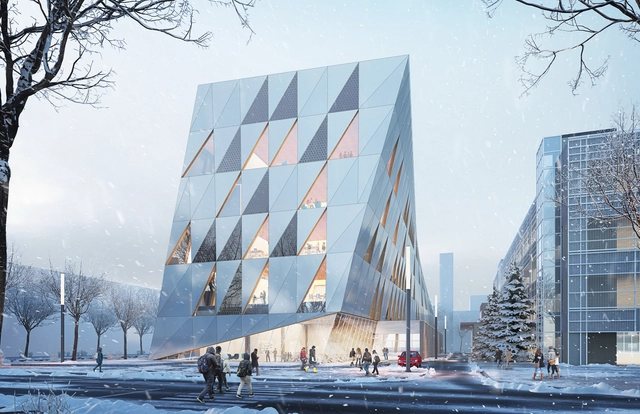
The School of Continuing Studies will frame an architectural gateway at the South edge of the Campus. Image Courtesy of Perkins + Will
Perkins+Will’s triangulated facade scheme has won an international competition for the design of the new School of Continuing Studies at York University’s Keele campus outside of Toronto, Canada.
Beating out proposals from top firms, including finalists HOK andGow Hastings Architects with Henning Larsen, Perkins+Will’s design twists as it rises, both reacting to solar optimization studies and opening up the building to create a new gateway at the campus’ southeast entrance.
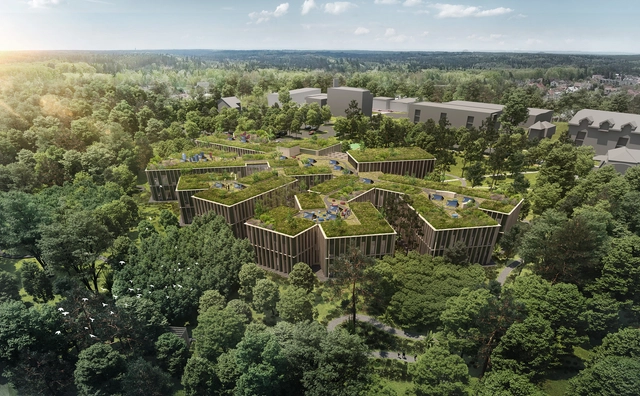
Estimated Forest Growth. Image Courtesy of Chybik + Kristof
A design team under the direction of Chybik + Kristof has won the international competition to design a new administrative center for the Czech Forestry Commission in Hradec Králové. The project focuses on a symbiotic relationship between the building and the adjacent forest, where the natural landscape outside begins to mingle with the office spaces within.
Perkins+Will is creating a whole new world 62 miles northwest of Shanghai for the Suzhou Science & Technology Museum. Inspired by shan sui, the Chinese phrase for "mountain-water,” the complex lies at the foot of Lion Mountain and adjacent to Shishan Lake. The 600,000 square foot museum will be the focal point of a new cultural neighborhood in Shishan Park.
For over ten thousand years, cities have maintained an industrial infrastructure to transform local materials into basic necessities, such as clothing, food, and shelter. Even in the present day, with advances in science, construction, and commercial technology, a need still exists for structures dedicated to industrial-scale production, storage and distribution. However, in this more advanced, environmentally-conscious age, a challenge has emerged to create industrial complexes which are ecologically sensitive, responsible and sustainable.
Against this environmental backdrop, Istanbul-based GAD Architecture have unveiled Media City, a multimedia-based industrial complex to serve Istanbul’s future airport, projected to be the world’s largest upon completion. Recognized with a Future Project Award by the Architectural Review, Media City will incorporate industrial buildings in an urban setting inspired by QR codes, where artistic and cultural values co-exist with a celebration of environmental and technological progress.
One general trend in today's Information Age involves the absolute transmutation of downtime into productivity or engagement of any kind, however meaningless. We hear it all the time: we have lost our ability to be still. However, as a team at Ennead Lab has observed, some of the same technologies that are causing this shift in routine also have the potential to open new, empty pockets of time in our daily lives, and affect the built spaces with which we interact.
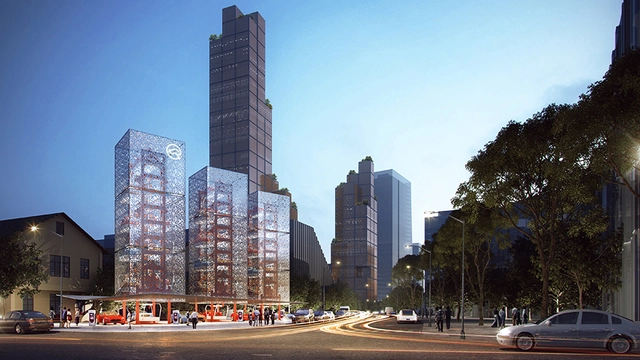
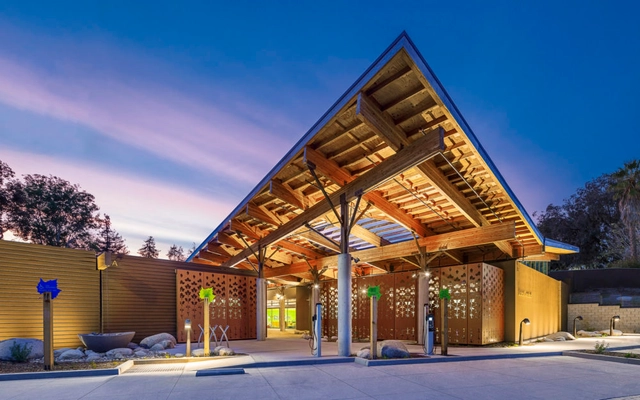
Tasked with designing an electric car charging station for a development in Shanghai, Ennead realized that the five hours required to fill up a single standard charge necessitate a place for customers to wait. In an article on Metropolis Magazine, they show that the promise of transportation-less people to stick around in one place for such a period of time opens up a host of possibilities for what could fill the latency period; the Shanghai project, however, focuses on the opportunity to create a civic space. The team has imagined the modern "gas station" as a vertical charging tower that calls upon the functionality of urban parking elevators in the 20th century, this time clad in reflective silver to serve as a beacon for customers in search of a charge. Rather than standalone charge-park towers, the projects are integrated into a system that encourages patrons to walk to neighboring zones to eat, shop, and socialize while they wait.
Knowles’ research into environmental conditions and theories about solar envelope zoning prefigured the parametric tools architects and planners use today. This scheme for an L.A. row-housing project demonstrates how dense developments—both low- and high-rise—could still provide equity in terms of natural sunlight. Image Courtesy of Ralph Knowles
I meet architect and educator Ralph Knowles on an unseasonably warm autumn day, even for Southern California. He greets me in shirtsleeves (his shirt is a tropical pattern of vines and branches) and leads me to a seat on the balcony of his condo. The building—a retirement community—is fairly new, but mature oak trees line the quiet street. As we talk about his career, the California oaks form a poignant backdrop. For more than five decades, Knowles, 88, has argued for an architecture that hews closely to nature’s forces and rhythms.
Metropolis editor in chief Susan Szenasy sits down with William McDonough—the designer, author, and developer of Cradle to Cradle design—to understand why we must begin to employ a new language regarding carbon and sustainable design.
Susan Szenasy: Your article in Nature, “Carbon is Not the Enemy,” really caught my attention. You're redefining how we think about carbon, what it is, and what we should be looking for. It seems like a new phase that you're leading us to. How did you come up with this idea, that there needs to be a new language on carbon? Can you trace back your thought process?
William McDonough: [With the UN’s Climate Change Conference in Paris in 2015,] everybody kept saying, "Oh, we have to do this, to reduce our carbon 20% by 2020." Well, when you think about that Susan, it's absurd. What you're telling us is what you're not going to do. You’re going to reduce your badness by 20% by 2020? That would be like getting in a taxi and saying to the driver, "Quick, I'm not going to the airport." It doesn't tell us what you're going to do.






.jpg?1561180124&format=webp&width=640&height=580)