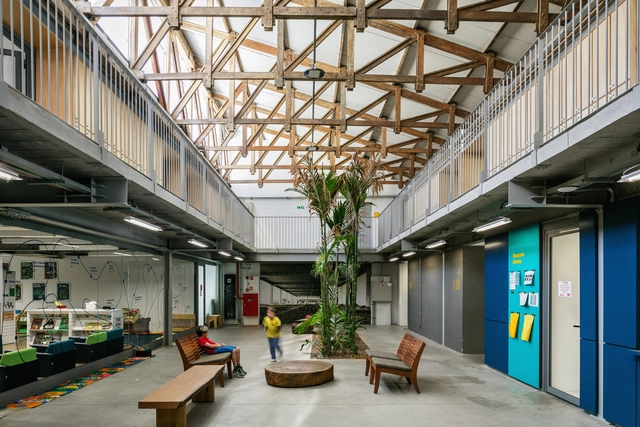
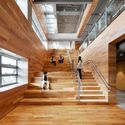
Arteries of hope by Partner-z Architects. Image Courtesy of Partner-z Architects
This week’s curated selection of Best Unbuilt Architecture highlights educational facilities submitted by the ArchDaily community. From a contextual Earth school in Senegal, to a borderless, collaborative school in Vietnam, this round up of unbuilt projects showcases how architects infused nature with architecture, offering students the chance to engage with the landscape and learn more about their surroundings from their academic institutes. The article also features projects from Lebanon, Switzerland, Armenia, Ukraine, and Greece.
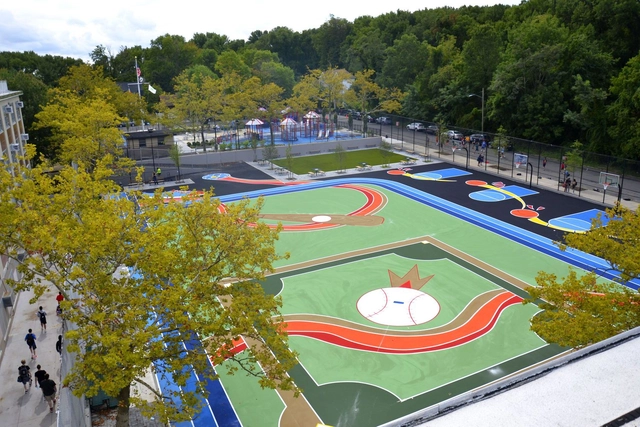
A new report from The Trust for Public Land (TPL) makes a compelling case for transforming underperforming, paved public schoolyards into green oases for the entire community. While the benefits for schools and their educational communities are clear, TPL sees an opportunity to open up these facilities to surrounding neighborhoods after school hours, on weekends, and when school is out. If all 90,000 public schools in the country had a “community schoolyard,” more communities could tackle the persistent park equity issue — in which too few communities, particularly undeserved ones, enjoy access to nearby high-quality public green spaces. TPL argues that opening up all schoolyards, essentially turning them into part-time all-access community hubs, would “put a park within a 10-minute walk of nearly 20 million people — solving the problem of outdoor access for one-fifth of the nation’s 100 million people who don’t currently have a park close to home.”
https://www.archdaily.com/971293/the-incredible-opportunity-of-community-schoolyardsJared Green
Following the recent evolution of the climate crisis, policymakers and private companies are getting behind the transition towards clean energy. California is set to mandate solar panels and battery storage for new buildings in a move towards establishing a 100% clean energy grid, while across the US, public schools are redesigned to operate on green energy. In Europe, the EU launched a call to establish an offshore renewable energies working group that would help define the framework for reaching the EU’s ambition of at least 300 GW of offshore wind and 40 GW of ocean energies by 2050. At the same time, furniture manufacturer IKEA announced it would start selling renewable energy to Swedish households.
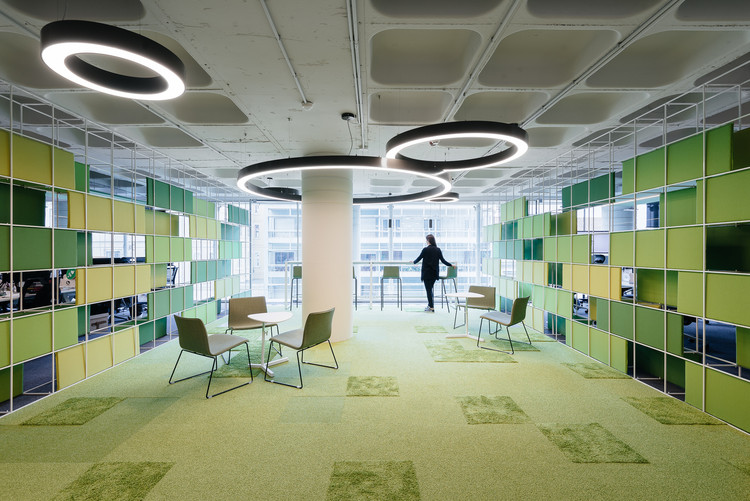
It is safe to say that living in large urban areas, most of the sounds surrounding us are accidental, and most of them are not very pleasant. According to Julian Treasure, chairman of The Sound Agency, sounds can affect us in many ways: physiologically, psychologically, cognitively, and behaviorally, reducing productivity in workspaces and even affecting sales in retail stores. Therefore, paying attention to acoustic comfort in the built environment is imperative, not only for engineers and consultants but also for architects.
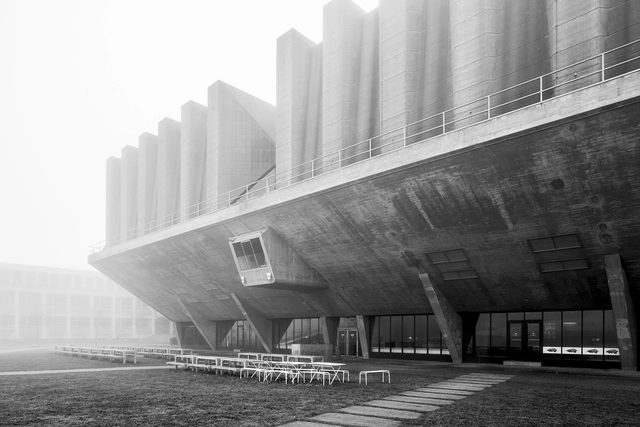
In his book “The New Brutalism in Architecture: Ethical or Aesthetic?,” Reyner Banham establishes what he deems the semantic roots of the term 'Brutalism,' explaining that it comes from one of the " indisputable turning points in architecture, the construction of Le Corbusier's concrete masterpiece, la Unité d'habitation de Marseille. It was Corbusier's own word for raw or rough-cast concrete, "Béton brut," that made Brutalism a mainstay in architectural jargon and, in many ways, the term, as well as the architecture it described, flourished." In the book, Banham highlights the historical milestone marked by Corbusier's Unite d' Habitation and the socio-political context that shaped it. In steel-starved post-World War II Europe, exposed concrete became the go-to building material within the burgeoning Brutalist movement, which quickly defined itself by its bare-bone, rugged surfaces and dramatic, geometric shapes.
Few things irritate us more than exposure to excessive noise or inability to hear what we need to hear. Whether it's a nearby construction site, highway traffic, air conditioning, or a neighbor learning saxophone, research shows that noise can contribute to cardiovascular disease, high blood pressure, headaches, hormonal changes, sleep disturbance, reduced physical and mental performance, and the reduction of well-being. On the other hand, in an acoustically "comfortable" environment, in addition to listening to what we want, we focus better and feel calmer.
The concern about creating acoustically comfortable environments is often relegated to cinemas, concert halls and recording studios. But it is particularly important in learning environments, such as classrooms, as it directly influences the teaching-learning relationship. Acoustic discomfort can harm the process of knowledge acquisition, interfering with attention and worsening student-teacher communication.
Titled "Future School", the Korean Pavilion at the 17th International Architecture Exhibition - La Biennale Di Venezia, transforms the structure into an explorative academic facility. Curated by Hae-Won Shin, the pavilion will be on display at the Giardini from May 22nd until November 21st, 2021.
The ongoing pandemic has been a disruption to the everyday routines of billions around the world, as due to being confined to their households, the separation between work and rest has become extremely blurry, with people forced to rethink and reconfigure the layout of their personal spaces. Conversations have abounded on how to create flexible working spaces in a home environment, and if offices themselves are an outdated model that we should leave behind. A missing part of that conversation, however, is the impact that the pandemic has had on children, specifically primary-school level children, on their education - as inequalities are emphasized, some children learning with slow internet connection speeds, or struggling to have the space required to adequately complete educational activities.
Many of our childhood experiences take place in school. Whether these memories are good or bad, most children and teenagers spend a majority of their days in classrooms or other educational facilities. According to IQAir, “every year, children spend an average of 1,300 hours in school buildings.” But even as the world changes rapidly, and the internet in particular increases the accessibility of information, the design and operation of schools remain, in a way, outdated. As noted in a previous article, ideally the typology of educational spaces and the configuration of classrooms should suit more contemporary ways of teaching and learning, rather than the traditional organization of rows of desks facing a teacher at the head. But it is important that the analysis of educational facilities does not stop there. All surfaces and materials have a significant impact on both the well-being and learning of users.
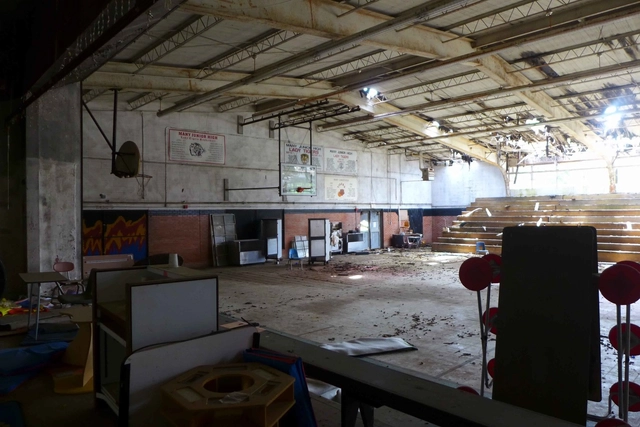
Throughout the south of the United States, hundreds of mid-century “equalization schools”—public schools built in the 1950s following Brown vs. Board of Education in a desperate effort to maintain segregated “separate but equal” schools in southern states—sit empty, abandoned, and crumbling.
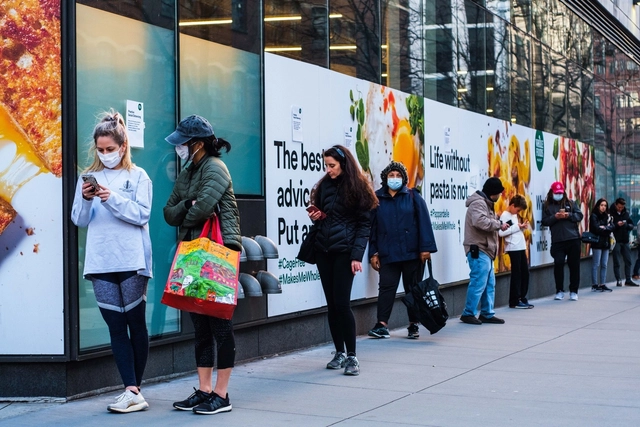
In order to ensure a proper transition into post COVID-19, architects, public health experts, and engineers are generating design guidelines to provide people with new secure, and efficient resources. Finding a balance between optimizing operations and keeping people safe, the strategies tackle the built environment that surrounds us, from restaurants and outdoor dining, to streets, offices, and retail.
Addressed to city officials, owners, and employers, the tools developed help to reopen the world, while reducing the risk of COVID-19 transmission, promoting social distancing standards, and enhancing wellbeing. Discover in this article a roundup of design guidelines securing a safe post coronavirus transition.
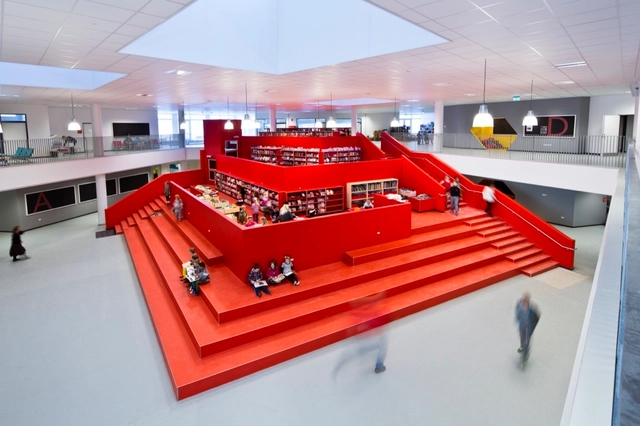
New City School, Frederikshavn / Arkitema Architects . Image Cortesía de Arkitema Architects
According to architect and academic Frank Locker, in architectural education, we keep repeating the same formula from the 20th-century: teachers transmitting a rigid and basic knowledge that gives students, no matter their motivation, interests, or abilities, little to no direction. In this way, says Locker, we are replicating, literally, prisons, with no room for an integral, flexible, and versatile education.
"What do you think of when you're in a space with closed doors and a hallway where you can't enter without permission or a bell that tells you when you can enter and leave?" asks Locker.
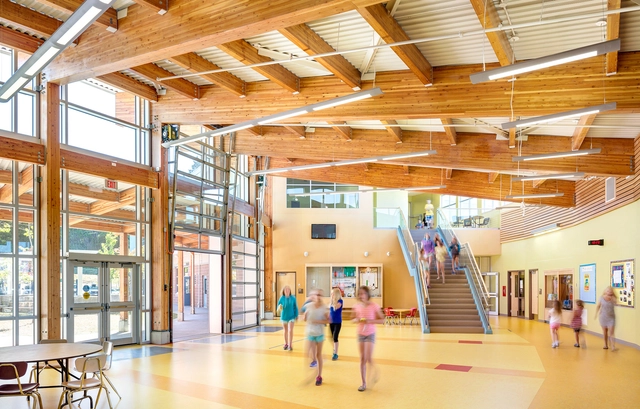
Woodland Elementary School / HMFH Architects. Image Cortesia de HMFH Architects
It is a student's right to be educated in a safe, healthy, and even aesthetically appealing environment, especially young students for whom these factors are even more important. For example, it has been shown that when the ergonomics of chairs are inadequate, they can greatly affect levels of concentration and the development of skills such as calligraphy. At the same time, the effectiveness of traditional teaching methods is increasingly being questioned and the quality of alternative methodologies increasingly being considered. In other articles, we discussed in more detail the design of Montessori schools and the atmosphere of Waldorf interiors.
Today, we will cover the importance of choosing furniture and address some aspects to consider when organizing them in classroom design for the schools of the future.
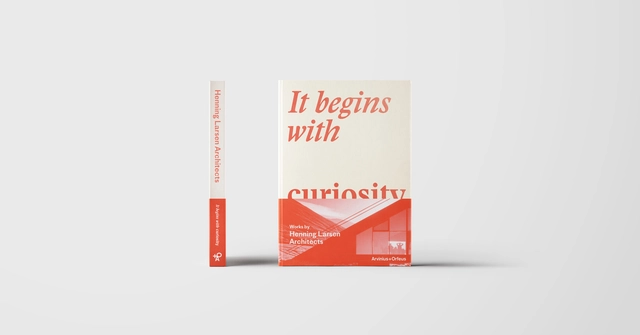
Henning Larsen is proud to present It Begins with Curiosity, the studio’s first ever monograph after more than half a century at the forefront of Scandinavian architecture and urbanism. The studio has been a pioneer in and ambassador for Danish design, bringing its unique principles and approach to projects as diverse as the Ministry of Foreign Affairs in Riyadh and Kiruna City Hall in Sweden. The book dives deep into the studio’s legacy, recent works, and outlooks to share their vision of how to create a more livable and sustainable future for all.
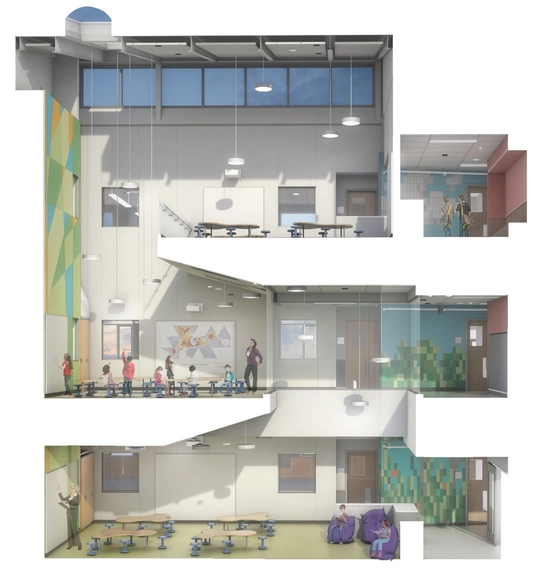
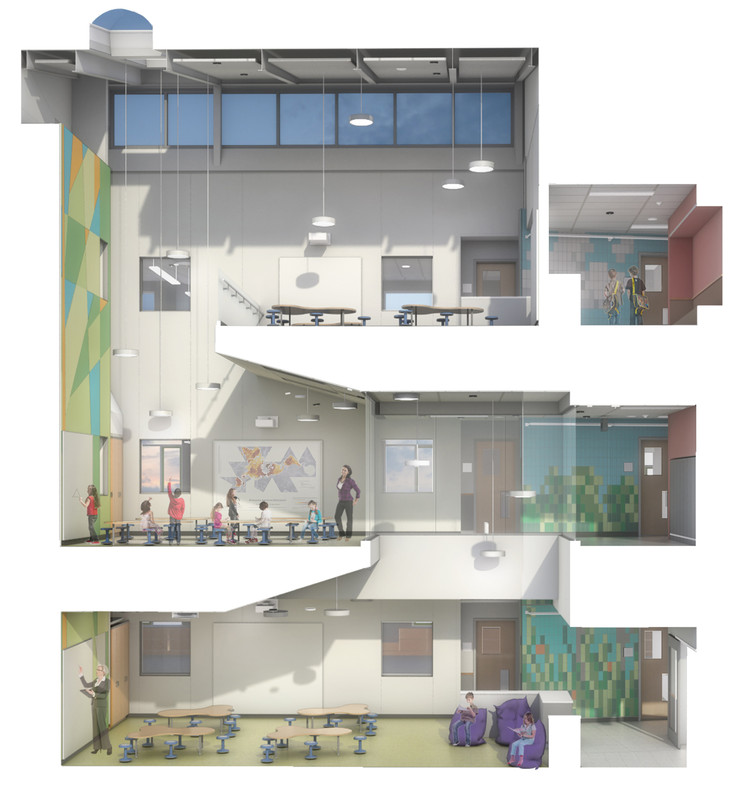
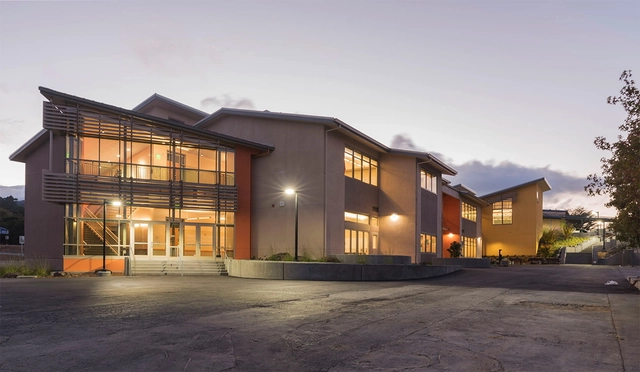
Burlingame Intermediate School. Image courtesy of Hamilton + Aitken Architects.
“When we started out, our goal was to change the world, to do something that would really make a difference to the lives of people,” said Chad Hamilton, AIA LEED AP BD+C, Principal Architect of Hamilton + Aitken Architects (H+AA). “And education is one of the things that really determines how people live the rest of their lives. “So, for us it’s just a wonderful feeling, to improve kids’ educational spaces.”
https://www.archdaily.com/919991/sustainable-school-design-how-hamilton-plus-aitken-architects-maximize-natural-light-using-vectorworksSponsored Post
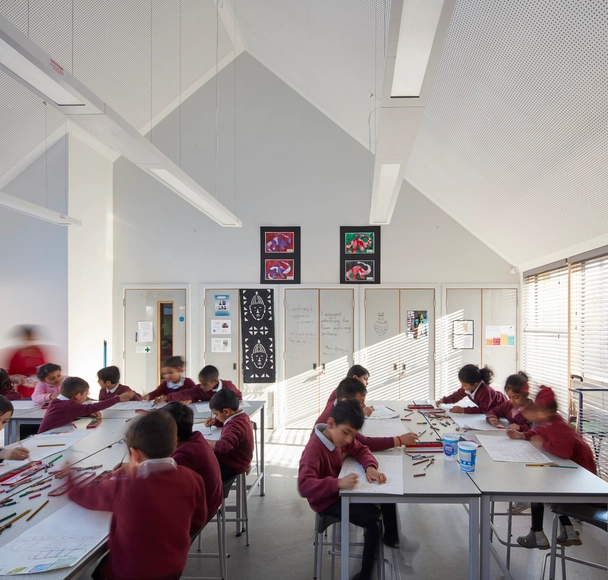
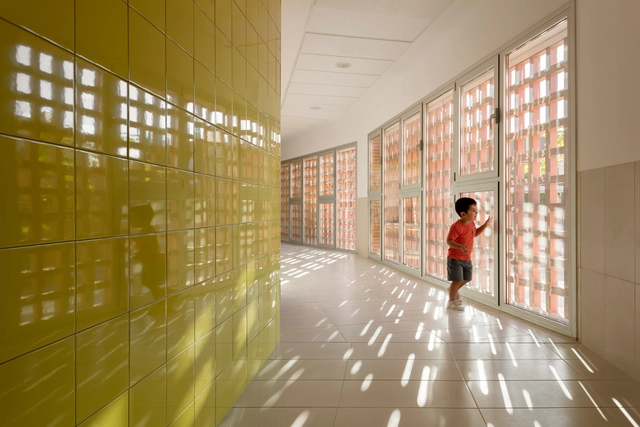
European children spend approximately 200 days a year at primary school. Even though the academic year in most parts of the world is not as long as in Europe, the place where children and adolescents spend the most time, following their own homes, is usually in educational institutions. These can be places for learning, playing and socializing, and as sad as it may be, they can also be safer places for children living in environments of abandonment, hunger, and violence, providing them with opportunities and even meals. A United Kingdom-wide survey found that the differences in physical characteristics of classrooms accounted for 16% of the variations in learning progress over the course of a year. In other words, the better a classroom is designed, the better children perform academically. According to the study, the factors that most affect children are sunlight, indoor air quality, acoustic environment, temperature, the design of the classroom itself and the stimulation within it.
The key to a good education lies not only in good books and the teacher's didactics. The learning environment which students attend also has a great influence on their education since the requirements for acoustic, thermal and luminous comforts, or even landscaping, directly influence the behavior and attention of the students. In Brazil, school projects can vary widely from the private sector to the public sector, yet in both cases, it is possible to find high-quality solutions.


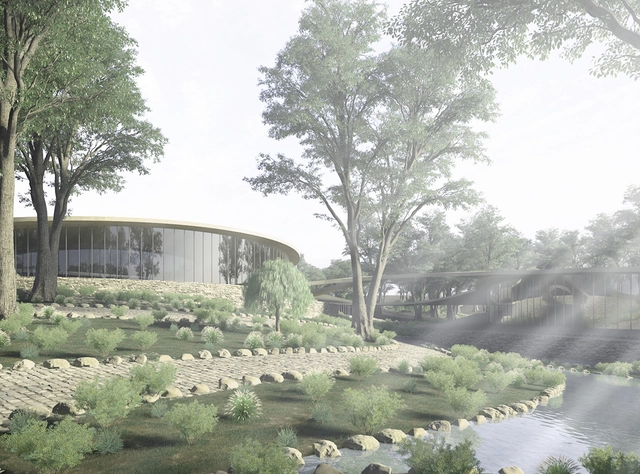

.jpg?1656583509 "The Creeper – COAF Smart Campus Armavir by TarberAK Architectural Studio; TL Bureau. Image Courtesy of TarberAK Architectural Studio; TL Bureau")









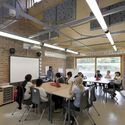
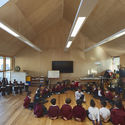
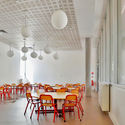

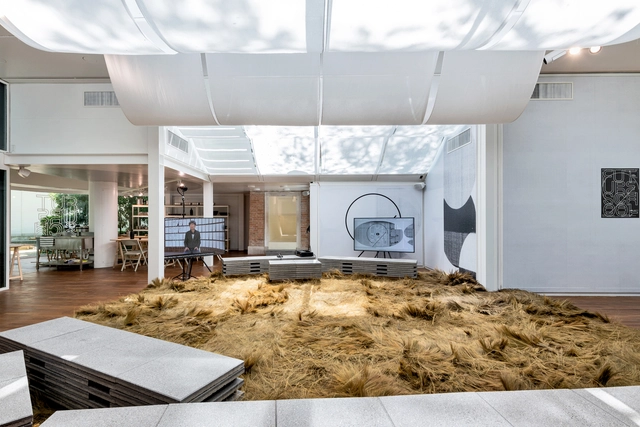





.jpg?1598300039&format=webp&width=640&height=580)




.jpg?1560778703&format=webp&width=640&height=580)