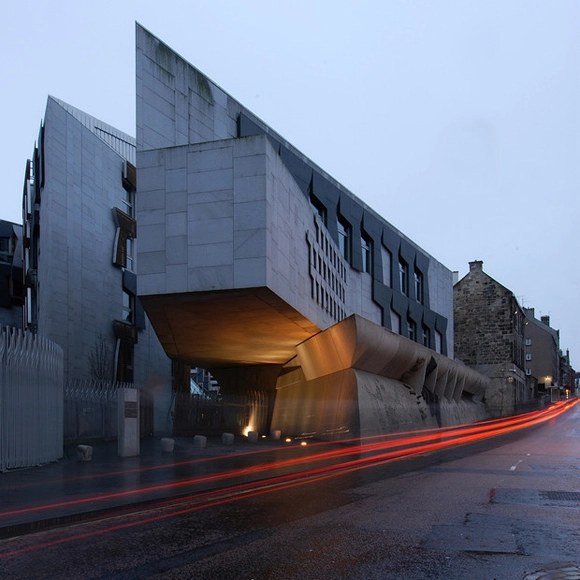
A total of sixteen projects have been shortlisted for RIBA South West 2015 Awards, featuring buildings by Glenn Howells Architects, Feilden Clegg Bradley Studios, AHR, and Stonewood Design. All shortlisted buildings will now be assessed by a regional jury. Regional winners will then be considered for a RIBA National Award in recognition of their architectural excellence, the results of which will place some projects in the running for the 2015 RIBA Stirling Prize.
See the complete list of shortlisted projects after the break.
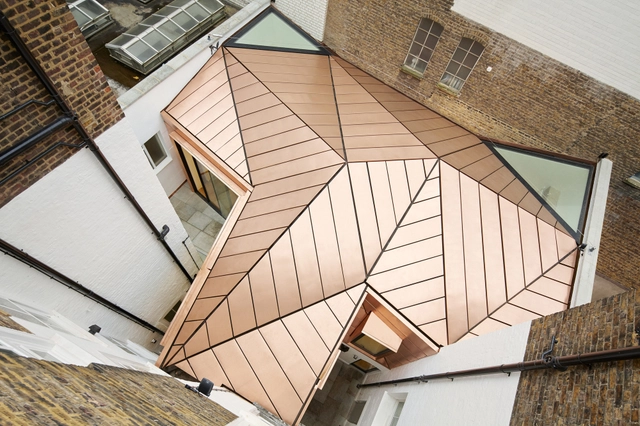
A total of eleven projects have been shortlisted for RIBA East Midlands 2015 Awards, featuring buildings by Evans Vettori, Make, Orms, and Studio Gedye. All shortlisted buildings will now be assessed by a regional jury. Regional winners will then be considered for a RIBA National Award in recognition of their architectural excellence, the results of which will place some projects in the running for the 2015 RIBA Stirling Prize.
See the complete list of shortlisted projects after the break.
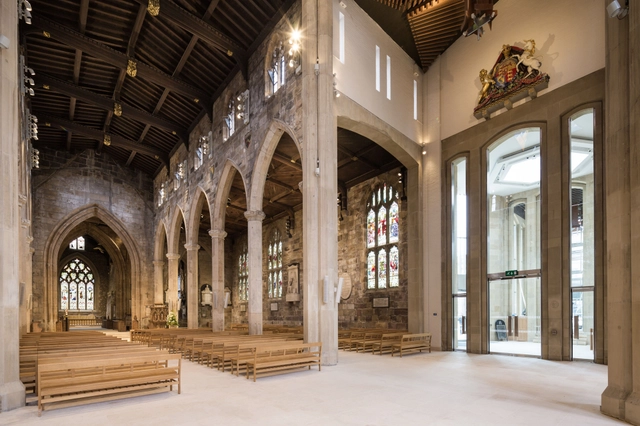
A total of eleven projects have been shortlisted for RIBA Yorkshire 2015 Awards, featuring buildings by Populous, HLM, and Studio Gedye. All shortlisted buildings will now be assessed by a regional jury. Regional winners will then be considered for a RIBA National Award in recognition of their architectural excellence, the results of which will place some projects in the running for the 2015 RIBA Stirling Prize.
See the complete list of shortlisted projects after the break.
The Royal Institute of British Architects (RIBA) have today announced a call for entries to the 2015 RIBA Awards programme. The prestigious awards are designed to celebrate the best architecture projects that have been opened within the past two years. Projects of all sizes and budgets from across the UK (excluding those in Scotland) are eligible to be entered to the RIBA Regional Awards. Scottish projects can be entered into the RIAS Awards. Those that are successful in the regional rounds are made eligible to be considered for the RIBA Stirling Prize, one of the most coveted awards in the architectural world.
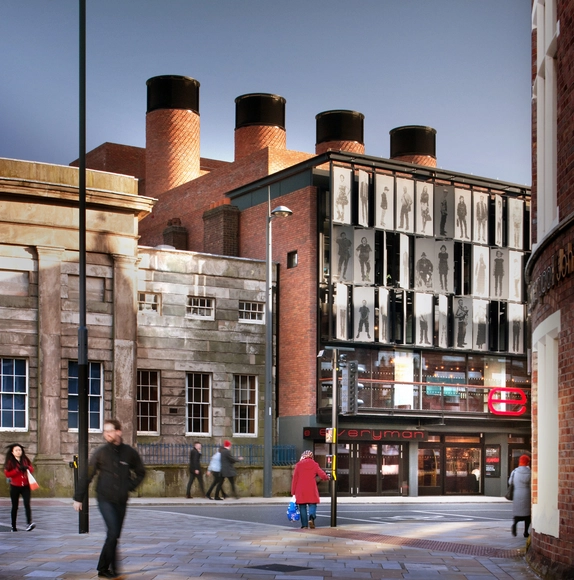
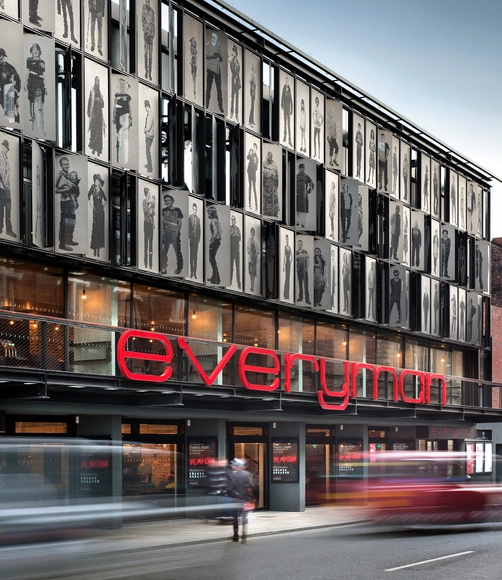
In what was seen by many as the strongest shortlist in years, the underdog Everyman has emerged victorious. But was it a worthy winner? Read on after the break to find out what the critics made of this unexpected result.
Haworth Tompkins'Everyman Theatre has won the RIBA Stirling Prize for 2014, beating competition from Zaha Hadid, Renzo Piano, Mecanoo, O'Donnell + Tuomey and Feilden Clegg Bradley. The result was announced last night by RIBA President Stephen Hodder at an event held at the RIBA's Headquarter's in London, with Hodder saying that "Haworth Tompkins have struck the perfect balance between continuity and change" and calling the scheme "a ground-breaking example of how to build a daring, bold and highly sustainable large public building in a historic city centre."
The RIBA and the BBC have partnered to screen a series of interactive online films in the final week leading up to the announcement of the 18th RIBA Stirling Prize. As the UK’s most prestigious architecture award, given annually to “the architects of the building that has made the greatest contribution to the evolution of architecture over the past year,” the shortlist has garnered worldwide attention. Although the ultimate decision lies in the hands of a jury, headed by British architect Spencer de Grey, the BBC will host a public vote which is available as of today.
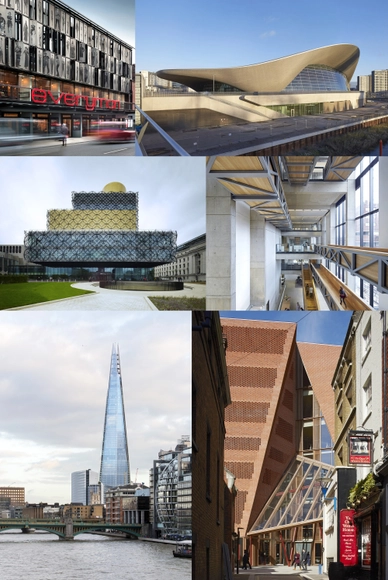
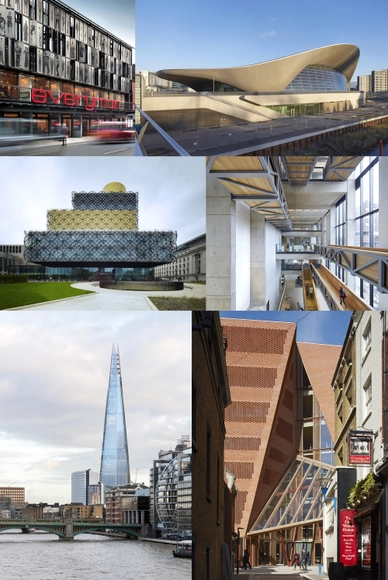
The Royal Institute of British Architects (RIBA) has now announced the six projects that form this year's Stirling Prize Shortlist, the award that is the ultimate prize for any British building. As the RIBA's most publicly prominent award, the Stirling Prize is often a prime demonstration of the tension between architecture that is widely appreciated by the general populace, and that which is lauded by architectural critics and practitioners.
This year is no exception, with perhaps the country's highest-profile project in years - the Shard - just part of the controversy. What did the critics make of the RIBA's selection? Find out after the break.
The RIBA has announced the six projects that will compete for the 2014 Stirling Prize, the award for the building that has made the greatest contribution to British architecture in the past year. The six nominees will now be judged head to head for British architecture's highest honour, based on "their design excellence and their significance in the evolution of architecture and the built environment," with a winner announced on October 16th. See the full shortlist after the break.
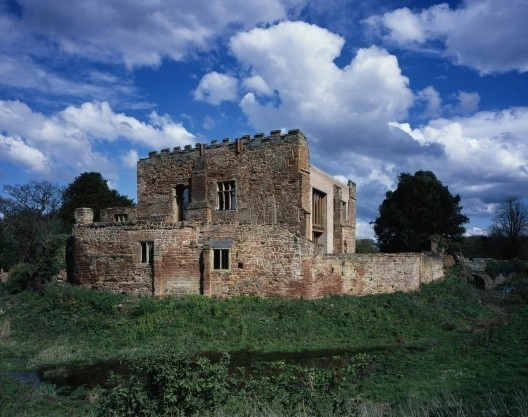
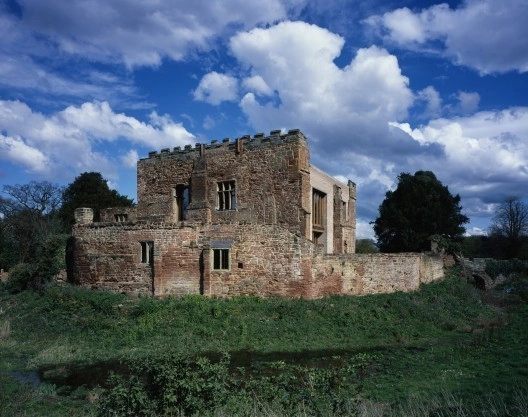
The annual RIBA Stirling Prize is set to regain its £20,000 cash prize following a year of no prize money in which Witherford Watson Mann scooped the accolade for Astley Castle. Considered to be the UK’s most prestigious architecture award, the Stirling Prize is presented annually to the “building that has made the greatest contribution to the evolution of architecture in the past year”. Brockton Capital have agreed to support the prize for the next three years starting from 2015, after which the prize will be known as the RIBA Brockton Stirling Prize. The lack of prize money in 2013 raised questions about the significance of the award.
Having been officially in the role for only two months, Hodder spent some time with us discussing his hopes for the next two years. Find out why he described himself as a fan of Scandinavians and prog-rock after the break...
A few weeks ago the RIBA doled out the 18th Stirling Prize to London-based architects Witherford Watson Mann. The decision was a good one. It was good for WWM and good for the profession – a youngish practice being recognized for a small but beautiful piece of work.
The scheme’s application of brickwork and joinery removes the work from the expediencies of modern construction technology and building products, which almost exclusively characterize the contemporary built environment. It genuinely feels like a project made at a different point in history, the result of the quite particular interests of three minds, Stephen Witherford, Chris Watson and William Mann. It is direct and personal. It reminds me of Stirling’s work..
And not just for its powerful draftsmanship, plan and restricted palette of materials, but for its intimacy. An intimacy that is apparent in much of Stirling’s oeuvre. I do not refer to the production of intimate spaces per se but the formulation of an architecture that is authored not by a factory but a few minds.
The latest Stirling prompted me to look back, and reconsider the work of Stirling himself.
Following the news that the 2013 RIBA Stirling Prize was been won by Witherford Watson Mann for Astley Castle at a ceremony in London last week, the critical response to the project has been extremely positive. Joseph Rykwert (who recently won the RIBA Gold Medal) said that "Witherford Watson Mann have been gentle surgeons, saving the essential, eliminating the incidental". Check out the critical responses from The Financial Times' Edwin Heathcote, The Guardian's Oliver Wainwright, Building Design's Ellis Woodman, and the Architects' Journal's Rory Olcayto after the break...
With Astley Castle winning this year's Stirling Prize last week, Olly Wainwright investigates the fortunes of other Stirling Prize winners - finding that in many cases critical acclaim and awards do not necessarily translate to long term success. His study brings into question what qualities should be awarded, and seems to imply that there should be a greater focus on post-occupancy awards, such as the 10-year award started by the Council on Tall Buildings and Urban Habitat’s (CTBUH) this year, and another being considered by the RIBA. You can read Wainwright's full investigation here.
The 2013 RIBA Stirling Prize has been won by Witherford Watson Mann for Astley Castle (Nuneaton, Warwickshire). The winner was just announced at a ceremony at London's Central Saint Martins, a building designed by last year's winner Stanton Williams. Astley Castle was also voted as BBC readers' favourite earlier this week. Jury-member Stephen Hodder stated that "engaging with the building was such a surprise for [the jury]," and described it as an "unassuming" building with great "rigour."
_JoChambers-Cropped-764x500.jpg?1428504204&format=webp&width=640&height=580)

AlanWilliams.jpg?1426489201&format=webp&width=640&height=580)






_Landmark_Trust.jpg?1380664454)