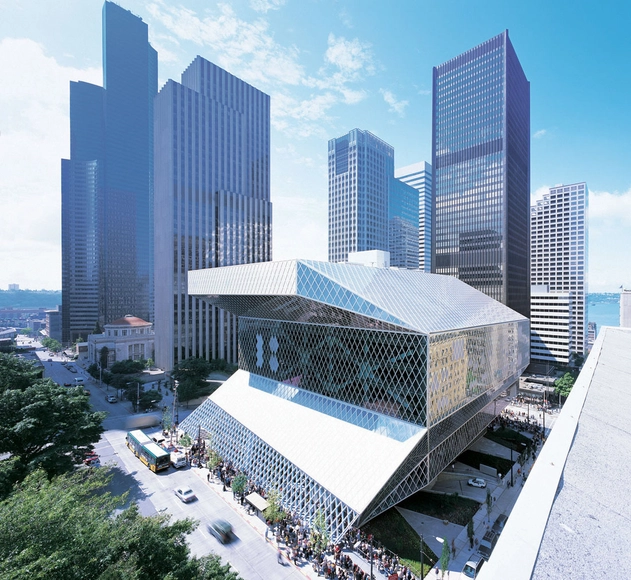
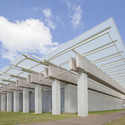
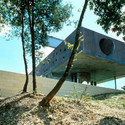
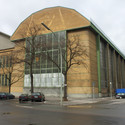
Courtesy of Strelka Institute for Media, Architecture, and Design, via Flickr
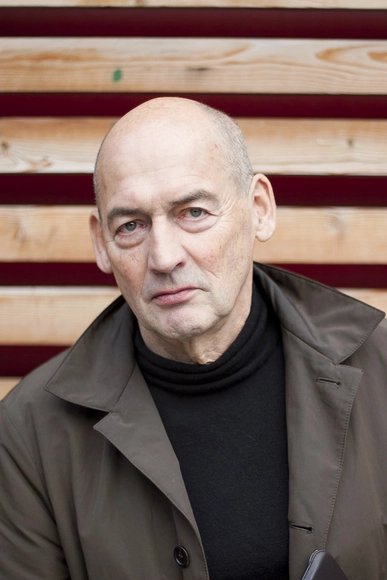
In the latest of a series ofpolemicalarguments against smart cities, Rem Koolhaas has penned perhaps his most complete analysis yet of the role that emerging technologies and the way they are implemented will affect our everyday lives, in an article over at Artforum. Taking on a wide range of issues, Koolhaas goes from criticizing developments in building technology as a "stealthy infiltration of architecture via its constituent elements" to questioning the commercial motivations of the (non-architects) who are creating these smart cities - even at one point implicating his other erstwhile recent interest, the countryside, where he says "a hyper-Cartesian order is being imposed." Find out more about Koolhaas' smart city thoughts at Artforum.
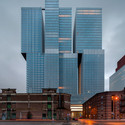
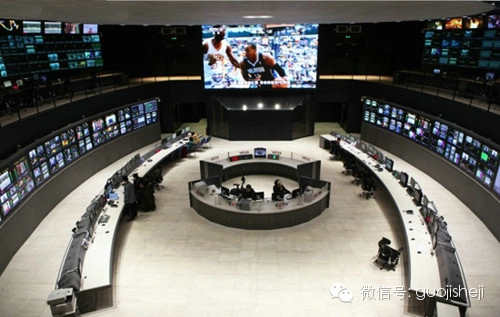
Since the building's construction concluded in 2012, images of OMA's CCTV Headquarters have permeated the media. But inside views of this mutant skyscraper -- characterized by a soaring 72 meter cantilever -- have remained rare. Until now, that is. Images originally published by International Design and shared on WeChat by 广电独家 reveal the interior of OMA's CCTV Headquarters, including Emmy-winning set designer Jim Fenhagen's news studios.
This past October Alejandro Zaera-Poloabruptly resigned from his position as Dean of Princeton’s School of Architecture amidst plagiarism rumors. The resignation, requested by University President Christopher Eisgruber, was the result of Zaera-Polo's removal of citations from his contribution to the “Facade” section of the Elements of Architecture exhibition at the 2014 Venice Biennale.
Claiming the rumors to be “demonstrably false,” Zaera-Polo has issued a “clarifying statement” outlining the purpose of his Biennale text to be polemic, and nonacademic, therefore it did not breach “any moral, ethical, or other applicable standards.” An email in support of Zaera-Polo sent by Rem Koolhaas to Eisgruber three days before the resignation has also released, denouncing any wrongdoing from Koolhaas’ perspective as the Biennale’s director.
Read Koolhaas' email, Zaera-Polo's clarification statement and a response from Princeton in full, after the break.
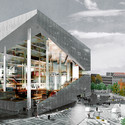
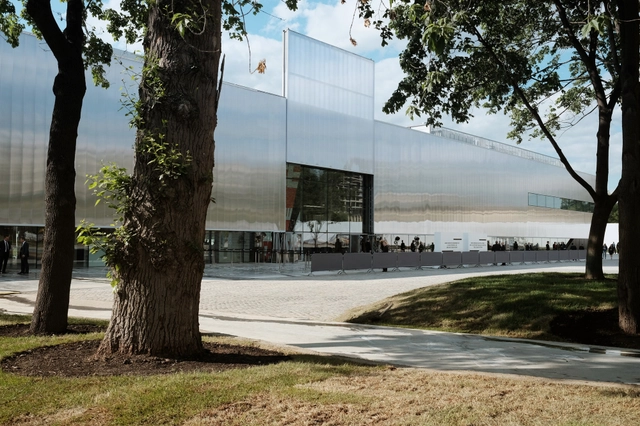
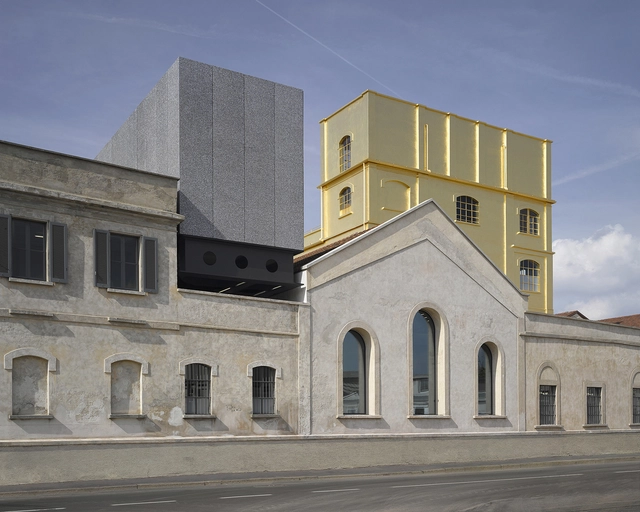
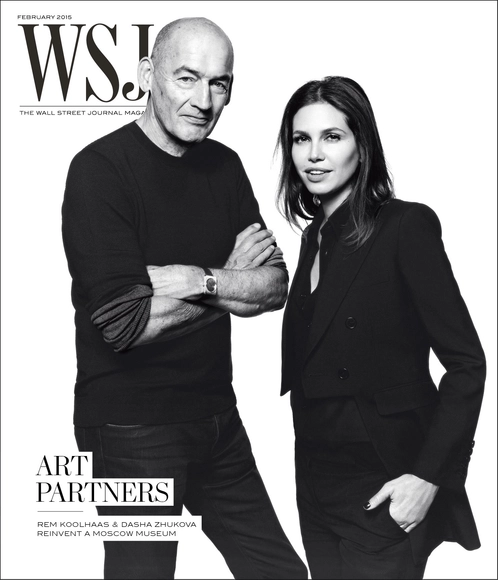
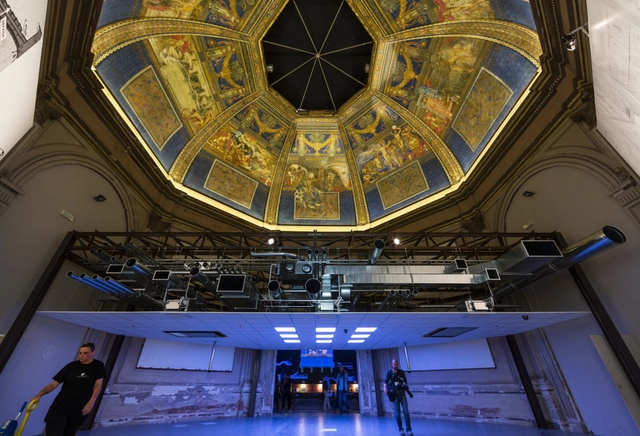
Rem Koolhaas and art philanthropist Dasha Zhukova will be gracing the WSJ. Magazine’s February cover as “art partners” embarking on a transformation that will turn a ruined Brezhnev-era Communist landmark - the Vremena Goda in Moscow’s Gorky Park - into the Garage Museum of Contemporary Art’s new home. “The building is basically a found object,” said Koolhaas, regarding his “raw” design and intent to preserve the structure’s decay. “We are embracing it as it is.”
How will technology that began in Silicon Valley change global urbanism and the elements of architecture? In this video from the 2014 Venice Biennale, inventor, designer and entrepreneur Tony Fadell discusses technology and its emerging impact on architecture with Rem Koolhaas. As a co-founder of Nest Labs, Fadell played a major role in developing the first Apple iPod and has taken his knowledge of interactive user interface with him to change one of the most basic interface elements in our homes – the thermostat. With adaptive technologies becoming increasingly prevalent in our daily lives, Koolhaas discusses the potential ramifications of technological architecture with concerns ranging from privacy to individual freedoms and more.
The Smart Cities concept is linked to highly "liveable" cities such as Vancouver superseding more recognizable cities in our collective consciousness. Image Courtesy of SFU
I had a sinking feeling as I was listening to the talks by these prominent figures in the field of smart cities because the city used to be the domain of the architect, and now, frankly, they have made it their domain. This transfer of authority has been achieved in a clever way by calling their city smart – and by calling it smart, our city is condemned to being stupid. Here are some thoughts on the smart city, some of which are critical; but in the end, it is clear that those in the digital realm and architects will have to work together.
Fundamentals, the title of the 2014 Venice Biennale, will close its doors in a matter of days (on the 23rd November). From the moment Rem Koolhaasrevealed the title for this year’s Biennale in January 2013, asking national curators to respond directly to the theme of ‘Absorbing Modernity 1914-2014’, there was an inkling that this Biennale would be in some way special. Having rejected offers to direct the Biennale in the past, the fact that Koolhaas chose to act not only as curator but also thematic co-ordinator of the complete international effort, was significant. This announcement led Peter Eisenman (one of Koolhaas' earliest tutors and advocates) to state in one interview that “[Rem is] stating his end: the end of [his] career, the end of [his] hegemony, the end of [his] mythology, the end of everything, the end of architecture.”
Videos
1,2,3 Group: Samuel Meyering, Rem Kolhaas, Frans Bromet, Rene Daalder, Jan de Bont. Image courtesy of Rene Daalder. Via The Architecture Foundation
Before studying architecture at the Architectural Association in London, Rem Koolhaas embarked on a short but fruitful career in film as a member of 1,2,3 Group, a youthful band of five who shared different roles in front of and behind the camera in a kind of anti-auteur cinema.
The first film produced by the group came from the longtime friendship between Rem and scriptwriter and director Rene Daalder, who along with Jan de Bont, Frans Bromet and Samuel Meyering produced 1,2,3 Rhapsody (1965), a short film which featured Koolhaas as an actor in some scenes and a cameraman in others.
Courtesy of Strelka Institute for Media, Architecture, and Design, via Flickr. Used under Creative Commons
Rem Koolhaas, one of today's most celebrated architects, has lived a significant year. With the closing of his much-talked about Venice Biennale just days away, the Dutchman also turns 70 years old this coming Monday.
https://www.archdaily.com/567462/help-us-honor-rem-koolhaas-on-his-70th-birthdayAD Editorial Team
The President of the People's Republic of China, Xi Jinping, has reportedly called for an end to the "weird buildings" being built in China, and particularly in the nation's capital, Beijing. In a two hour speech at a literary symposium in Beijing last week, Mr Xi expressed his views that art should serve the people and be morally inspiring, identifying architectural projects such as OMA's CCTV Headquarters as the kind of building that should no longer be constructed in Beijing.
With China's construction boom being one of the most talked about features of today's architecture scene - and many a Western practice relying on their extravagant projects to prop up their studios - the Chinese leader's comments have the potential to affect the landscape of architectural practice worldwide. But what is behind these sentiments? Read on after the break to find out.
In December of last year, we brought you news of Tomas Koolhaas' kickstarter campaign to fund a documentary about his father, Rem Koolhaas. Well, not only was Koolhaas' REM documentary fully funded, three generous backers offered up $500 each in return for one question to be answered directly by Rem Koolhaas himself. The video above is the result of those questions, in which Koolhaas responds to questions on urbanism in the developed country of the Netherlands compared to still-developing India, as well as a question about how his early work in film-making and scriptwriting influenced his architectural career.
Watch the video above and read on after the break for a synopsis of Koolhaas' answers
How does contemporary architecture differ around the world and what causes these differences? In this video of a discussion between Rem Koolhaas and Nest C.E.O Tony Fadell at Vanity Fair’s New Establishment Summit, Koolhaas gives some interesting insights into his experience with decision-makers around the world. Watch the video above and read Vanity Fair’s full article here to learn more about this seldom-considered factor in building design.
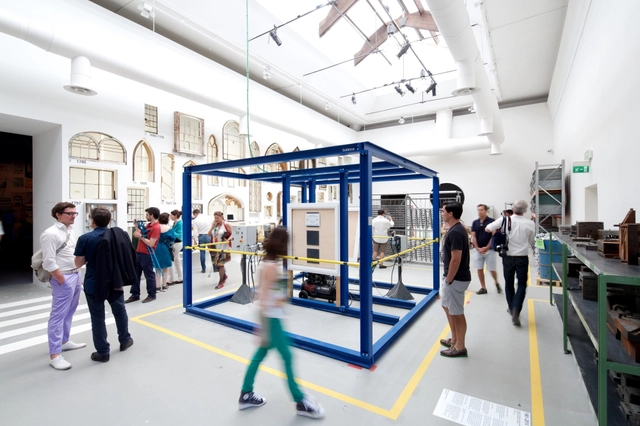
In “Elements,” an exhibition and accompanying book for the 2014 Venice Architecture Biennale, Rem Koolhaas seeks to explore the omnipresent components of buildings that have never been intentionally articulated by architectural theory. Breaking down the history of architecture into its fundamental components, the text is divided into 15 volumes and functions as “a technophilic treatise on the state of architectural thinking in the twenty-first century.” Despite providing lessons in architectural history, does the book deliver a compelling synthesis of all its parts? In his full review of the book for Metropolis Magazine, Samuel Medina argues that Koolhaas "fails to unpack the language of his argument," resulting in a book that is "ambitious, overreaching, maddening" - much like the exhibition itself. Read the full review here.
When you abandon the countryside in favour of the city, what do you leave behind? In a recent essay for Icon Magazine, OMA co-founder Rem Koolhaas deliberates on the intersection between the two, arguing that "our current obsession with only the city is highly irresponsible because you cannot understand the city without understanding the countryside."
ArchDaily is continuing our partnership with The Architectural Review, bringing you short introductions to the themes of the magazine's monthly editions. In this post, we take you back to AR's July 2014 issue, which focused on this year's Venice Biennale. In her introduction, AR Editor Catherine Slessor argues that while previous Biennales have been hopelessly out of touch, this year Rem Koolhaas has initiated a critical conversation at a crucial moment in time.
In its giddy, self-referential way, the Venice Architecture Biennale always seems blissfully detached from the real world. Set in the preposterous, decaying stage set that is modern Venice, the press vernissage is a frenzied bacchanal, as the global cognoscenti descend like locusts on a fragile urban eco-system already bludgeoned by battalions of tourists and hulking cruise ships.