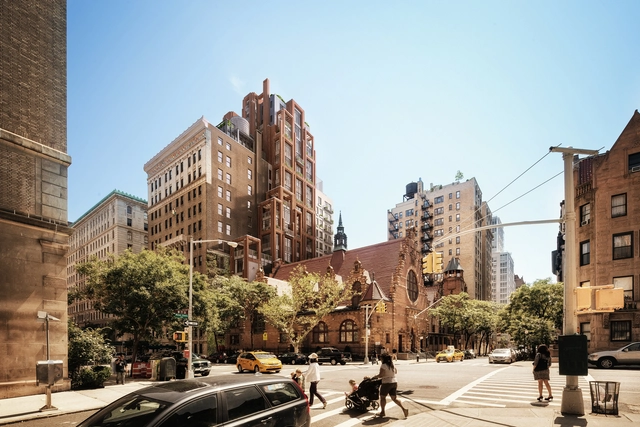
The New York City Landmarks Preservation Commission has approved COOKFOX Architect's plans for a mid-rise, 66-unit condominium building in Manhattan. Planned for two parcels of land in the West End Collegiate Historic District, next to one of the Churches' five ministries, the project aims to "fit harmoniously with the distinct streetscape" while "interweaving the rich historic details of the Upper West Side with subtle contemporary and sustainable design."
If there’s one thing that can get the architectural community up in arms, it’s the threat of demolition being placed over a much-loved building. Whether it’s a 44-year-old bus station, a 38-year-old hospital, or even a 12-year-old art museum, few other news stories can raise such a sustained outcry. And recently, some have started to turn their eyes toward the next wave of preservation battles: the upcoming crop of Postmodern buildings which are increasingly being placed under threat. But in all of these heated debates about preservation, do people really know what they’re arguing for?
What are the characteristics of preservation-worthy architecture? In his book "Belyayevo Forever: A Soviet Microrayon on its Way to the UNESCO List," Kuba Snopek finds uniqueness in the seemingly generic Belyayevo microrayon, and argues that in spite of its pattern-book design it is worthy of protection. In this excerpt from the book's first chapter, Snopek examines Belyayevo's predecessor - the Ninth Quarter of Cheryomushki, which was constructed in the 1950s as an experiment that would transform Soviet housing policy - finding it to be a place which challenges our preconceived notions about architectural heritage.
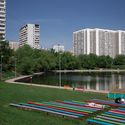
A foreigner’s first contact with Moscow might begin with Google Earth. Its virtual tour through Russia’s capital starts with a view of its radial-concentric plan: loops of circular roads radiating from the Kremlin are cut through with the straight lines of prospects (avenues) and streets leading from the center towards the outskirts. This general scheme is familiar to any European architect: many other cities have circular boulevards, straight avenues and ring roads.
Since 1957, the Middle East Center at St. Antony's College has been the University of Oxford's facility for research and teaching on the Arab world, Iran, Israel and Turkey. Over the years, the center's world-class archive has grown exponentially, leading to the commission of Zaha Hadid Architects to expand its facility; the recently completed Investcorp Building doubled the center's library and archive space, while delicately integrating a new 117-seat lecture theater into the college's restricted site.
Honoring its success and "vital role" in the community, the Investcorp Building has been selected as a winner in the OxfordPreservation Trust Awards' New Building category - now in its 38th year.
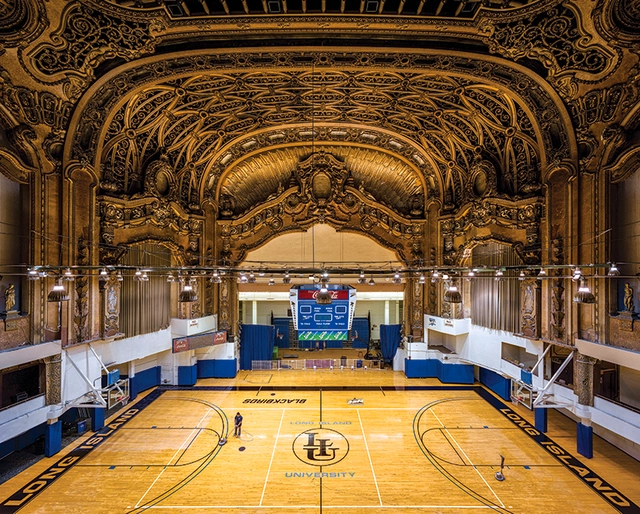
We enjoy looking at historic interiors, but there’s more to them than meets the eye. Behind the walls, below the floors, and underneath the painted surfaces are the back-stories few people have heard about the city’s known and not-so-known landmarks. The authors of Interior Landmarks: Treasures of New York (The Monacelli Press; September 29, 2015) will take us behind the scenes of some of the City’s most interesting spaces. They will tell little-known and fascinating stories about places like City Hall and the Tweed Courthouse, Loew’s Paradise Theater, the Four Seasons Restaurant, the Dime Savings, and Manufacturers Trust bank buildings. They will share stories of the political wrangling, financial skullduggery, design competitions, preservation challenges, and restoration problems that designers and builders dealt with to provide insight into why these venues are so special and how even being a landmark doesn’t guarantee that a great space will remain safe from damage, or change. This program delves into the themes of our exhibition Saving Place: 50 Years of New York City Landmarks, on view through January 3.
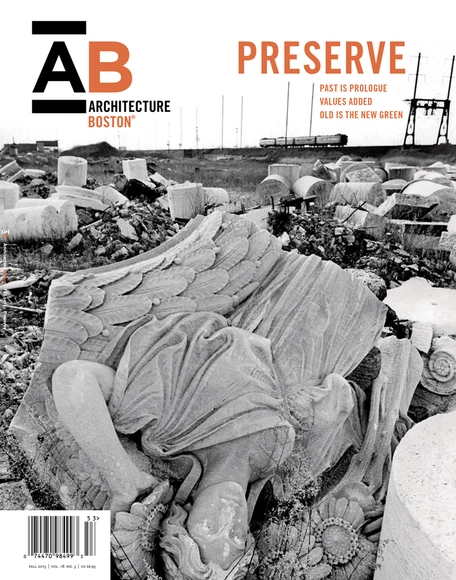
When it comes to sustainable architecture, the focus has historically been on designing buildings to reduce emissions. In recent years though, this focus has expanded to take into account the full life-cycle impact of a building and its components. But is this enough? In this article from ArchitectureBoston's Fall 2015 Issue, originally titled "Old is the new green," Jean Carroon FAIA and Ben Carlson argue that not only are most green buildings not designed with the full life-cycle of their materials in mind, but that even those which are they rely on a payback period that we simply can't afford. The solution? A dose of "radical common sense" in the form of preservation.
“Radical common sense” is the term a fellow preservation architect uses to describe a mindset that values repair over replacement. Why is this radical? Because, while reuse of water bottles and grocery bags is rapidly gaining ground, reuse of buildings and building components is not. And it’s not hard to see why: It is almost always less expensive and easier to replace a whole building and almost any of its elements — doors, windows, light fixtures — than to repair and reuse. Replacement also can offer measurable and consistent quality with product certifications and warranties not available for repaired items. Theoretically, a new building can ensure “high performance” and significantly reduce the environmental impact of building operations while creating healthier spaces. What’s not to like?
Maybe the old saying applies: If it sounds too good to be true, it probably is. We want and need “sustainability.” We want and need buildings, towns, and cities that are not bad for the environment nor the people who live and work in them. But is “new” the solution or the problem?
https://www.archdaily.com/775136/why-old-is-the-new-greenJean Carroon FAIA and Ben Carlson
Historic preservation activism in New York City did not begin in the 1960s with the fight to save Penn Station and the effort to pass the Landmarks Law—it began in the late 19th century. Little-remembered preservation pioneers like Andrew H. Green and Albert Bard, as well as various women's garden clubs, and patriotic and civic organizations laid the groundwork for the generations of preservationists that would follow. Join us to recount the triumphs, failures, and tactics of these early preservationists, and discuss what they might teach us moving forward.This program delves into the themes of our exhibition Saving Place: 50 Years of New York City Landmarks, on view through January 3.
As the 50th Anniversary of the National Historic Preservation Act approaches, the fall issue of ArchitectureBoston hits hard with questions about one of the profession’s most heated topics today: preservation. With essays and articles from a dozen different perspectives, featuring a dozen different problems and solutions, the issue is a gateway for discourse for anyone interested in the role of the past, in the future of architecture. Read on for more information.
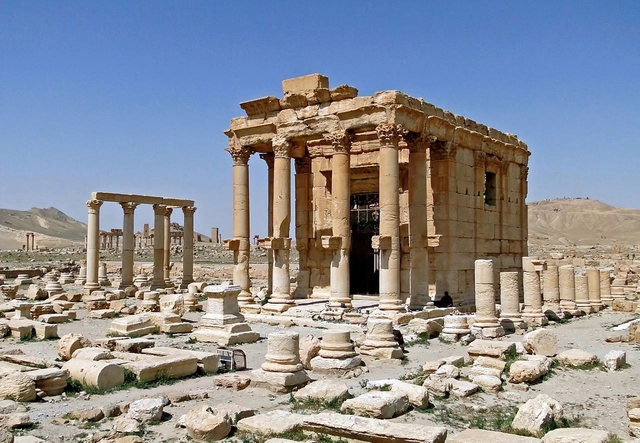
From the 2,000-year-old Temple of Baalshamin to the city of Nimrud, ISIS has destroyed countless monuments and relics. Now archaeologists from Harvard and Oxford have teamed up with UNESCO World Heritage and the epigraphical database project at New York University’s Institute for the Study of the Ancient World to launch the Million Image Database Project. Spearheaded by Oxford's Institute for Digital Archaeology (IDA), the campaign plans to "flood" war-torn regions with thousands of 3D cameras so people can scan and (digitally) preserve their region's historical architecture and artifacts.
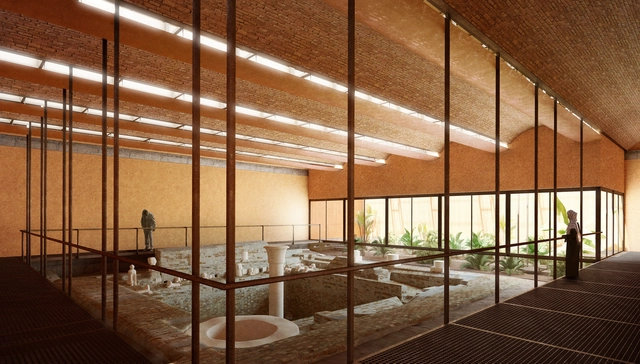
Rendered Interior View. Image Courtesy of Kéré Architecture
Kéré Architecture has placed first in a competition to design a protective shelter on the UNESCO-protected Meroe Royal Baths in Sudan, North Africa. Believed to have served nearby palaces from the great African Kingdom of Kush (now modern-day Sudan), the Meroe Royal Baths were listed as a UNESCO World Heritage Site in 2011 and is the focus of joint research by the German Archaeological Institute and the National Corporation for Antiques and Museums. Still marked by temples, palaces and over two hundred pyramids, the ruins of Meroe are a testimony to the exchanges of culture between the Mediterranean and Africa. Find out more about the proposal after the break.
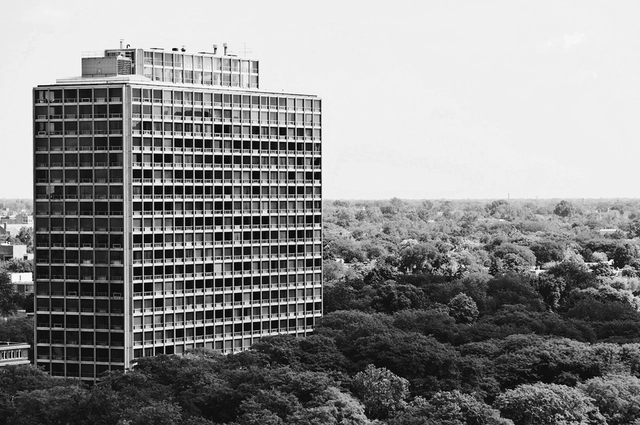
One of the first and most successful examples of urban renewal, Detroit's 78-acre Lafayette Park is known for being the world's largest collection of works by Mies van der Rohe. Now, the mid-century modern "masterpiece" is the first urban renewal project to be declared a National Historic Landmark. This is partially due to the fact that, as Ruth Mills, architectural historian for Quinn Evans Architects told the Detroit Free Press, "Lafayette Park was one of the few urban renewal projects that's done it successfully." It is now Michigan's 41st landmark.
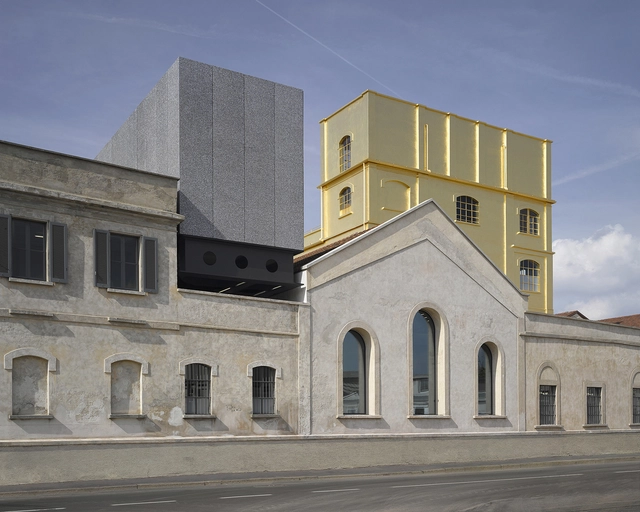
With the opening of the Fondazione Prada art galleries in May, OMA showed a different side to their practice, one focusing on preservation and assemblage rather than the iconography and diagrammatic layout that many associate with the firm. In this interview, originally published by Metropolis Magazine as "Koolhaas Talks Prada," Rem Koolhaas explains the reasoning behind this new approach, and how they attempted to avoid falling into the clichés of post-industrial art spaces.
When the Fondazione Prada opened its doors to a new permanent home in Milan dedicated to contemporary culture, it not only placed the Italian city firmly at the forefront of today’s global art world, but also introduced an ambitious new way of thinking about the relationship between architecture and art. The location—an original 1910 distillery in a distinctly gritty part of the city—comprised seven spaces including warehouses and three enormous brewing cisterns with a raw industrial quality that the architects, Dutch firm OMA, retained while adding three new buildings made of glass, white concrete, and aluminum foam. One, the centrally located Podium, is intended for temporary shows, while another—still under construction—is a nine-story tower that will house the foundation’s archives, art installations, and a restaurant. The third, a theater with a mirrored facade, features folding walls that allow the building to open onto a courtyard. In total, the collection of buildings provides nearly 120,000 square feet of exhibition space, more than twice that of the new Whitney Museum of American Art. Metropolis correspondent Catherine Shaw visited the site with Pritzker Prize–winning architect Rem Koolhaas to find out more about the challenges of creating a new cultural paradigm.
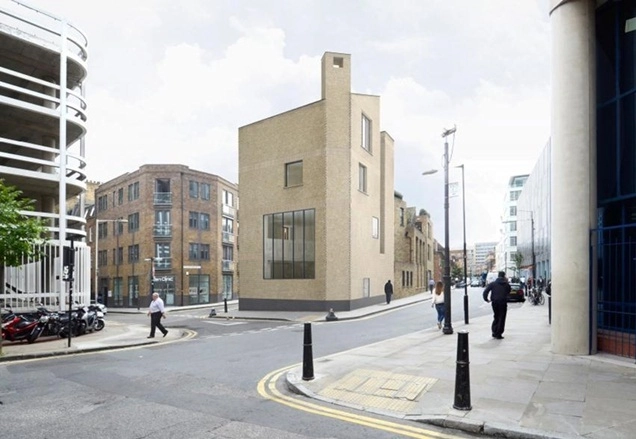
When news spread of Tracey Emin's plans to demolish a disused 1920s building in London's East End neighborhood, residents immediately objected. The artist, known for her conservation work in the area, has commissioned David Chipperfield to design a minimalist flat and studio on the site. However, despite the planning application's claim that the design will "greatly contribute to the character and appearance of the conservation area," the opposition isn't convinced.
“Tracey Emin is at present the owner of a locally listed building that is part of a historic streetscape of variety and charm,” said Save Britain's Heritage director Clem Cecil, who labeled Chipperfield's design "angular and blank." “She has done great conservation work with her other buildings nearby and this building deserves the same treatment.
The anticipated £13 million plan is a major step forwarded considering the 1960s station, now a Grade II listed building, was recently slated for demolition. The adaptive reuse efforts are a result of a successful, international preservation campaign that secured a second life for the iconic structure.
This article was written by Rodrigo Bitencourt and Gláucia Dalmolin, and translated from Portuguese by Rodrigo Bitencourt.
The city and civilization are concomitant phenomena. The city can be seen as a receptacle that both accommodates and transmits civilization. In fact, as man differs from other creatures in his ability to learn indefinitely, his perfectibility (ants that lived six thousand years ago had the same features of current ants: they are confined to a narrow range of behaviors dictated by their genetic programs), he acquired the power to extrapolate nature and thus build in his own way, creating history. As every human life is unique and no one can predetermine how it will be carried out, it could be said that the human being bears a historical duality: the individual history, or education, and the collective history, or culture.
With the opening of their Fondazione Prada building in Milan at the start of this month, OMA got the chance to show off a skill that they don't get the chance to use very often: preservation. In this interview with Kultur Spiegel, Rem Koolhaas talks at length on the topic, explaining that he believes "we have to preserve history," not just architecture, and arguing that the rise in popularity of reusing old buildings comes from a shift toward comfort, security and sustainability over the ideals of liberty, equality and fraternity. "The dimensions and repertoire of what is worthy of preserving have expanded dramatically," he says, meaning that "we shouldn't tear down buildings that are still usable." Still, he says, that doesn't mean we shouldn't tear down and start again in some cases - an entire Parisian district beyond La Défense, for example. Read the full interview here.
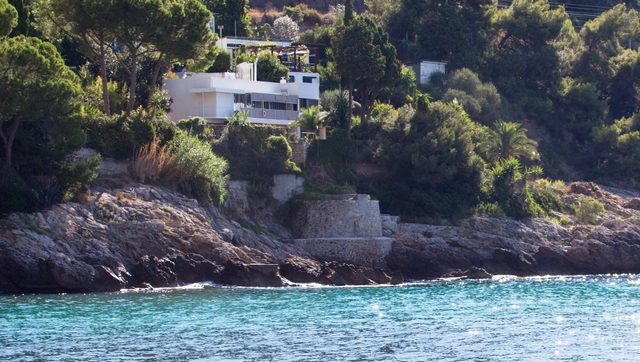
The controversial renovation of Eileen Gray's E1027 on the Côte d’Azur is complete. Once a "lost legend of 20th-century architecture," the quaint holiday home has been brought back to life and is now open to the public. Announcing the news, The Guardian author Rowan Moore has recounted the cliffside project's turbulent past, reciting its significance as Gray's first architectural project.












.jpg?1438347714 "The Fondazione’s inaugural exhibition, the Serial Classic, explores questions of authenticity and imitation in classical antiquity. The lifesize sculptures are mounted on an intricate flooring system designed for the exhibition and composed of travertine, brushed aluminum, and perspex—all exposed along the edges. Image © Attilio Maranzano")
.jpg?1438347662 "The gilded exhibition hall is the central focal point of the Fondazione. Called the Haunted House, the structure’s blank utilitarian features are draped in gold leaf, an ostensibly spontaneous extravagance that Koolhaas post-rationalizes on functionalist grounds. The building towers above the rest of the campus’s open-air spaces and warehouses, which all can be taken in from the Haunted House’s balconies. Image © Bas Princen - Fondazione Prada")

-2.jpg?1430924661&format=webp&width=640&height=580)