

A year after the ancient city of Palmyra, Syria was destroyed by the Islamic State, a 3D-printed recreation of one of its most iconic structures has begun its world tour. Originally erected in London’s Trafalgar square in April, on Monday, the replica of Palmyra’s Arch of Triumph was unveiled in its new location outside city hall in New York City.
Preservation: The Latest Architecture and News
3D Printed Replica of Syrian Arch Destroyed by ISIS Erected in New York City
https://www.archdaily.com/795744/3d-printed-replica-of-syrian-arch-destroyed-by-isis-erected-in-new-york-cityPatrick Lynch
Chipperfield’s Plans for Saarinen’s US Embassy Building in London Under Fire from Preservationists
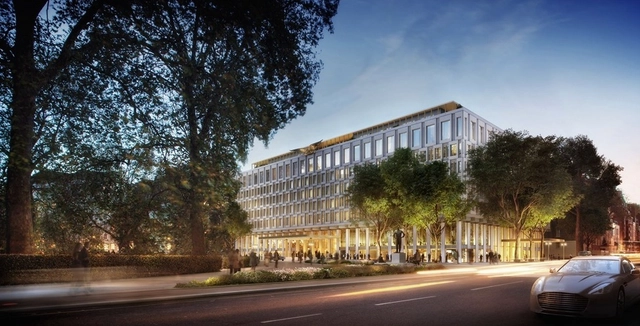
British preservation group Twentieth Century Society has publicly denounced plans by David Chipperfield Architects to convert the Eero Saarinen-designed, soon-to-be former US Embassy near London's Grosvenor Square into a "world-class" 137-room hotel. Central to Chipperfield’s plan is an enlargement of the sixth floor to make room for a double-height event space, a move Twenieth Century Society believes will “cause significant and substantial harm to the character of the building.”
https://www.archdaily.com/793828/chipperfields-plans-for-saarinens-us-embassy-building-in-london-under-fire-from-preservationistsPatrick Lynch
Monocle 24 Ask: Why is Architectural Preservation Important?
With UNESCO's recent announcement that 17 buildings by Le Corbusier are to be added to the World Heritage List, Monocle 24's Section D speaks to a number of organisations—including the Twentieth Century Society, devotees of Frank Lloyd Wright in Arizona, London's Victoria Albert Museum, and the Cooper Hewitt Smithsonian in New York City—in order to understand why architectural preservation is important, and who decides what’s worth saving.

https://www.archdaily.com/792971/monocle-24-pose-a-question-for-the-ages-why-is-architectural-preservation-importantJames Taylor-Foster
2 Classic Marcel Breuer Buildings At Risk for Demolition to Meet Opposite Fates
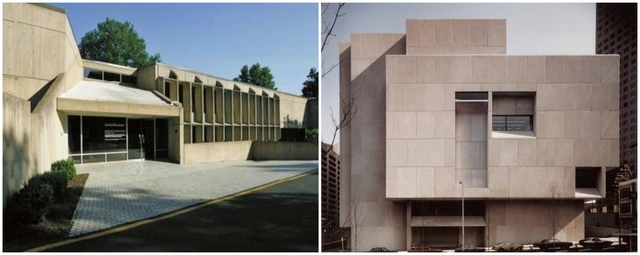
In the past few weeks, the fates of two classic Brutalist buildings by architect Marcel Breuer were determined – with differing results. For the Atlanta Central Library, it was good news, as the Fulton County Board of Commissioners voted unanimously to support the renovation of the building, saving it from the wrecking ball. Meanwhile, the American Press Institute in Reston, Virginia, was not so lucky, as Fairfax County’s board of supervisors voted to tear down the building to make room for a new a townhouse development project.
https://www.archdaily.com/792583/2-classic-marcel-breuer-buildings-at-risk-for-demolition-to-meet-opposite-fatesPatrick Lynch
Pompeii’s Most Famous House, the Villa of Mysteries, is at Risk of Collapse
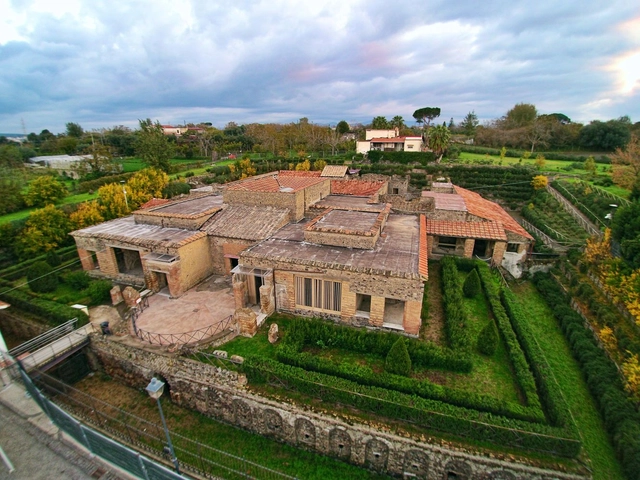
One of Pompeii’s most precious gems, the Villa of Mysteries, is now at risk of collapse due to seismic activity in the Bay of Naples, as well as vibrations from a nearby train line transporting tourists. That's the conclusion of a recent study conducted by Italy’s National Agency for New Technologies, Energy and Sustainable Economic Development (ENEA). The news comes only a few months after the reopening of the house, whose stunning frescoes had just been restored.
As The Telegraph reports, the high-tech study showed that “in addition to the vibrations from the Vesuvius light railway commuter trains, which ferry tourists to Pompeii from Naples, the protective structure around the villa, built in armored cement, wood and steel 50 years ago is threatened by its own weight and water ingress.”
-19.jpg?1468604454 "© User:MatthiasKabel [CC BY-SA 3.0], via Wikimedia Commons")
-03.jpg?1468604394 "© User:MatthiasKabel [CC BY-SA 3.0], via Wikimedia Commons")
-16.jpg?1468604611 "© User:MatthiasKabel [CC BY-SA 3.0], via Wikimedia Commons")

https://www.archdaily.com/791466/pompeiis-most-famous-house-the-villa-of-mysteries-is-at-risk-of-collapseMarie Chatel
Portland’s Veterans Memorial Coliseum Named National Treasure by National Trust for Historic Preservation
Skidmore, Owings, and Merrill's Veterans Memorial Coliseum in Portland, Oregon has been on the chopping block for some time now: since the city’s NBA team moved to the Moda Center (known also as the Rose Garden) next door in 1995, the building has struggled to find the funding necessary for maintenance, and since 2009 calls have been made for the demolition of the iconic modernist structure. The threat reached peak levels last October, when the Portland City Council nearly voted to approve a proposal for demolition before ultimately denying it by a narrow 3-2 margin.
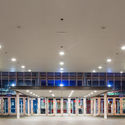
Now, preservationists have a new designation to use in their defense. Today, the National Trust for Historic Preservation named the Veterans Memorial Coliseum its newest National Treasure, joining 60 other threatened sites including the Houston Astrodome and Philip Johnson’s New York State Pavilion for the 1964-65 World’s Fair.

.jpg?1465573576 "via City of Portland Archives")


https://www.archdaily.com/789238/portlands-veterans-memorial-coliseum-named-national-treasure-by-national-trust-for-historic-preservationPatrick Lynch
View Hundreds of Architecture Magazines Online With This Digital Archive By Hanley Wood and NCMH
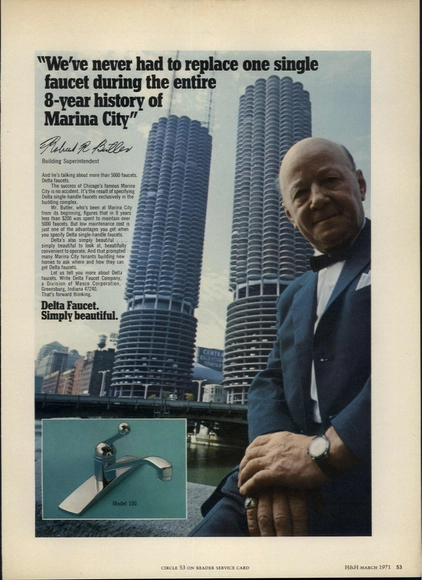
North Carolina Modernist Homes (NCMH) and Hanley Wood (parent company of ARCHITECT) have partnered to create Colossus: a new digital archive of 20th century architectural publications, reports Architect Magazine. When complete, it will be the largest digital archive of modern architecture magazines, with over 1.3 million pages.
https://www.archdaily.com/788400/view-hundreds-of-architecture-magazines-online-with-this-digital-archive-by-hanley-wood-and-ncmhEric Oh
Brutalism and Culture: How St Peter's Seminary is Already Shining in its Second Life
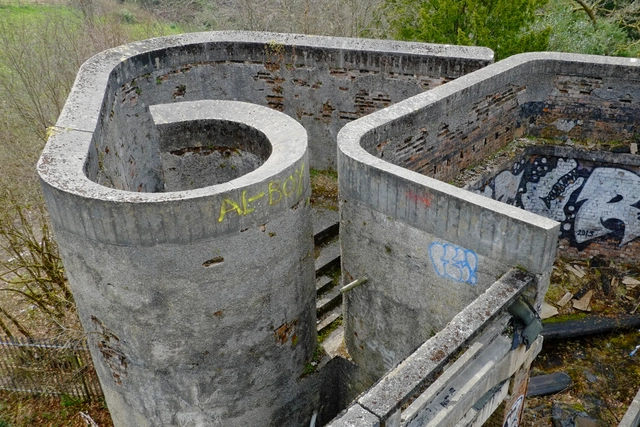
Gillespie, Kidd & Coia's celebrated St Peter's Seminary—once voted Scotland's best modern building—has for too long been a victim of fate, left to decay after it was abandoned just 20 years after its completion. Fortunately, plans are well underway to restore the building. This article, originally published by Metropolis Magazine as "Ruin Revived," explains how even in its ruined state, the dramatic brutalist structure is already showing its value as a cultural destination.
Modernist architecture, it used to be said, was inadequate because the machined materials of modern buildings wouldn’t lend themselves well to picturesque ruination. What, minus the taut skins of glass and plaster, could these stark, boxlike carcasses possibly communicate to future generations?
St. Peter’s Seminary in Cardross, Scotland, is a forceful rejoinder to that jibe. Built in 1966 and abandoned 20 years later, the seminary has settled into a state of pleasing decrepitude. Glass and plaster are long gone. The concrete remains largely intact but stained, spalled, and spoiled. Entire roofs and staircases have caved in. The only fresh signs of life are the aprons of graffiti draped all over the “interiors.” Yet, the sense of the place lingers, its noble forms still remarkably assertive—jutting forth from the dense surrounding forest—and optimistic.

https://www.archdaily.com/786906/brutalism-and-culture-how-st-peters-seminary-is-already-shining-in-its-second-lifeSamuel Medina
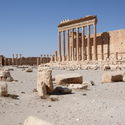
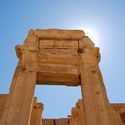
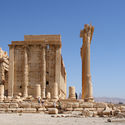
This 3D Model Shows the Damage Caused by ISIS to Palmyra's Temple of Bel
In August of last year, many of the most precious landmarks of the ancient city of Palmyra were damaged or destroyed by the forces of ISIS in a violent, iconoclastic attempt to send a message to the rest of the world. Since the UNESCO World Heritage Site was recaptured in March, the question in the architectural preservation community has been how to rebuild and preserve the buildings. That process will begin, of course, with a thorough assessment of the damage.
Shortly after Palmyra was recaptured Iconem, a French company which specializes in the digitization of archeological sites, arrived in Palmyra to lead the survey. In partnership with the Syrian DGAM (Direction Générale des Antiquités et des Musées), Iconem was granted access to the city to survey the damage to the temples of Bel and Baalshamin, the Monumental Arch, the Valley of Tombs, and the museum—all sites which are of the most cultural value and therefore were the greatest targets of ISIS's violence.


https://www.archdaily.com/786837/this-3d-model-shows-the-damage-caused-by-isis-to-palmyras-temple-of-belRory Stott
Saving Palmyra: A Discussion with Yale's Cultural Heritage Expert Stefan Simon
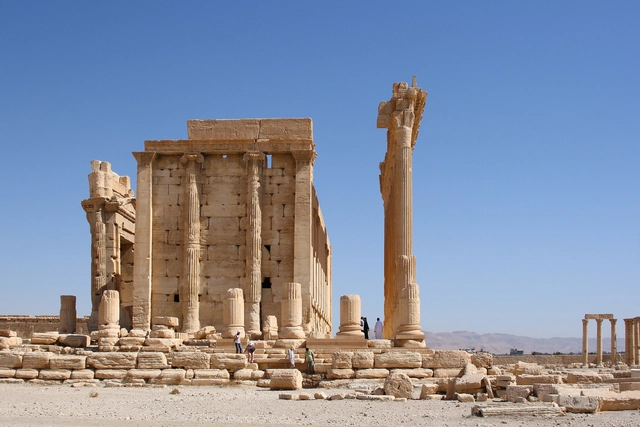
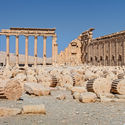
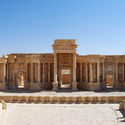
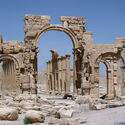
Last May, Islamic State forces took control of Palmyra, one of the world's most treasured UNESCO World Heritage Sites. In the proceeding months, the world looked on in shock as ISIS released a series of videos showing the destruction of the priceless ruins. Last month however, the ancient city was recaptured, marking the beginning of a difficult discussion about what the international preservation community should do next.
ArchDaily had the opportunity to interview Stefan Simon, the Inaugural Director of the Institute for the Preservation of Cultural Heritage (IPCH) at Yale University, an organization “dedicated to advancing the field of heritage science by improving the science and practice of conservation in a sustainable manner.” Simon earned his PhD in Chemistry from the Ludwig Maximilian University, Munich, and has broad experience in material deterioration diagnostics, microanalytics, climatology, and non-destructive mechanical testing. He previously served as Director of the Rathgen Research Laboratory at the National Museums in Berlin, as a member and Vice President of the International Centre for the Study of the Preservation and Restoration of Cultural Property (ICCROM), and as leader of the Building Materials section at the Getty Conservation Institute, Los Angeles, in 2005, among numerous other accomplishments.
The conversation that focused on cultural preservation in the wake of conflict, and specifically, how to proceed in Palmyra now that the Syrian site has been wrenched back from the control of the Islamic State. The tragic case of Palmyra guided a conversation that sought out specificity on the options and considerations that must be taken in the wake of trauma.


https://www.archdaily.com/786191/saving-palmyra-a-discussion-with-yales-cultural-heritage-expert-stefan-simonVladimir Gintoff
Marcel Breuer's Central Library in Atlanta Faces Demolition Threat
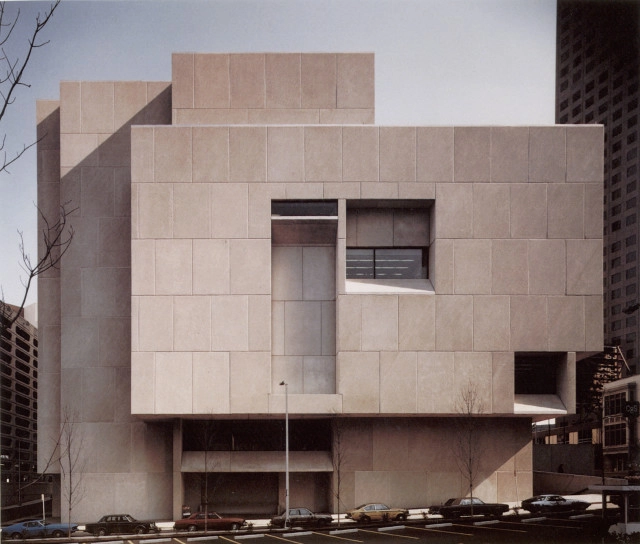
Like many Brutalist buildings in America, the Central Library in Atlanta by Marcel Breuer is facing demolition, reports The Architect's Newspaper. Completed in 1980 with a 300-seat theater, restaurant and 1 million books, the building exemplifies Breuer’s sensibilities, with its bush-hammered concrete panels and Bauhaus-inspired forms. However, over the years the building has fallen into disrepair, with its theater closing in the mid-1990s, and the restaurant closing a few years later. In 2002, the city spent $5 million on restoration. Even so, in 2008, voters approved a $275 million bond referendum, which included a proposal to replace the library by Breuer with another. Despite protests from preservationists, the building’s future is uncertain, with voters clearly calling for a new library building.
https://www.archdaily.com/785636/marcel-breuers-central-library-in-atlanta-faces-demolition-threatEric Oh
Society of Architectural Historians Announces 2016 Publication Award Recipients
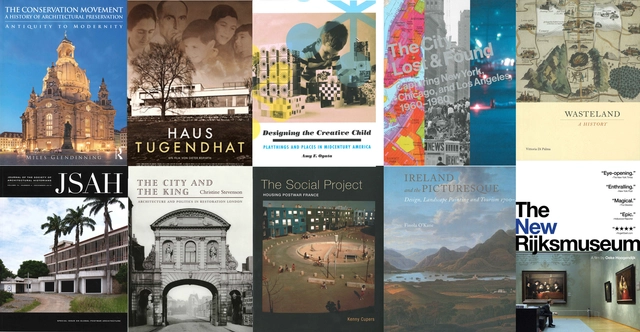
The Society of Architectural Historians (SAH) has announced the winners of the 2016 Publication Awards and SAH Award for Film & Video as part of their annual International Conference Awards ceremony in Pasadena, California.
Awarded annually, the SAH Publication awards honor excellence in "architectural history, landscape history, and historic preservation scholarship," alongside outstanding architectural exhibition catalogs. Eligible publications must have been published in the two years immediately preceding the award, with nominations for the 2017 Publication Awards and SAH Award for Film & Video opening on June 1, 2016
Learn more about the winning publications after the break.
https://www.archdaily.com/785538/society-of-architectural-historians-announces-2016-publication-award-recipientsEric Oh
What The Demolition of OMA's Netherlands Dance Theatre Says About Preservation in Architecture
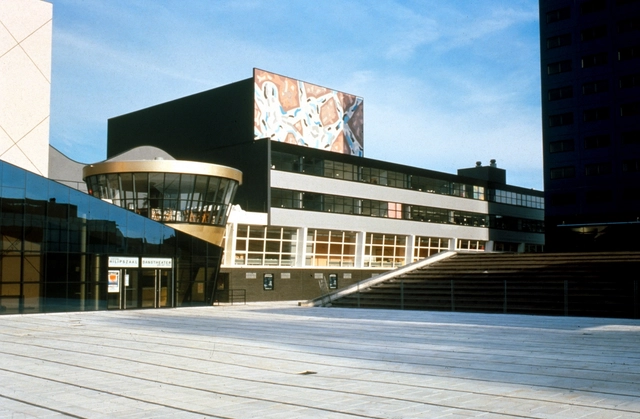
At the end of 2015, OMA’s first major commission, the Netherlands Dance Theater (NDT) was swiftly demolished. The once-praised building was reduced to dust and debris within a few months, without drawing much attention from the architecture world. Koolhaas had heard rumors about the demolition of the NDT over the last decade, but did not expect the lack of public outcry. “There was almost nothing, almost zero,” he said.
Using the NDT as a case study, Metropolis Magazine takes a look at how the early works of our most lauded architects are treated when they are no longer fit for purpose, and asks how we decide on the role preservation plays in the architectural profession. Is the demolition of the NDT a sign of lack of respect for OMA? Or is it a more general sign of our current era of rapidly changing styles and a need for larger buildings? Read the full story by Metropolis Magazine, here.
https://www.archdaily.com/785504/what-the-demolition-of-omas-netherlands-dance-theatre-says-about-preservation-in-architectureKaley Overstreet
The Destruction of Memory: A Documentary on the War Against Cultural History
This article was originally published by Metropolis Magazine as "The Destruction of Memory, A Documentary."
"Part of war and conflict has always been the collateral damage. Buildings have fallen in the path of military objectives, but, [...] in this war, buildings aren't destroyed because they're in the way of a target. The buildings are the target." As the narrator of The Destruction of Memory so eloquently explains, the destruction of culture—of buildings, books, and art—is often not an accidental consequence of conflict. As we can see by the actions of ISIS in Iraq and Syria today, the destruction of cultural artifacts is part and parcel of a conscientious strategy to target and destroy the collective memory, history, and identity of a people.
https://www.archdaily.com/785676/the-destruction-of-memory-a-documentary-on-the-war-against-cultural-historyVanessa Quirk
The Demolition of Plovdiv’s Tobacco Warehouse Demands a New Response from Citizens
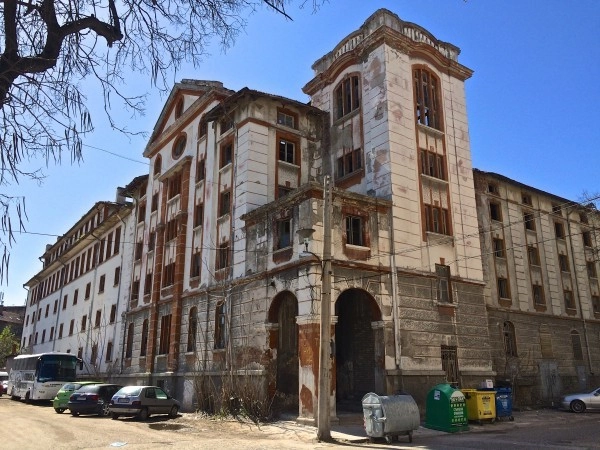
The public of Plovdiv, and of Bulgaria, woke up on Monday the 7th March—after their national holiday celebration—with a national cultural monument and a key piece of the city's identity on the ground in pieces. The building was one of the standout structures of “Tobacco Town”—a complex of former tobacco industry warehouses. The demolition by its owners began despite a promise made by Mayor Ivan Totev in September that the entire complex would be renovated as an urban art zone as part of the preparations for Plovdiv European Capital of Culture 2019.
Plovdiv, a city in the south of Bulgaria with its 7 hills, is one of the oldest continuously inhabited cities in Europe. The Thracians, Romans, and Ottomans all employed its strategic location, and today it is Bulgaria’s second largest city. The title of cultural capital is well deserved, and perhaps even well overdue. With its arrival, there was hope that major parts of the city's history lying in disrepair may finally have a standing chance, and then this… another building, gone.
Everybody's heart is heavy. They are in disbelief. The questions are the same as the ones that have been asked many times before: “How did this happen?” “Who did this?”
https://www.archdaily.com/784253/the-demolition-of-plovdivs-tobacco-warehouse-demands-a-new-response-from-citizensMegan Lueneburg
Chicago’s Marina City Complex Officially Named City Landmark

Fifty-two years after its completion, the Marina City Complex in Chicago has been named an official architectural landmark. Following a 48-0 vote by the City Council, the buildings by Bertrand Goldberg will be given their official designation on March 16, reports The Architect Magazine.
https://www.archdaily.com/782615/chicagos-marina-city-complex-officially-named-city-landmarkEric Oh
SAH Los Angeles Seminar: Surveying LA -- Past, Present, Future
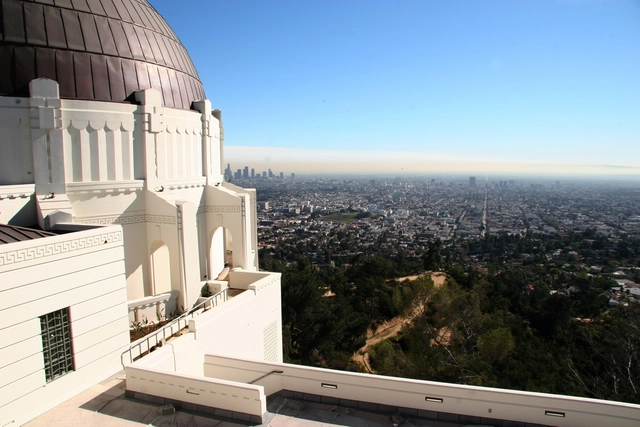
The SAH Los Angeles Seminar bridges the Society's efforts in historic conservation to the contemporary built environment and the local public and professional community. The LA Seminar will critically look at SurveyLA, a five-million dollar, city-wide study of historic resources sponsored by the J. Paul Getty Trust and the City of Los Angeles. As described online, “SurveyLA – the Los Angeles Historic Resources Survey – is Los Angeles' first-ever comprehensive program to identify significant historic resources throughout our city. The survey marks a coming-of-age for Los Angeles' historic preservation movement, and will serve as a centerpiece for the City's first truly comprehensive preservation program."
https://www.archdaily.com/781741/sah-los-angeles-seminar-surveying-past-present-futureRene Submissions
Call for Applications: 2016 L.A. Conservancy Preservation Awards

The Los Angeles Conservancy is now accepting applications for their 2016 Preservation Awards, which recognize outstanding achievement in the field of historic preservation in Los Angeles County. Applications are due by 5 p.m. on Friday, January 29, 2016.
https://www.archdaily.com/780159/call-for-applications-2016-la-conservancy-preservation-awardsRene Submissions