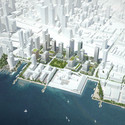
As part of a masterplan along the Chicago River, the River Beech Tower is a residential high-rise which, if built, would be taller than any existing timber building. The collaborative team behind River Beech consists of architects Perkins+Will, engineers Thornton Tomasetti and the University of Cambridge. Currently a conceptual academic and professional undertaking, the team state that it could potentially be realized by the time of the masterplan’s final phases.
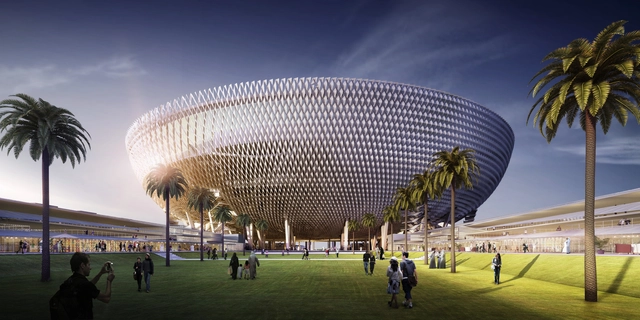
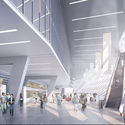
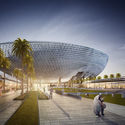
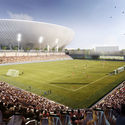
The Boston office of Perkins+Will has been selected to design a new mixed-use sports complex in Dubai. The development's centerpiece will be the 60,000-seat Mohammed bin Rashid Stadium, which when completed will become the largest stadium in the UAE. Other facilities will include training facilities, a practice pitch, warm-up areas, a 5,000 space car park, a museum, and a multi-purpose sports hall, as well as retail, restaurant and public plaza areas.
Architectural Record has released the latest edition of its annual list of the “Top 300 Architecture Firms” in the United States, based on architectural revenue from the previous year (2015). Gensler, which became the first firm to surpass $1 billion in revenue in 2014, held on to the top spot with earnings of $1,181,030,000 in 2015. Los Angeles-based AECOM maintained its number 2 position after a revenue increase of more than 30 percent, making it the largest publicly traded company in the LA area. Perkins+Will continued their steady climb up the list, finishing at number 3.
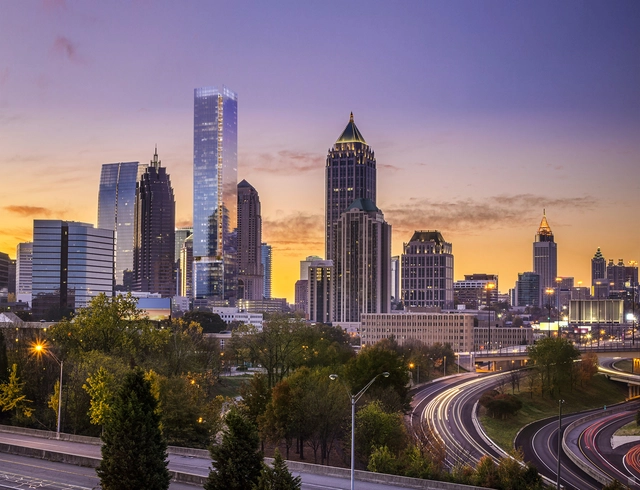
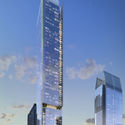
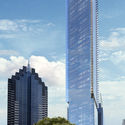
Perkins+Will has released plans for 98 Fourteenth Street, a 920 foot (280 meter) tall residential and commercial tower that, when complete, will become Atlanta’s second tallest building behind Pritzker Prize winning architect Kevin Roche’s Bank of America Plaza. The new tower is an integral piece of a planned development called the Midtown Art Walk, a half-mile pedestrian landscape featuring innovative architecture and interactive art elements between 2 transit stations in the district. The 74-story building will contain 382 luxury residential units and 180 corporate suites, as well as retail space on the ground level.
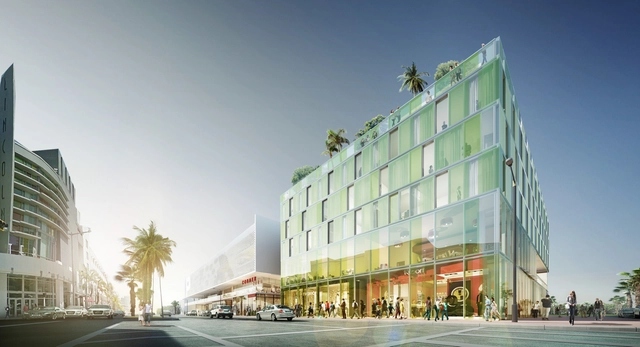
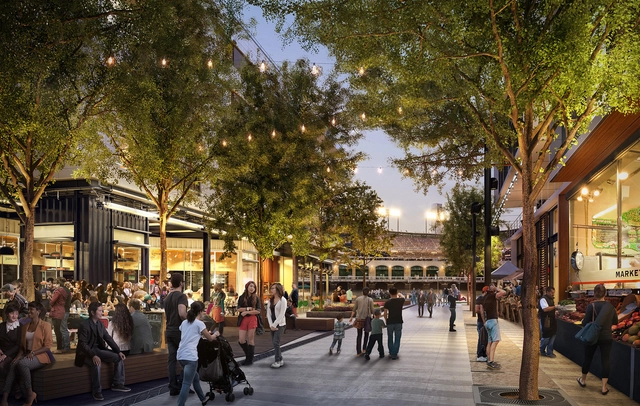
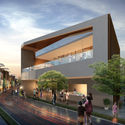
The Miami office of Perkins+Will has unveiled the designs for 1212 Lincoln Road, a five-story mixed-use structure at the corner of Alton Road and the internationally renowned Lincoln Road Mall in Miami Beach.
The complex, which will span 140,000 square feet excluding parking, will feature 100 boutique hotel units, a European-style market, high-end retail space, as well as 450 parking spaces. The Market portion of the complex will contain fresh produce, as well as a variety of exotic eateries.
Perkins+Will designed a sports therapy and research centre for a new collaboration between the Dallas Cowboys and healthcare provider Baylor Scott & White. To sit within the Cowboy's new 91-acre campus, the mixed-use medical facility will provide necessary care and training facilities to athletes of all levels, including the Dallas Cowboys themselves.
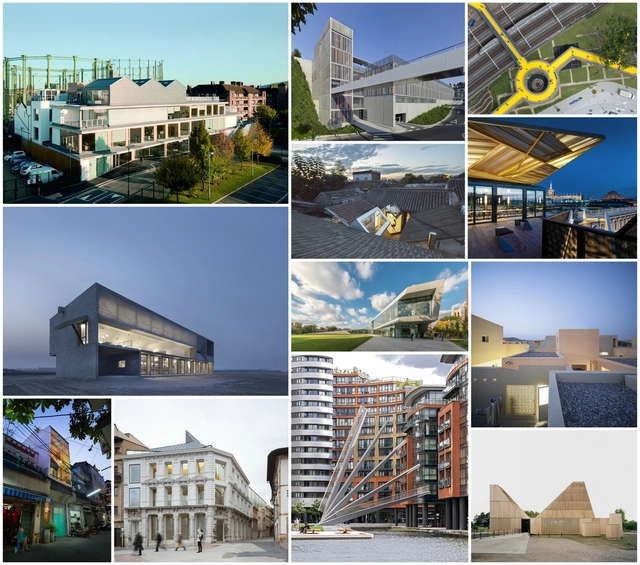
After a three-day event attracting over 1,000 visitors, the 2016 ARCHMARATHON came to a close, with the presentation of its annual awards. Now in its 3rd year, the Milan-based exchange awarded projects in ten different categories, as well as an overall winner, and a “crowd award” based on voting on the event’s website. The 42 presented projects were judged by the international jury, chaired by Luca Molinari and composed of internationally famous architects and critics such as Lucy Bullivant, William Menking, Wassim Naghi, Li Brian Zhang and Elie Haddad. See all 12 awarded projects after the break.
As we become a planet of city-dwellers, planners and urban designers have an imperative to design communities that perform better than ever before. But what exactly does “performance” mean? Communities should have energy and water-saving systems, but at a high level there also needs to be a more holistic approach to creating a sense of place and connection, while at the same time being accessible to different demographics and vibrant all throughout the day. Here are five essential ingredients for designing a high-performance community.
https://www.archdaily.com/783748/5-steps-to-creating-high-performance-communitiesNoah Friedman and Kristen Hall
When you consider the practical properties of polyvinyl chloride (PVC) - durability, versatility and low price - it is easy to understand how it has become such a common construction material, with applications as roofing membranes, siding, pipes and plumbing, conduit, window frames, window blinds, molding and trim, and fencing. But perhaps it’s time to be more cautious about its use. According to a new whitepaper report by Perkins+Will, "What’s New (and What’s Not) With PVC," in spite of recent advances in plastic chemistry PVC is still responsible for a range of environmental and human health hazards created in multiple stages of its manufacturing process.
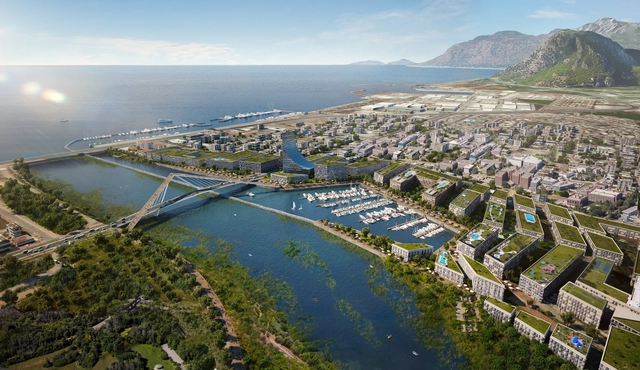
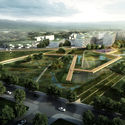
Turkish President Recep Tayyip Erdoğan and Antalya Mayor Menderes Turel have announced their support for Perkins+Will’s sustainablemaster plan for Antalya, Turkey. The master plan will revitalize and preserve the Bogacay Creek Basin area of Antalya, improving its quality as a major tourist city along the Turkish Riviera.
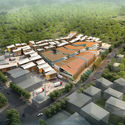
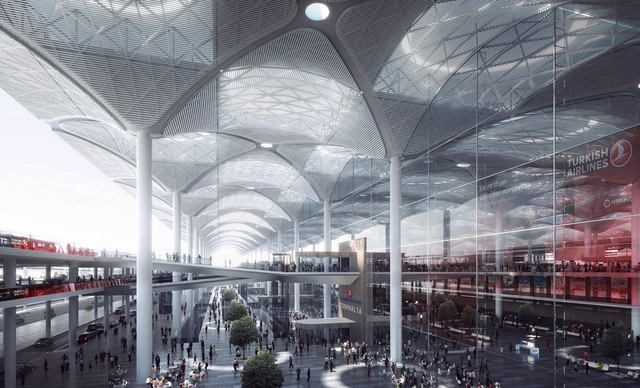
Perkins+Will has been selected to masterplan a major mixed-use development adjacent to undergoing Istanbul New Airport - soon to be one of the largest airports in the world. The 690-hectare scheme, "Airport City" will feature a "central innovation district," hotels, retail and commercial office space, logistic centers, an expo and convention center, public space, and metro and high-speed rail connections to Istanbul and beyond.
Update:The Chicago Tribune's architecture critic Blair Kaminhas now reported that 140 architects from 60 cities have expressed their interest in designing the Barack Obama Presidential Center in Chicago by submitting qualifications. Of these, 99 are based in the United States, although names have not been released. The below article, originally published on September 1st, lists 11 architects that Kamin was able to confirm had been invited to submit qualifications by the Barack Obama Foundation.
Last week, it was reported that the Barack Obama Foundation was searching globally for an architect to design Obama's Presidential Library and Museum (officially known as the Barack Obama Presidential Center). With the list of invited candidates for Obama's Presidential Center still a closely-guarded secret, though, the Chicago Tribune's architecture critic Blair Kamin has turned investigator, uncovering a list of 11 firms among the "fifty or more" which are believed to have been invited. Kamin states that the 11 firms he has confirmed to be in the running are "A) Of high caliber; B) Represent a broad geographic and aesthetic spectrum; and C) Include the established firms one would expect to be invited."
Often, all that is needed for that big break in your career is getting experience at the right firm. But getting your foot in the door is daunting, especially if your ideal firm is one where thousands of other architects are applying constantly, regardless of whether a vacancy has been advertised. In this article originally posted on The Architect's Guide, Brandon Hubbard reaches out to some of the world's top architecture firms (Zaha Hadid Architects, Snøhetta, Perkins+Will, BDP and Callison) to find out how you can maximize your chances in the application process.
I recently reached out to several of the world’s top architecture firms and asked them a series of questions on what they look for in potential architecture job applicants.
After my discussions with these firms I discovered a common theme in how they acquire many new hires. As I covered in a previous article, Want a Great Architecture Job? Don't Send a Resume, many new employees are found through personal references and word of mouth. Developing these relationships within the architecture community is essential for a successful career.
The questions are structured to cover the various steps of the architecture job application process, from the first point of contact to the interview.
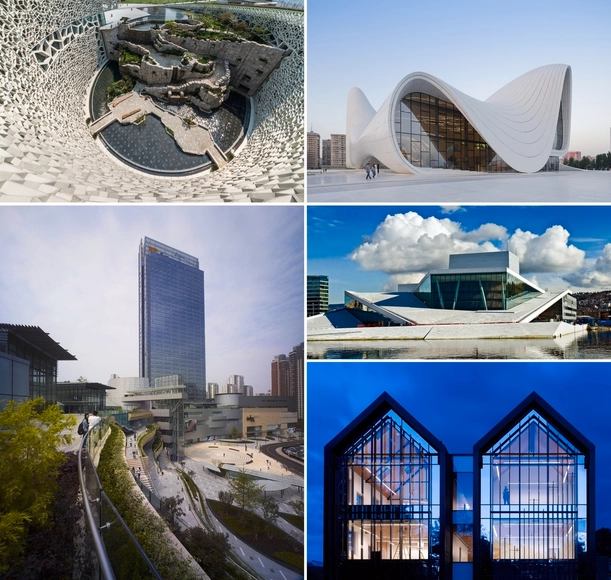
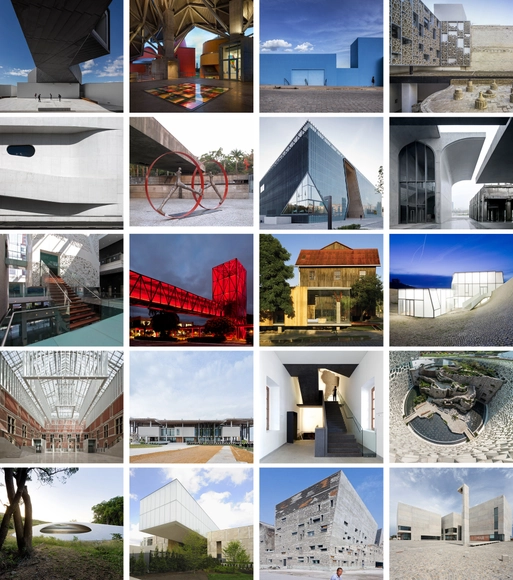
In honor of International Museum Day we’ve collected twenty compelling museum projects. In this round up you’ll find a truly global selection; from Wang Shu's Ningbo Historic Museum in China and Tod Williams + Billie Tsien's Barnes Foundationin Philadelphia to Monoblock's Contemporary Art Museumin Buenos Aires, see all of our editors’ favorites after the break!
https://www.archdaily.com/631994/archdaily-editors-select-20-more-amazing-21st-century-museumsAD Editorial Team
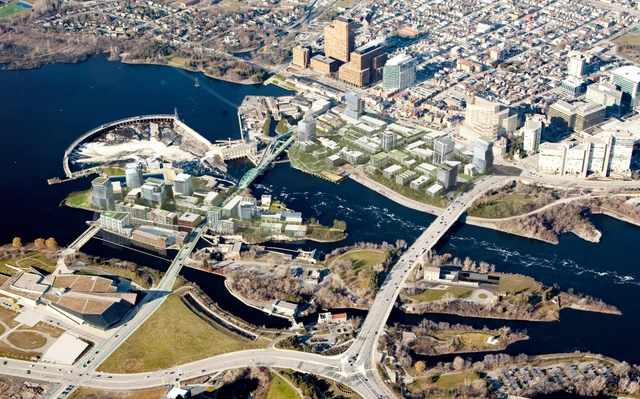
Urban waterfronts have historically been the center of activity for many cities. They began as economic, transportation and manufacturing hubs, but as most industries changed their shipping patterns and consolidated port facilities, many industrial waterfronts became obsolete. In Europe, smaller historic ports were easily converted to be reused for leisure activities. However, in North America, where the ports were larger, it was more difficult to convert the waterfronts due to logistical and contamination issues.
Over the past 40 years or so, architects and urban planners have started to recognize the redevelopment potential for waterfronts across the United States and Canada, and the impact they can have on the financial and social success of cities. Though cold-climate cities pose a unique challenge for waterfront development, with effective planning waterfront cities with freezing winter months can still take advantage of the spaces year-round.
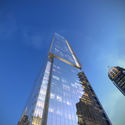
Conceptual plans of Perkins+Will’s East 37th Street Residential Tower in New York City have been unveiled. Debuted in Cannes, France, during MIPIM, where the high-rise received a “Future Projects Award,” the 700-foot-tall Manhattan tower boasts a “shimmering, angled curtain wall” organized by five clusters of shared amenities and open-air gardens.
More about the 65-story, 150,000-square-foot condominium tower, after the break.
Fast Company has announced who they believe to be the most innovative practices in architecture for 2015. Topping this list is the online remodeling community Houzz, the BIG powerhouse and David Benjamin’s The Living. See the complete list, after the break, and let us know who you believe is the world’s most innovative firms in the comment section below.












.jpg?1431654800 "Lower Yonge project in Toronto. Image © Chris Foyd courtesy of Perkins+Will")