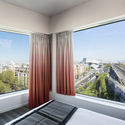
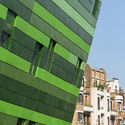
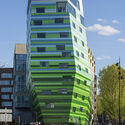
From reTHINKING competitions we are happy to announce our new competition:“What's Up Paris?” A city like Paris is intense, full of tourists, workers, cars ... is a place in constant motion, with changes of atmosphere, with people walking and taking pictures. It is the perfect city for having a coffee and watch people go by, watch tourists spellbound with its architecture, businessmen who run to take the subway or Parisians who simply walk their city.
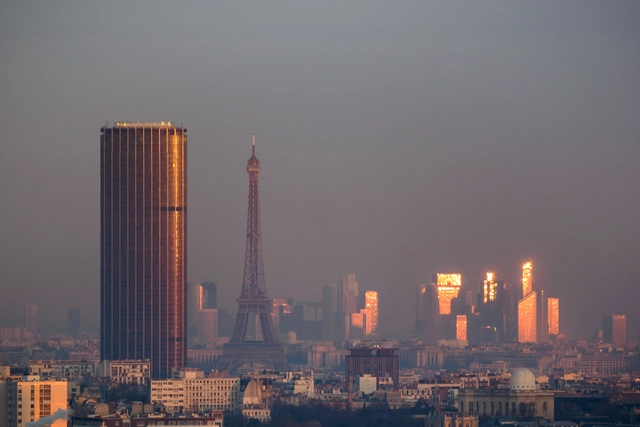
The Ensemble Immobilier Tour Maine-Montparnasse (EITMM) has selected 7 notable firms to continue to the second round in a competition for the renovation of Tour Montparnasse in the Montparnasse district of Paris, France.
Often cited as one of the architecture world’s most hated buildings, Tour Montparnasse has been criticized for its discordance with the Parisian urban landscape – just two years after its completion, new buildings over seven stories high in the city centre were banned, leaving the tower as an alien presence on the skyline.
With the launching of the competition, the EITMM hopes to transform Tour Montparnasse into a beloved landmark with a complete renovation of the facade, the building entry and all interior spaces. The budget for the project is estimated to reach over 300 million Euro ($330 million USD), and will be funded in entirety by the building owners.
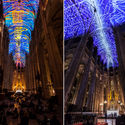
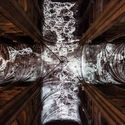
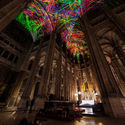
Digital artist Miguel Chevalier has transformed the ceiling of the Saint-Eustache Church into a dynamic, imaginary sky chart for the 2016 Nuit Blanche Festival in Paris. The installation, titled Voûtes Célestes, illuminates the soaring ceilings with 35 different colored networks to create glowing webs of light that highlight the church’s gothic architecture.
Since 2009, Mario Carvajal has captured amazing panoramic photographs from his hometown in Colombia as well as top destination spots around the globe. He has climbed the Empire State Building in New York and Colpatria Tower in Bogota, Colombia. Carvajal has captured the geographical beauty of Iceland as well as the intensity of Paris at night.
As Carvajal mentioned in an interview with ArchDaily, images in 360 degrees "allow the viewer to dive into an attractive and interesting 'virtual world' to experience immersive sensations". Of course, with the new surge in popularity these types of pictures have experienced with the hardware becoming more readily available and these images being shared more and more every day through Facebook, Carvajal's work reaches new levels, allowing thousands of people to see the world from above.
Below, we invite you to see his best shots of iconic buildings and landscapes around the world. For a complete experience, we recommend using Google Cardboard.
In the canon of great Dutch architects sit a number of renowned practitioners, from Berlage to Van Berkel. Based on influence alone, Rem Koolhaas—the grandson of architect Dirk Roosenburg and son of author and thinker Anton Koolhaas—stands above all others and has, over the course of a career spanning four decades, sought to redefine the role of the architect from a regional autarch to a globally-active shaper of worlds – be they real or imagined. A new film conceived and produced by Tomas Koolhaas, the LA-based son of its eponymous protagonist, attempts to biographically represent the work of OMA by “expos[ing] the human experience of [its] architecture through dynamic film.” No tall order.
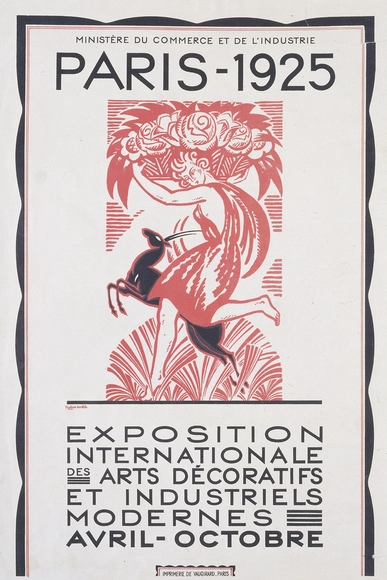
The Exposition’s poster, designed by Robert Bonfils. ImageCourtesy of the Victoria and Albert Museum
The end of the First World War did not mark the end of struggle in Europe. France, as the primary location of the conflict’s Western Front, suffered heavy losses in both manpower and industrial productivity; the resulting economic instability would plague the country well into the 1920s.[1] It was in the midst of these uncertain times that the French would signal their intention to look not to their recent troubled past, but to a brighter and more optimistic future. This signal came in the form of the Exposition Internationale des Arts Décoratifs et Industriels Modernes (International Exposition of Decorative Arts and Modern Industries) of 1925 – a landmark exhibition which both gave rise to a new international style and, ultimately, provided its name: Art Deco.
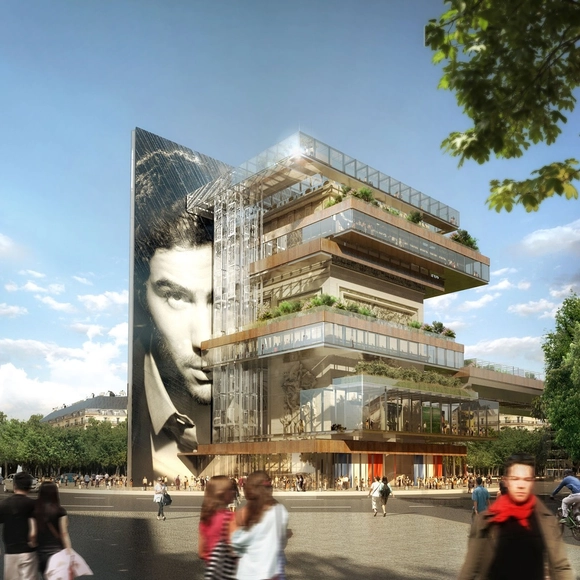
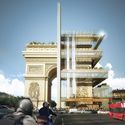
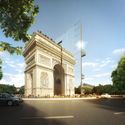
French architect Patterlini Benoit has imagined a mixed-use building to be wrapped around one half of the Arc de Triomphe in Paris. Completed in 1836 as a memorial to the victories of the French armies under Napoleon, Paris’ triumphal arch is one of the most iconic and visited landmarks in France and the world over. But Benoit argues that its status as a tourist destination has removed it from the authentic cityscape that is used by everyday Parisians. His proposal attempts to reclaim the monument for the city by dividing the arch with an enormous mirrored plane – visually competing the monument from one perspective and providing new function from another. In this way, Benoit claims, the structure can be “brought into modernity without denying history.”
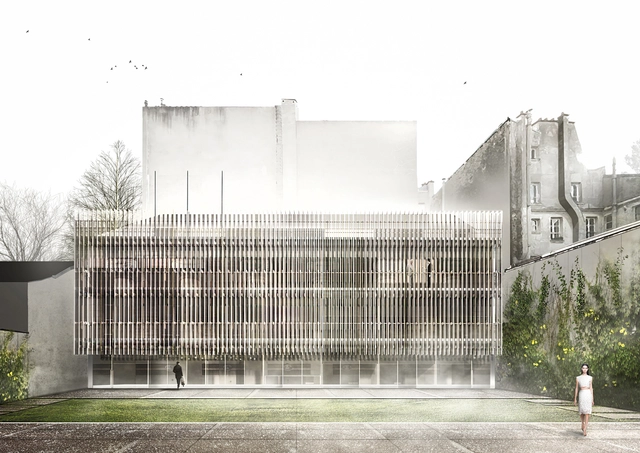
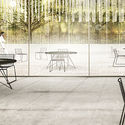
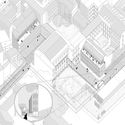
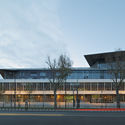
As part of an experimental ideas exhibition, Tomas Ghisellini Architects (TGA) have designed an extension to the Italian Institute of Culture in Paris. Nine Italian practices were engaged by a consortium of French and Italian institutions, and this cohesive union of cultures is mirrored in TGA's design. TGA's proposal plays with transparency and layering, with two large volumes of glass and steel referencing the "Parisian architectures of transparency," whilst displaying the excellence of Italian materiality and craftsmanship. The exhibition is being shown at the historical complex of the Hotel de Galliffet in Paris until December this year.
Abbesses and Chateau Rouge are demonstrative of the great socio-economic divide currently installed in Paris. Only a few hundred metres apart, the difference between plush 'bobo' Abbesses and relatively deprived Chateau Rouge could not be more distinct. They both share a common urban element, the market. This competition proposes the design of a small intervention in either or both sites to further support these social infrastructures and provide improved market and exchange spaces. But through a collective architectural response, could these two sites be brought closer together?











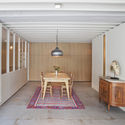
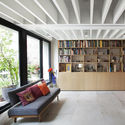
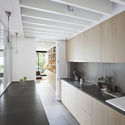
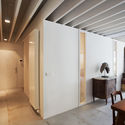

.jpg?1472177279&format=webp&width=640&height=580)
.jpg?1472177169 "© Didier Boy de la Tour")
.jpg?1472177100 "© Didier Boy de la Tour")
.jpg?1472177324 "© Didier Boy de la Tour")
.jpg?1472177279 "© Didier Boy de la Tour")
.jpg?1472177279)








JulienLanoo_20151123_1108.jpg?1468313041&format=webp&width=640&height=580)
JulienLanoo_20151123_586.jpg?1468313181 "© Julien Lanoo")
Frédéric_Gémonet_058.jpg?1468314660 "© Frédéric Gémonet")
JulienLanoo_20151123_940.jpg?1468312402 "© Julien Lanoo")
JulienLanoo_20151123_1127.jpg?1468312352 "© Julien Lanoo")
JulienLanoo_20151123_1108.jpg?1468313041)