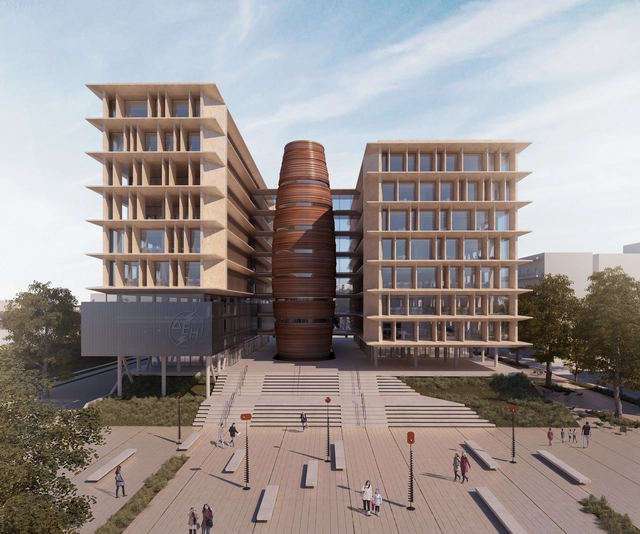
Micromega’s winning proposal for the new Public Power Corporation HQ in Athens seeks to define the company’s public character in creating an integrated urban park around and under the structure. The site which held the steam-powered station is to become a contemporary landmark for the city whilst establishing a dialogue with the historical complex and the existing old electricity factory.
Through Micromega’s design, PPC’s commitment to sustainable forms of energy will be established by three main “topoi” (spaces) that educate and express the company’s renewable sources – sun, wind, and water. In the creation of the new urban park, the architects hope to activate environmental awareness, reminding the public of the alternative clean sources available.
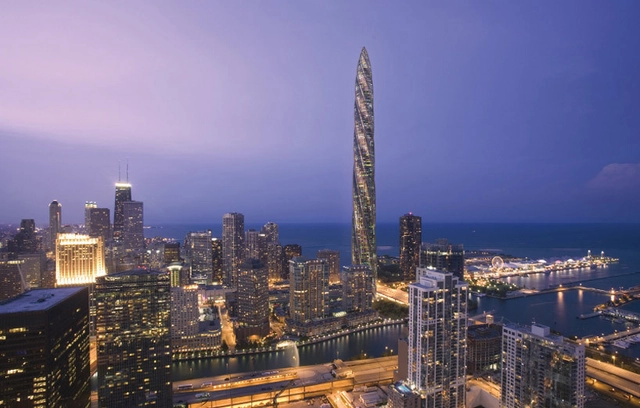
We all know a little about the world's tallest buildings—those engineering feats which define their cities and become symbols of human achievement—but what of the buildings that never took their planned place in their respective skylines? In 2014, The Council on Tall Buildings and Urban Habitat (CTBUH) released a report listing the 20 tallest buildings that were never completed (an up-to-date list is also maintained on their website here). In order to be considered "never completed," all of the buildings in the report had begun site work, but construction was completely halted with no reports indicating it will continue. Read on to find out the top 10 tallest uncompleted buildings in 2018 after the break.
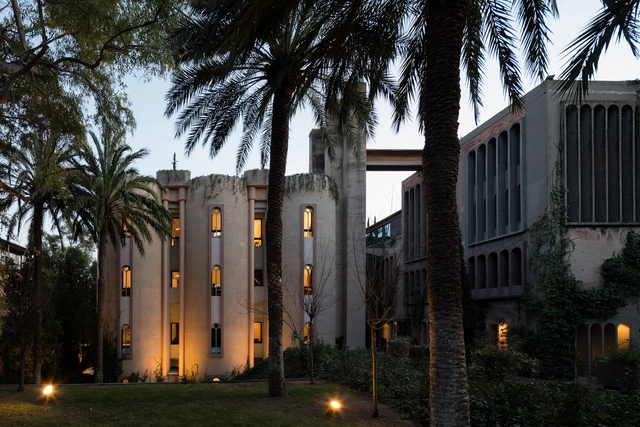
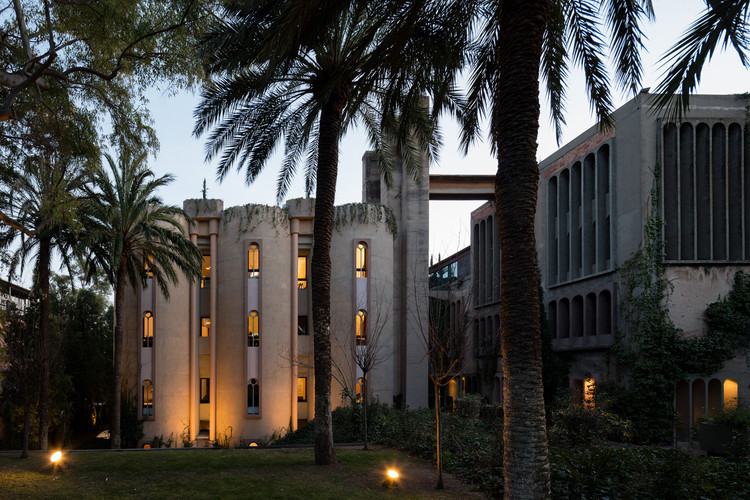
Architectural photographer Marc Goodwin captures the unique workspaces of architects around the world. So far, Goodwin’s photography has helped us imagine what office life might be like as an architect in London, Paris, Beijing, Shanghai, Seoul, the Nordic countries, and now, Barcelona. Read on to see the spaces where architects from Ricardo Bofill to Fermin Vazquez design solutions that impact our world.
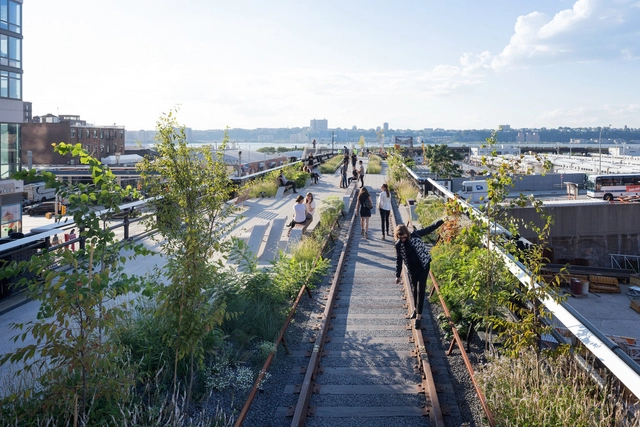
Eight long and prosperous years have passed since the first part of the New York High Line opened in 2009. As a prominent piece New York's architectural and urban identity, it is no wonder that it has been awarded the Harvard GSDVeronica Rudge Green Prize in Urban Design, recognising the ongoing efforts of the Friends of the High Line for their adaptivity to the changing context of the park and their support from the beginning for design excellence.
The jury was particularly inspired by the multidisciplinary project between James Corner Field Operations, Diller Scofidio + Renfro, and Piet Oudolf, spanning the public and private domains as a model of collaborative design. It was also commented on the social and political relevance of the High Line in saving a piece of American history from ruin and interacting through community outreach programs and a wider dissemination program for cities across the US.
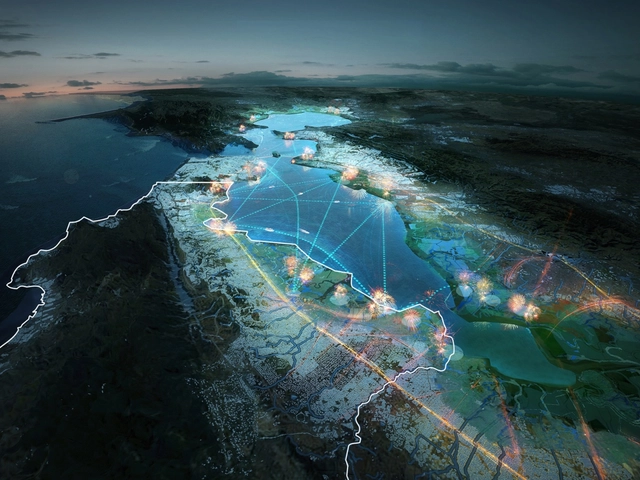
Following recent natural disasters including the Northern California wildfires, the HASSELL + team have been inspired to reimagine the San Francisco Bay Area as a vibrant community hub, equipped to provide temporary facilities in an emergency. As part of the competition Resilient by Design, the ten teams were asked to provide solutions for the waterfront through site-specific conceptual design and collaborative research projects.
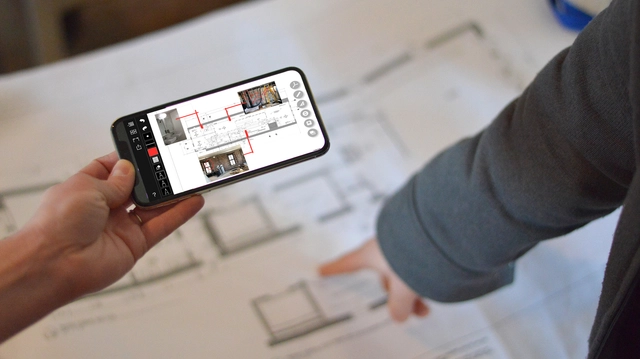
Have you ever been on the construction site and had a problem arise that needed immediate attention? The answer to that question is almost guaranteed to be yes. The Construction Administration phase is not intended to be a time for big design decisions, but with unforeseen field conditions, contractor errors and never-ending client changes, your team can keep designing and problem-solving throughout CA. Morpholio's new update to their Trace app for iPhone, TracePro, aims to transform site visits by "importing key components of the design process into the Construction Administration phase."
The job application process can be an exhausting one, endless cover letters, constant updating of your curriculum vitae, not to mention ensuring your instagram is #onpoint and squeaky clean. And chances are, recruiters and employers will spend all but a few seconds looking at your content. Novorésumé, an online résumé builder, is there to help speed up the process and provide all the tools you need for an employer friendly, well-designed CV.
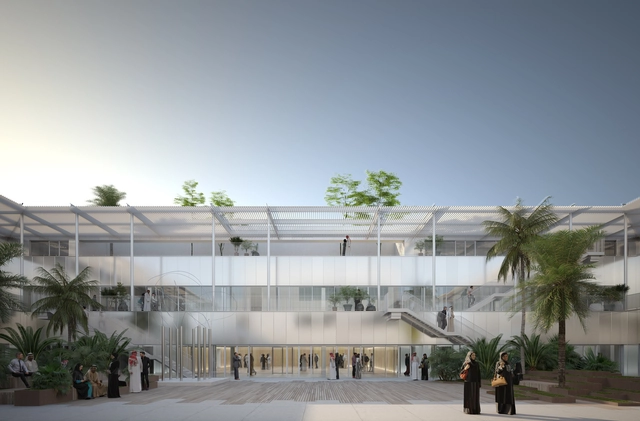
Thanks to Art Jameel, a Middle Eastern non-profit arts organization, a new arts district is taking shape in Jeddah, Saudi Arabia. Since the crowning of Prince Mohammad bin Salman, Saudi Arabia has shifted focus from oil to arts and technology. The new multidisciplinaryart center, named Hayy, is a 17,000 square meter step in the right direction.
There is something incredibly satisfying about 3D maps that make you want to follow the streets and rivers with your fingers, navigating your way through the urban landscape. Almost like contours, the CityWood’s minimalist maps are built up through plywood layers, laser cut with precision to one-hundredth of a millimeter and hand assembled for high-quality craftsmanship.
After making a trip to Doha (Qatar), Alejandro Aravena spoke with Chilean newspaper El Mercurio and shared details about this project. "One of the things we set out to do is to make this endure for the next 1,000 years," explains the 2016 Pritzker Prize winner. "When you look at industrial facilities, especially silos, archaeological ruins are the kind of things that remain," he adds.
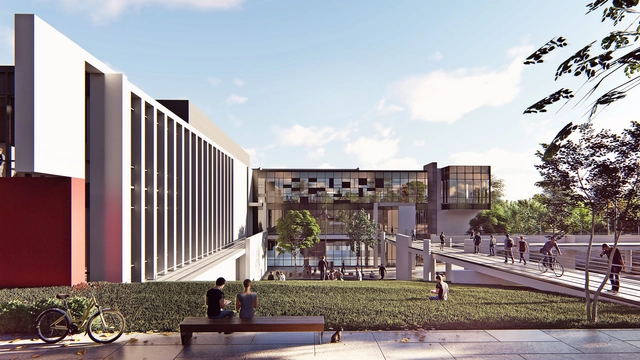
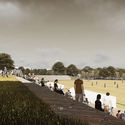
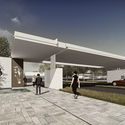
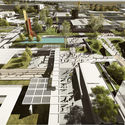
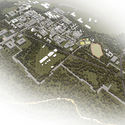
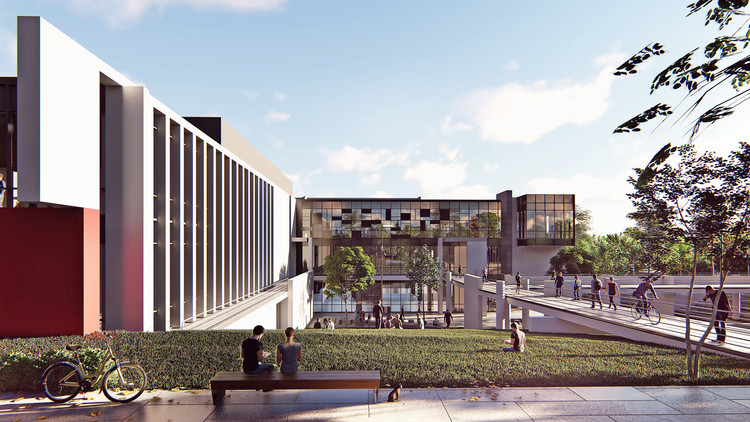
Beoffice and HSY Architects’ competition-winning proposal for Bandırma Onyedi Eylül University Campus in Turkey represents a generation of knowledge that will flourish and support Bandırma’s innovation in industry and economy. The university will take an integrated approach to the region, blurring the boundary between campus and city with interactive spaces that can open up for flexible use.
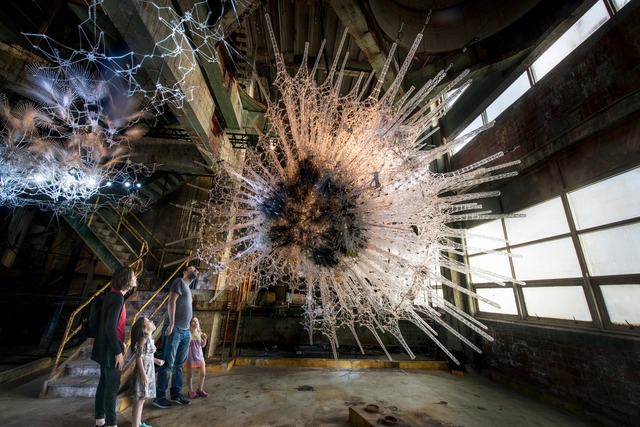
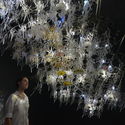
'Astrocyte' is a living piece of architecture that could easily be mistaken for a piece of science fiction. Engaging with the senses for an immersive experience, artist and architect Philip Beesley’s aerial structure combines chemistry, artificial intelligence, and a responsive soundscape. ‘Astrocyte’, translates from Greek to the literal meaning of star and cell, appropriate for such a complex structure that can react with the viewers' movements with patterns of light, vibrations and surround sound.
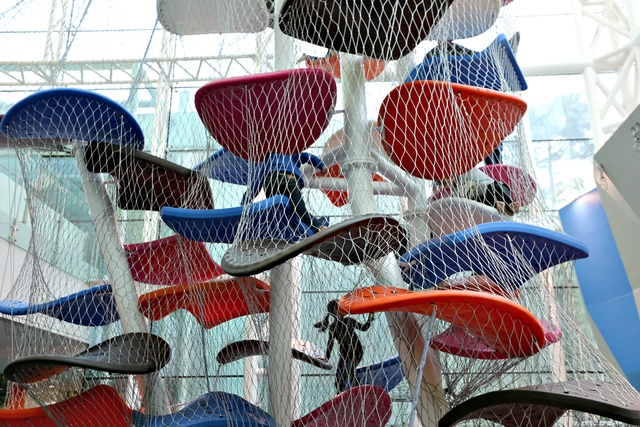
Having trained at Yale School of Architecture, Spencer Luckey decided to pursue a slightly alternate career designing vertical climbing structures to let children’s imaginations run free. Luckey Climbers are part jungle gym, part work of art that rise up off the ground with undulating platforms sprouting out, creating an abstract space to inspire creativity and intellectual development.
Columbia Graduate School of Architecture, Planning and Preservation (GSAPP) has launched the United States’ first-ever Ph. D in Historic Preservation. GSAPP is ranked within the top 10 architecture graduate schools in the US in the latest figures for 2017. It’s leadership in learning and experimental practice is about to be further enhanced by the introduction of the course.
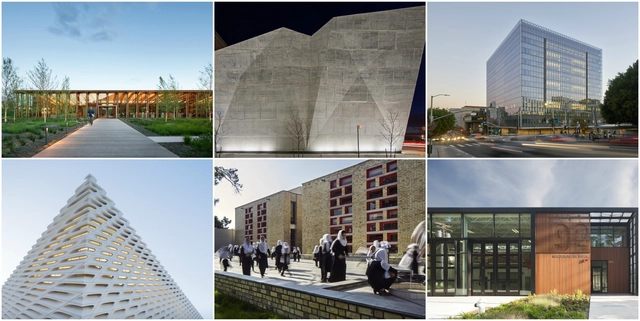
Seventeen projects chosen by the American Institute of Architects (AIA) have been selected for this year’s Institute Honor Awards for Architecture, an award known to be the profession’s highest recognition of works in America that exemplify an excellence in architecture, interior architecture and urban design.
Out of 500 submissions, the 17 recipients will be honoured with the award at the AIA Conference on Architecture in New York City in June.
We are starting the new year with an announcement from the American Institute of Architects that there will be no winner for their Twenty-five Year Award in 2018. This will be the first time this has occurred since the award was officially established in 1971. The AIA award recognises buildings that have “stood the test of time for 25-35 years and continues to set the standards of excellence for its architectural design and significance.”












_Malcolm_Reading_Consultants_and_Elemental.jpg?1517319937&format=webp&width=640&height=580)


.jpg?1516300417&format=webp&width=640&height=580)