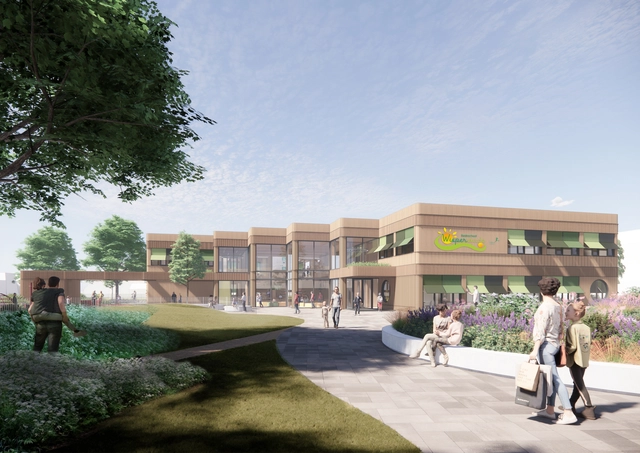
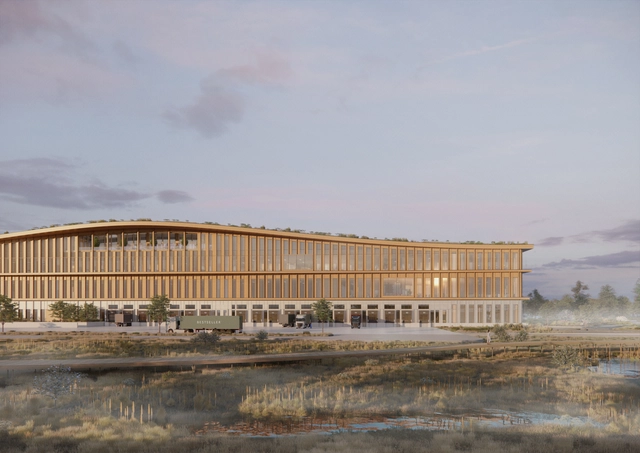
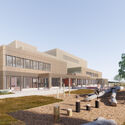
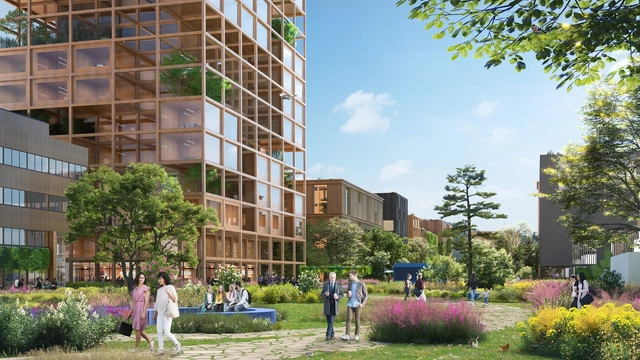
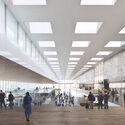
Henning Larsen has revealed the designs for Europe’s largest timber logistics center. Located in Lelystad, on the Dutch island of Flevopolder, the center is a testament to the future of timber structures. Serving as Bestseller’s new 155,000 sqm Logistics Center, the design is committed to reduced emissions, fair working conditions, and following circular design principles in order to minimize waste.
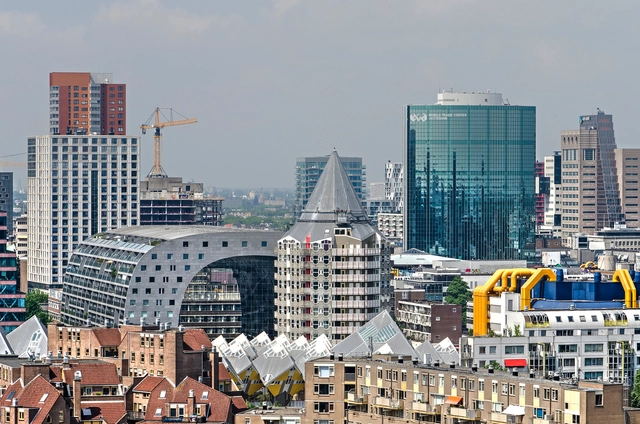
Often referred to as the “Manhattan on the Maas,” Rotterdam is a city unlike any other in the Netherlands. The Dutch metropolis with its striking skyline, tells a unique architectural narrative with chapters filled with the rubble of the devastating bombings of World War II, followed by a story of reconstruction that transformed the city into a hub for experimental architecture and urban planning. Today a mosaic of architectural styles, Rotterdam has embraced innovation, becoming a global showcase for cutting-edge design and sustainable urban development.
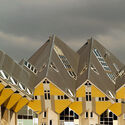
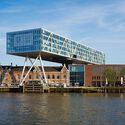
In 1940, almost the entire city center was wiped out by German bombs. Instead of following other European cities’ examples of reconstruction, Rotterdam decided to reinvent itself. Today, the city hosts some of the most well-known Dutch pieces of architecture, such as the Kubuswoningen or the Het Nieuwe Instituut. Its open attitude toward innovation and experimentation continues to attract talent from around the world, as its distinctive skyline continues to change and adapt to contemporary conditions.
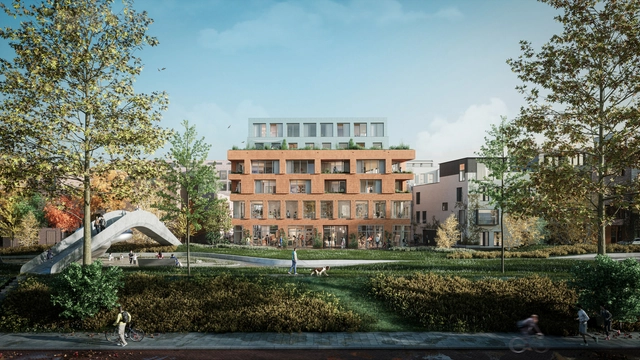
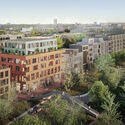
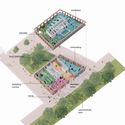
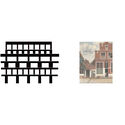
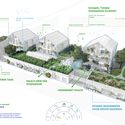
In Nieuw Delft, a newly developed city area next to the historic city center of Delft and in close proximity to the central train station, Common City is developing the winning LeeuwenPart plan in collaboration with Space&Matter. The project includes a residential building located on the edge of the future Van Leeuwenhoek Park. The project is developed as a co-commissioning, a process where the future residents are included in the design process, resulting in a well-adapted building and a close-knit community.
Cities across the globe are developing comprehensive action plans in order to create a coordinated response to the challenges of climate change. Targets and goals for consumption-based emissions are important for guiding strategic planning and decision-making, improving accountability, and communicating the direction of travel to businesses and the public. National and regional government officials are working with the private sector, international organizations, and civil society to create change at every level, from structural interventions in supply chains and industries to individual choices. This demonstrates a rising understanding of the role of cities in mitigating the adverse effects of rising temperatures.
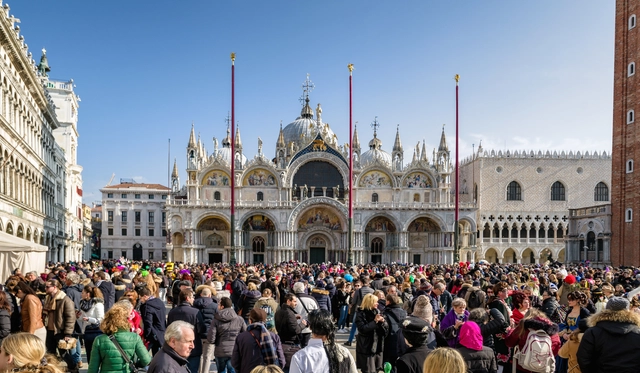
Since pandemic-imposed restrictions have been lifted, Europe has experienced a surge in tourism, with millions of people visiting some of its most attractive destinations, such as Venice, Barcelona or Paris. The large number of visitors has proved to be a challenge for the cities, creating overcrowding and affecting the local population, urban development, and even the natural ecosystems surrounding the urban areas. In a bid to limit this influx, some of Europe’s most popular cities are taking various measures to address the overcrowding and the subsequent social and infrastructural issues. The measures include fines, entrance fees, and time-slot systems to impose some restrictions.
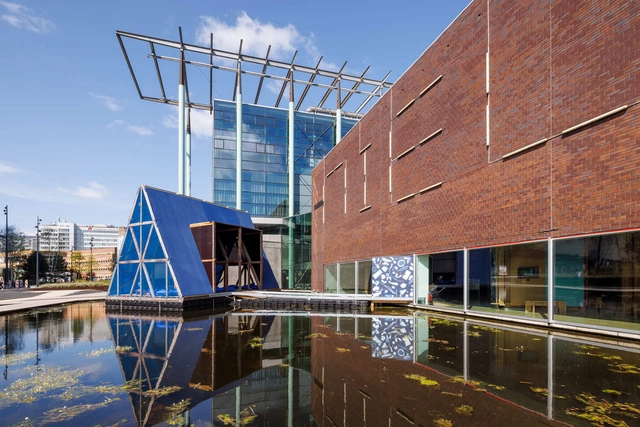
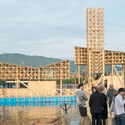
Nieuwe Instituut in Rotterdam has inaugurated the ‘Water Cities Rotterdam. By Kunlé Adeyemi,’ a cultural project comprising of exhibitions along with several floating pontoons and artist installations that present the Nigerian-Dutch architect Kunlé Adeyemi’s waterfront designs in the Netherlands. The exhibition brings a seven-meter-high floating wooden pavilion on the institute’s outdoor ponds. Inside the pavilion, landscape architect and artist Thijs de Zeeuw has created an artwork to allow visitors to experience the pavilion from the perspective of nature while contemplating the consequences of building and living on the water for the surrounding ecology and biodiversity. The entire exhibition is on display at the Nieuwe Instituut until 22 October 2023.
Land reclamation from the sea has become a popular phenomenon in coastal development. It is the most preferred solution to the need for land in coastal areas and has been implemented for various use cases, including flood control and agriculture. Nowadays, it has become a famous urban response to the rapid increase in coastal urbanization, economic activity, and global population. Countries like China and the Netherlands lead the chart on the amount of land area reclaimed. However, most reclamation projects today take place within urban centers in the global south. Cities in West Africa, East Asia, and the Middle East produce these new lands as economic forerunners for their commercial industry and as platforms to house luxury residences.
But the relationship between the design and production of reclaimed lands and the response of water in ocean environments is complex. It requires a symbiotic relationship with water bodies for stability but can provoke natural forces when negligently imposed on the sea. Ocean water behaviors, including tidal accumulation, sea level rise, connection to wetlands, and aquatic biodiversity, can question the success or failure of land reclamation projects in different contexts.
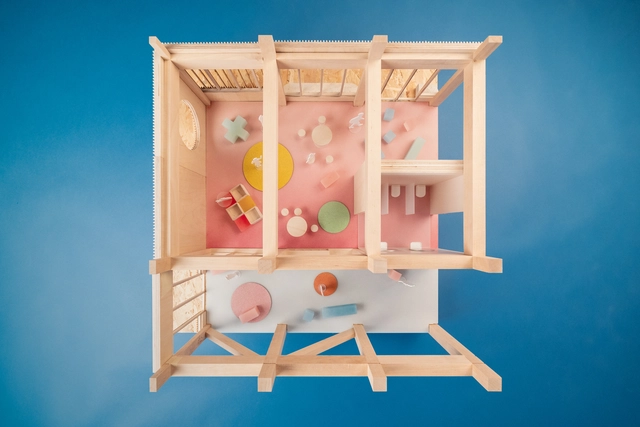
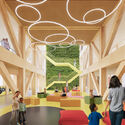
As part of the Circlewood consortium, OMA’s David Gianotten and Michel den Otter have developed a modular system to build schools that can adapt and transform throughout their lifecycle. The system was selected by the City of Amsterdam to be employed to build multiple schools in the coming ten years, as part of the Innovation Partnership School Buildings program. The citywide initiative aims to build nine to thirty “high-quality, flexible, and sustainable” schools as a way to contribute to the city’s goal of becoming fully circular by 2050.
In the world of contemporary architecture and design trends, the topic of biophilia is ruthlessly spreading itself across floor plans, mood boards, and finished interiors like butter on hot toast. So talk of outdoor spaces with natural materials, fresh air, natural light, and expansive views may seem like a broken record, but sometimes you just want to keep on pressing repeat. Also like butter on hot toast, you can never have too much of a good thing.
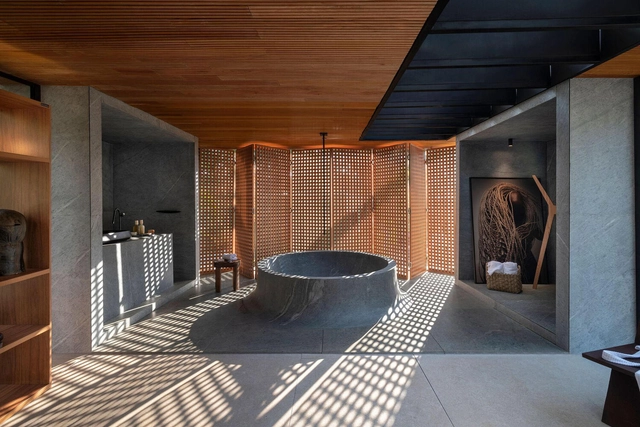
These outdoor bathroom spaces open themselves up, both figuratively and literally, to outdoor environments in a variety of worldwide climates, without forgetting their main purpose: to provide a sanctuary of comfortable calm, in a stressful world.
MVRDV has joined the Van Gogh Homeland Foundation to develop the first Van Gogh Homeland Biennale to bring awareness to the challenges faced by the Brabant region. At the initiative of Midpoint Brabant, the experience strives to combine knowledge of architecture, landscape design, and sustainability to reignite enthusiasm for the Brabant landscape, Vincent van Gogh;s native Dutch province. According to the organisers, the region is facing a number of threats, including the increasing number of floods and the limited availability of space, but, through an orchestrated effort, the landscape that inspired van Gogh 150 years ago can become more sustainable and greener in the future.
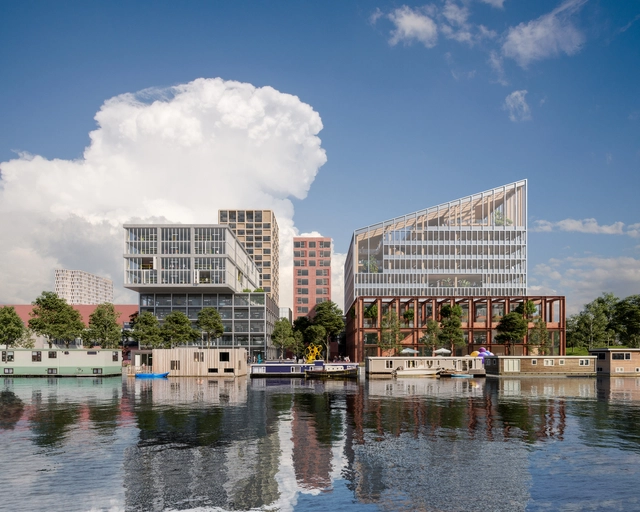
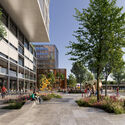
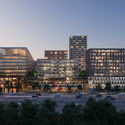
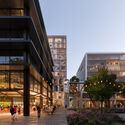
Designed by Mecanoo, Amstel Design District is a mixed-use development that includes social housing, mid-rent residential spaces, private sector homes, and collective facilities. The 80,000 square meters master plan also provides spaces for creative offices and retail, along with cultural institutions such as the 800 square meters design museum. Located between the highway and the metro line, the project responds to site constraints and concerns about noise pollution by creating a composition of stacked volumes with setbacks. This allows for the creation of comfortable public spaces in between the buildings as pocket parks and plazas.
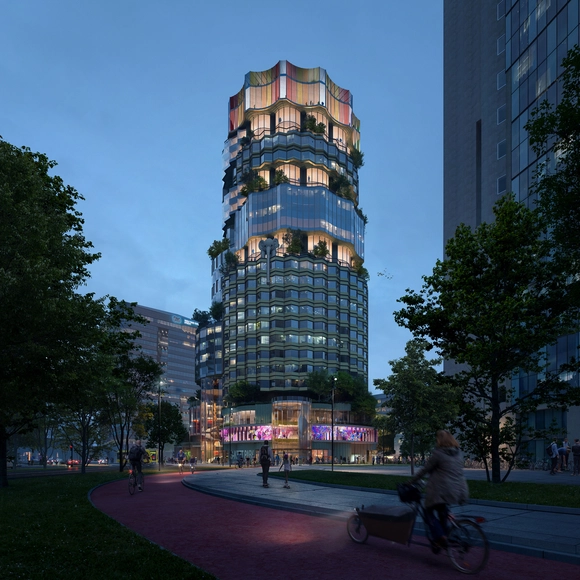
Heatherwick Studio and Barcode Architects have been selected to design a new hub for culture, work and leisure in the Jaarbeursplein central square in Utrecht, Netherlands. The project aims to respond to the city’s diverse population and to bring a sense of warmth and fun to the square, according to the architects. Nicknamed Oopen, the building’s design integrates a colorful collection of cylinders that stand out against the backdrop of the neighborhood. The team has partnered with Edge, a sustainable real estate development company, to help bring the vision to life. Construction is set to start in 2025 and the building will be delivered in 2028.
MVRDV has revealed the master plan to expand the Noviotech Campus, a giant in Health & High Tech Innovation, in Nijmegen, east of the Netherlands. The concept combines the campus's already scattered buildings, adds new structures where there are gaps, and integrates the site within the city, putting ecology first. The municipality of Nijmegen, Kadans Science Partner, and NXP Semiconductors will collaborate with Noviotech Campus and MVRDV in the following months to develop and refine the master plan.
Subscriptions are quickly becoming an integral part of everyday life. For example, streaming platforms have completely replaced the need to own video cassettes, while ride-sharing services partially cover the need to own a private car. Subscriptions have been largely understood as digital services, but a new trend suggests that the same concept could be transferred to physical objects in the near future. Instead of owning a fridge, a washing machine, or even light bulbs, one could acquire a subscription to ensure the freshness of produce, clean clothes, and a well-lit home.
The concept is known as the “subscription-based economy,” a variant of the “circular economy” notion. It postulates that instead of owning some of the objects used every day, one could subscribe to a service to gain access to the same benefits, but without the need to own, maintain or dispose of the object in question. Consumers no longer buy products; they buy access to services. Sometimes, it would mean simply leasing the object instead of purchasing it, but the model goes one step further. It inscribes a shift of responsibility and mentality. Because consumers no longer own the objects, the responsibility to reuse and recycle falls to the producers, who are now in charge of the entire life cycle of the objects they create.
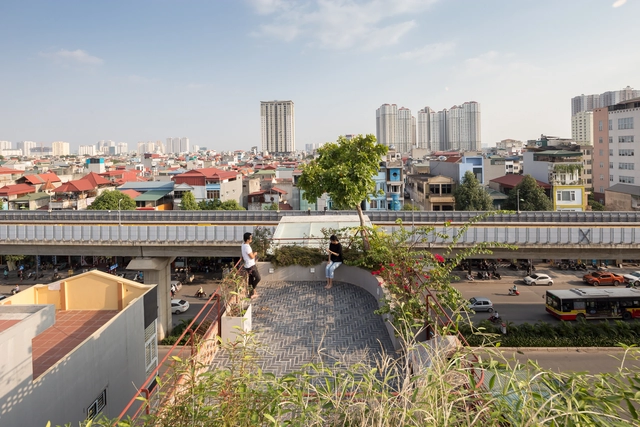
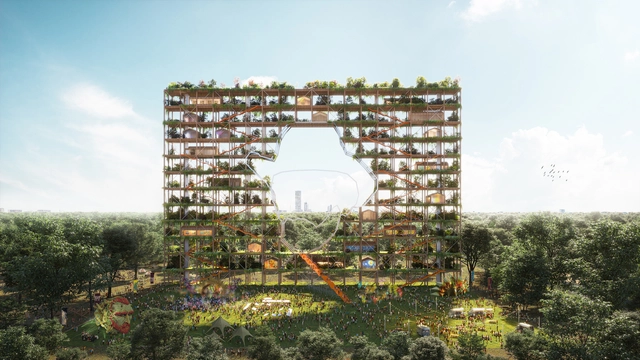
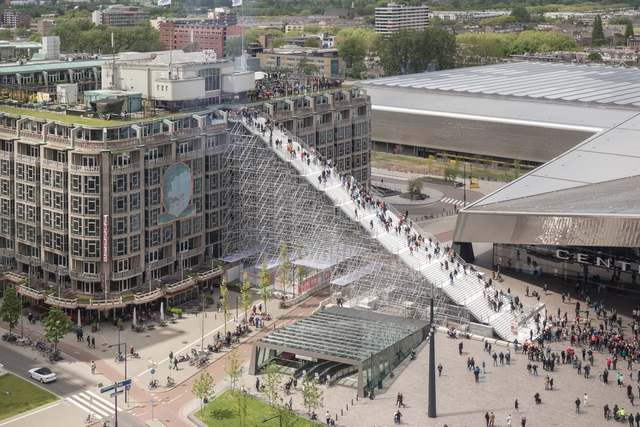
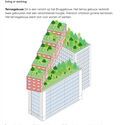
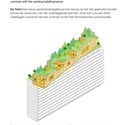
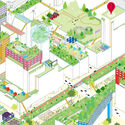
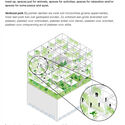
Highlighting an untapped spatial resource, MVRDV's Rooftop Catalogue, in collaboration with Rotterdam Rooftop Days, is now available online for free. Commissioned by the City of Rotterdam, the Rooftop Catalogue presents 130 innovative ideas to make use of Rotterdam's empty flat roofs, showcasing a potential new phase in the city's development and illustrating how reprogramming rooftops can help with issues such as land scarcity and climate change while also addressing the practical side of repurposing these spaces in terms of construction options and suitable sites.
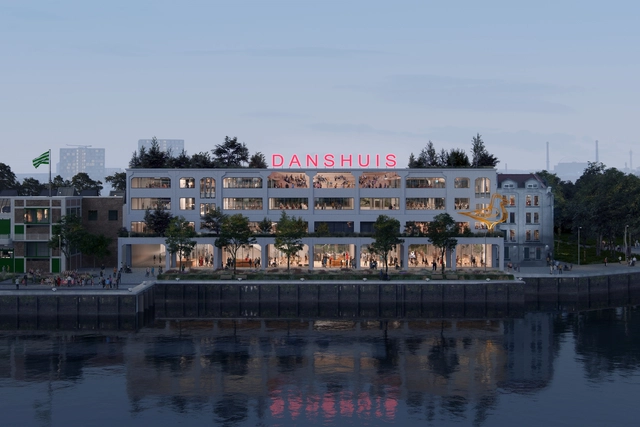
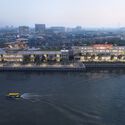
MAD Architects, Led by Ma Yansong, has just revealed its design for the Danshuis, dutch for The Dance House. The project will transform the riverfront Provimi warehouse into a cultural destination in Rotterdam. The Danshuis initiative seeks to convert the old warehouse into a vibrant multi-use studio based on movement and performing arts, a vibrant place to exchange world dance culture. The Droom en Daad Foundation, the primary client of the project, hopes to place Rotterdam on the map as a world leader in arts and culture.
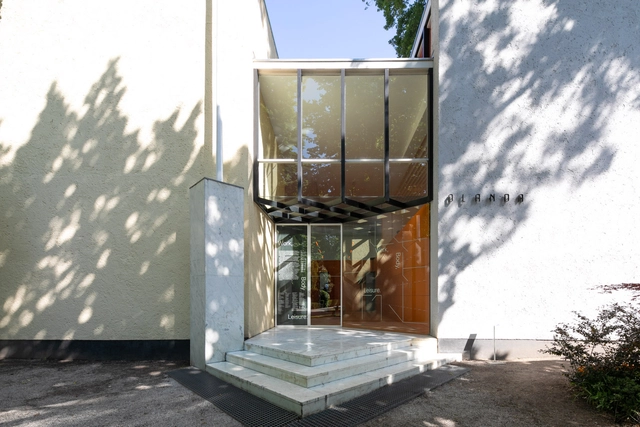
Nieuwe Instituut has appointed Jan Jongert / Superuse Studios from Rotterdam as curator of the Dutch Pavilion at the 18th International Architecture Exhibition – La Biennale di Venezia. In response to Lesley Lokko’s overarching theme for this edition of the Biennale, “Laboratory of the Future,” the Dutch curatorial team aims to explore the complex systems that underpin the structures of our societies. The exhibition will be open from 20 May to 26 November 2023.