1. ArchDaily
  2. Natural Infrastructure

Natural Infrastructure: The Latest Architecture and News

Reimagining the Complete Neighborhood through Urban Renaturing

Subscriber Access | 

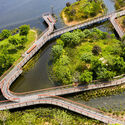
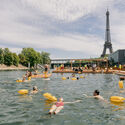
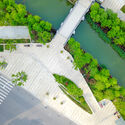
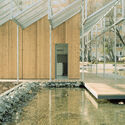
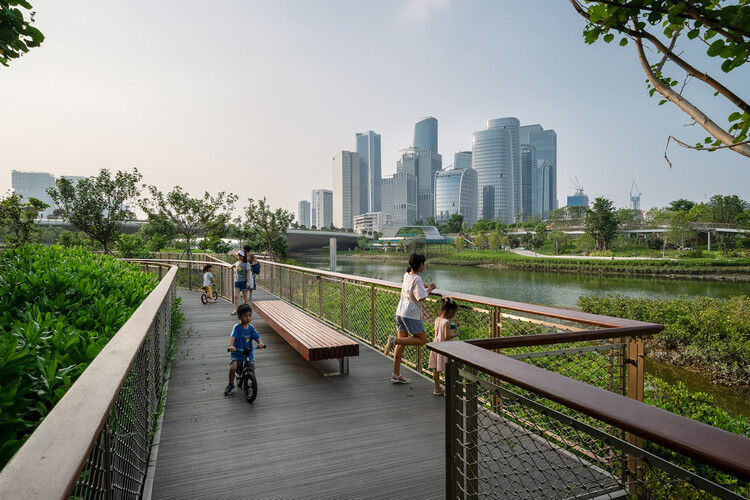
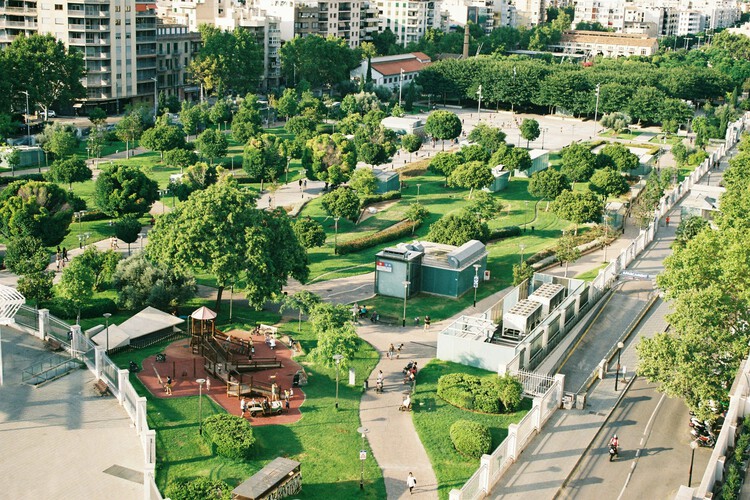
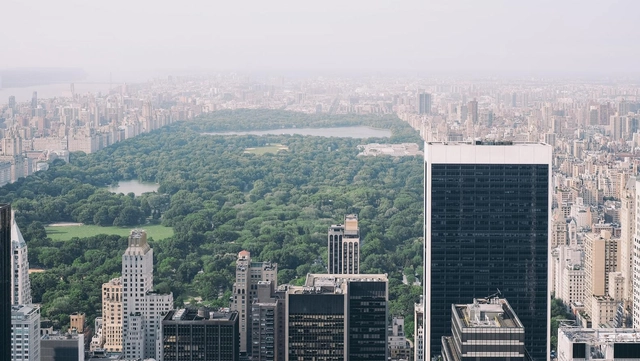
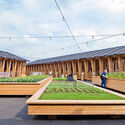
The ReGreeneration project, a Horizon Europe project led by Inetum and supported by C40 Cities, ARUP, Placemaking Europe, and several others, operates as an active collaboration with local governments, private companies, academia, and civil society organizations at the intersection of urban regeneration, green public spaces, and neighborhood-scale design. Its premise addresses how European cities are built and maintained and how they experience a changing climate, arguing that cities must fundamentally change to remain livable under accelerating climate pressures.

Reimagining the Complete Neighborhood through Urban Renaturing - Image 1 of 4Reimagining the Complete Neighborhood through Urban Renaturing - Image 2 of 4Reimagining the Complete Neighborhood through Urban Renaturing - Image 3 of 4Reimagining the Complete Neighborhood through Urban Renaturing - Image 4 of 4Reimagining the Complete Neighborhood through Urban Renaturing - More Images+ 12

No Solid Ground: Three Approaches to Building Below Sea Level in Rotterdam

Architects carefully calibrate their relationship to the earth, adjusting foundations to soil, groundwater, climate, risk, and culture. Driven timber piles, rammed-earth platforms, and poured concrete slabs are each a response to a specific set of ground conditions, and each shapes the architecture that rises from it. The way a building meets the earth determines its durability and its limits because foundations are among the most consequential design choices an architect makes.

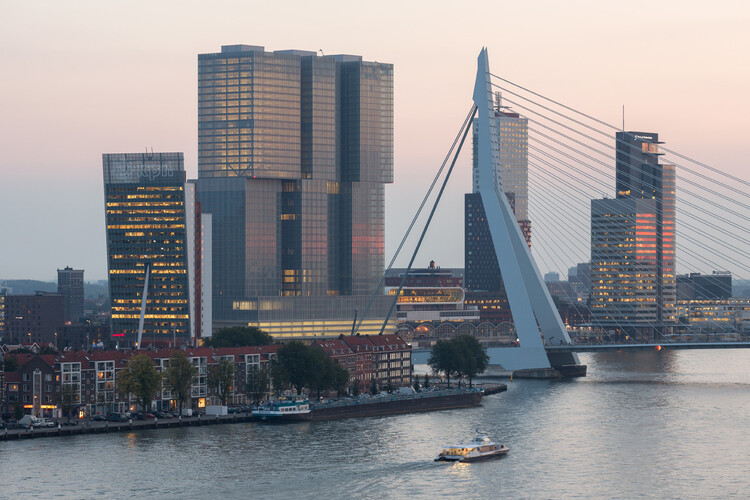
The city of Rotterdam sits approximately one meter below sea level, an organizing condition that shapes daily life in the Netherlands' second-largest city and is a growing preoccupation amid unstable coastal conditions. The city occupies the delta of the Rhine and Maas rivers, a landscape that was never naturally dry but has been kept functional through centuries of hydraulic intervention. The water boards in this region are among the oldest democratic institutions in the world, created in the thirteenth century to manage shared water drainage and still operating today as elected bodies with technical capacity. As sea levels rise and rainfall across Northern Europe grows less predictable and more extreme, Rotterdam faces a significantly increased risk of coastal storm surges and urban flooding driven by overwhelmed drainage infrastructure.

No Solid Ground: Three Approaches to Building Below Sea Level in Rotterdam - Image 16 of 4No Solid Ground: Three Approaches to Building Below Sea Level in Rotterdam - Image 57 of 4No Solid Ground: Three Approaches to Building Below Sea Level in Rotterdam - Image 25 of 4No Solid Ground: Three Approaches to Building Below Sea Level in Rotterdam - Image 54 of 4No Solid Ground: Three Approaches to Building Below Sea Level in Rotterdam - More Images+ 65

SCAPE and BIG Unveil Final Plans for Manresa Wilds on Former Power Plant Site in Norwalk, US

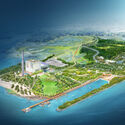
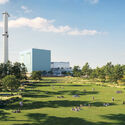
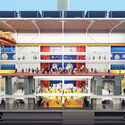
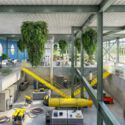
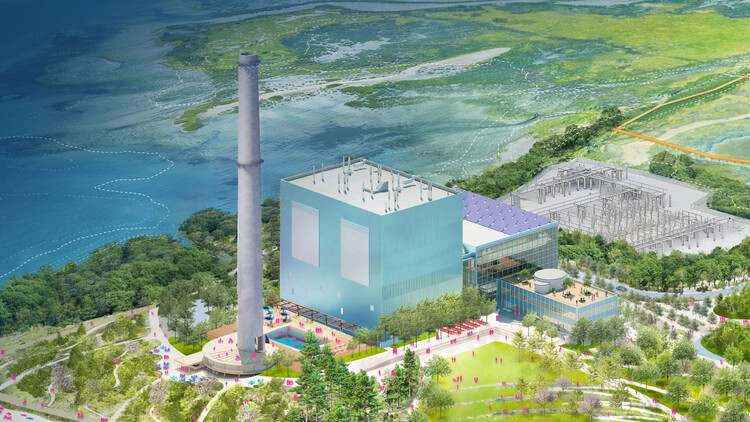
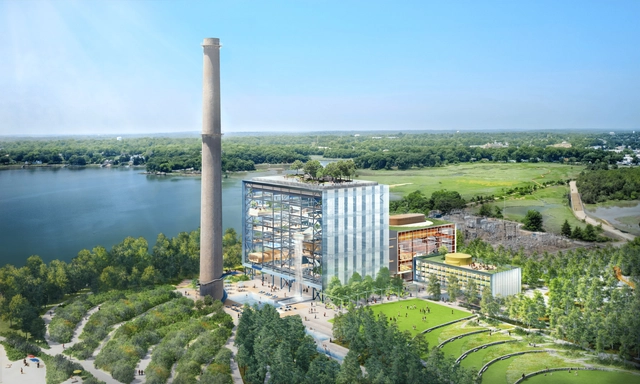
Manresa Island Corp. has unveiled the final vision for Manresa Wilds, a 125-acre waterfront park planned on a former power plant peninsula along Long Island Sound in Norwalk, United States. Developed in collaboration with landscape architecture firm SCAPE and architecture studio BIG, the proposal outlines the transformation of a polluted and long-inaccessible industrial shoreline into a publicly accessible coastal landscape. Following the receipt of a stewardship permit from Connecticut's Department of Energy and Environmental Protection in December 2025, the project will move forward in phases, beginning with the opening of the 28-acre Northern Forest in spring 2027. Subsequent phases, extending into the early 2030s, will deliver the majority of the restored landscape and the adaptive reuse of the 1960s-era power plant as a year-round civic and educational hub, opening nearly two miles of coastline that have been closed to the public for decades.

SCAPE and BIG Unveil Final Plans for Manresa Wilds on Former Power Plant Site in Norwalk, US - Image 1 of 4SCAPE and BIG Unveil Final Plans for Manresa Wilds on Former Power Plant Site in Norwalk, US - Image 2 of 4SCAPE and BIG Unveil Final Plans for Manresa Wilds on Former Power Plant Site in Norwalk, US - Image 3 of 4SCAPE and BIG Unveil Final Plans for Manresa Wilds on Former Power Plant Site in Norwalk, US - Image 4 of 4SCAPE and BIG Unveil Final Plans for Manresa Wilds on Former Power Plant Site in Norwalk, US - More Images+ 21

New York City Unveils Plans to Transform Fifth Avenue into a Pedestrian-Centered Boulevard

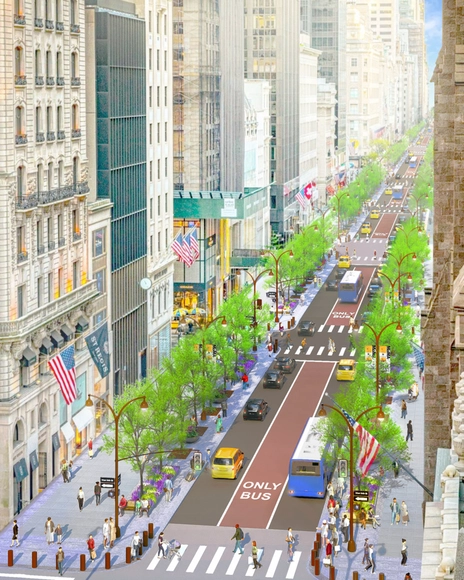
The mayor of New York City, Eric Adams, along with the Future of Fifth Partnership, announced plans to transform Fifth Avenue, between Bryant Park and Central Park, into a pedestrian-centered boulevard. The project includes expanding sidewalks by 46%, reducing traffic lanes, improving pedestrian safety with shorter crosswalks, and adding greenery and lighting. The initiative begun with the Future of Fifth public-private partnership, which selected Arcadis, Sam Schwartz Engineering, and Field Operations to lead the design and study, and schematic design, scheduled to be completed by summer 2025.

Designing Shared Rural Environments: Defining Public Spaces beyond Urban Metrics

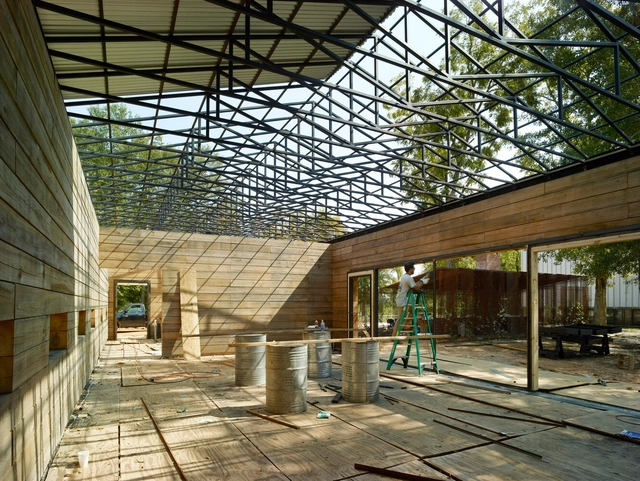
Rural environments are often difficult to define in administrative and professional contexts and carry notable biases and complexities. Population and density thresholds are the most common determinants for drawing administrative boundaries, yet other factors, such as infrastructure, employment, and services, contribute to the characterization of rural environments. In the United States, the Census Bureau defines rurality, not by its characteristics or resources, but by absences, as "any population, housing, or territory not in an urban area." For the design and planning community, it is important to define the future of rural environments, not through the metrics of urban resources or infrastructure, but to design a new framework for flexibility, adaptation, and health.

Designing Shared Rural Environments: Defining Public Spaces beyond Urban Metrics - Image 1 of 4Designing Shared Rural Environments: Defining Public Spaces beyond Urban Metrics - Image 2 of 4Designing Shared Rural Environments: Defining Public Spaces beyond Urban Metrics - Image 3 of 4Designing Shared Rural Environments: Defining Public Spaces beyond Urban Metrics - Image 4 of 4Designing Shared Rural Environments: Defining Public Spaces beyond Urban Metrics - More Images+ 6

BIG and SCAPE Reimagine Decommissioned Power Plant into a Public Destination in Connecticut, US

Landscape architecture firm SCAPE together with Bjarke Ingels Group have announced plans to transform Connecticut's Manresa Island into a public-oriented development as a hub for learning, exploration, and community engagement. Originally slanted for private waterfront housing, the new scheme aims to open up the area as a public park with ample waterfront access, a project led by SCAPE. Additionally, the decommissioned coal-fired power plant is set to be converted by BIG into a community hub for multiple activities including swimming, small and large-scale events, research, and educational rooms. Supported by a private philanthropic investment from Austin McChord, the project is set to open in 2030 through a phased development.

BIG and SCAPE Reimagine Decommissioned Power Plant into a Public Destination in Connecticut, US - Image 1 of 4BIG and SCAPE Reimagine Decommissioned Power Plant into a Public Destination in Connecticut, US - Image 2 of 4BIG and SCAPE Reimagine Decommissioned Power Plant into a Public Destination in Connecticut, US - Image 3 of 4BIG and SCAPE Reimagine Decommissioned Power Plant into a Public Destination in Connecticut, US - Image 4 of 4BIG and SCAPE Reimagine Decommissioned Power Plant into a Public Destination in Connecticut, US - More Images+ 7

Infrastructure and Landscape: 12 Projects Redefining Natural Environments in Spain

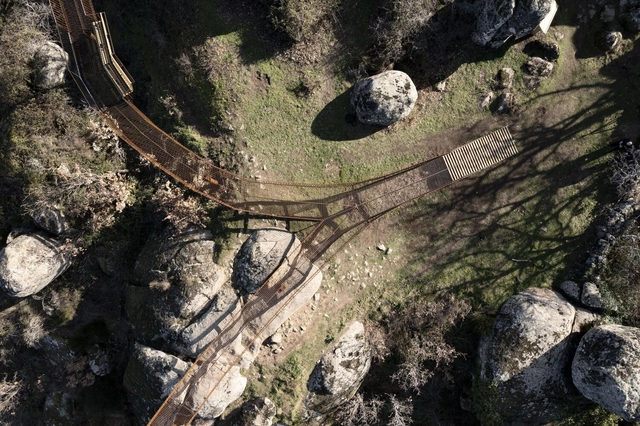
Spain, with its vast territory and notable diversity of landscapes, has been a reference point in the development of external infrastructures, both in urban and rural areas. Tourism has played a key role in this process, focusing on creating spaces that maximize the enjoyment of the natural environment and integrating local landscapes into urbanized areas. The construction of these infrastructures has had two main aspects: the adaptation of cities for both their residents and tourists and the development of rural or coastal areas, where nature is the main attraction. This has led to interventions ranging from creating waterfront promenades, viewpoints, and natural parks, to urbanization projects in previously untouched areas. Furthermore, urban growth has driven the creation of green infrastructures such as botanical gardens, ecological trails, and reserves that aim to protect the environment while being sustainably open to the public.

Infrastructure and Landscape: 12 Projects Redefining Natural Environments in Spain - Image 1 of 4Infrastructure and Landscape: 12 Projects Redefining Natural Environments in Spain - Image 2 of 4Infrastructure and Landscape: 12 Projects Redefining Natural Environments in Spain - Image 3 of 4Infrastructure and Landscape: 12 Projects Redefining Natural Environments in Spain - Image 4 of 4Infrastructure and Landscape: 12 Projects Redefining Natural Environments in Spain - More Images+ 14

The Urban Transformation of Medellín: A Case Study

CityMakers, The Global Community of Architects Who Learn from Exemplary Cities and Their Makers, is working with Archdaily to publish a series of articles about Barcelona, Medellin, and Rotterdam. The authors are the architects, urban planners, and/or strategists behind the projects that have transformed these three cities and are studied in the "Schools of Cities" and "Documentary Courses" made by CityMakers. On this occasion, Victor Restrepo, Coordinator of CityMakers in Medellin, presents his article "Medellin: A Case Study".

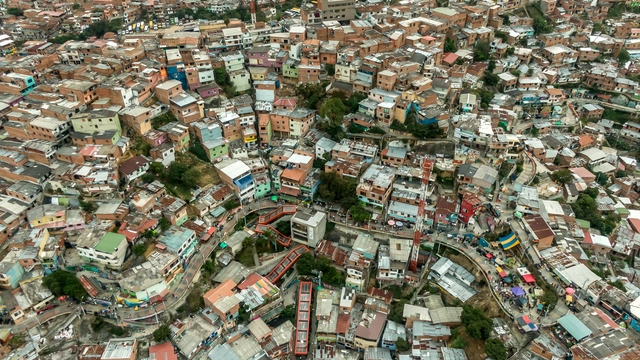
Medellín stands as an inspiring example for many cities worldwide. It is a city that transitioned from deep collective fear to hopeful enthusiasm for urban and social life characterized by quality and coexistence. The city's crisis has always been associated with violence and drug trafficking. However, this crisis is more structural and profound, it responds to many more factors, some of which are associated with the accelerated growth of its population, as in many Latin American cities.

The Urban Transformation of Medellín: A Case Study - Image 1 of 4The Urban Transformation of Medellín: A Case Study - Image 2 of 4The Urban Transformation of Medellín: A Case Study - Image 3 of 4The Urban Transformation of Medellín: A Case Study - Image 4 of 4The Urban Transformation of Medellín: A Case Study - More Images+ 7

Bofedales: Natural Infrastructures and Andean Landscapes

Subscriber Access | 

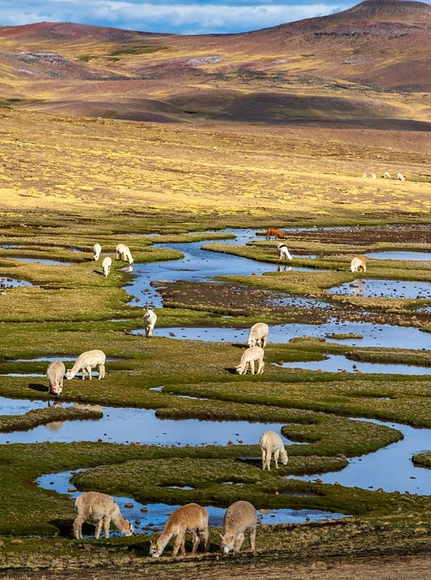
In the highlands of the Central Andes, one finds the "bofedales." Known by some as 'high Andean wetlands,' bofedales are ecosystems and landscapes crucial for water regulation and storage in the Andes. Moreover, they are natural infrastructures that constitute a material and immaterial heritage to address contemporary climate crises and to sustain local Andean communities, which have nurtured them for generations.

What Are Living Infrastructures?

Subscriber Access | 

Infrastructure is widely known by the population in general, defined simply as a set of fundamental services for the socio-economic development of a region, such as sanitation, transportation, energy, and telecommunication. The commonly presented examples always refer to man-made physical structures. However, a new concept of infrastructure has emerged in recent decades, driven primarily by the urgent need for reconciliation between humans and nature for the survival of species.

What Are Living Infrastructures? - Image 1 of 4What Are Living Infrastructures? - Image 2 of 4What Are Living Infrastructures? - Image 3 of 4What Are Living Infrastructures? - Image 4 of 4What Are Living Infrastructures? - More Images+ 4