1. ArchDaily
  2. MVRDV

MVRDV: The Latest Architecture and News

MVRDV Brings Minecraft to Life with RED7 Housing in Moscow

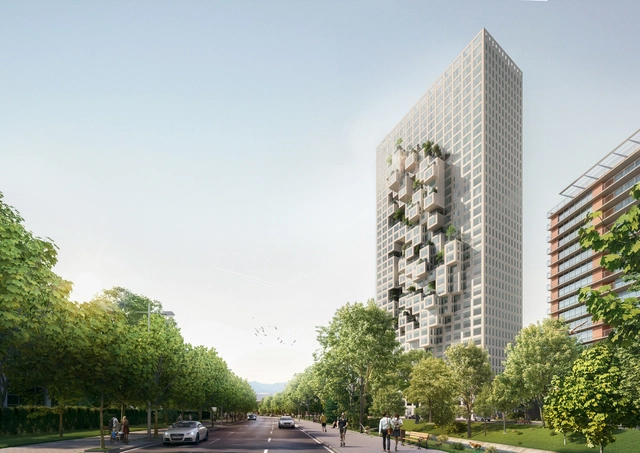
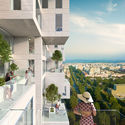
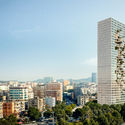
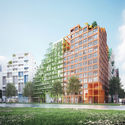
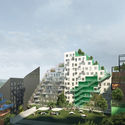
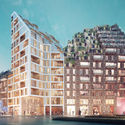
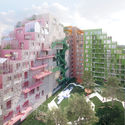
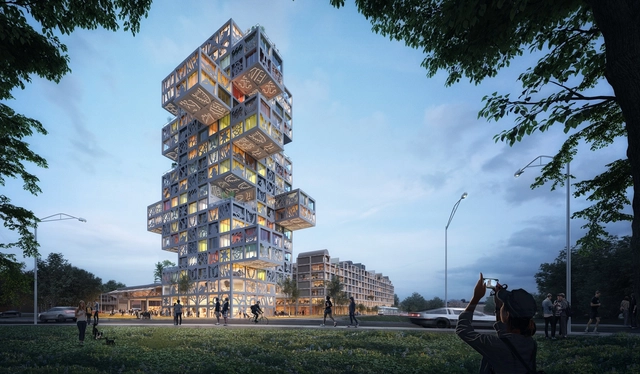
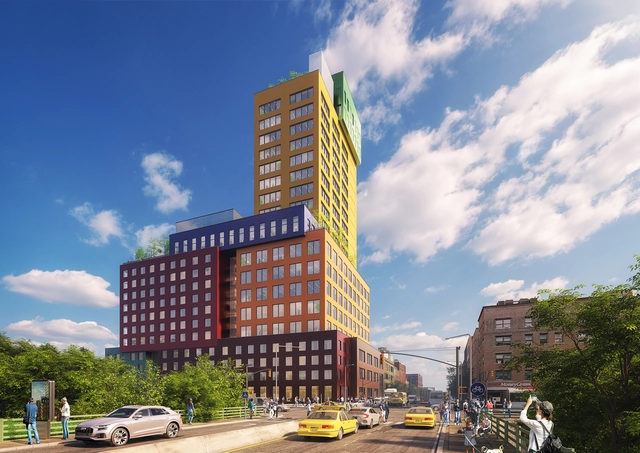
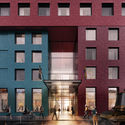
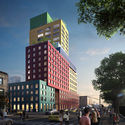
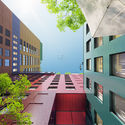
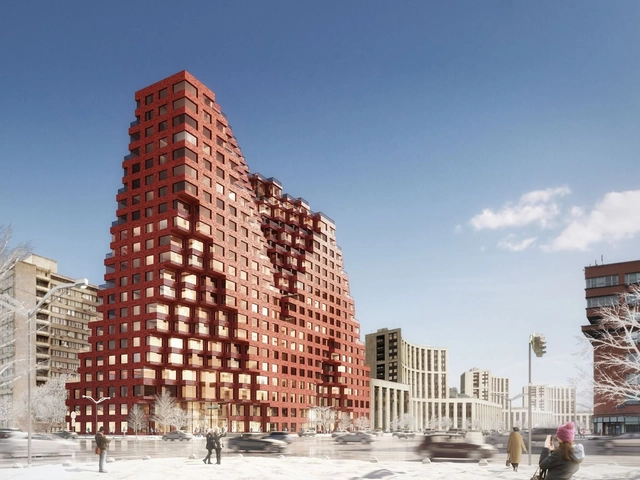
Dutch practice MVRDV have unveiled RED7, a housing project for Moscow and the firm’s first building in Russia. MVRDV won the competition to design RED7 for client GK Osnova in December 2017, and the project has been accepted by the architectural committee of Moscow. Designed with a Minecraft-like gradient of blocks, the project was inspired by its neighboring context. As a symbolic gateway into the city center, the design will include 289 apartments with external terraces and expansive views of Moscow's skyline.

MVRDV Brings Minecraft to Life with RED7 Housing in Moscow - Image 1 of 4MVRDV Brings Minecraft to Life with RED7 Housing in Moscow - Image 2 of 4MVRDV Brings Minecraft to Life with RED7 Housing in Moscow - Image 3 of 4MVRDV Brings Minecraft to Life with RED7 Housing in Moscow - Image 4 of 4MVRDV Brings Minecraft to Life with RED7 Housing in Moscow - More Images+ 7

Cynical Optimism Links the Homes of Alain de Botton's Living Architecture Series

Subscriber Access | 
Cynical Optimism Links the Homes of Alain de Botton's Living Architecture Series - Image 4 of 4
Dune House / JVA. Image © Nils Petter Dale

Alain de Botton’s Living Architecture project - a joyful, democratically-minded concept to share quality architecture in the UK - was borne out of personal crisis. The Swiss-born philosopher and author gained fame in both popular and architectural circles following the release of his book, "The Architecture of Happiness."

The book was immediately successful (movie buffs may recall its brief cameo in the 2009 film 500 Days of Summer), but the response unsettled Botton. “...However pleasing it is two write a book about an issue one feels passionately about," he explained to Assemble Papers, "the truth is that - a few exceptions aside - books don’t change anything. I realized that if I cared so much about architecture, writing was a coward’s way out; the real challenge was to build.”

Cynical Optimism Links the Homes of Alain de Botton's Living Architecture Series - Image 9 of 4Cynical Optimism Links the Homes of Alain de Botton's Living Architecture Series - Image 14 of 4Cynical Optimism Links the Homes of Alain de Botton's Living Architecture Series - Image 18 of 4Cynical Optimism Links the Homes of Alain de Botton's Living Architecture Series - Image 26 of 4Cynical Optimism Links the Homes of Alain de Botton's Living Architecture Series - More Images+ 26

Life after Serpentine: Second Lives of Architecture's Famed Pavilions

If the surest sign of summer in London is the appearance of a new pavilion in front of the Serpentine Gallery, then it’s perhaps fair to say that summer is over once the pavilion is taken down. The installations have gained prominence since its inaugural edition in 2000, acting as a kind of exclusive honor and indication of talent for those chosen to present; celebrated names from the past names include Zaha Hadid, Rem Koolhaas, and Olafur Eliasson.

Life after Serpentine: Second Lives of Architecture's Famed Pavilions - Image 1 of 4Life after Serpentine: Second Lives of Architecture's Famed Pavilions - Image 2 of 4Life after Serpentine: Second Lives of Architecture's Famed Pavilions - Image 3 of 4Life after Serpentine: Second Lives of Architecture's Famed Pavilions - Image 4 of 4Life after Serpentine: Second Lives of Architecture's Famed Pavilions - More Images+ 15

M·Cube / MVRDV

M·Cube / MVRDV - Shopping Centers
© Seth Powers

M·Cube / MVRDV - Shopping CentersM·Cube / MVRDV - Shopping CentersM·Cube / MVRDV - Shopping CentersM·Cube / MVRDV - Shopping CentersM·Cube / MVRDV - More Images+ 17

  • Architects: MVRDV
  • Year Completion year of this architecture project Year:  2018
  • Manufacturers Brands with products used in this architecture project
    Manufacturers:  Hunter Douglas
  • Professionals: AGC Design, HK, Gartner, LPA, JP, +2

MVRDV Proposes Respectful Renovation for 19th Century Heritage Building in Wrocław, Poland

MVRDV has released details of their proposed renovation of a 19th-century listed building on Slodowa Island in Wroclaw, Poland. The “Concordia Hub” will see the retention of the existing façade, with the addition of a contemporary rear extension to “create a focal point” for the general public and visitors.

The site’s former use as a German artillery base in 1945 means almost all of the island’s structures were destroyed in the closing months of World War II. The Concordia Hub scheme seeks to preserve one of the only surviving heritage structures on the island, while transitioning the building into the modern age.

MVRDV Proposes Respectful Renovation for 19th Century Heritage Building in Wrocław, Poland - Featured ImageMVRDV Proposes Respectful Renovation for 19th Century Heritage Building in Wrocław, Poland - Image 1 of 4MVRDV Proposes Respectful Renovation for 19th Century Heritage Building in Wrocław, Poland - Image 2 of 4MVRDV Proposes Respectful Renovation for 19th Century Heritage Building in Wrocław, Poland - Image 3 of 4MVRDV Proposes Respectful Renovation for 19th Century Heritage Building in Wrocław, Poland - More Images

This Week in Architecture: What Makes a Place?

Subscriber Access | 

It’s well understood that a sense of place is an essential value for people, architecture, and cities. Everyone from designers to planners to city governments speak breathlessly of the power of places to transform cities for the better - but it’s not clear what placemaking really means.

The Imprint / MVRDV

The Imprint / MVRDV - Commercial Architecture
© Ossip van Duivenbode

The Imprint / MVRDV - Commercial ArchitectureThe Imprint / MVRDV - Commercial ArchitectureThe Imprint / MVRDV - Commercial ArchitectureThe Imprint / MVRDV - Commercial ArchitectureThe Imprint / MVRDV - More Images+ 27

  • Architects: MVRDV
  • Area Area of this architecture project Area:  9800
  • Year Completion year of this architecture project Year:  2018
  • Manufacturers Brands with products used in this architecture project
    Manufacturers:  Techwall

15 Eye-Popping Projects That Don't Apologize For Using Color: Photos of the Week

Subscriber Access | 

This week, colorful projects are here to steal the show. Few architects have dared to use color in their works, however, when done so the results can be incredible. Here is a selection of 15 images from prominent photographers such as Gregori Civera, Julien Lanoo and Subliminal Image that show us the huge potential of color.

15 Eye-Popping Projects That Don't Apologize For Using Color: Photos of the Week - Image 5 of 415 Eye-Popping Projects That Don't Apologize For Using Color: Photos of the Week - Image 1 of 415 Eye-Popping Projects That Don't Apologize For Using Color: Photos of the Week - Image 3 of 415 Eye-Popping Projects That Don't Apologize For Using Color: Photos of the Week - Image 2 of 415 Eye-Popping Projects That Don't Apologize For Using Color: Photos of the Week - More Images+ 11

Cities are Avoiding Hosting the Olympics. They Shouldn’t.

Subscriber Access | 

The apple of every athlete's eye, the Olympic Games direct the gaze of the world onto one host city every two years, showcasing the best that sport has to offer across both summer and winter events. In a haze of feel-good anticipation, the general buzz around the city before during the four week stretch is palpable, with tourists, media and athletes alike generating contributing to the fervour. With almost an almost exclusively positive public response (the majority of Olympic bids are met with 70% approval or higher), the Games become an opportunity for a nation to showcases their culture and all it has to offer. At first glance, it's an opportunity you'd be a fool to miss.

Yet as the dust settles, these ‘lucky’ host cities are often left with structures that lack the relevance and function of their initial, fleeting lives. Empty aquatics centers, derelict running tracks and rarely-used stadiums have become as much a trademark of the Games as the Rings, with the structural maintenance and social implications burdening former hosts for years to come. In recent years, fewer cities have been taking part in the bidding process, suggesting that the impact of the Games is beginning to catch up with the excitement. As many as 12 cities contended for the honor of hosting the 2004 games; only two were put forward for 2024/28.

Cities are Avoiding Hosting the Olympics. They Shouldn’t. - Image 1 of 4Cities are Avoiding Hosting the Olympics. They Shouldn’t. - Image 2 of 4Cities are Avoiding Hosting the Olympics. They Shouldn’t. - Image 3 of 4Cities are Avoiding Hosting the Olympics. They Shouldn’t. - Image 4 of 4Cities are Avoiding Hosting the Olympics. They Shouldn’t. - More Images+ 6

UNStudio Named Winner of Landmark Melbourne Skyscraper Competition

UNStudio and Cox Architecture have officially been announced as the winners of Melbourne’s landmark Southbank Precinct overhaul. Selected from a range of high-profile offices, including BIG, OMA, and MAD, UNStudio's vision for the $2 billion project includes a pair of twisted towers called Green Spine. As the largest single-phase project in the history of Victoria, Australia, the Green Spine is designed as a state-of-the-art, mixed-use environment centered around innovation in architecture and design.

UNStudio Named Winner of Landmark Melbourne Skyscraper Competition  - Image 1 of 4UNStudio Named Winner of Landmark Melbourne Skyscraper Competition  - Image 2 of 4UNStudio Named Winner of Landmark Melbourne Skyscraper Competition  - Image 3 of 4UNStudio Named Winner of Landmark Melbourne Skyscraper Competition  - Image 4 of 4UNStudio Named Winner of Landmark Melbourne Skyscraper Competition  - More Images+ 25

OMA, BIG, and UNStudio Among Prominent Firms to Reveal Visions for Landmark Melbourne Southbank

A prominent shortlist including BIG, OMA, and UNStudio have revealed their visions for Melbourne’s landmark Southbank Precinct overhaul. The $2 billion project will be the largest single-phase project in the history of Victoria, Australia, intended as “a state-of-the-art, mixed-use environment” to be “centered around innovation in architecture and design.”

The six shortlisted schemes include twisting towers, interlocking blocks, and stacked neighborhoods, all focusing on the 6,000-square-meter BMW Southbank site. The designs were revealed at a public symposium on July 27th featuring speakers from the shortlisted firms.

OMA, BIG, and UNStudio Among Prominent Firms to Reveal Visions for Landmark Melbourne Southbank - Image 1 of 4OMA, BIG, and UNStudio Among Prominent Firms to Reveal Visions for Landmark Melbourne Southbank - Image 2 of 4OMA, BIG, and UNStudio Among Prominent Firms to Reveal Visions for Landmark Melbourne Southbank - Image 3 of 4OMA, BIG, and UNStudio Among Prominent Firms to Reveal Visions for Landmark Melbourne Southbank - Image 4 of 4OMA, BIG, and UNStudio Among Prominent Firms to Reveal Visions for Landmark Melbourne Southbank - More Images+ 19

Look Inside a Collection of Dutch Architecture Offices, Photographed by Marc Goodwin

Subscriber Access | 

Having previously assembled sets of images featuring the offices of architecture firms in Dubai, London, Paris, Beijing, Shanghai, Seoul, the Nordic countries, and Barcelona, architectural photographer Marc Goodwin continues the series with an exploration of 17 large and small offices in the Netherlands. Occupying buildings formerly used as offices, banks and old factories, the interior and exterior images capture a glimpse of the lives of these designers and their daily architectural surroundings.

"Past, Present, Future": Leading Dutch and Italian Designers on Being an Architect Yesterday, Today, and Beyond

Architecture is always evolving. The practice and business of architecture are undoubtedly evolving alongside the more obvious technological advances, but what we often forget is that there are no new ideas. When it comes to design, what we see manifested in our daily lives is the result of evolution. And at the root of that design evolution is inspiration.

A new initiative from Gianpiero Venturini and his firm Itinerant Office titled Past, Present, Future aims to open a research path based on the analysis of successful practices in the 21st Century while ultimately providing a new form of inspiration for the next generations of architects and designers. The documentary series begins with a select group of 11 international architects, including Jacob van Rijs, co-founder of MVRDV, Mario Cucinella, and Simone Sfriso, co-founder of TAMassociati. Each architect is featured in three video interviews in which they reveal the methodology behind their designs, the themes and approaches within their architectural practice, and the predictions they have for architecture in the near and distant future.

Form Follows Energy

Architecture is energy. Lines drawn on paper to represent architectural intentions also imply decades and sometimes centuries of associated energy and material flows. “Form Follows Energy” is about the relationship between energy and the form of our built environment. It examines the optimisation of energy flows in building and urban design and the implications for form and configuration. It speaks to both architectural and engineering audiences and offers for the first time a truly interdisciplinary overview on the subject, explaining the complex relationships between energy and architecture in an easy to follow manner and using simple diagrams to show how

Winy Maas at Living Environment: "There Are Four Important Points for the Development of Contemporary Housing"

Subscriber Access | 

With a presentation by Dutch architect Winy Maas (MVRDV), the third edition of "Living Environment," organized by Russian Ministry of Construction Industry, Housing and Utilities Sector, DOM.RF and Strelka Institute for Media, Architecture and Design, was inaugurated today in the city of Kaliningrad, Russia. Also participating on the opening day are Martin Sobota (Holland), Elliot Eisenberg (United States), and Brian Mark Evans (United Kingdom).

MVRDV to Transform Communist-Era Pyramid into Center for Art and Technology in Albania

MVRDV to Transform Communist-Era Pyramid into Center for Art and Technology in Albania - Image 4 of 4
Courtesy of MVRDV

MVRDV has unveiled its vision for transforming the Communist-era “Tirana Pyramid” in Albania into a center for technology, art, and culture. Under the plans, the abandoned structure will be revitalized as a multifunctional technology education center for Tirana’s youth, with the existing dark interior becoming open, bright, and green.

The Tirana Pyramid was opened in 1988 as the Enver Hoxta Museum, designed in honor of Albania’s former communist leader. Since then, the building has transitioned into a NATO base during the Balkan Wars, a nightclub, and an event space. Though now in decay, the building remains a popular spot for young people keen to climb on its roof. As a nod to this unique appropriation, MVRDV has made the roof officially available for all visitors.

MVRDV to Transform Communist-Era Pyramid into Center for Art and Technology in Albania - Image 1 of 4MVRDV to Transform Communist-Era Pyramid into Center for Art and Technology in Albania - Image 2 of 4MVRDV to Transform Communist-Era Pyramid into Center for Art and Technology in Albania - Image 3 of 4MVRDV to Transform Communist-Era Pyramid into Center for Art and Technology in Albania - Image 4 of 4MVRDV to Transform Communist-Era Pyramid into Center for Art and Technology in Albania - More Images

BIG, OMA, and MVRDV Among Shortlisted Firms for Melbourne Landmark Competition

The shortlist for a new landmark project in Melbourne has been announced, comprising award-winning global architects such as Bjarke Ingels Group, MVRDV, and OMA. For the “Southbank by Beulah” mixed-use development, the shortlisted architects will engage in a design competition working in collaboration with local Australian firms, each producing a design proposal for Melbourne’s BMW Southbank site.

With an end value in excess of $2 billion, Southbank by Beulah will be the first large-scale private project adhering to the Australian Institute of Architecture guidelines, while the design competition will be chaired by a jury of seven regarded individuals from academic, architectural, property and government sectors.

Explore These Architecturally Innovative Bookcases

Subscriber Access | 

At first, books were kept in chests but as they became published in bulk they moved into the cupboard. The doors came off and the bookcase began to evolve. Today, bookcases can be integral architectural elements that shape space and, in some cases, even light. In celebration of International Day of the Book on April 23rd, ArchDaily compiled this round-up of architecturally, innovative bookcases.

Scroll down to see inventive architectural book storage from Alberto Kalach, ARCHSTUDIO, Toyo Ito, and more.

Explore These Architecturally Innovative Bookcases - Image 1 of 4Explore These Architecturally Innovative Bookcases - Image 2 of 4Explore These Architecturally Innovative Bookcases - Image 3 of 4Explore These Architecturally Innovative Bookcases - Image 4 of 4Explore These Architecturally Innovative Bookcases - More Images+ 12